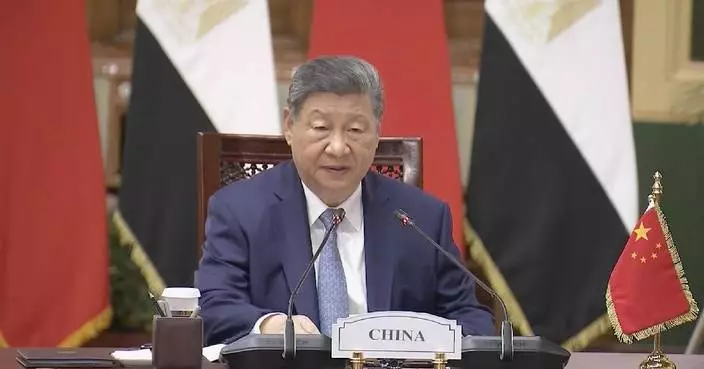
Chinese President Xi Jinping on Wednesday raised a four-point proposal on building a new security architecture in the Middle East via upholding a vision of common, comprehensive, cooperative and sustainable security.
In his talks with Egyptian President Abdel Fattah El-Sisi in Cairo, Xi said China supports countries in the region in developing good-neighborly and friendly relations.
First, Xi called for efforts to be made to foster the internal driving force for common security in the region.
People in the Middle East should remain masters of their own affairs, and external interference should be rejected, Xi said, noting that China supports regional countries in strengthening dialogue on peace and security, exploring the building of a new security architecture for the Middle East, and taking their future into their own hands.
Second, Xi said a comprehensive approach should be adopted to advance common security in the region and that given the multiple hotspots in the Middle East and their close interconnections, comprehensive solutions should be pursued.
The Palestinian issue remains at the core of the Middle East question and should never be overlooked or marginalized, he added.
Third, Xi said the foundation for common security should be strengthened through development, noting that lasting peace and stability in the Middle East fundamentally depend on development.
China stands ready to work with Middle East countries to safeguard the security of international shipping lanes, advance development cooperation, promote the convergence of interests of regional countries, gradually enhance mutual trust, and eliminate the root causes of the conflict, he said.
Fourth, Xi urged that international coordination for common security in the region should be strengthened, and the UN Charter and international law should serve as the fundamental principles for handling Middle East affairs.
The international community, especially external powers, should abandon double standards in the Middle East, respect the sovereignty and territorial integrity of regional countries, and safeguard regional peace and stability, Xi added.
He also urged support for the United Nations' effective role in Middle East affairs.
Sisi said that Egypt highly appreciates China's consistent, objective, and impartial stance on the Middle East question, noting that Egypt is committed to promoting de-escalation in the region, resolving conflicts and differences through political means, and advancing regional security and development.
Egypt stands ready to continue strengthening coordination with China to ease tensions in the Middle East, safeguard regional stability, and explore a regional security architecture, Sisi said.
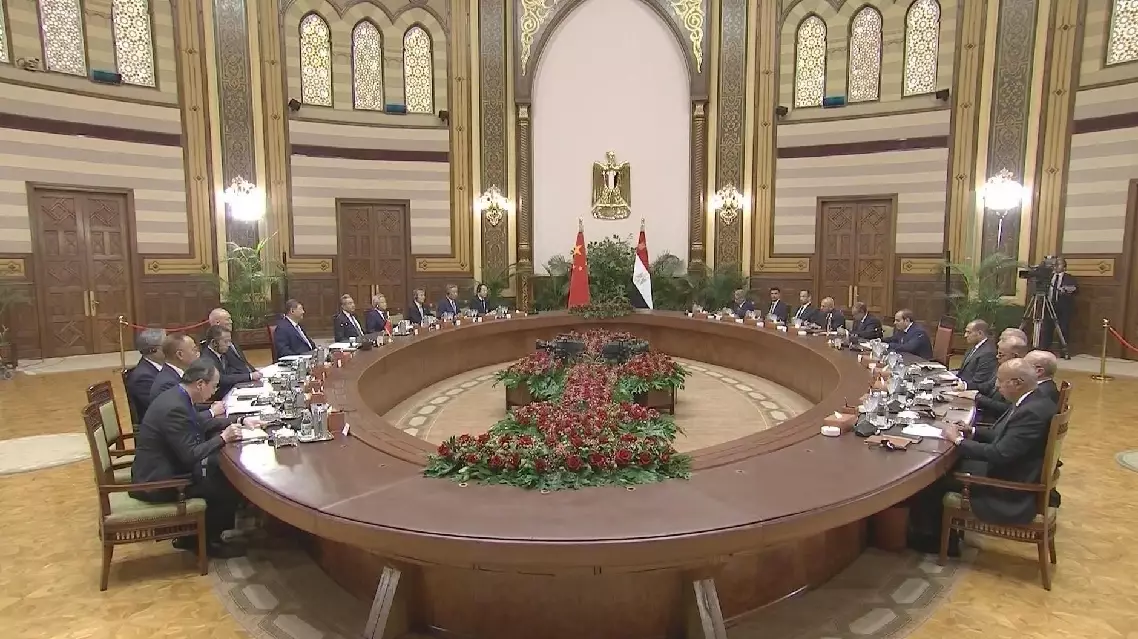
Xi raises four-point proposal on new security architecture for Middle East