The Food and Agriculture Organization of the United Nations (FAO) Food Price Index averaged 133.3 points in August, up 1.9 percent from July and 2.5 percent from a year earlier, reaching its highest level since the end of 2022, the FAO said Friday.
The increase was broad-based, with all five commodity group indices rising. The FAO said extreme weather, geopolitical tensions, and disruptions to trade and logistics are exacerbating supply risks for major global agricultural products.
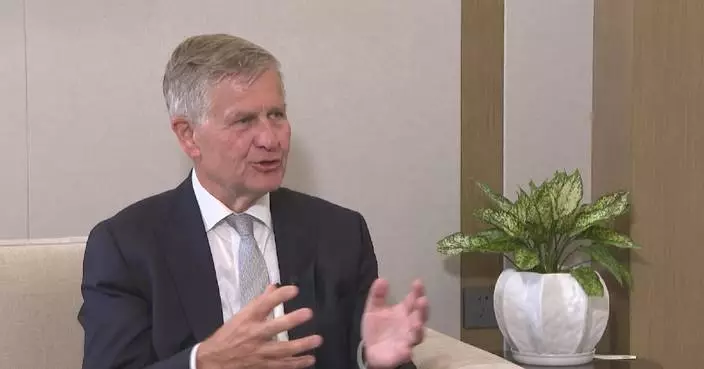
"The FAO released its monthly food price index, as we've been warning food prices are climbing again and the weather is driving much of that. FAO says the benchmark index for world food commodity prices edged up in August as high temperatures and other weather related risks raised concern over supply," said Stephane Dujarric, spokesman for United Nations secretary-general, at a press conference at the UN Headquarters.
The FAO Sugar Price Index recorded the biggest increase, surging 11.9 percent month-on-month to its highest level since June 2025, amid growing concerns over global sugar supplies in the 2026/27 season. Hot and dry weather in the European Union and parts of Asia, lower sugar production in Brazil, and India's decision to allow duty-free raw sugar imports contributed to the rise.
The FAO Cereal Price Index rose 2.2 percent in August to its highest level since May 2024. Wheat prices increased 2.6 percent, supported by continued disruptions to Black Sea export logistics, lower production prospects in parts of Europe due to hot and dry weather, and a weaker U.S. dollar. Maize prices climbed 2.5 percent amid concerns over crop yields in parts of the United States and the European Union, strong demand from the ethanol and feed sectors, and disruptions to Ukrainian exports.
The Vegetable Oil Price Index rose 0.6 percent to its highest level since June 2022, marking its third consecutive monthly increase. The Meat Price Index increased 1.0 percent, driven by higher poultry, pig and ovine meat prices, while the Dairy Price Index rose 2.3 percent, its first increase in four months.
Despite the August rise, the FAO Food Price Index remained 16.8 percent below its record high reached in March 2022, the FAO said.
The FAO also lowered its 2026 global cereal production forecast by 3.4 million tons from its July forecast. Global cereal stocks are projected to reach 947.20 million tons at the end of 2026-2027 period, a 1.1 percent decrease from the previous forecast.
"Looking ahead, FAO forecast global cereal production this year to be a 2.98 billion metric tons. That's still the second largest harvest on record, but down 2 percent from last year," Dujarric said.
Although global grain production is expected to remain at a historically high level, the FAO warns that factors such as climate risks, regional conflicts, and transportation disruptions are increasing uncertainty in the international food market.
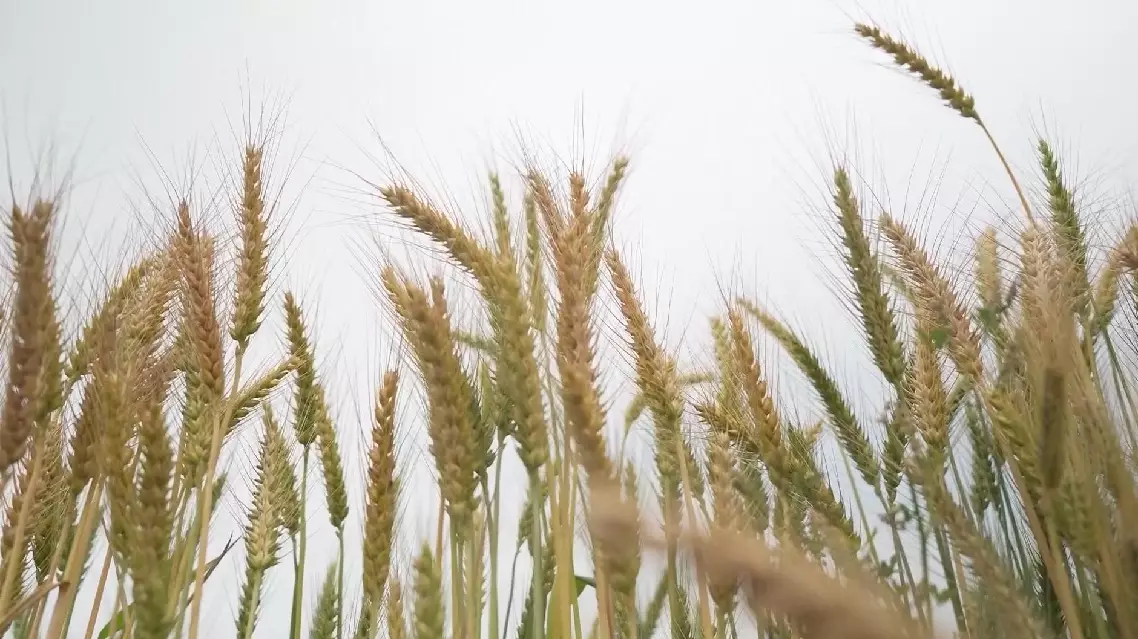
Global food price index hits highest level in 3 years in August: FAO
Amidst overlapping global challenges, international experts at the 2026 Global Governance Forum in north China's Hebei Province emphasized that rebuilding confidence and cooperation in global governance requires enhanced dialogue, the establishment of common rules in emerging fields, and a fairer, more inclusive international system that amplifies the voice of the Global South.
Held from October 23 to 25 in Xiong'an, China's "city of the future" built on the North China Plain, the forum brought together nearly 400 representatives from over 90 countries. Spanning five major sectors and 22 thematic seminars, the event provided a platform for diverse stakeholders in politics, economy, technology, culture, and think tanks to jointly address governance challenges and promote inclusive, multi-stakeholder global governance reform.
"In this conference, I met some American representatives, a remarkable businessman. I asked him, 'what are you doing here?' And he said, 'I wanted to discuss Global Governance Initiative.' I said, 'Listen, I don't believe because whatever China proposes, the U.S. will object. And he said no. And he mentioned specific subject -- AI. He said, 'I want to make my humble contribution into establishing (of) global governance in AI.' So among Americans, this idea is also receiving some understanding. More dialogue is required and I would underline the weight of this forum," said Djoomart Otorbaev, former prime minister of Kyrgyzstan.
In today's world, where deficits in peace, development, security, and governance are intertwined, rebuilding confidence and cooperation is the most scarce international public good. In response, China has proactively set the agenda to address pressing concerns, such as advancing the reform of the UN-centered governance system, cooperating on new frontiers like cyberspace, outer space, and AI, and bridging civilizational divides amidst geopolitical rivalry.
"And there were some specific initiatives which we also have discussed, which is to set the global governance for the outer space, for the deep seas, for some areas of the planet like the Antarctica, where there is various needs for more common rules. One area the world is looking for is artificial intelligence and we need to regulate globally and efficient intelligence to avoid the worst. So if we work together, we can get the benefits and make sure that we make it much more difficult to do the harm," said Erik Solheim, chairman of the EU-Asia Centre and former UN under-secretary-general and former executive director of the UN Environment Programme.
"The world has become a global village, but this global village is now fighting. There's a problem going on in the Middle East, there's a problem going on in Africa, but China is trying to promote a conclusive thing so that the world can be peaceful. Because of this Global Governance Initiative, China has been able to tell the world (that) how to work together," said Khalid Taimur Akram, executive director of the Pakistan Research Center for a Community with a Shared Future.
Since its proposal over a year ago, the Global Governance Initiative has garnered support and responses from over 160 countries and international organizations.
During the forum, China announced pragmatic measures to further implement the initiative, reaffirming its firm support for multilateralism and the core status of the United Nations, while emphasizing the need to enhance the representation and voice of the Global South in international affairs to translate the initiative from a Chinese proposal into broader international practice.
"It's that combination of defense of the games that arise from the existence of the international system, but improving it, updating it, performing it, making it fairer, particularly to the great mass of developing countries, which is why the Chinese proposals meet a lot of support, particularly from the Global South, but also from fair minded people in other countries," said Keith Bennett, vice chairman of UK 48 Group Club.
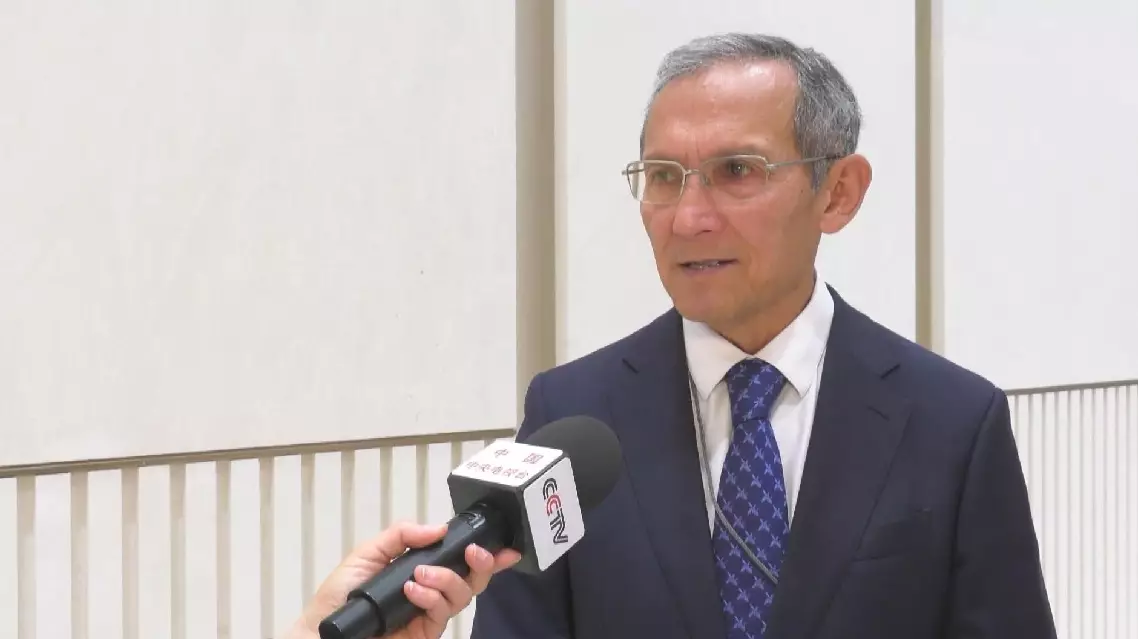
Participants of Global Governance Forum hail China's contribution to fairer international order