U.S. President Donald Trump's threat of tariff hikes on cars imported from Canada will severely impact Japanese automakers, which hold a significant share of the Canadian automotive market, according to a Japanese economist.
On August 24, Trump announced that tariffs on cars, automotive parts and steel imports from Canada will be increased to 50 percent, effective January 1, 2027.
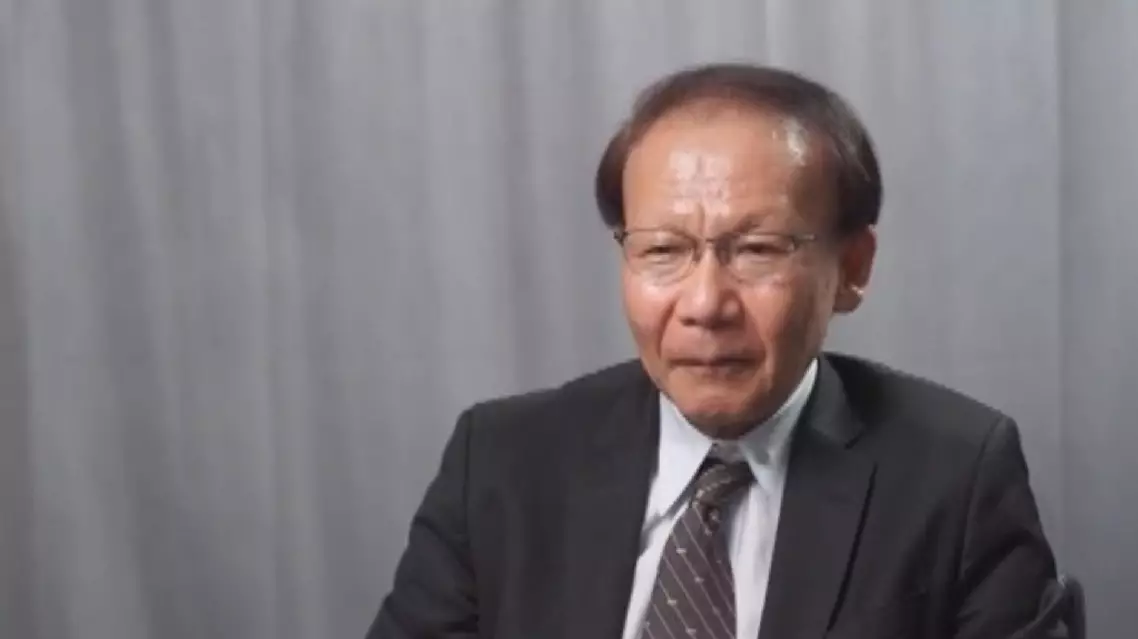
"To some extent, it can be said that Japanese automakers have already captured a considerable portion of Canada's automotive industry. These automakers aim to export to the vast U.S. market, and the United States-Mexico-Canada Agreement (USMCA) is the prerequisite for this model. The agreement stipulates that cars produced in Canada and Mexico can be exported to the United States duty-free or with significantly reduced tariffs. Now that this agreement may become invalid, it could deal a nearly fatal blow to Japan's automotive industry," said Hidetoshi Tashiro, chief economist of Japan's Infinity LLC.
Tashiro also said that a growing number of Japanese companies are beginning to reconsider and adjust their supply chains and global strategies.
"The U.S. market is no longer the overwhelmingly dominant market it once was. Therefore, from an economic perspective, Japanese automakers are very likely to shift the focus of their global operations and global strategies from North America to East Asia, with China at its center," said Tashiro.
Trump's tariffs on Canadian cars to impact Japanese automakers: economist
Trump's tariffs on Canadian cars to impact Japanese automakers: economist
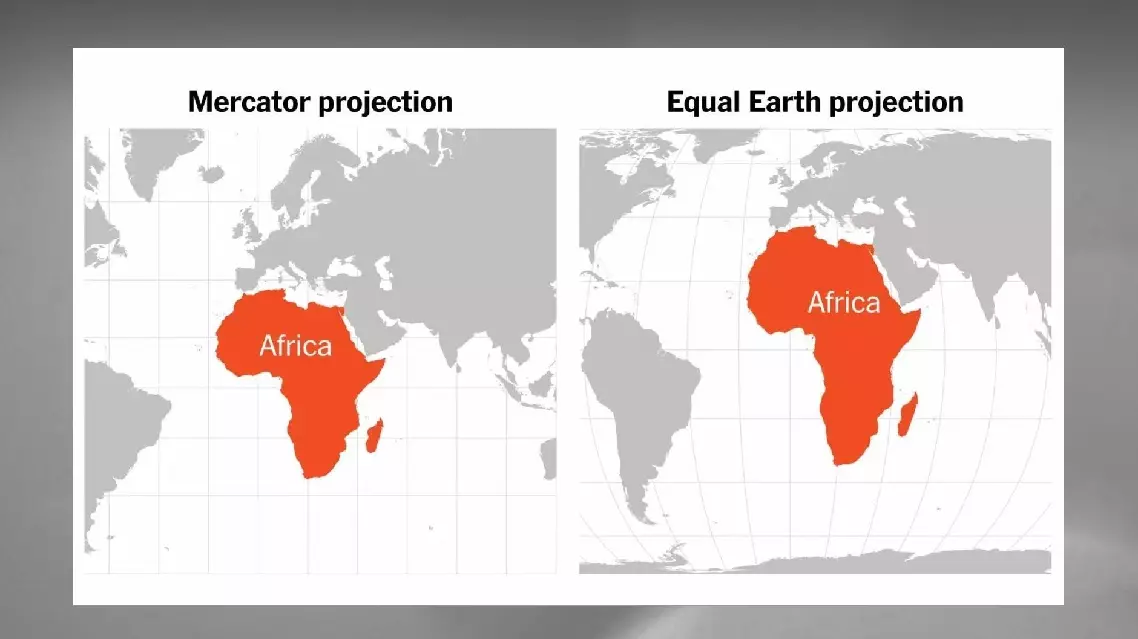
The United Nations General Assembly on Friday adopted a landmark resolution encouraging institutions worldwide to replace the traditional Mercator map with the Equal Earth projection, a move aimed at accurately reflecting the true size of Africa and other equatorial regions.
Spearheaded by Togo and backed by the African Union, the "Correct the Map" resolution passed with overwhelming international support. A total of 164 countries voted in favor, six abstained, and the United States cast the sole opposing vote.
Speaking at a press briefing at the UN headquarters in New York following the adoption, Togo's Foreign Minister Robert Dussey hailed the decision as a historic moment for global representation.
"This adoption comes at a historic moment for Africa and for the world. It affirms the need for a more accurate, more balanced, and more geographically faithful representation of our planet," said Dussey.
He noted that a map is indeed a technical tool, but is also an instrument of knowledge and representation that shapes how people and continents perceive themselves.
"Certain projection used for centuries and decades portray Africa and all the regions of the world in ways that do not reflect their actual landmass. Correcting the map, therefore, also means correcting a perception. Correcting the map means restoring to continents in the mind of people the reality of the true dimensions," he said.
Addressing the U.S. dissenting vote, the foreign minister stressed that the "Correct the Map" campaign is not directed against any nation, region, or civilization.
"We respect the decision of the U.S., but we will continue to discuss with our friends in the U.S., and we are sure we will, in terms of the implementation, why not we can work together. So, the U.S. and Africa, we have to work together for peace in the world, [which] is very important for us," said Dussey.
The resolution highlights the inherent flaws of the traditional Mercator projection, created by Dutch cartographer Gerardus Mercator in 1569. On a standard Mercator map, landmasses closer to the North and South Poles are significantly magnified, while those near the equator are compressed, creating a stark visual illusion.
The Mercator map shows that Africa and Denmark's Arctic territory Greenland appear to be roughly the same size, however, Africa's true area is 14 times larger than Greenland's.
UN adopts landmark map showing Africa's true size despite US opposition