The Panama Canal began reducing the number of ships passing through the waterway on Thursday as a severe El Nino-driven drought continues to lower water levels in the artificial lakes that feed the canal.
The Panama Canal Authority (ACP) said daily transit slots would be cut from 36 to 34 starting Sept 3, or Thursday, and be further reduced to 32 from Sept 15.
The maximum draft for vessels has also been lowered from 15.24 meters to 14.63 meters.
The restrictions come despite the arrival of the rainy season and the canal's implementation of water-saving measures.
Rainfall across the canal watershed between May and August was 34 percent below the historical average, while inflows were 44 percent lower than usual, according to the authority.
The Panama Canal handles about 5 percent of global maritime trade and around 40 percent of U.S. container traffic.

Panama Canal cuts daily vessel transits amid severe drought

Panama Canal cuts daily vessel transits amid severe drought
Leftover oil from restaurants in central China's Henan Province now can be transformed into bio-based aviation fuel via a series of upgraded procedures.
At a restaurant in Henan's Puyang City, workers collect all the swill-cooked oil with specific sealed collection buckets, and then deliver it to food waste disposal stations for further processing.
"We have processed a total of more than 50,000 tons of food waste. It is used as feedstock for industrial-grade mixed oil, with an oil extraction rate of approximately 3 percent," said Chen Yahui, director of Puxin Company's food waste disposal operation department.
The greatest significance of transforming waste oils and fats lies in their conversion into bio-based aviation fuel, turning from a common industrial waste into a high-end clean energy.
For local companies specializing in swill-cooked oil utilization, their supplies not only come from Henan, but also from other nearby provinces.
"The price of bio-based aviation kerosene rose from around 2,200 U.S. dollars per ton at the beginning of the year to about 2,500 U.S. dollars in July -- an increase of more than 10 percent in just six months. Our export volume also grew by approximately 20 percent year on year, with orders being booked through 2027," said Hu Rui, operation director of Henan Junheng Industrial Group Biotechnology Co., Ltd.
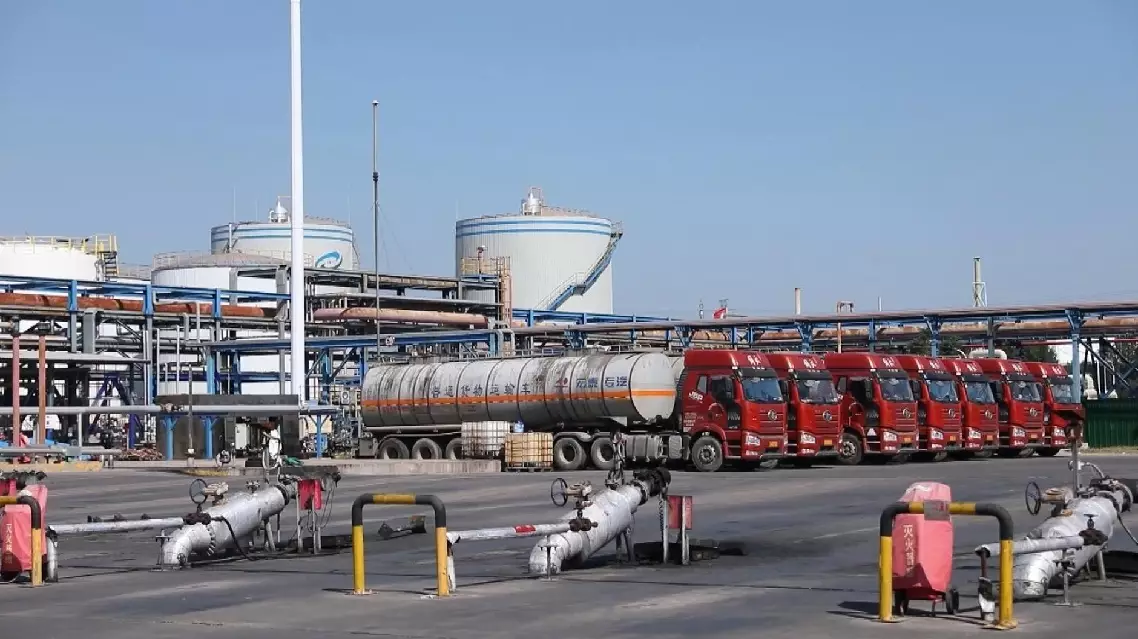
Central China province succeeds in turning swill-cooked oil into jet fuel