The 32nd APEC Small and Medium Enterprises Ministerial Meeting concluded in Guangzhou on Friday, offering a new roadmap for regional businesses to collaborate, innovate and grow.
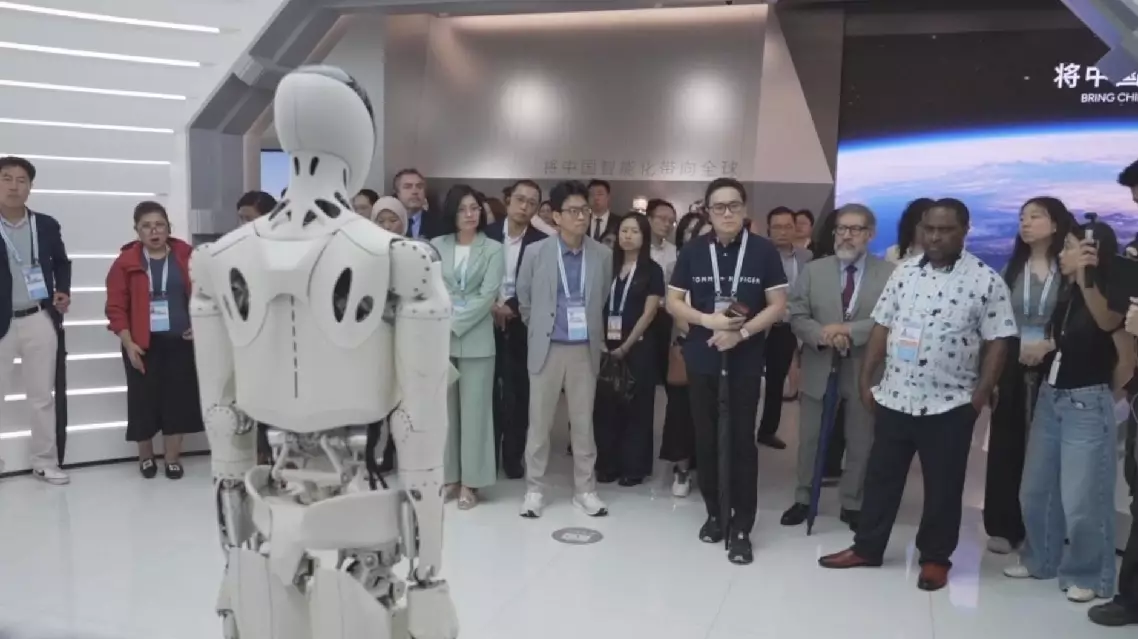
For these APEC business leaders, the path toward greater regional cooperation begins with a closer look at the companies at the forefront of innovation.
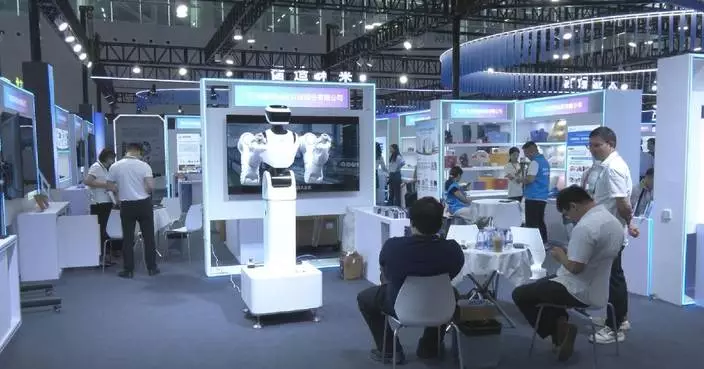
Their first stop was Chinese electric vehicle maker Xpeng, whose robotics unit recently secured 900 million U.S. dollars in a record funding round, highlighting growing investment in embodied intelligence.
"More and more SMEs want to have future-oriented technologies like AI. We need to support small and medium enterprises to have access to finance the new technologies," said Hwang Seunghyun, senior advisor of International Trade and Cooperation Division under the Ministry of SMEs and startups of South Korea.
Guangzhou is a leading manufacturing hub and is now showcasing how AI can boost industrial production through smarter and more efficient strategies.
"I'm very grateful with the APEC and China and the factory for to show us this technology. And the idea is that in Chile, someday, we can develop this kind of technology," said Henry Azurmendi, general manager of technical cooperation service of Chilean Ministry of Economy, Development and Tourism of Chile.
Digitalization and automation can help cut costs and boost productivity. But adopting such technologies is still too expensive for many SMEs.
"For Hong Kong, China, we have promoted several funding schemes and one of the most notable ones is the BUD Fund, which basically helps our enterprises to conduct e-commerce businesses in terms of branding, operating and transformation," said Sunny Chan, assistant director-general of trade and industry of the Hong Kong Trade and Industry Department.
SMEs are a major pillar of the regional economy, accounting for 97 percent of all businesses across the APEC region.
China's experience in supporting SMEs' digital transformation offers one example. The latest move came on Friday, when the Ministry of Industry and Information Technology released an action plan to support AI entrepreneurship among SMEs for 2026-2028. The plan aims to foster more than 10,000 technology-based and innovative SMEs, more than 2,000 "little giant" firms, as well as a number of gazelle companies and unicorns.
Beyond domestic efforts, China is also seeking to extend AI cooperation through technology sharing and practical collaboration. Experts suggested that applying these practices across the wider Asia-Pacific will require necessary infrastructure, policies and other conditions.
"You need reliable electricity, good roads and transportation, a supportive business environment, and stable labor relations. Companies can also work with universities on their practical needs. And the Chinese government is encouraging SMEs to leverage the supply chains of larger companies," said Li Bing, deputy director of the National Development Research Institute of Sun Yat-sen University in Guangzhou.
Asia-Pacific SMEs seek new growth through AI, deeper connectivity