The Asia-Pacific Media Forum (APMF) opened in the tech hub of Shenzhen in south China on Saturday, bringing together more than 400 representatives from media, think tanks and government sectors across 42 countries and regions, as well as United Nations agencies and other international organizations.
The forum, a key part of the APEC "China Year" activities, comes just over two months before the 33rd APEC Economic Leaders' Meeting, which is also scheduled in Shenzhen.
The forum is themed "Building a Path to Shared Prosperity for the Asia-Pacific Community: Media Consensus and Action," with discussions centered on openness, innovation and cooperation.
In separate interviews with China Media Group, participants shared their expectations for the forum and their views on China's media and technological development.
"This forum provides us [with] an opportunity to share experiences, to share our knowledge, to share the policies of our media. We have agreements with CMG (China Media Group), we have agreement with CGTN (China Global Television Network). China has achieved excellence in media also, so they can also share their experience with the Asia-Pacific countries," said Aman ul Haq, international relations director of Pakistan Television Corporation (PTV).
"So if they can address to the people, then they can bring the people together. And if the people come together, I think that's much better in terms of creating friendship and relationship and it becomes a lasting one. So the forum can do a lot," said Imtiaz Ahmed, executive director of the Bangladesh-based think tank Center for Alternatives.
Ahead of the forum, participants toured several cities in the Guangdong-Hong Kong-Macao Greater Bay Area city cluster, including Guangzhou, Zhuhai and Zhongshan, in south China.
A sci-tech innovation exhibition was also on display at the forum venue, where participants can gain a firsthand look at China's advanced technologies and spoke highly of the country's high-quality development achievements.
"The Russian National Media Group (NMG) is basically focused now on the well issue of AI cooperation. So we plan to have a representative office here in Shenzhen, and it is in Shenzhen because this is the technological capital of China," said Alexey Urazov, international cooperation director of Russia's NMG.
The forum was co-hosted by the Publicity Department of the Communist Part of China Central Committee, the Xinhua News Agency and the Guangdong provincial government, and organized by the Shenzhen municipal government.
At the opening ceremony, 16 founding organizations from China and abroad jointly formed the Organizing Committee of the Asia-Pacific Media Partnership Program.
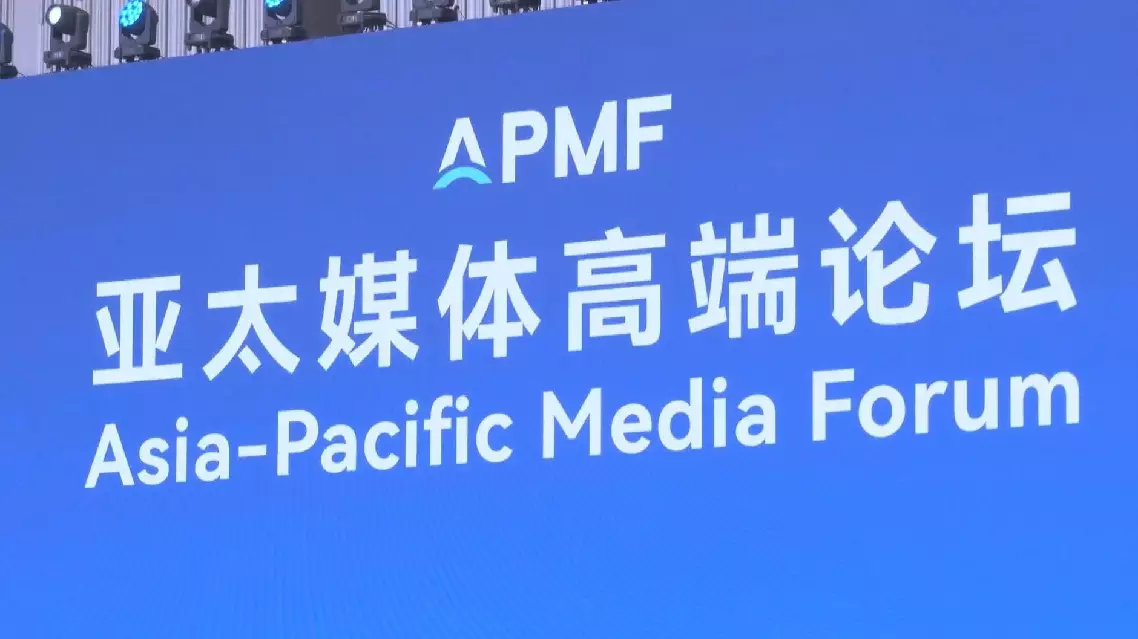
Asia-Pacific media forum opens in Shenzhen ahead of APEC leaders' meeting
As the world grapples with multiplying crises and a dangerous decline in international trust, a senior Uzbek lawmaker has called for greater unity and multilateral cooperation to tackle shared crises.
Sodiq Safoyev, first deputy chairman of the Senate of the Oliy Majlis (national parliament) of Uzbekistan, said the world is navigating a complex era of "polycrisis" marked by wars, pandemics, and growing division, and that the response should not be to create new dividing lines, but to unite people and act collectively.
"Today we're living in a difficult time worldwide. Even some academicians defined the contemporary world as in a time of polycrisis or simultaneous occurrence of several catastrophic events, indeed, wars, pandemia, fragmentation of the world. And I think that it's a time not to create new division lines, but to unite the people and act together, vis-a-vis global challenges. I think that such an idea, proposed by his Excellency, Chairman [President] Xi Jinping, is very important, because it brings very clear idea that today we need to build cooperation and to think about the next generation's destiny, to save the earth from the challenges which we have," said Safoyev.
Safoyev also pushed back against the notion that deglobalization has taken hold, saying that international trade, information flows, and migration remain unstoppable. However, he warned that rising interconnectedness has been accompanied by a dangerous decline in mutual trust and understanding.
"Some people think that the process of deglobalization has started. I don't think so. I don't think that it's possible to stop international trade, flow of information, migration of people who want to study abroad, who want to work abroad. Globalization is not stopping and that's why interconnectedness of the nations only increases. But at the same time, simultaneously, we're absorbing diminishing of trust and understanding. It's a very dangerous combination. We connected, but we don't understand each other," said Safoyev.
Acknowledging that international organizations fail to meet public expectation in resolving conflicts, Safoyev said that regional mechanisms such as the Shanghai Cooperation Organisation (SCO) and cooperation between China and Central Asian countries offer models for effective cooperation.
"And I think that international organizations today are not matching expectations of the people in the regard with preventing conflicts, preventing the problems and resolving them. And it's the most challenging issues of the contemporary world. And I think that's why the experience of Shanghai organizations [the Shanghai Cooperation Organization] and cooperation between China and Central Asian countries is very important to demonstrate that it's possible," said Safoyev.
He also said that Central Asia serves as a prime example of overcoming fragmentation and uniting, as the region has transformed from one plagued by border disputes, suspicion, and resource conflicts a decade ago into a cohesive, cooperating bloc.
"From the more positive side, I'd like to note that the situation in Central Asia is something which might give us some more optimism. Twenty years ago, even 10 years ago, Central Asia was divided, divided by suspicion, divided by unresolved issues like unresolved borders, many conflicts of interest in the regard with the using the water resources of the transnational water resources etc. Today, in a relatively short time, period of time, Central Asia became completely different, more and more consolidating, uniting, having joint approach to the regional problems. And that's why Central Asia started to lure more attention worldwide. We're seeing that [there are] more interests of the global actors with the Central Asia, and I think that it demonstrates to the whole world that it's possible today now to overcome fragmentation and to unite. And that's why we, as usual, have both some concerns. But at the same time, we must be optimists in looking ahead," said Safoyev.
He also said that wisdom of humanity and visionary leadership inspire optimism that building future of common shared destiny is possible.
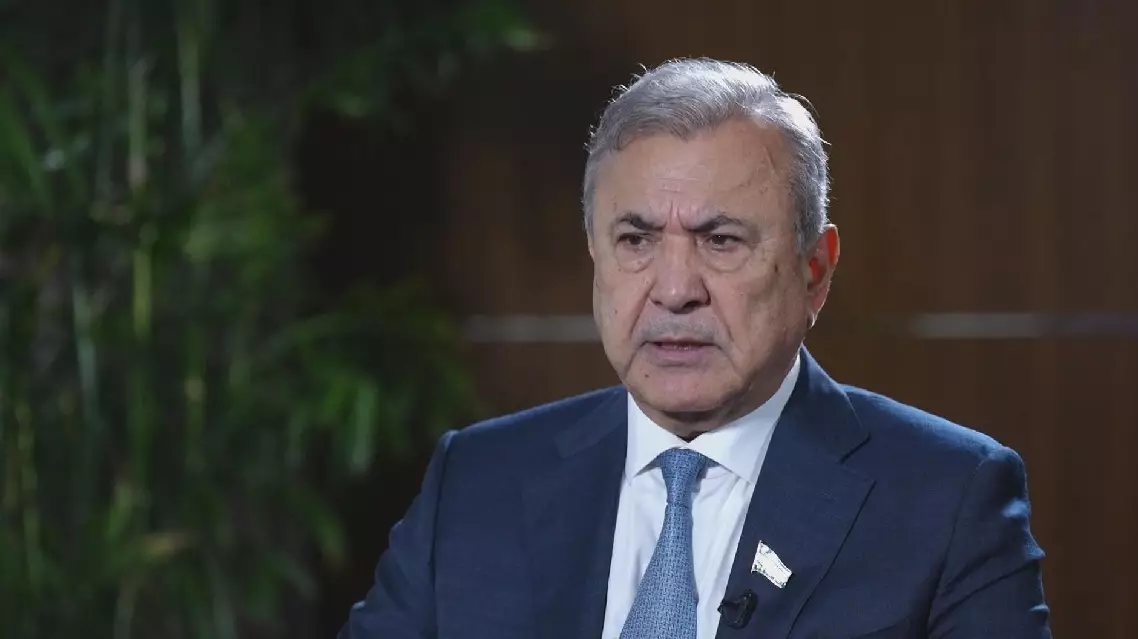
Senior Uzbek lawmaker calls for regional unity, cooperation amid global "polycrisis"