China unveiled a new action plan on Friday aimed at supercharging artificial intelligence (AI) entrepreneurship among the country's small and medium-sized enterprises (SMEs) by 2028.
Released by the Ministry of Industry and Information Technology, the plan sets ambitious goals for cultivating a new generation of AI-driven companies across key sectors, including AI-related industrial applications, data services, and intelligent computing infrastructure.
Under the plan, the government aims to nurture more than 10,000 AI-focused SMEs and help over 2,000 companies achieve "little giant" status, a designation reserved for highly specialized, sophisticated firms with strong market positions.
The initiative also envisions the emergence of a wave of high-growth "gazelle" companies and "unicorn" startups in the AI space.
To build the ecosystem needed to support these goals, the plan calls for the construction of 10 high-standard technology enterprise incubators and 10 national-level public service demonstration platforms for SMEs. In addition, 10 new national-level SME industrial clusters with distinct AI specializations will be established.
Moreover, the plan will guide local authorities in optimizing talent evaluation systems to help startups attract and retain top-tier professionals.
It also proposes providing low-cost computing power to early-stage ventures and building a comprehensive patience capital support system to ensure long-term financial backing for AI startups.
This directive forms a central pillar of China's broader 15th Five-Year Plan (2026-2030), which prioritizes technological self-reliance, supply-chain resilience, and the widespread deployment of the national "AI plus" initiative.

China unveils ambitious plan to cultivate over 10,000 SMEs in AI sector

China unveils ambitious plan to cultivate over 10,000 SMEs in AI sector
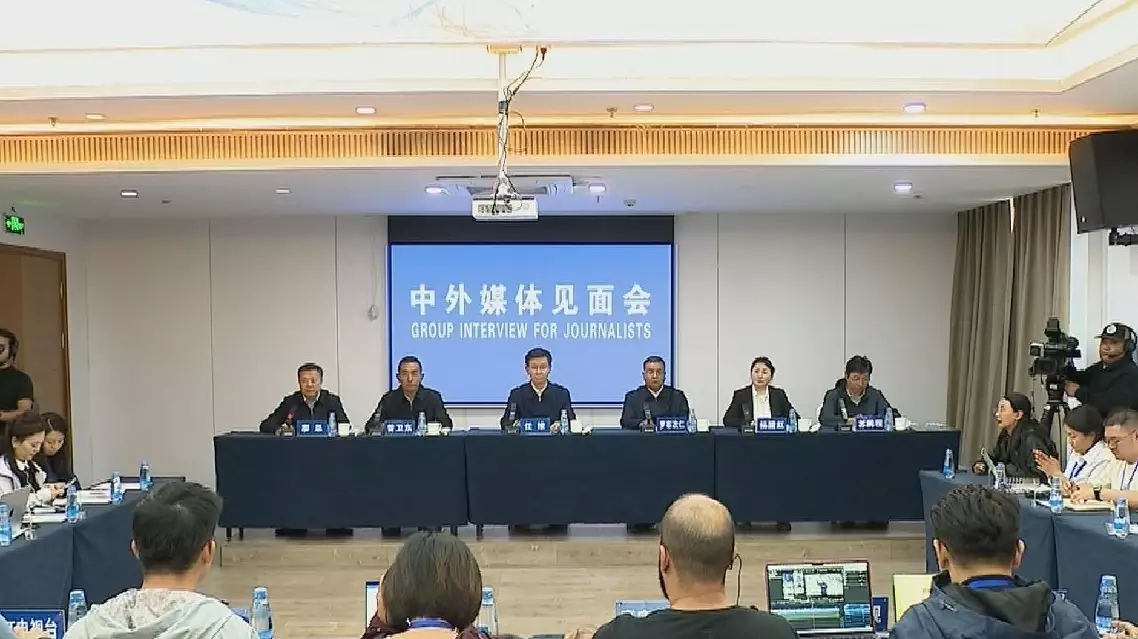
Glacial lakes of the Donglin Zangbo River Basin in Gyrong County of southwest China's Xizang reveal no abnormal changes after the area was struck by a massive mudslide on August 26 as satellite remote sensing monitoring has detected, an official said at a press conference in the county on Sunday.
The fast-moving chain mudslide, triggered by a high-altitude glacier collapse on the Nepalese side, struck the Gyrong Port on the China-Nepal border on August 26, and had left 43 people dead and 519 others missing as of 18:00 Saturday, according to the press conference.
At an elevation of 5,140 meters, a glacier spanning 620,000 square meters located in the upper reaches of the Cuojian River broke off. The collapsing ice rapidly swept up loose rock and debris along its path, flowing into the Guobaxiaqu River, a boundary river between China and Nepal, before joining the Donglin Zangbo River.
After the mudslide disaster, Chinese experts conducted continuous satellite monitoring of 11 glacier lakes each with an area of more than 0.1 square kilometers across the Donglin Zangbo River Basin. At the press conference, authorities confirmed these lake areas remain normal.
Norbu Tsering, deputy head of the emergency rescue headquarters and acting mayor of Xigaze City, said that in recent years, Xizang has organized comprehensive surveys of its glacier and glacier lake resources using multi-source remote sensing images, field investigations, and reference data from glacier-related research.
"Surveys show that there are over 33,000 glacial lakes across Xizang. Following the principle of 'targeted priorities and precise risk prevention,' we have prioritized 187 high-risk glacial lakes for satellite remote sensing monitoring, and conducted ground-based monitoring and drone surveillance on 49 extremely high-risk lakes of them," said Norbu Tsering.
He noted that they have established an interdepartmental data-sharing mechanism among meteorological, hydrological, natural resources, and emergency management agencies, and have put in place a system of regular expert consultations for glacial lake risk assessment. A short-term early warning "call-response" mechanism was also set up, along with emergency evacuation protocols. Regular drills are conducted for residents living downstream during the flood season.
"However, this ice-rock collapse erupted all of a sudden, which is extremely unusual in nature, and it is hard for current observation and monitoring methods to precisely capture precursor signals before the event. In the wake of the August 26 mudslide in Gyirong County, we have mobilized expert teams and technical resources to conduct continuous satellite remote sensing monitoring of 11 glacial lakes each with an area of more than 0.1 square kilometers in the Donglin Zangbo River Basin. To date, no abnormalities have been detected in their surface areas. As the disaster occurred on the Nepalese side, broader monitoring and early warning efforts will require enhanced cooperation among all relevant countries," said Norbu Tsering.
Glacial lakes in Donglin Zangbo basin show no abnormal changes