Beyond sightseeing and dining, international tourists visiting Shanghai are adding a new stop to their itineraries: hair salons. From precision haircuts to custom coloring, personalized styling services are emerging as a fresh and increasingly popular way for visitors to experience the city's vibrant local life.
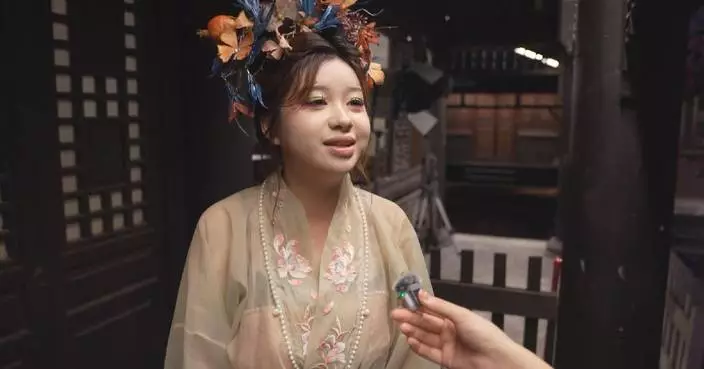
Swiss tourist Elif and her friend booked a salon on social media before even arriving in Shanghai for their 10-day trip, eager to try an Asian-inspired look.
"I saw multiple videos and this place was much more accessible, like we could tell that they had other foreigners here and so it was easy to communicate because they also speak English," she said.
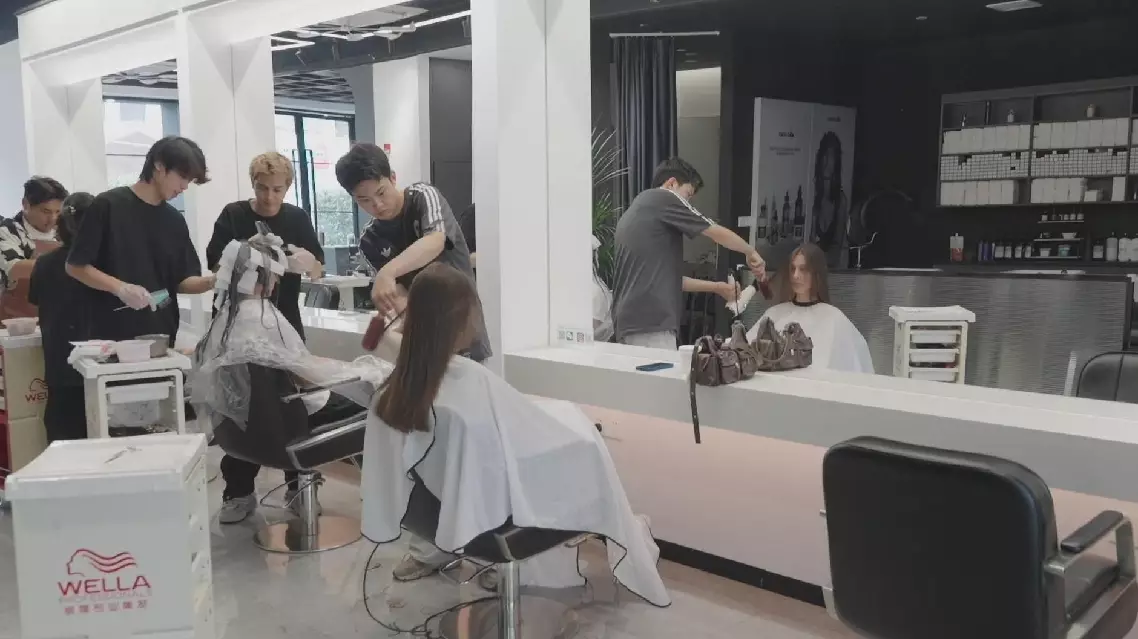
After an in-depth consultation, the stylist designed layers, curls, and bangs tailored to Elif's face shape, hair texture, and everyday wardrobe -- a level of personalization she said is hard to find back home.
"It will cost me a little bit less than half the price of what I would pay in my country," she said.
The salon is located on Laowai Street in Shanghai's Minhang District, a neighborhood long popular with expatriates. As inbound tourism continues to surge, the number of foreign clients has grown noticeably.
"We have clients from Europe, the Middle East and South Africa. We've seen a clear increase in foreign tourists, with about 20 to 30 foreign clients coming in each month," said Li Menghua, the salon owner.
To cater to the diverse needs of international customers, who vary widely in hair texture and aesthetic preferences, the salon offers one-on-one styling sessions. Staff also receive regular English training to ensure smooth communication.
Li now has over 8,000 foreign clients stored in his contacts, complete with notes on their names and styling preferences. Many have become regulars, returning every month or two; others make a point of visiting every time they travel to Shanghai on business.
"I started to see him last year, they speak English and the service is really good and he knows a lot about foreigners' hair," said Julie, a tourist from France.
Shanghai's hair salons become must-try for inbound tourists
The 21st China International Small and Medium Enterprises Fair (CISMEF) concluded on Sunday in Guangzhou, south China’s Guangdong Province, offering a dedicated platform for participants from APEC member economies to explore artificial intelligence (AI) innovation and cooperation.
The event was held alongside the just‑ended 32nd APEC Small and Medium Enterprises Ministerial Meeting.
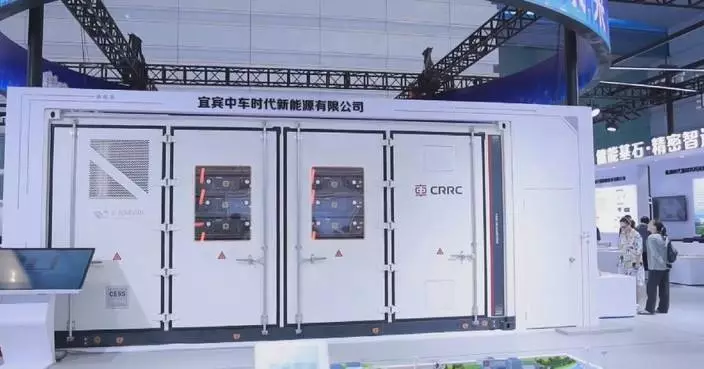
This year's fair this year attracted more than 2,000 companies from 43 countries and regions presenting their latest innovative achievements at over 3,700 booths on site. Exhibits spanned a wide range of cutting-edge sectors, including artificial intelligence (AI), new energy, new material and biomedicine.
The international pavilion brought together 510 enterprises from 43 countries, regions and international organizations, and for the first time featured a dedicated exhibition area for APEC member economies. Many exhibitors shared a common goal of seeking partners to drive digital and intelligent transformation.
"We've been to many different shows through China, and we often talk to people involved in artificial intelligence (AI) and robotics and how we can integrate with them. You could have a sensor in our cushion. So AI might cause the seat to have a little electronic motors that move the shape. So it's better for that person's posture," said Brian Jamieson, president and CEO of Vigurus Technologies Inc., a Canadian company located in Toronto.
A Russian exhibitor highlighted the company’s interest in forging partnerships at the fair.
"There are many companies, big and small companies who produce AI solutions. And we found a lot of companies who would like to cooperate with us. So now we are going to create new program that can indicate the fire when it just starts and people can just get notification in their phones," said a project manager of the AFES, a Russian company.
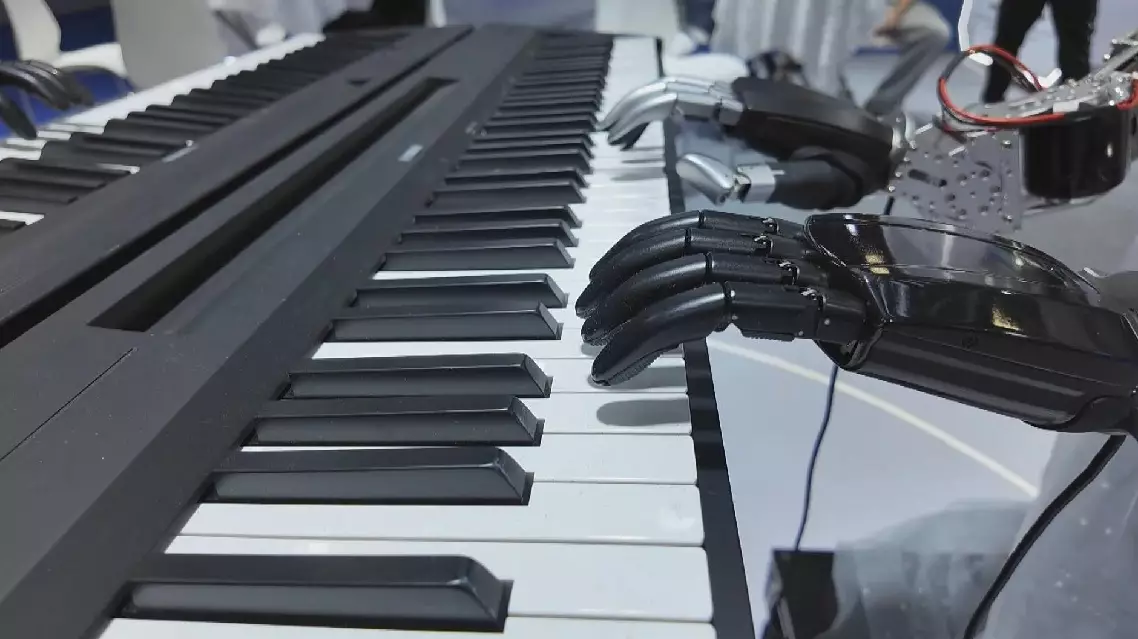
Chinese exhibitors highlighted advanced AI applications at the fair, showcasing how embodied intelligence is being applied in industrial settings.
"Its flexibility, precision, and the entire long-sequence task -- these are difficult challenges to overcome in the embodied AI field. In current real application scenarios, we are focusing on industrial settings related to automotive wiring harnesses and assembly. We previously set a Guinness World Record for assembling the most wiring harnesses, over 100 within one hour. This technology can be integrated into different industrial scenarios of small and medium-sized companies, helping them achieve digital transformation and AI transformation in the future," said Cui Dacheng, brand marketing manager of TARS, or Tashi Zhihang Technology Co., Ltd., based in Shanghai.
Themed with "AI Empowering SMEs," this edition of the fair ran for four days, and set a major focus on how AI is accelerating transformation among small and medium enterprises.
Guangzhou fair helps APEC economies to explore AI innovation