Skip to Content Facebook Feature Image

Iran establishes economic war headquarters to deal with US sanctions

HotTV

HotTV

HotTV

Iran establishes economic war headquarters to deal with US sanctions

2026-09-09 17:07 Last Updated At:18:46

Iran's Ministry of Economic Affairs and Finance recently announced the establishment of an "economic war headquarters" to improve coordination and expedite efforts to address economic challenges arising from wartime conditions.

The measure comes as Iran, in addition to facing decades-long sanctions, sustained considerable economic damage from U.S. and Israeli strikes that started on Feb 28. The country has also been under a U.S.-imposed naval blockade for the past few months and recently faced intensified economic pressure from the U.S.

Last month, U.S. President Donald Trump announced "the most crushing economic operation ever taken" against any country, stressing that this will be economic warfare and isolation "on an unprecedented scale."

Iran's Deputy Economy Minister for Economic Policymaking and Strategy, Morteza Zamanian, said the economic war headquarters' primary focus is on the economy ministry's responsibilities and authority.

It seeks to accelerate efforts to resolve wartime problems facing Iranian businesses, trade, financing operations and other economic sectors, he said.

He noted that some issues are beyond the ministry's authority and require coordination among various government bodies and follow-ups at the highest levels.

Iran's recent priority is to ensure the supply of essential goods and medicines.

The Plan and Budget Organization head Seyed Hamid Pourmohammadi said the country has developed a plan and is drawing on resources from the National Development Fund to replenish these strategic reserves.

Seyed Ali Madanizadeh, Iran's Minister of Economic Affairs and Finance, also noted that the government has mobilized its financial system and bond market to provide liquidity to enterprises affected by the conflict.

Iran is further working to reduce logistics costs by streamlining customs procedures. Zamanian noted that the government is revising some customs regulations and minimizing vehicle delays at border crossings.

The country is also accelerating efforts to diversify its trade, transport, and settlement channels, actively advancing international initiatives such as fostering banking cooperation and facilitating trade and investment, and has proposed using economic diplomacy as a tool to counter U.S. sanctions.
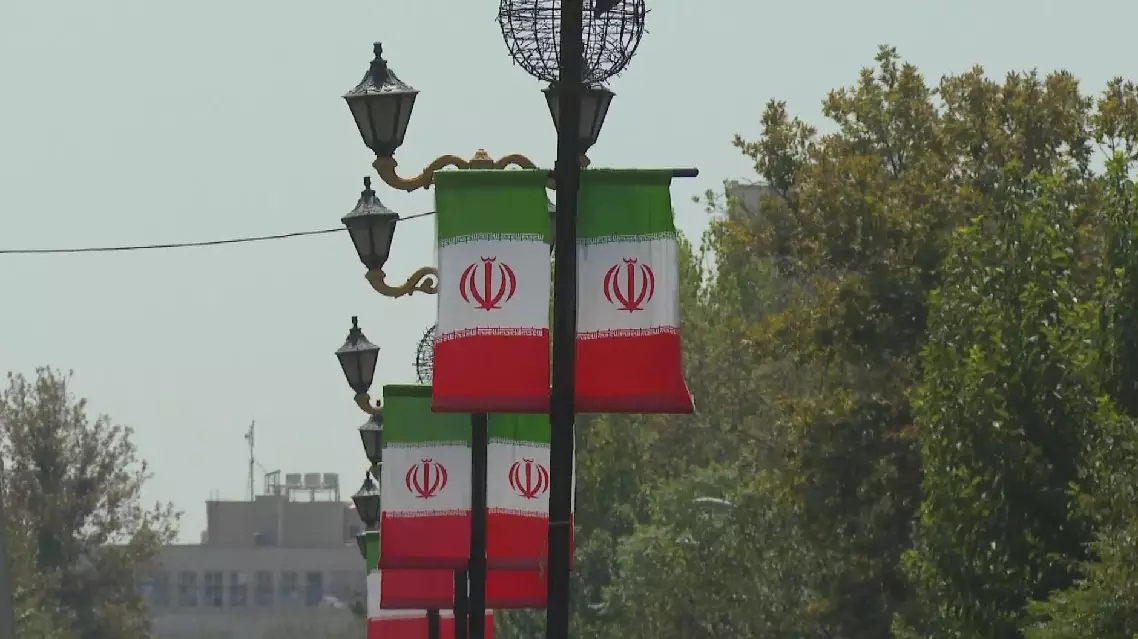
Iran establishes economic war headquarters to deal with US sanctions

Iran establishes economic war headquarters to deal with US sanctions

The war in Gaza has forced tens of thousands of Palestinian children out of school and into hard labor to help support their families, leaving many struggling to survive amid widespread displacement and devastation.

The conflict has driven a deepening humanitarian crisis that leaves children without the basic rights to life, education, health, and safety that United Nations member states are committed to upholding.

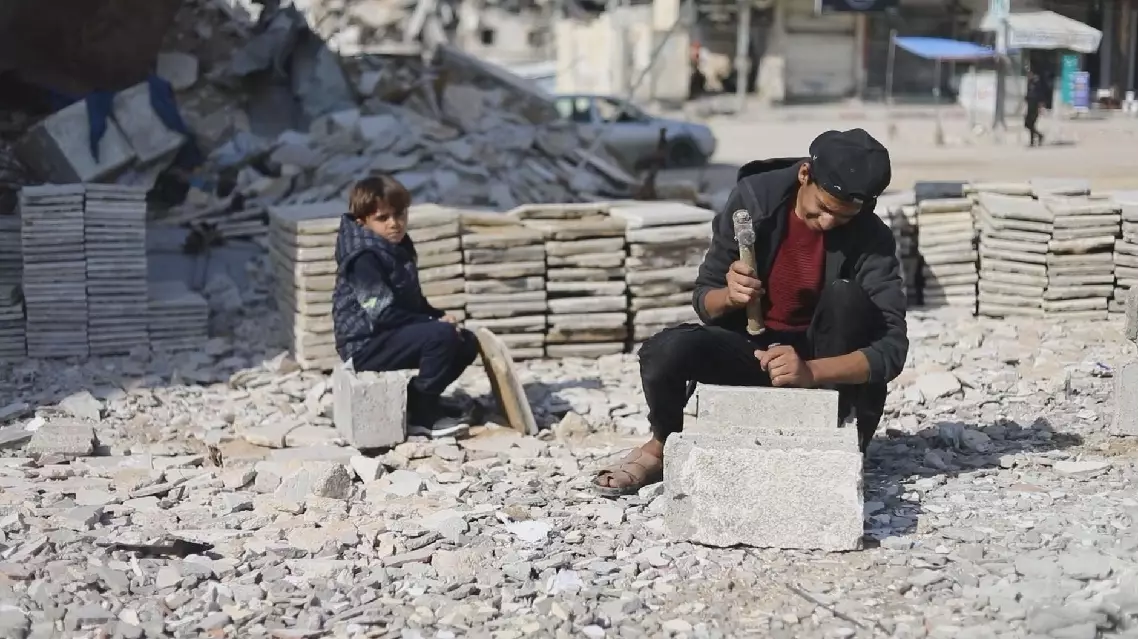
Among them is 15-year-old Ahmed Al-Zabda, struggling to make a living amid the devastation. He spends his days chipping cement away from stones and tiles salvaged from destroyed homes.

Displaced from Gaza City's Shujaiya neighborhood, Ahmed was forced to leave school to help provide for his family. His experience reflects the growing hardship facing children whose families have lost both their homes and their livelihoods.

"I go to work at seven in the morning and stay until after sunset. I have no choice because I need to earn a living and help my family with expenses. At night, I can't sleep because my back, legs and hands hurt. I face many difficulties doing this work," said Ahmed.

For Ahmed, school has been replaced by hard labor, reflecting how the war has disrupted the lives of children across Gaza.

"Anyone my age should never have to do this kind of work. They should be studying at school or playing and enjoying their freedom. But here, at this age, we have no freedom. Either you work, or you have nothing to eat," he said.

As the family endures increasingly difficult living conditions, Ahmed's mother struggles to provide for her children while holding on to the hope of a better future for her son.

"I don't want to see him work. I wanted him to continue his education because he was an excellent student, one of the top in his class. But his siblings are still young, and he helps us cover their expenses," she said.

UNICEF estimates that around 800,000 displaced children in Gaza are living in dire conditions, many sheltering in tents or damaged buildings without access to basic necessities.

For children like Ahmed, the struggle to survive has come at the cost of their education and childhood, as the burden of supporting their families falls on shoulders far too young to bear.

Gaza’s humanitarian crisis forces children out of school, into hard labor

Gaza’s humanitarian crisis forces children out of school, into hard labor

Recommended Articles