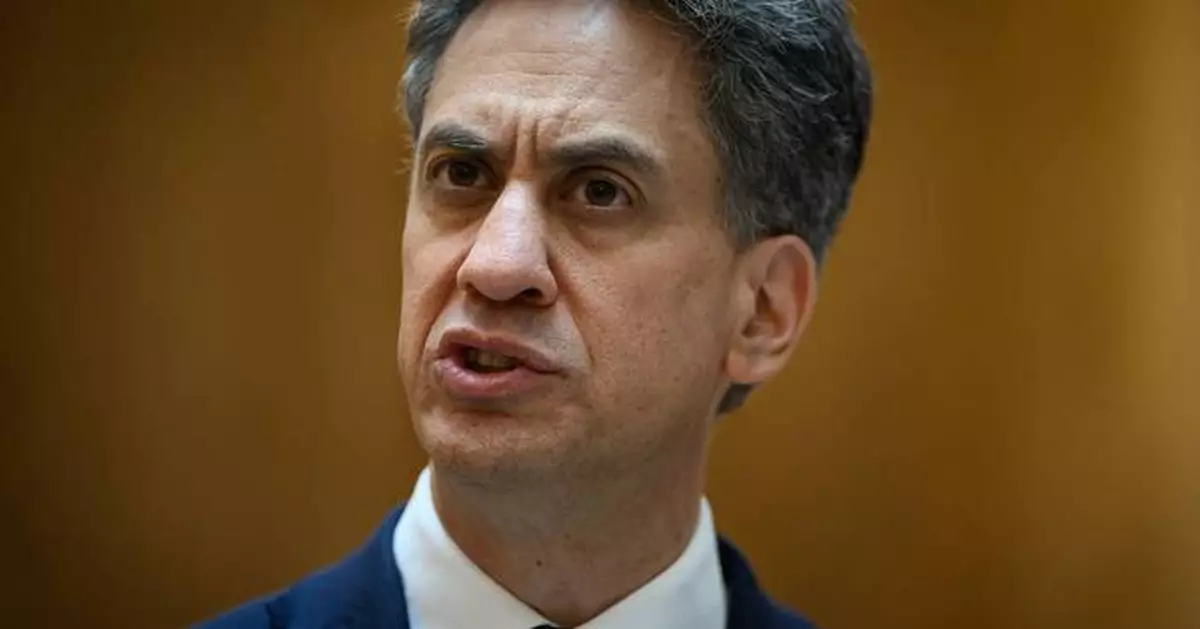
LONDON (AP) — British Foreign Secretary Ed Miliband said Wednesday he was disappointed with Israel’s response to the government's decision to ban trade with Israeli settlements in the occupied West Bank, and rejected criticism from the U.K.'s chief rabbi.
Israel responded Tuesday by closing the British consulate in east Jerusalem and banning 11 lawmakers from the country.
“I regret what the Israeli government has announced, but I’m proud of what we did yesterday and it was the right thing to do,” Miliband told Sky News.
The U.K.'s tougher stance was followed by France and Canada's leaders saying they would take similar action to prevent expanding settlements and growing violence from making it impossible to establish a future Palestinian state.
Miliband said “settler terrorists” were carrying out “ethnic cleansing” of Palestinians in the U.K. government's biggest pushback to Israel since it recognized Palestinian statehood a year ago. He said there had been “houses bulldozed, roads and public infrastructure destroyed, families displaced from their homes.”
Israeli Foreign Minister Gideon Saar condemned the “despicable” move and said Israel would expel U.K. representatives from a joint military center monitoring the Gaza ceasefire and end U.K. training of the Palestinian Authority’s security forces in the West Bank. In addition, Israel barred entry to a dozen British lawmakers and other U.K. citizens whom Sa’ar said were “involved in antisemitic and anti-Israel activity.”
Ephraim Mirvis, the chief rabbi in the U.K., accused the government of “gesture politics” that would bolster “the very extremism they seek to target.”
Miliband, who is Jewish, said he respected Mirvis but disagreed with him.
“We all need to do more to tackle antisemitism, but I believe we can do that and stand up for British values,” he said.
The ban covers imports of all goods from the settlements and bars companies from providing services for the settlements, including financing, construction, infrastructure, real estate and advertising. It will take effect in up to nine months.
Denmark, Finland, Iceland, Poland, Portugal and Sweden have pledged to “support further action,” Miliband said. The Netherlands, Ireland, Belgium, Spain and Norway have either banned goods from settlements or are in the process of doing so, he said.
Miliband also tightened Britain’s embargo on weapons sales to Israel for use in Gaza to include arms “that materially contribute to the occupation” of Palestinian territories.
The economic impact is likely to be limited, since the settlements produce only a small amount of largely agricultural exports. But the move is a symbolic expression of displeasure with Israel by some of its closest allies, and it offers a new sign of the Israeli government’s growing isolation as a result of the Gaza war.
Under Israeli Prime Minister Benjamin Netanyahu 's ultranationalist government, settlement construction in the West Bank — seized by Israel in the 1967 Mideast war — has surged. Netanyahu’s government views the West Bank as the biblical and historical homeland of the Jewish people and is opposed to the creation of a Palestinian state.
The international community overwhelmingly considers such construction to be illegal. Britain and other countries have voiced particular concern about the E1 settlement project approved by Israel, which would effectively cut the territory in two.
There have been marked increases in attacks by settlers on Palestinians, evictions from Palestinian towns, Israeli military operations and checkpoints that choke freedom of movement, as well as several Palestinian attacks on Israelis.
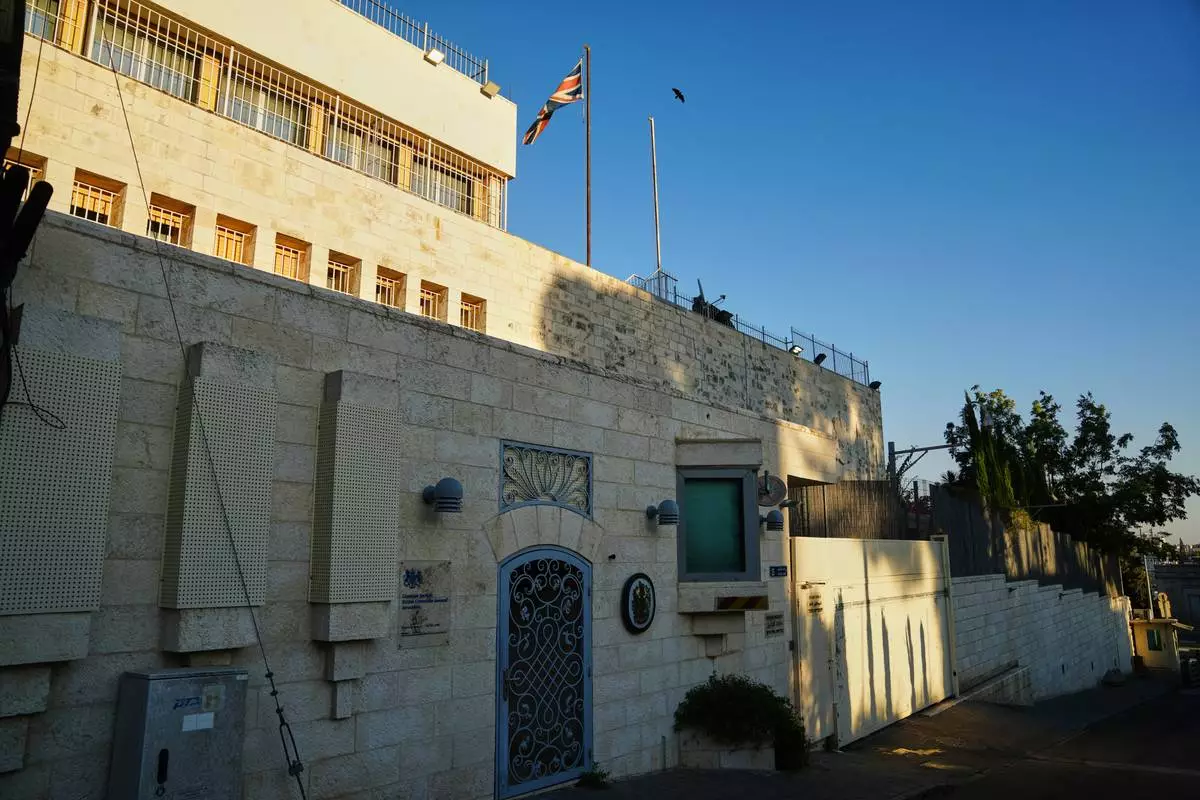
A view of the the British Consulate in east Jerusalem after Israeli Foreign Minister Gideon Sa'ar announced that Israel would close the facility in response to U.K sanctions on Israeli settlements in the West Bank, Tuesday, Sept. 8, 2026. (AP Photo/Mahmoud Illean)
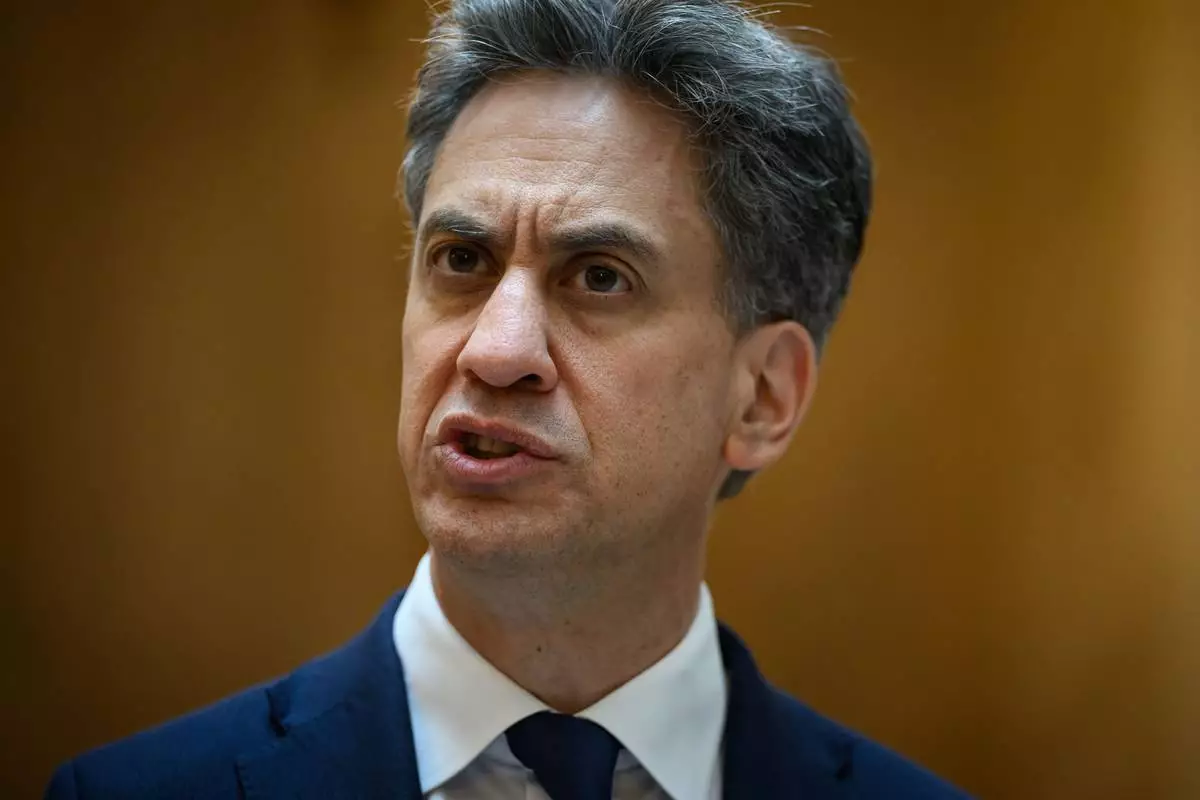
FILE - Britain's Foreign Secretary Ed Miliband speaks during a press conference in Madrid, Spain, on July 29, 2026. (Leon Neal/Pool Photo via AP, File)
BELGRADE, Serbia (AP) — Serbia's President Aleksandar Vucic on Wednesday called an early parliamentary election for Oct. 25 after nearly two years of street protests that have rattled his rule.
He issued a decree dissolving the 250-member Parliament and paving the way for the vote. He said a snap election was necessary because of ongoing tensions and divisions in the Balkan country.
Vucic, who cannot run for another presidential term, has said he plans to run for prime minister instead.
“We have had … huge turbulences,” Vucic said in an address. “We need election results that will clearly show the will of the people and the direction where Serbia is going.”
The ballot will be held against the backdrop of heightened political tensions as ruling populists seek to hold on to power despite widespread popular discontent.
The street protests started after a train station tragedy on Nov. 1, 2024, killed 16 people in northern Serbia. The protesters demanded accountability for the concrete canopy collapse in the city of Novi Sad and an end to the corruption they blame for substandard renovation work.
Almost daily demonstrations, sometimes drawing hundreds of thousands of people, shook Vucic more than at any time since he came to power in 2012. Protesting students have demanded early parliamentary elections for over a year, but Vucic has apparently waited until he felt strong enough to run.
The president and his right-wing Serbian Progressive Party have been accused of curbing democratic freedoms and of ties to organized crime, which he has denied. Serbia’s bid to join the European Union has stalled under Vucic, who has maintained close ties with both Russia and China.
Vucic has faced additional EU pressure in the past week over the public homage to war criminal Ratko Mladic, the former Bosnian Serb army commander, who was buried as a hero in Serbia on Monday despite his conviction for genocide by a U.N. court.
The student-backed election list for Parliament is expected to include university professors and experts. The movement has gained huge support among the 6.5 million voters in Serbia, many of them disillusioned by mainstream politicians.
Several right-wing and center-left opposition parties will also run.
As Vucic announced the election, the students' movement posted on social networks that “it is time for victory!”
Vucic has pushed hard against the protesters, sparking international concern over police violence and arbitrary detentions. He has accused the students and professors behind the protests of an intention to “destroy the state.” Hundreds of people have been detained or lost their jobs for supporting the protests.
Vucic reiterated on Wednesday that “it would be wrong to assume” that political tensions were the result of disagreements in Serbia alone. He said that “we have had unrest and clashes and a divided society with considerable interference of foreign powers.”
He did not specify which alleged foreign powers nor offer any evidence for his claims. He urged voters to make their choice in a “peaceful and dignified way.”
Student Filip Gajic said “people are optimistic — that is why I think that a change is possible.”
Belgrade resident Danica Ercedi said she expected Vucic to win, “and nothing else.”
Vucic has said he will resign the presidency in the coming weeks so he can join the campaign for the parliamentary vote. He cannot run for president again after serving two almost full terms. An early presidential election will be held separately.
Analysts say the so-called Students’ List presents a serious challenge to the ruling populists. Dejan Pavlovic, from Belgrade’s Faculty of Political Sciences, drew a comparison with an election this year in Hungary that swept from power another authoritarian, Viktor Orbán.
Pavlovic said a scenario might unfold “similar to (the) Hungarian one, where the challenger, without the media support, without the resources, still manages to provide (a) very persuasive win.” Pavlovic said Vucic “offers a lot, he promises a lot and presses voters.”
The populists have gradually taken over Serbia’s institutions and mainstream media after coming to power in 2012.
A local election in Serbia earlier this year was marred by violence, including against journalists, drawing international concern. Observers during a 2023 parliamentary vote also reported multiple irregularities that included media bias, group voting and misuse of public resources in favor of the ruling party.

FILE - Serbian President Aleksandar Vucic waves a Serbian flag during a rally of the ruling Serbian Progressive Party (SNS) in Belgrade, Serbia, on June 27, 2026. (AP Photo/Darko Vojinovic, File)