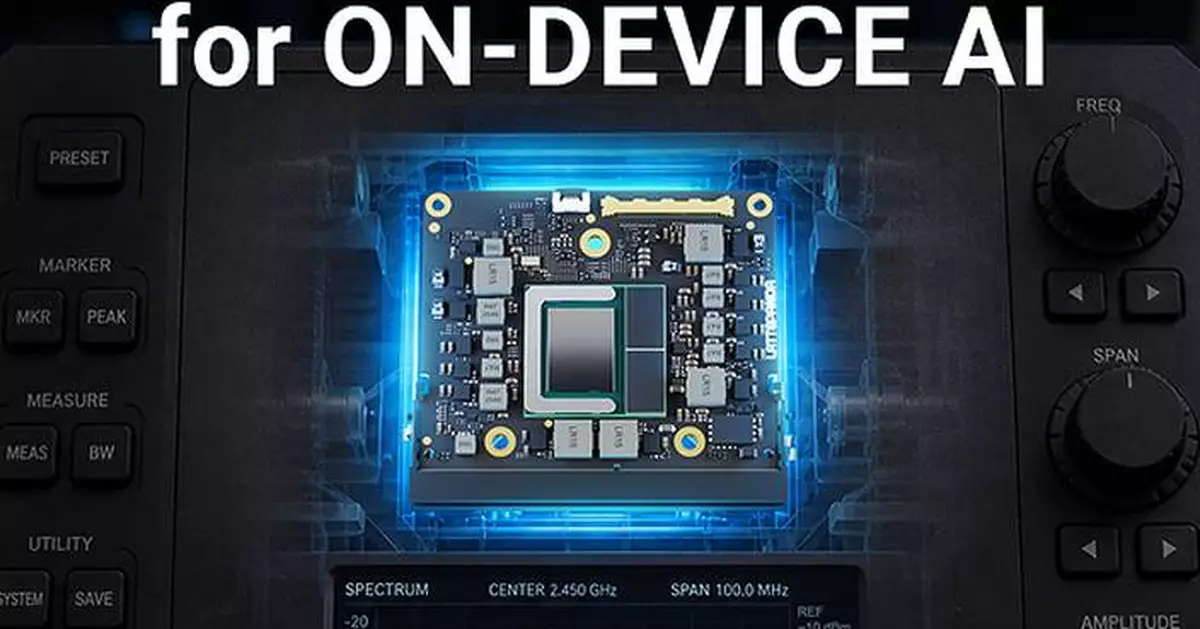
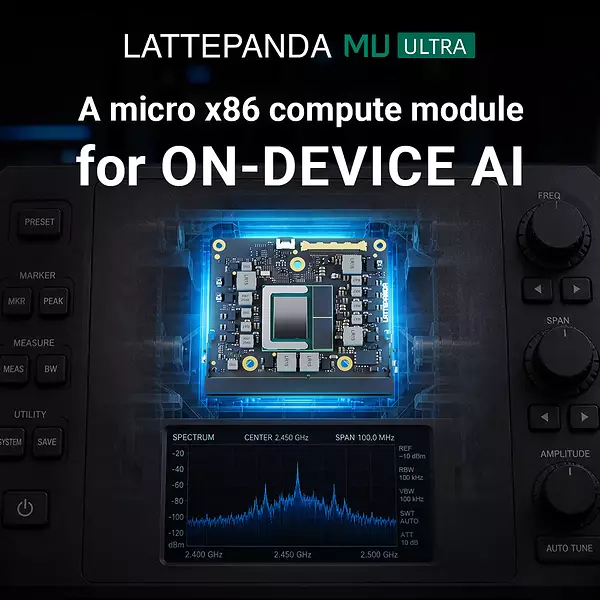
SHANGHAI, Sept. 9, 2026 /PRNewswire/ -- LattePanda Team today launched LattePanda Mu Ultra, a micro x86 compute module purpose-built for on-device AI. Powered by Intel Core Ultra 5 226V and Ultra 7 256V processors, it delivers up to 115 TOPS of AI performance in a compact 69.6 × 60mm form factor. Built to address the hardware, compute, and software challenges of running AI locally, LattePanda Mu Ultra brings powerful AI computing to engineering teams, system integrators, and OEMs across robotics, industrial automation, portable instruments, vision AI, and a broad range of intelligent edge applications.
115 TOPS of AI Performance in a Compact x86 Module
LattePanda Mu Ultra combines the CPU, GPU, and NPU of Intel Core Ultra 5 226V and Ultra 7 256V processors to deliver up to 115 TOPS (INT8) of AI performance, including 47 TOPS from the dedicated NPU.
Its 69.6 × 60mm form factor brings powerful x86 computing into space-constrained devices, from handheld instruments and smart cameras to robots and other intelligent edge systems.
Run AI Locally on the Device
LattePanda Mu Ultra runs AI workloads directly on the device, enabling low-latency inference, better data privacy, and less reliance on cloud computing.
In testing, LattePanda Mu Ultra achieved text generation speeds of 18 tokens/s with Qwen3.5-9B and 55 tokens/s with Qwen3.5-2B, using INT4 quantization with OpenVINO GenAI on the iGPU. These results demonstrate its ability to support responsive, local conversational AI without cloud inference. This makes it suitable for applications such as local voice assistants, offline document processing, and private knowledge retrieval, keeping sensitive data on the device.
High-Bandwidth Memory for AI Workloads
LattePanda Mu Ultra features 16GB of LPDDR5X-8533 memory, with up to 11.6GB available for graphics memory, providing the bandwidth required for demanding AI workloads across its CPU, GPU, and NPU.
The memory architecture is designed to support workloads ranging from LLMs and multimodal AI to real-time sensor processing. With idle power consumption as low as 2.5W, the module is also well suited to portable and always-on applications where power efficiency matters.
Bring On-Device AI to Existing x86 Systems
Deploying AI directly on devices involves more than choosing the right hardware. Ensuring software compatibility across the AI stack can also add significant development costs.
LattePanda Mu Ultra supports Windows and Linux and maintains compatibility with the established x86 software ecosystem. It also supports popular AI tools and frameworks, including Intel OpenVINO, llama.cpp, and Ollama.
This allows engineering teams and OEMs to build on existing x86 applications and development workflows, making it easier to add on-device AI capabilities without rebuilding their systems from the ground up.
Upgrade with a Modular Design
LattePanda Mu Ultra retains the standardized form factor and connector of the LattePanda Mu family and is largely compatible with existing carrier boards. When paired with the 3.5-inch Lite Carrier Board, Mini Carrier, or M.2 M Key Carrier Board, it enables users to upgrade existing systems without redesigning the entire carrier board.
With interfaces including PCIe 4.0, USB 3.2 Gen 2, USB 2.0, HDMI / DisplayPort, eDP, GPIO, UART, and I2C, LattePanda Mu Ultra can support everything from rapid prototyping and small-batch development to volume production.
Five Key Applications for On-Device AI
Intelligent AI Terminals
Run LLMs locally for translation devices, voice assistants, and private knowledge-based applications where low latency and data privacy are important.
Portable Instruments
Bring high-performance x86 computing to handheld devices such as spectrum analyzers and portable diagnostic equipment for AI-assisted, real-time analysis.
Autonomous Mobile Robots (AMRs)
Support real-time sensor fusion, SLAM, and autonomous navigation in a compact computing platform designed for space-constrained robots.
Service Robots
Run vision, voice, and LLM-based multimodal AI workloads on a single computing module, providing an integrated processing core for service robots.
On-Device Vision AI
Process high-resolution video locally in smart cameras and robotic inspection systems, enabling low-latency defect detection while reducing data transmission and cloud computing costs.
Key Specifications
Processor Options:
- Intel® Core™ Ultra 5 Processor 226V (16GB memory)
- Intel® Core™ Ultra 7 Processor 256V (16GB memory)
AI Performance:
- Up to 115 TOPS (CPU + GPU + NPU, INT8)
NPU (Neural Processing Unit):
- Up to 47 TOPS INT8
GPU (Graphics Processing Unit):
- Intel® Arc™ Graphics (up to 8 Xe Cores)
Memory:
- 16GB LPDDR5X-8533
VRAM (Allocatable Video Memory):
- Up to 11.6GB allocatable VRAM for larger language models and KV Cache
Display Output:
- Up to 3 × HDMI / DisplayPort
- 1 × eDP
Dimensions:
- 69.6 × 60mm
"Getting AI to run in the cloud is relatively straightforward. The real challenge comes when developers need to deploy it in physical devices—where space is limited, power matters, and migrating existing software can be costly," said Youliang Yu, LattePanda product manager. "LattePanda Mu Ultra addresses these challenges with a compact x86 design, high AI performance, and low power consumption. By combining powerful local computing with compatibility across the existing x86 ecosystem, it gives developers a simpler path to integrate AI into real-world products without rebuilding their systems from the ground up."
Now available on the official LattePanda online store, pricing starts at $599. For full specifications and purchasing information, visit the LattePanda official website.
** This press release is distributed by PR Newswire through automated distribution system, for which the client assumes full responsibility. **
LattePanda Launches the LattePanda Mu Ultra: A Micro x86 Compute Module for On-Device AI
The Hyper3D world-generation model expands AI 3D generation from individual objects to complete scenes, combining individual 3D assets, spatial relationships and estimated physical properties for robotics simulation, filmmaking, game development and spatial computing.
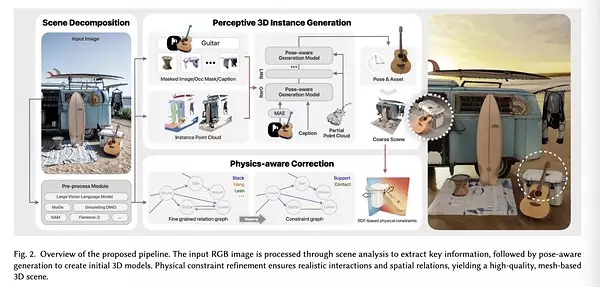
LOS ANGELES, Sept. 9, 2026 /PRNewswire/ -- Hyper3D, an internationally leading 3D generative AI company, recently announced the launch of WorldGen, a world-generation model that turns a single image into a 3D scene composed of independent, editable and interactive objects. The release expands Hyper3D's generative 3D capabilities from standalone assets to complete scenes that can be used in simulation and creative production workflows.
Users can upload a scene image and let WorldGen identify its main objects automatically, or draw bounding boxes to select specific objects for generation. The generated assets can be edited, replaced and moved individually, giving users control over individual assets and the overall scene layout.
Generating 3D Objects, Spatial Relationships and Physical Properties
WorldGen advances CAST (Component-Aligned 3D Scene Reconstruction from an RGB Image), research developed by the Hyper3D team that received a Best Paper Award at SIGGRAPH 2025, the leading international conference on computer graphics and interactive techniques. Following that research, the team continued developing the models, algorithms and engineering systems that underpin WorldGen's multistage generation process.
The system generates object geometry, inferring plausible shapes for portions hidden from view, and builds a graph of relationships such as contact, support and suspension. It estimates each object's position, scale and orientation in a shared 3D space, along with collision geometry, mass and friction.
WorldGen uses a hybrid 3D representation. Objects intended for editing and interaction are generated by Hyper3D's Rodin model as separate mesh assets with complete geometry and estimated physical properties. Background environments use 3D Gaussian splatting to preserve visual detail and immersion.
From photographs to robot-training environments
For robotics teams, WorldGen turns real-world photographs into simulation training environments for embodied AI. Building such environments has traditionally required manual scene modeling, which is slow and costly; WorldGen generates interactive, physically grounded scenes directly from images, giving robot training a faster way to produce diverse, task-ready simulation data.
WorldGen extends Hyper3D's NVIDIA Isaac Sim workflow from individual assets to entire scenes. Hyper3D, a member of NVIDIA Inception, previously introduced Sim-Ready capabilities for Rodin through NVIDIA Omniverse and Isaac Lab, along with an Isaac Sim plug-in.
In July, Hyper3D announced a joint robotics simulation workflow with D-Robotics and Motphys. In the workflow, WorldGen reconstructs interactive scenes from photographs, while Motphys and D-Robotics contribute physics simulation and computing infrastructure respectively, connecting scene generation, simulation, data collection and model training.
Teams can vary lighting, layouts, obstacles and object states to create different environments for the same task. The workflow spans scene reconstruction, simulation, training and policy validation, including deployment to physical robots for testing and iteration. The partners are continuing to refine the solution and expand its use in robot training.
A controllable 3D foundation for AI filmmaking
For filmmakers, WorldGen provides an editable 3D scene for planning compositions, camera angles and object placement. Creators can set camera angles, move objects, replace assets and adjust layouts, then use rendered views or camera sequences from the scene as visual references for AI video generation.
WorldGen can be used in workflows with video-generation models such as Seedance 2.5. WorldGen supplies stable spatial structure, camera relationships and controllable, untextured 3D scenes; the video model adds character performance, materials, lighting and visual style. The approach is designed to improve control and consistency across complex scenes and multiple shots, supporting advertising, concept films and previsualization. Projects using WorldGen are already in production, with releases to follow.
Bringing Generated 3D Assets into Creative Tools and Game Engines
3D assets generated in WorldGen can be brought into Blender, Unity, PlayCanvas, Unreal Engine and Unity's Tuanjie Engine for material editing, rigging, level design and performance optimization. Users can generate their starting scene assets in WorldGen, then continue working in familiar software and production pipelines.
In July, Hyper3D and Unity's Tuanjie Engine announced a collaboration to connect 3D generation with real-time game applications. WorldGen was also demonstrated at the Tuanjie Engine 2.0 launch.
Extending generated scenes into XR
WorldGen-generated scenes can also serve as the basis for experiences on XR devices such as Apple Vision Pro. Users can explore a reconstructed space from different positions and viewpoints and inspect objects up close. Further editing can support changes to layouts, object replacements and interactions with selected assets. Potential applications include interior design, immersive education, spatial presentations and XR content creation.
About Hyper3D
Hyper3D develops generative AI models and tools for creating 3D assets and scenes. Its core products include Hyper3D Rodin for individual 3D assets and WorldGen for scene-level generation, serving nearly ten million users worldwide. Hyper3D supports workflows across gaming, film production, industrial design, embodied AI and more.
Learn more about Hyper3D at https://hyper3d.ai/
** This press release is distributed by PR Newswire through automated distribution system, for which the client assumes full responsibility. **
Hyper3D Launches WorldGen to Turn Single Images into Editable 3D Scenes