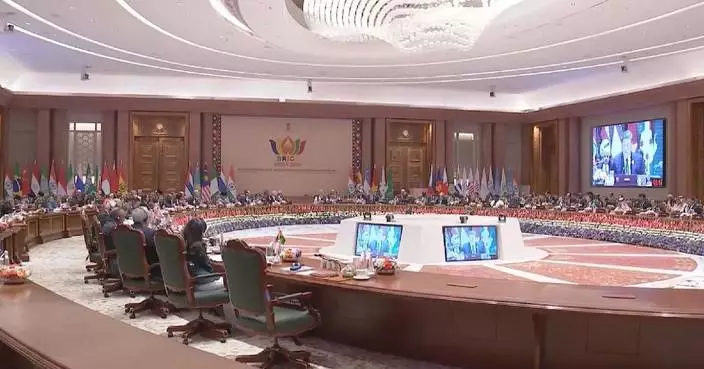
Chinese President Xi Jinping attended Session II of the 18th BRICS Summit in New Delhi and delivered an important speech on Sunday.
In the speech, Xi said the Global South, with its collective rise, has become a key driver of world multipolarity.
Noting that the international landscape is volatile and fraught with risks and challenges, Xi said BRICS countries must seize the historical initiative, rally the Global South, be an active, stabilizing and positive force in international affairs, and advance the well-being of all humanity, so as to bring stability to the world and make it a better place.
He stressed that Global South countries should jointly defend the rule of law in international affairs, safeguard the basic norms of international relations including sovereign equality, noninterference in internal affairs, and the peaceful settlement of disputes, and ensure that international law and international rules are applied to all, free from double standards.
Global South countries should hold high the banner of multilateralism, uphold the authority and role of the United Nations, and support multilateral institutions in advancing reform and increasing efficiency, he said.
Xi called for WTO reform in the right direction, stressing that the international financial architecture must be reformed and improved to increase the representation and voice of developing countries.
Global South countries should stay committed to a people-centered development philosophy and strive to deliver on the 2030 Agenda for Sustainable Development, Xi said, adding that the countries should jointly advance security governance and tackle both traditional and nontraditional security threats, improve global climate governance, and work faster to evolve a consensus-based global AI governance framework, so that new technologies can light the way toward shared prosperity.
Xi stressed that "greater BRICS" must make greater impacts, achieve greater development, and lay a solid foundation for practical cooperation.
"Greater BRICS" should leverage strengths in being rooted in emerging markets and connected with the Global South, uphold openness and cooperation for mutual benefit and win-win outcomes, keep industrial and supply chains stable and unimpeded, and foster integrated markets, Xi said.
He noted that "greater BRICS" should build innovation incubators, upgrade traditional industries, develop emerging industries, and make forward-looking plans for future industries.
The Chinese leader then proposed five initiatives on "greater BRICS" cooperation in areas of AI, trade and investment facilitation, digital industry, smart manufacturing, and talent development.
First, the open source and inclusive AI initiative. China will be a pioneer in establishing a BRICS AI open source community, support the cooperation in developing and applying large language models, hold specialized AI seminars and training courses, and build an open ecosystem for AI.
Second, the trade and investment facilitation initiative. China proposes to establish a BRICS special economic zone partnership, under which countries can set up an intelligent portal, coordinate policies, and build a new frontier for open development. In an effort to cultivate new drivers of economic and trade cooperation, China will hold the BRICS Forum on Trade in Services next year.
Third, the digital industry cooperation initiative. China will push for establishing a BRICS digital ecosystem cloud platform, and conduct digital skills training, technological exchange and industrial alignment, so as to jointly enable the development of the digital economy.
Fourth, the intelligent manufacturing cooperation initiative. China stands ready to assist fellow BRICS countries in building smart factories and developing standards and norms, and jointly promote manufacturing transformation and upgrading.
Fifth, the science and technology talent development initiative. China proposes to set up a BRICS engineer cultivation alliance for joint development of engineers and mutual recognition of competency standards. China will launch a BRICS youth exchange program for scientific and technological innovation, so as to cultivate more high-caliber talent.
Noting that this year marks the launch of China's 15th Five-Year Plan, Xi said the plan is not only China's own development blueprint but also a list of cooperation opportunities for the world.
China will continue to promote high-quality development, expand high-standard opening up, implement the Global Development Initiative, advance high-quality Belt and Road cooperation, and share opportunities and create prosperity with other countries around the world, he added.
Also attending the session were Russian President Vladimir Putin, South African President Cyril Ramaphosa, Iranian President Masoud Pezeshkian, Egyptian President Abdel Fattah El-Sisi, Indonesian President Prabowo Subianto, Ethiopian Prime Minister Abiy Ahmed, and Sheikh Khaled bin Mohamed bin Zayed Al Nahyan, Crown Prince of Abu Dhabi, the United Arab Emirates (UAE).
Brazilian Foreign Minister Mauro Vieira, Saudi Foreign Minister Prince Faisal bin Farhan Al Saud, leaders or representatives of BRICS partner countries and guest countries, as well as heads of international organizations including UN Secretary-General Antonio Guterres were also present at the session, which was presided over by Indian Prime Minister Narendra Modi.
Before the session, Xi joined other leaders for group photos.
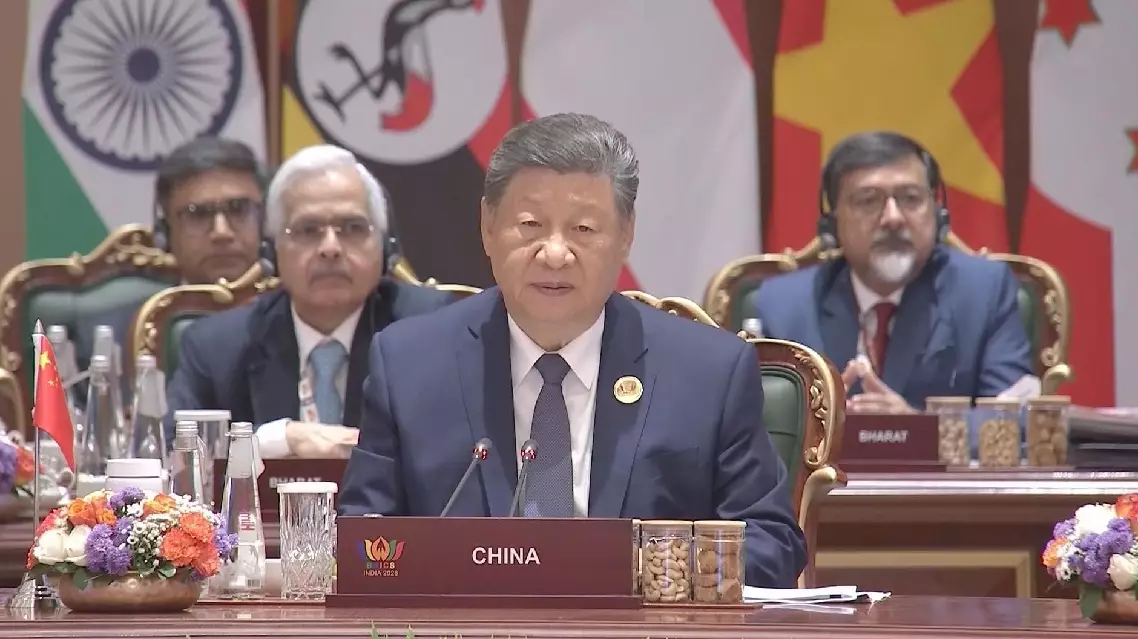
Xi attends second day of BRICS summit in New Delhi
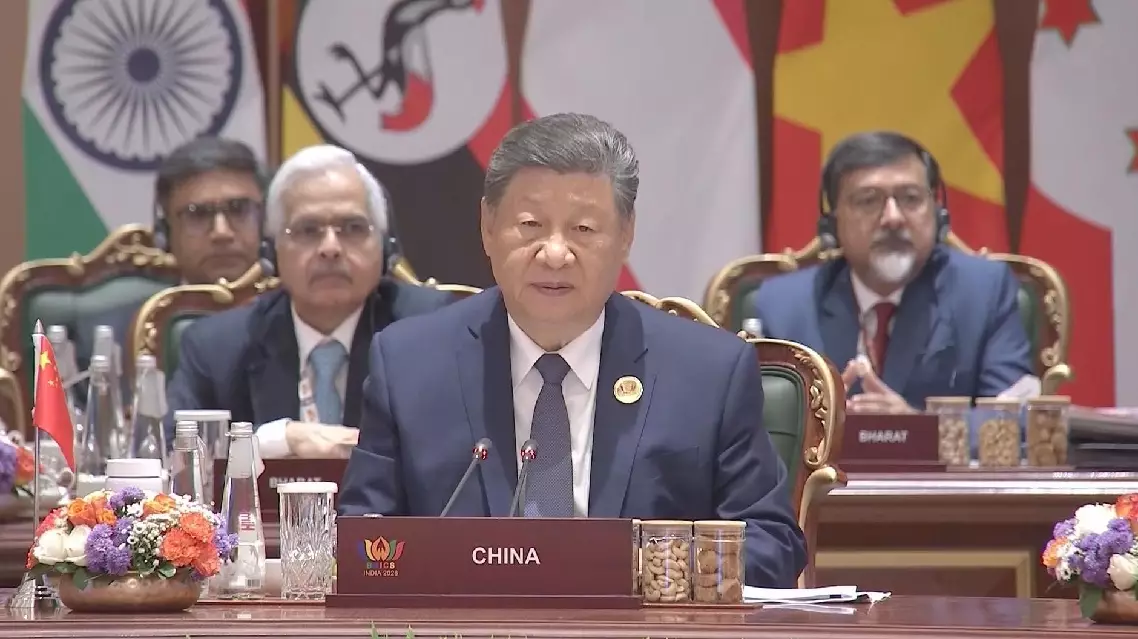
Xi attends second day of BRICS summit in New Delhi