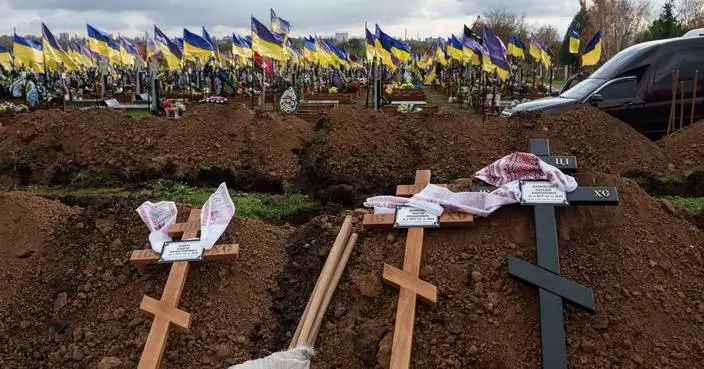
WELLINGTON, New Zealand (AP) — A major inquiry into the case of New Zealand man Tom Phillips, who hid his children in dense forest for years before he died in a police shootout, has criticized officials for not taking seriously enough the harms and risks to the children early in the saga of their disappearance.
The public inquiry — which is a formal, independent investigation of matters of significant importance in New Zealand — was launched in November 2025 to scrutinize how government agencies handled the case. It was prompted by outrage about how a father involved in court proceedings was able to evade authorities for almost four years, while forcing his children to live in rugged, squalid conditions in remote countryside without access to health care or education.
The inquiry's report, released Tuesday, said the harms caused by Phillips isolating his children were “underplayed, minimised or overlooked” for “significant periods” by the police and New Zealand's child protection agency, Oranga Tamariki. Concerns raised by the children's mother and her relatives were "often minimised as being part of a parenting dispute,” the report added.
When Phillips vanished with his children — then 5, 7 and 8 — from Marokopa, a tiny rural township on New Zealand’s North Island, in December 2021, it wasn't the first time he'd disappeared with them. Yet officials dealing with the case didn't act with enough urgency, the inquiry found.
Significant opportunities were missed by police officers and social workers after the family's first disappearance months earlier, New Zealand Minister of Social Development Louise Upston said in the government's response to the inquiry on Tuesday. The inquiry found officials didn't act quickly enough on a 2023 sighting of the family and didn't seek surveillance warrants or bring in the military early enough.
“To the Phillips children directly, this report has found that our agencies did not take all practical steps to protect you," Upston said in a statement. “For that we are deeply sorry.”
The government pledged to enact all of the report's recommendations, which include changes to how reports of concern to agencies about children are made and handled. However, no individual officials are named in the report and a public inquiry doesn't have the power to make criminal charges or impose penalties.
Oranga Tamariki Chief Executive Amanda Malu said the report, which said her staff were “largely dismissive” about concerns of the children's mother and older sisters about Phillips, was “difficult and at times harrowing” to read.
“I would particularly like to acknowledge the courage shown by the children’s mother and older siblings,” Malu said in a statement. “We did not listen in the way we should have, and this family deserved better from us.”
After Phillips was shot dead by police officers in September 2025 as he fled a robbery with one of his children, the others were soon discovered along with a cache of guns at a makeshift campsite nearby. Since Phillips disappeared in December 2021, he and his children never appeared to have traveled far from the tiny rural settlement where they lived in the sprawling farming region of Waikato.
Since the children were found, officials haven't disclosed details of where they live or who is caring for them. Some details of the case can't legally be reported.
The children's names and photographs were widely published in New Zealand news outlets while they were missing as the police urged members of the public to come forward with information. However, the inquiry found that before those efforts, police officers took a “low-key” approach to the inquiry, “predicated on the misconceived view that there were no concerns for the children’s welfare."
While on the run, Phillips committed armed robberies and during his fatal shootout, he shot a police officer in the head, seriously wounding him.
December 2021 wasn’t the first time the fugitive father and his children had vanished. Three months earlier, he sparked a massive search operation when his truck was found on a beach near his home, with no trace of the family.
Officials feared they had been swept out to sea before Phillips and the children emerged from the forest after 18 days, saying they had been camping. Phillips was charged with wasting police resources but disappeared again with the children before he was due to appear in court.
He didn't have custody of the children at the time. However, Oranga Tamariki staff told a family court hearing between Phillips' first and second disappearances that the children were “completely fine.”
They also failed to tell the court about concerns raised by the children's mother and the police, said the report’s writer, former High Court justice and prominent lawyer Simon Moore.
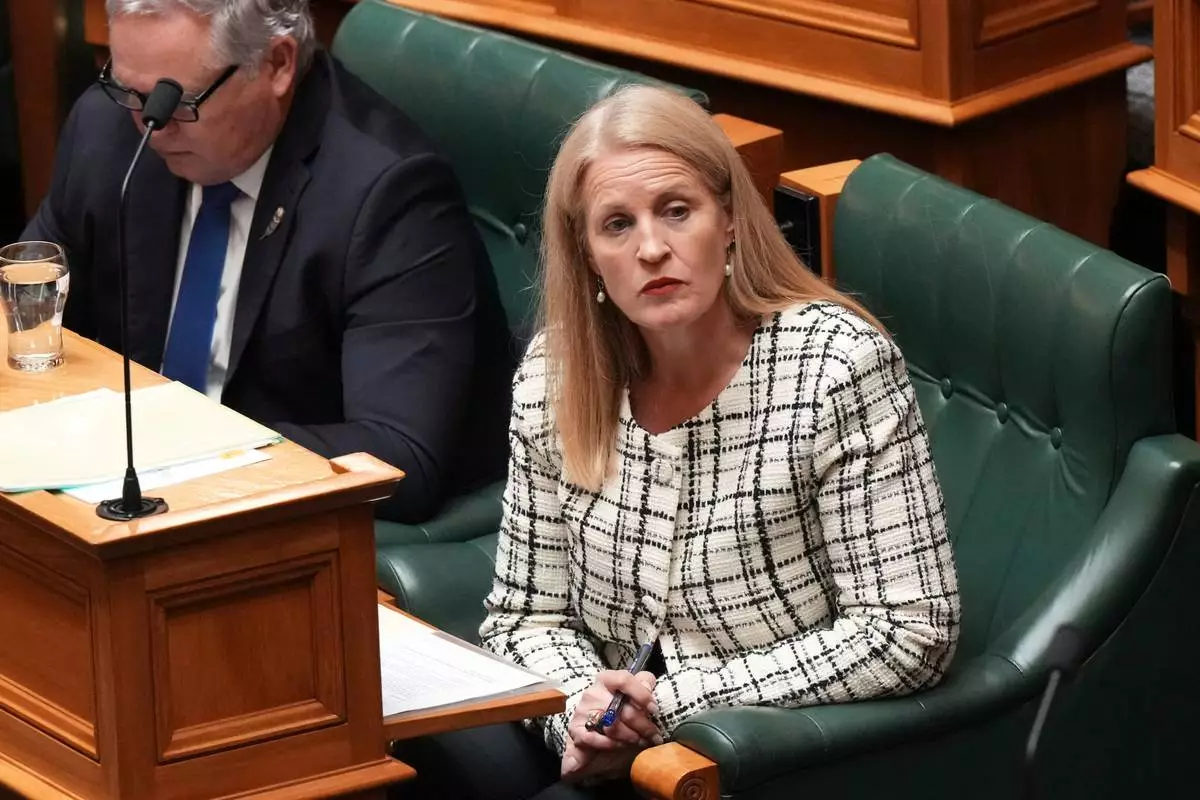
FILE - New Zealand Minister of Social Development Louise Upston watches a speech at Parliament in Wellington, New Zealand, on Aug. 19, 2026. (AP Photo/Charlotte Graham-McLay, File)
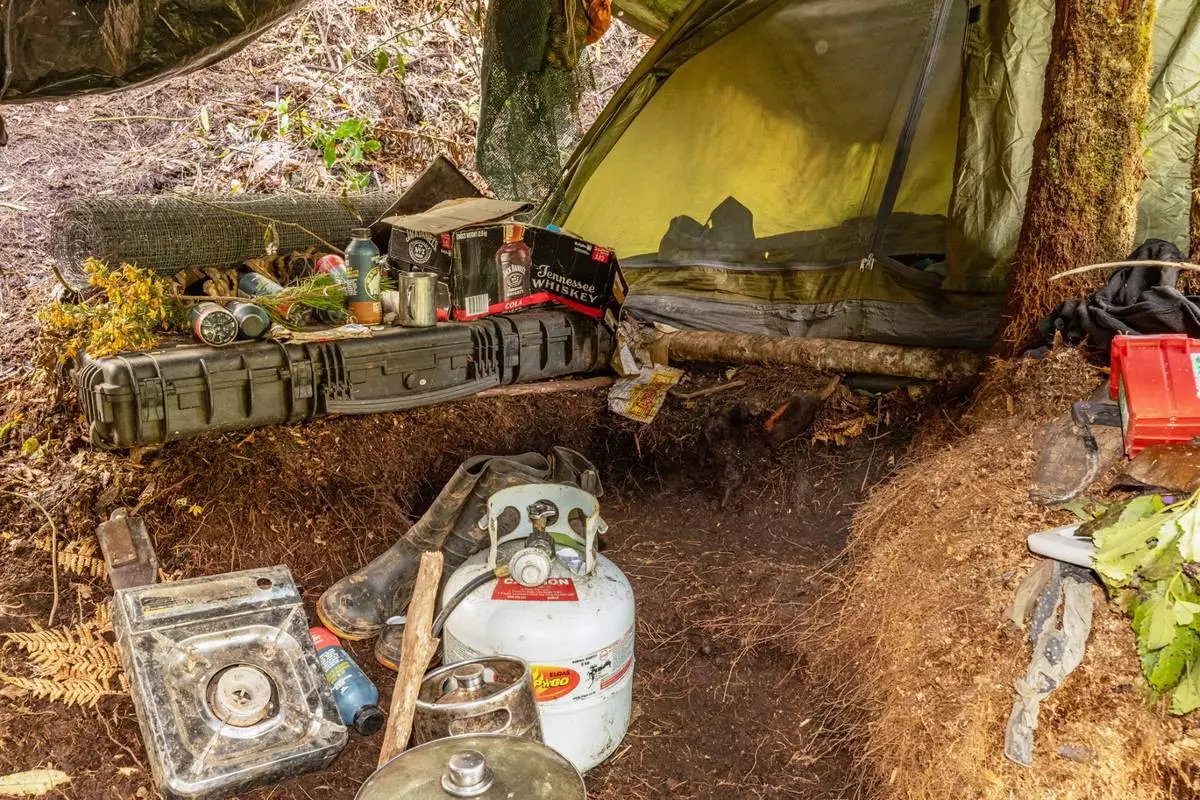
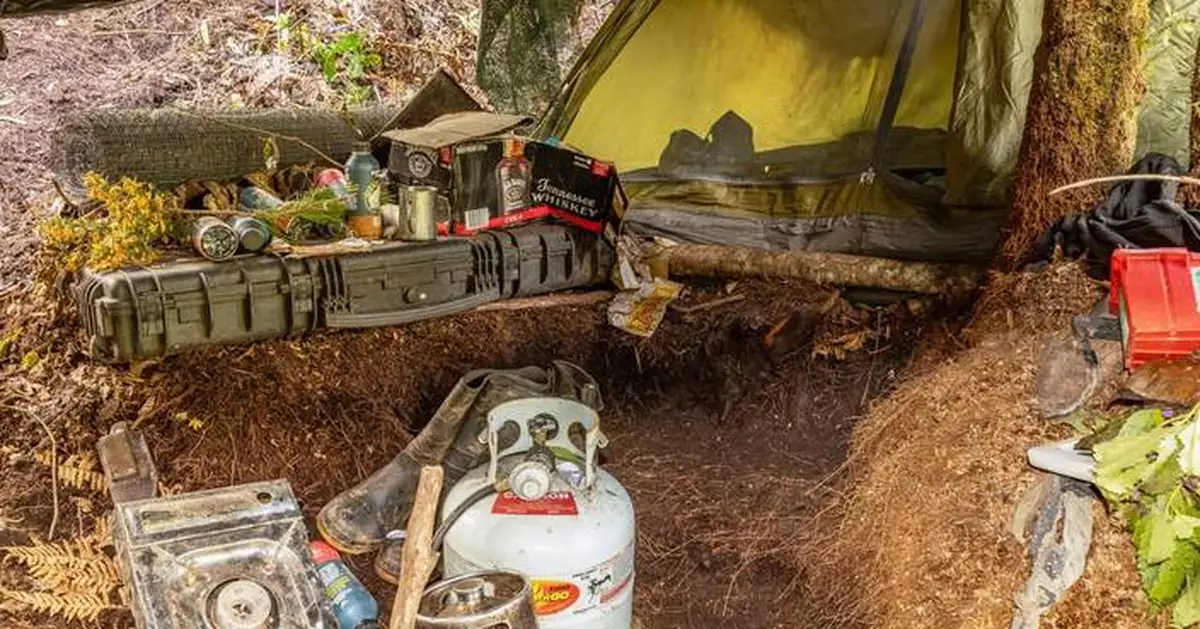
FILE - This photo released by the New Zealand Police on Sept 10, 2025, shows the main campsite where Tom Phillips and his children were hiding in the bush near Waitomo, in the district of Waikato, New Zealand. (New Zealand Police via AP, File)
WASHINGTON (AP) — Senate Republicans will meet Tuesday for a “robust conversation” on their future and to decide whether to keep South Dakota Sen. John Thune as their leader, just a week after steep losses in the midterm elections that cost them their majority.
Thune is expected to be reelected, given that he remains popular with fellow Senate Republicans and is running unopposed. But some Republicans who returned to Washington on Monday for the first time since the election wipeout that cost them at least seven seats say it's too soon to endorse the status quo.
“We need to have some real soul-searching,” said Wisconsin Sen. Ron Johnson, who has circulated a letter to the conference asking for a delay in the closed-door, secret-ballot leadership elections. “We can't just continue on business as usual — that kind of defeat demands change.”
Still, Johnson conceded that there's no one else on the ballot.
“That's part of our problem, who would want the job?” he said, turning to a reporter and joking, “Do you want it?”
The angst comes as the party is just beginning to reckon with what the election results mean for GOP lawmakers and how soon they can try to rebuild their ranks. Two additional races remain uncalled in Alaska and Mississippi that could further deplete their numbers.
Thune made clear Monday that the leadership is moving ahead with Senate elections, which will include contests for other party leaders as well. But senators could still seek a vote to delay as they gather Tuesday morning.
Thune said they will have a “very fulsome, robust conversation about where we go from here and then we’ll see what the consensus of the conference is.”
“Ultimately that’s a decision made by Republican senators,” Thune said.
Thune, who replaced Sen. Mitch McConnell of Kentucky as leader in early 2025, has spent much of the last two years navigating President Donald Trump, who has often been at odds with the Senate.
While backing up Trump on most policy, Thune has refused to change Senate rules and scrap the filibuster to pass voting legislation that would require proof of citizenship for all voters — a position that frustrated Trump and enraged some in the president's political base.
But Trump hosted Thune and his family at the White House in October. He said Monday that the GOP leader is “a very fine man.” The election is “up to the Senate,” Trump said.
Thune has made it a point to hear out different viewpoints before he makes major decisions and has maintained close relationships with the rank and file — a different approach from his predecessor, McConnell.
Thune “has widespread support” among Republican senators, said Oklahoma Sen. Jim Lankford, who said he supports having the elections on Tuesday when many of the new GOP senators are already in town for freshman orientation.
It is “a pretty complicated role to be able to manage,” Lankford said. “No one wants that job.”
Still, Johnson and others in his conference say Tuesday’s election is too soon.
Pennsylvania Sen. Dave McCormick in a statement over the weekend said Republicans shouldn’t choose a leader until the lessons of the election have been “digested and debated.” Indiana Sen. Jim Banks said Republicans need to “sit down and have a frank conversation about where we fell short.”
Republican Sen. Mike Lee of Utah, one of a few senators who signed Johnson's letter asking for a delay, said any leadership contest should come after the two outstanding Senate elections in Alaska and Mississippi are decided.
Neither of those races has yet been called, so it’s unclear if Republican Sens. Dan Sullivan of Alaska and Cindy Hyde-Smith of Mississippi will be returning to the Senate next year.
The soul-searching comes as lawmakers are trying to wrap up the year’s work — funding the government and seeing if there are some issues where they can work together, including an energy permitting bill that moved forward on a bipartisan vote Monday evening.
Republicans will try to confirm as many of Trump’s nominees as they can before the new Congress begins Jan. 3, and Democrats will strategize on how to best keep up their momentum into next year.
In his first remarks on the Senate floor since the election, which he called a “tough night," Thune previewed his pitch to his colleagues who are looking for answers on how they will navigate the minority.
Republicans will be willing to work with Democrats, Thune said, but “the American people are not looking for socialist government and leftist fantasies.”
Across the aisle, Democrats who could hold as many as 56 seats next year are having private discussions about whether New York Sen. Chuck Schumer is still the right person to lead them.
Schumer has found critics on the left and the right of his caucus as candidates from both sides declined to say in the campaign whether they would support him as leader. Maryland Sen. Chris Van Hollen and Michigan Sen. Elissa Slotkin have both considered challenging Schumer, but neither has announced a run.
Many in the party have said it’s time for generational change after Schumer’s 12 years as leader. Still, Schumer appears to have widespread support from his members after carrying his party to massive wins in Tuesday’s elections.
Sen. Kirsten Gillibrand, Schumer’s New York colleague and the head of the Democratic Senate campaign arm, predicted that he will win enough support. Schumer not only won the Senate back but he “cares deeply, and he understands politics well," she said.
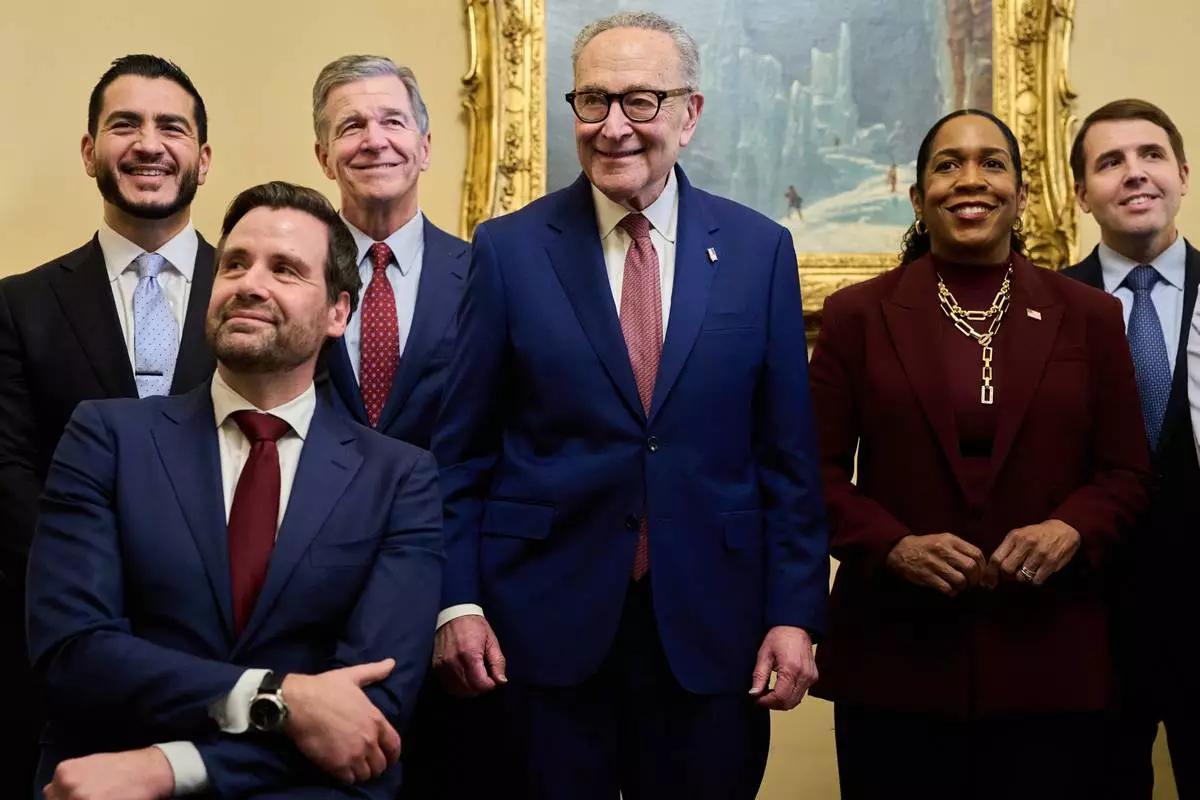
Senate Minority Leader Chuck Schumer, D-N.Y., center, poses for a photograph in his office with Sen.-elects Abdul El-Sayed, D-Mich., Josh Turek, D-Iowa, Roy Cooper, D-N.C., Juliana Stratton, D-Ill., and Chris Pappas, D-N.H., Monday, Nov. 9, 2026, at the U.S. Capitol in Washington. (AP Photo/Julia Demaree Nikhinson)
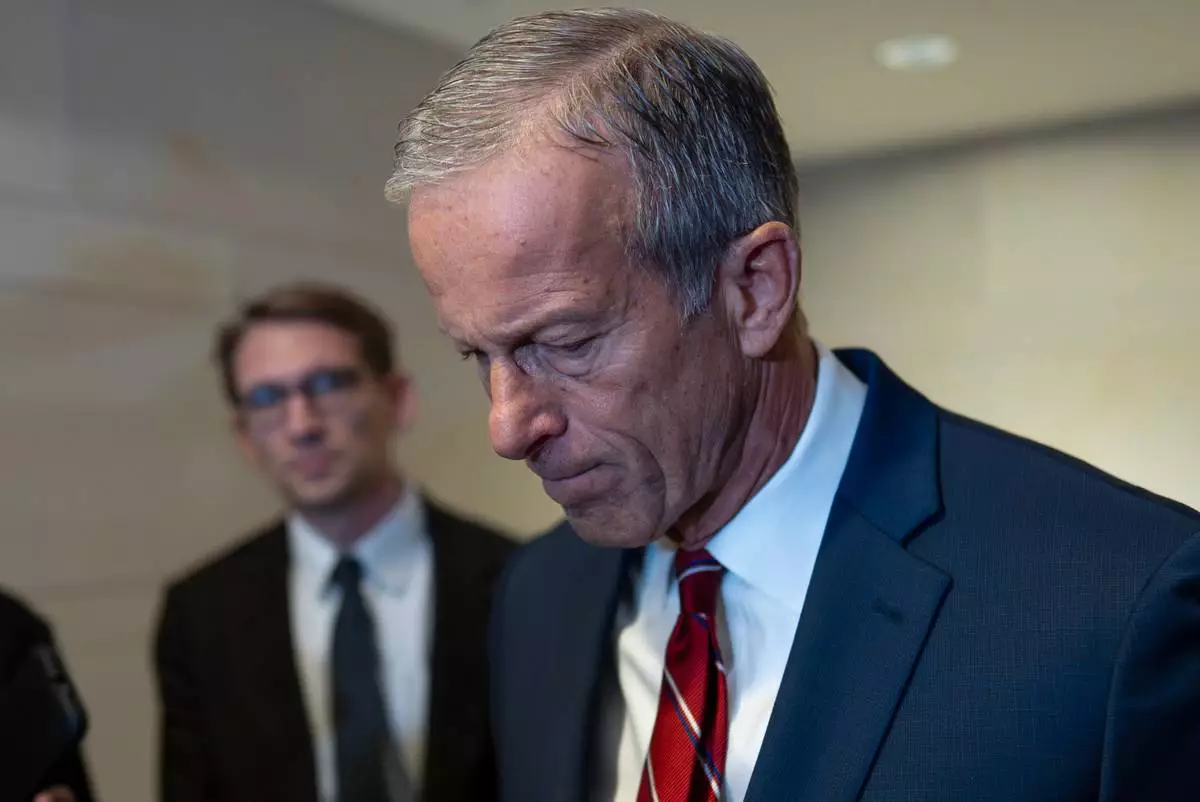
Senate Majority Leader John Thune, R-S.D., heads to an intelligence briefing in a secure room in the basement of the Capitol with the director of national intelligence and other congressional leaders, as Congress returns to work following the midterm elections, at the Capitol in Washington, Monday, Nov. 9, 2026. (AP Photo/J. Scott Applewhite)