Officials and scholars at the Asia-Pacific Regional Cooperation Roundtable hosted by the Boao Forum for Asia (BFA) in south China's Haikou City in Hainan Province called on Tuesday for upholding multilateralism and promoting economic integration amid rising global uncertainty.
Themed "Toward an Asia-Pacific Community: Vision and Action," the event brought together government officials, business representatives and academics from more than 30 countries, with discussions focusing on AI cooperation, supply chain integration and broader regional economic cooperation.
"We need to uphold genuine multilateralism and open regionalism to further advance Asia-Pacific economic integration," said Mu Hong, vice chairman of the BFA, in his keynote speech.
One of the key topics widely discussed at the meeting was how to advance the vision of the Free Trade Area of the Asia-Pacific (FTAAP), a proposed regional free trade framework aimed at bringing economies across the APEC region closer together.
"FTAAP is not your traditional trade agreement, so it's not about a trade agreement, but it is about deepening economic integration. What you do is because of all kinds of diversity among our own economies, we need to break it down and see what can be done first and do it. So go by sectors, go by different parts of the agreement," said Rebecca Fatima Sta Maria, former executive director of the Asia-Pacific Economic Cooperation Secretariat.
"The question about FTAAP is not which agreement is the pathway, it's more about what are the immediate tasks, which institution is good for doing which task, and how do they get done," said Christopher Findlay, honorary professor at the Crawford School of Public Policy of the Australian National University.
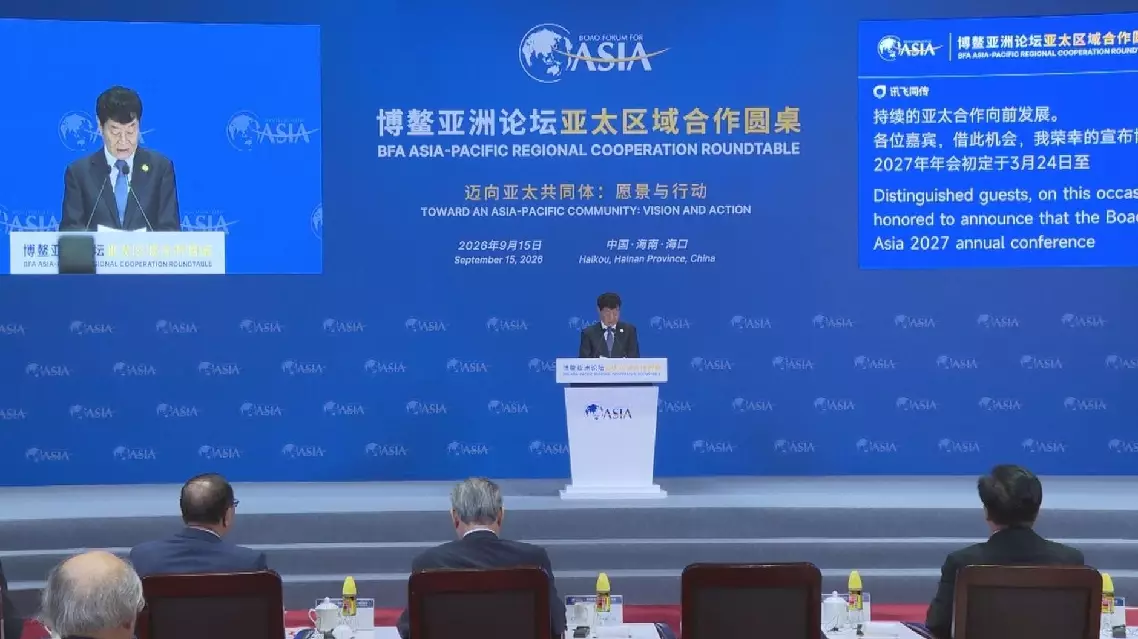
Officials, scholars call for strengthening economic integration at Asia-Pacific roundtable
Zhang Hongzhang, a 40-year-old researcher turned astronaut, became China’s second payload expert to reach space aboard Shenzhou-21 on October 31, 2025. He conducted groundbreaking studies on lithium-ion batteries for space applications and looks forward to further experimental projects in space again.
He recently shared his experiences in space, insights into his selection, and future expectation during an interview with China Central Television (CCTV) in Beijing.
As one of four payload specialists in China's third batch of astronauts, Zhang and his crew spent 210 days in orbit, from their launch on October 31, 2025, to their return on May 29, 2026, setting a new record for the longest single crew stay by Chinese astronauts.
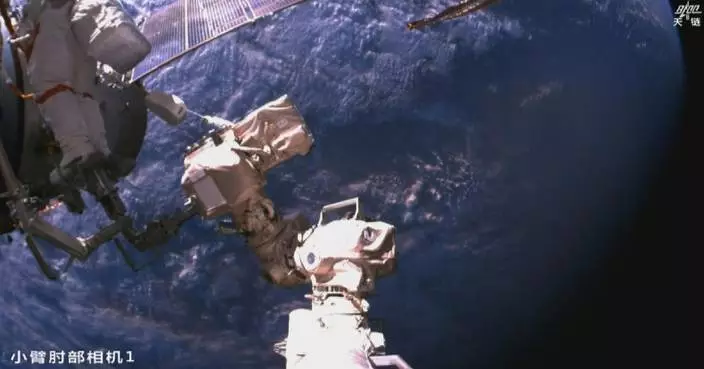
During their mission, they completed three spacewalks and conducted extensive space science experiments, notably witnessing and participating in the first-ever in-orbit emergency rescue operation in the history of China's manned space program.
Before joining the astronaut corps, Zhang was a researcher at the Chinese Academy of Sciences (CAS), focusing on key materials and technologies for large-scale energy storage batteries. The study on lithium-ion battery electrochemistry for space applications was developed collaboratively by the Dalian Institute of Chemical Physics, CAS, and the China Astronaut Research and Training Center.
During his mission, Zhang performed in-situ optical observations of lithium-ion batteries under microgravity conditions, capturing full-process images of lithium dendrite growth and adjusting experimental procedures, monitoring experimental conditions in real time, and identifying and recording key scientific phenomena.
"The purpose of this experiment is, first, to verify my experimental equipment — the first time an electrochemical experiment has been conducted in orbit — and that it can proceed smoothly. Second, I hope to be able to observe in orbit the experimental phenomena I want to observe and obtain the data I can get. After analyzing the experimental data, we can then improve the battery's performance, and after improvement, conduct another verification on the space station. This may form a complete closed loop. At present, this is still the first step. If we can analyze this problem clearly, it will serve as a very good reference for other batteries beyond lithium-ion batteries," he said.
Zhang considers himself fortunate to have pursued new energy and energy storage.
"Because this direction is very important for the future of our Earth. We need to reduce uncontrolled carbon dioxide emissions, reduce the greenhouse effect, and reduce the consumption of fossil fuels. Because these fossil fuels, including coal, oil, and natural gas, cannot have unlimited reserves on Earth. So we develop new energy and green energy. I think choosing this direction back then was indeed fortunate," he said.
Zhang graduated from the School of Chemistry and Chemical Engineering at Shandong University. In 2018, at age 32, he had begun to stand out in scientific research, leading multiple major projects. That same year, China opened the astronaut selection process to researchers and engineering technicians for the first time, and Zhang signed up.
In September 2020, Zhang became one of China's third batch of astronauts. After a comprehensive evaluation, he was selected for the Shenzhou-21 flight mission. This marked the second time China assigned a crew composed of spacecraft pilots, flight engineers, and payload experts to carry out a mission.
"Because I had been engaged in research work at the Dalian Institute of Chemical Physics for more than 10 years, I am very familiar with and understand what ground-based researchers want to obtain through these experiments, what they care about, and what they may not notice.I may be able to assist with these experiments, ensuring their smooth completion while potentially yielding additional unexpected results and better solving some issues that may arise beyond the initial plan," he said.
Reflecting on his time in space, Zhang said: "One overarching impression is that space is immensely profound. People — including every one of us — and the even Earth seems very small. Indeed, Reflecting on my extended time in space, it truly feels as if it all happened in a dream."
Zhang also expressed his desire to return to space again.
"I look forward to it. I also hope there can be more experimental projects, and that more scientists can conduct experiments in orbit, or at least send their experiments to the space station, so that in this unique environment, we can make greater contributions to exploring and utilizing space," he said.
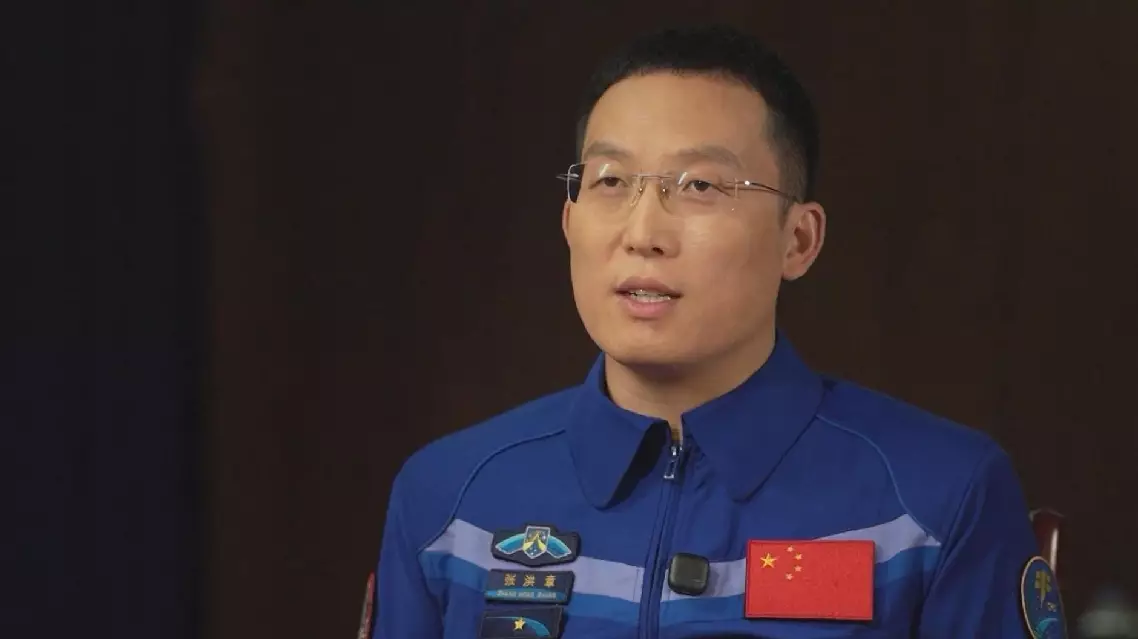
China's second payload specialist eyes further space experiments months after return