U.S. stocks ended lower on Tuesday as investors braced for a widely expected interest rate hike from the Federal Reserve on Wednesday.
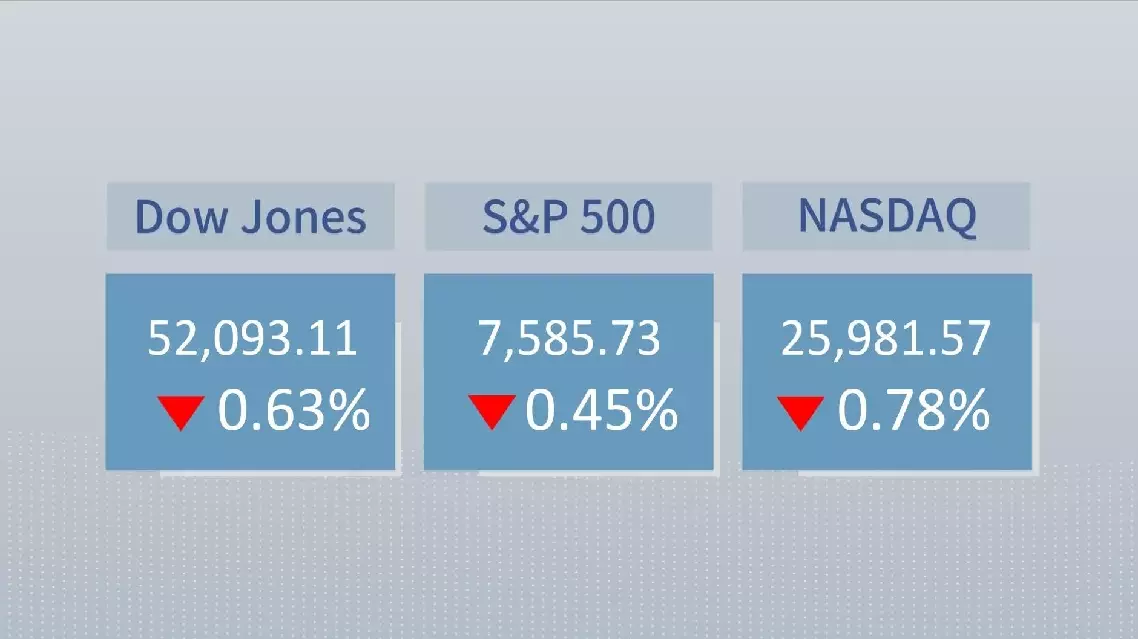
The Dow Jones Industrial Average fell by 328.09 points, or 0.63 percent, to 52,093.11. The S&P 500 sank 34.25 points, or 0.45 percent, to 7,585.73. The Nasdaq Composite Index shed 204.84 points, or 0.78 percent, to 25,981.57.
Nine of the 11 primary S&P 500 sectors ended in the red. The consumer discretionary and utilities sectors led the laggards, dropping 1.76 percent and 1.2 percent, respectively. Energy and materials were the only gainers, rising 2.26 percent and 0.37 percent, respectively.
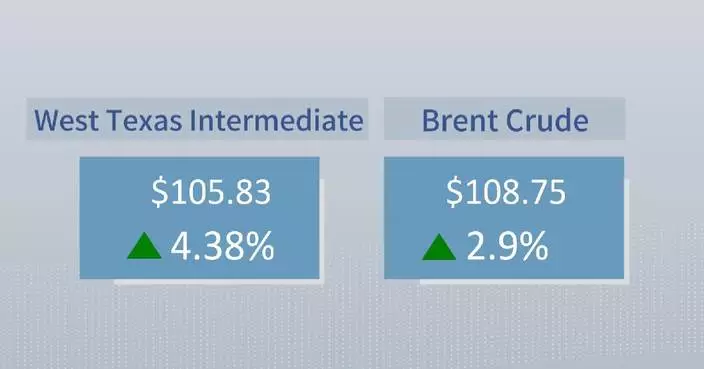
The energy sector's outperformance was underpinned by a sharp jump in crude oil prices. West Texas Intermediate for October delivery gained 4.44 U.S. dollars, or 4.38 percent, to settle at 105.83 dollars a barrel on the New York Mercantile Exchange. Brent crude for November delivery added 3.07 dollars, or 2.9 percent, to close at 108.75 dollars a barrel on the London ICE Futures Exchange.
Market sentiment was heavily influenced by the Federal Open Market Committee, which began its September policy meeting on Tuesday. Following months of elevated inflation data, traders overwhelmingly expect the central bank to implement an interest rate hike at the meeting's conclusion on Wednesday.
Investors are preparing to closely scrutinize the release of the Fed's "dot plot" economic projections, along with Federal Reserve Chair Kevin Warsh's subsequent press conference, for clues about the direction of the central bank's monetary policy.
On Tuesday, the yield on the benchmark 10-year U.S. Treasury note rose to 5.04 percent, its highest level since 2007.
In corporate and sector news, the semiconductor industry remained in focus. While some investors have recently voiced concerns over a potential pullback in artificial intelligence spending, Bank of America analyst Vivek Arya argued that the sector still possesses a long runway for expansion amid ongoing hardware and power constraints.
Underscoring this optimistic outlook, Arya raised his 2030 chip market estimate from 2.7 trillion dollars to 3.2 trillion dollars, representing a robust 18-percent annual growth rate.
"Despite rising concerns around potential AI infra/investment slowdown, we see no signs of slowing in customer orders, LTAs [long-term agreements], capacity commitments, or semis pricing," he wrote on Tuesday.
U.S. stocks fall as Fed begins policy meeting