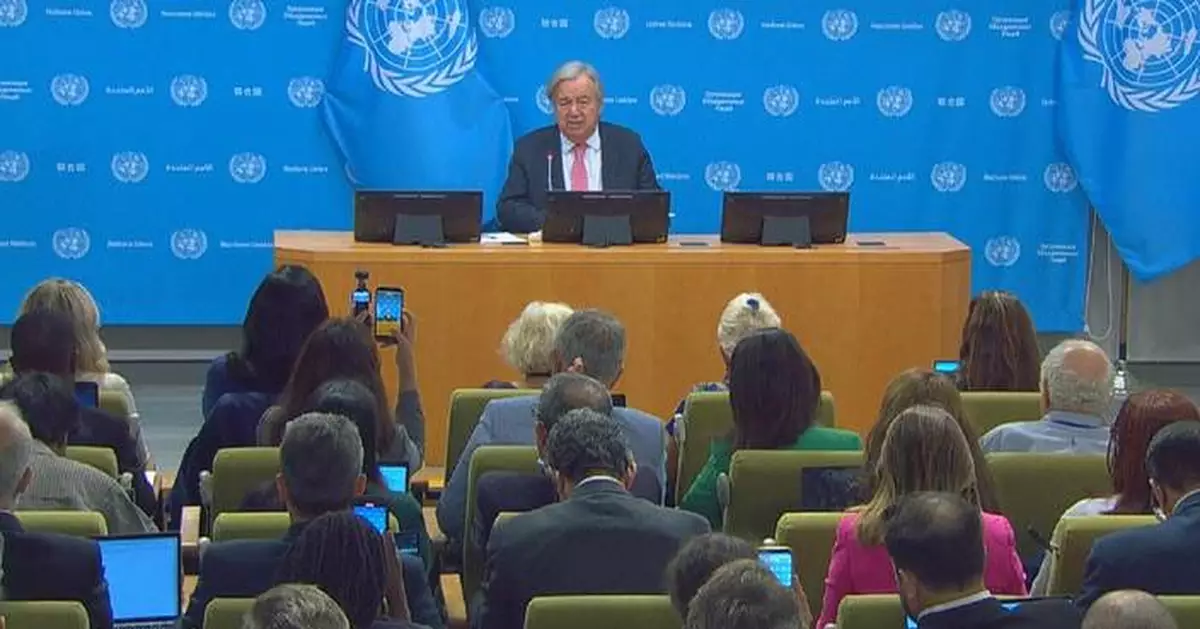
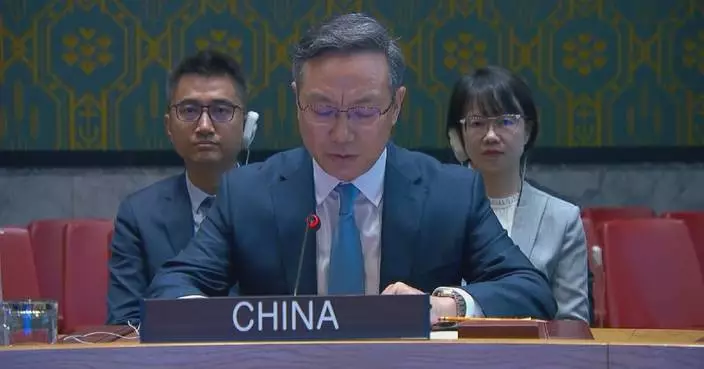
United Nations Secretary-General Antonio Guterres on Wednesday called for de-escalation in the Middle East and Ukraine.
He made the appeal at a press conference ahead of this year's high-level week of the UN General Assembly.
"At this crucial moment in the Middle East, de-escalation must be priority one, priority two and priority three," said Guterres. "All parties must cease any actions that harm civilians and ensure that humanitarian operations can proceed safely and without obstruction."
"Navigational rights and freedoms in and around the straits of Hormuz and Bab al-Mandab must be fully restored and respected by all, in accordance with international law," he added.
"The only path forward is de-escalation, diplomacy and dialogue," he said.
Regarding persisting conflicts in Gaza, Guterres reiterated the importance of the full implementation of the two-state solution.
"The peace plan for Gaza must be fully implemented with unrestricted humanitarian aid. And the creeping annexation of the West Bank must stop. There will be no peace in the Middle East without realizing the two-state solution," he said.
On the Ukraine conflict, he said that it is time for an immediate ceasefire as a first step toward a just, lasting and comprehensive peace, in line with the UN Charter, international law and relevant UN resolutions.
The conflict is in its fifth year, with immense civilian suffering, cascading global consequences, and no end in sight, he noted.
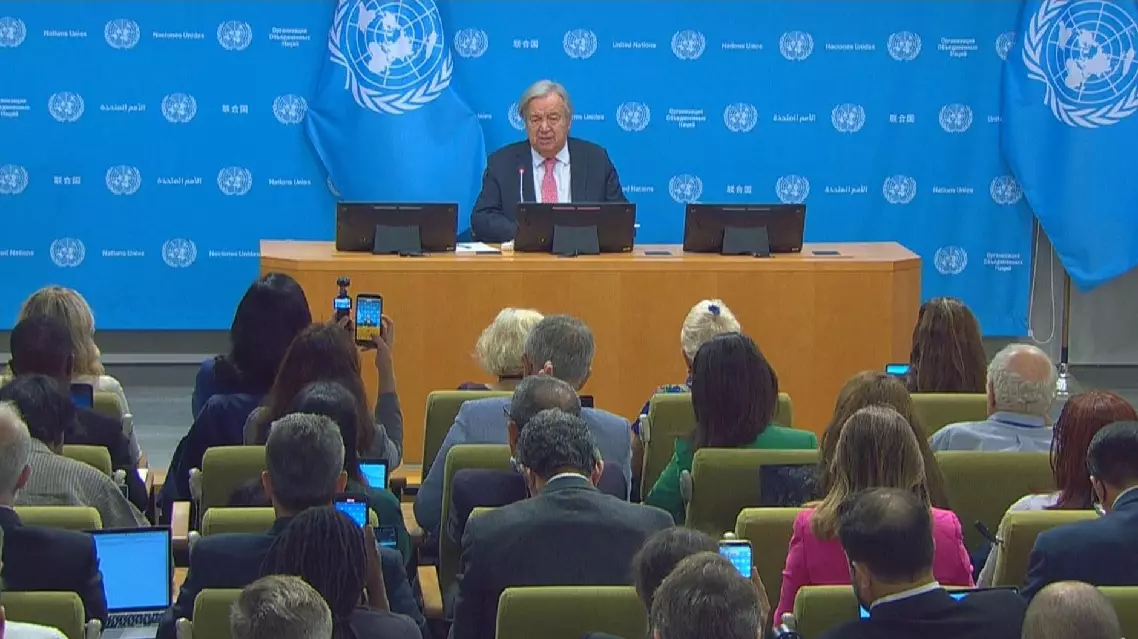
UN chief calls for de-escalation in Mideast, Ukraine
The Global Health Forum 2026 Haikou Conference was held in Haikou City of south China's Hainan Province on Wednesday, focusing on global health governance and international cooperation.
Hosted by the Boao Forum for Asia, the event gathered participants from across the globe to explore ways to enhance international collaboration in tackling shared health challenges.
"There is still a long way to go in advancing the global health cause. We urgently need to build greater consensus, and strengthen solidarity and cooperation, so that health can serve as a fundamental foundation for ensuring sustainable and high-quality development," said Leung Chun-ying, vice chairman of the National Committee of the Chinese People's Political Consultative Conference while addressing the conference.
The conference covered a wide range of health-related topics from healthy aging to health industry cooperation. Artificial intelligence (AI) was one of the key focuses, as the technology continues to rapidly reshape the healthcare sector.
"I think some of the ways that are the most exciting are the ones we don't see. They are not helping the patient directly. They are not helping the doctor directly, but they are making the systems more efficient," said Alain Labrique, director of the Department for Data, Digital Health, Analytics and AI at the World Health Organization.
While some remain concerned that AI hallucinations could pose risks when the technology is used in healthcare, guests at the event said such risks can be mitigated through proper regulation and appropriate human oversight.
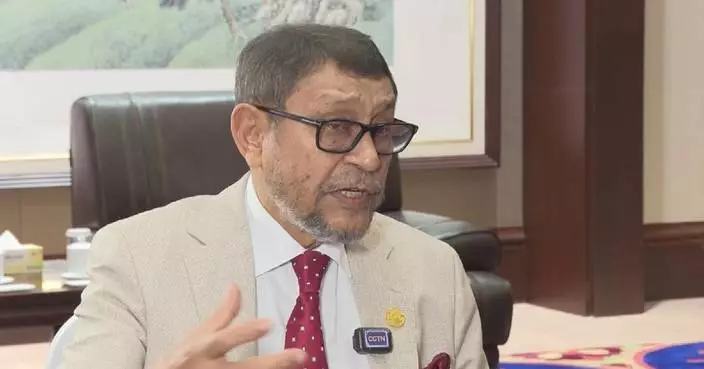
"If I use a calculator, if I give two plus two and if I had five, that is the man behind the machine. So, the man behind the machine must be very careful and technologically very high and efficient," said Sardar Md. Sakhawat Husain, Bangladesh's Minister of Health and Family Welfare. "It's critical that regulators and regulatory systems are in place to make sure that people have access to the right tools for what they need. And to make sure that companies and systems are accountable for when mistakes happen," Labrique said.
Participants also noted that global health governance needs to keep pace, bringing countries together to respond to both new opportunities and emerging challenges.
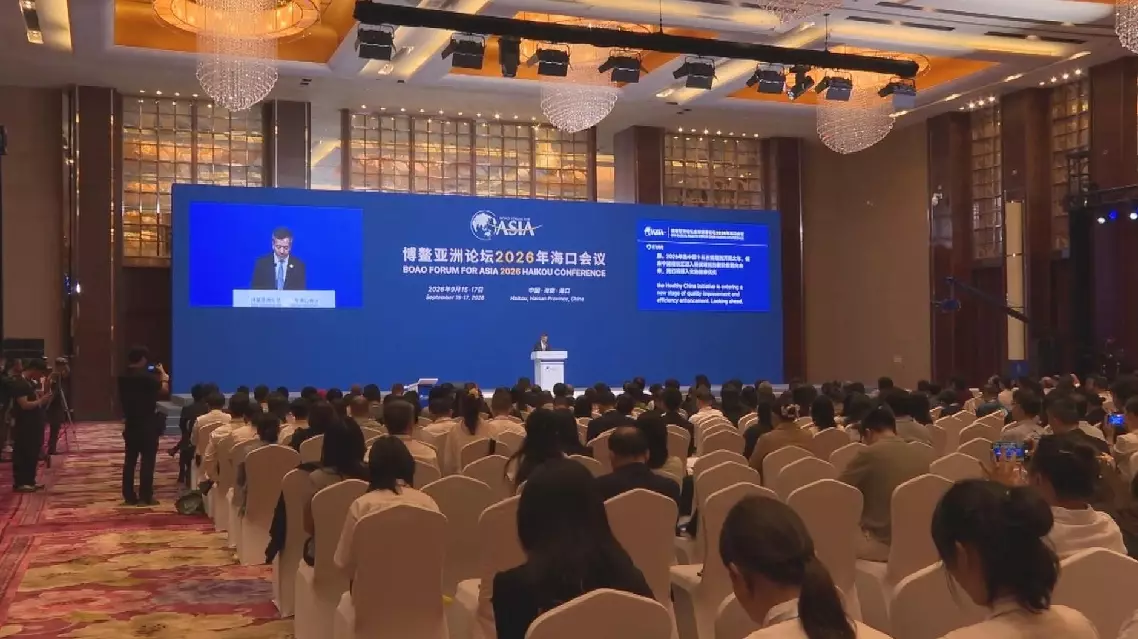
Global Health Forum held in south China's Hainan to focus on international health cooperation