China's green trade volume ranks first globally, with green product exports nearly doubling over the past five years, according to a report released Thursday by the Chinese Academy of International Trade and Economic Cooperation under the Ministry of Commerce.
The "China Green Trade Development Report (2026)" shows that China's green trade imports and exports reached 802.25 billion U.S. dollars in 2025, accounting for 14.68 percent of the global total, the largest share of any country. Green product exports climbed 14.62 percent year on year to 442.63 billion U.S. dollars, representing 16.53 percent of global green product exports, while imports reached 359.62 billion U.S. dollars, or 12.91 percent of the worldwide total, also ranking first. The figures underscore China's dual role as both a major supplier and a key market for green products, resources, and technology.
"In recent years, the global green and low-carbon transition has deepened, international demand for green products has continued to grow, and the growth rate of China's green product exports has significantly outpaced overall foreign trade growth. The share of green trade in goods trade has continued to expand," said Xu Yingming, director of the Green Economic and Trade Cooperation Research Center at the academy.
According to the report, green products accounted for a growing share of China's exports, reaching 11.74 percent of total goods exports in 2025. Energy-saving and carbon-reduction products, along with clean energy products, together accounted for 82.35 percent of green exports, forming the two main pillars.
The report also noted that China supplied roughly 70 percent of the world's wind power equipment and 80 percent of solar photovoltaic module equipment, providing both equipment and technical support for other countries' energy transitions while fueling its own trade growth.
"The global demand for green and low-carbon transition has pushed Chinese manufacturers to seek energy-saving, low-pollution, and green upgrades. Green supply chain management has become a must for foreign trade enterprises. Greening is no longer limited to final export commodities. It runs through the entire life cycle, from research and development and design to raw material procurement, production, and logistics packaging, driving simultaneous improvements in the quality and efficiency of foreign trade and industry," said Xu.
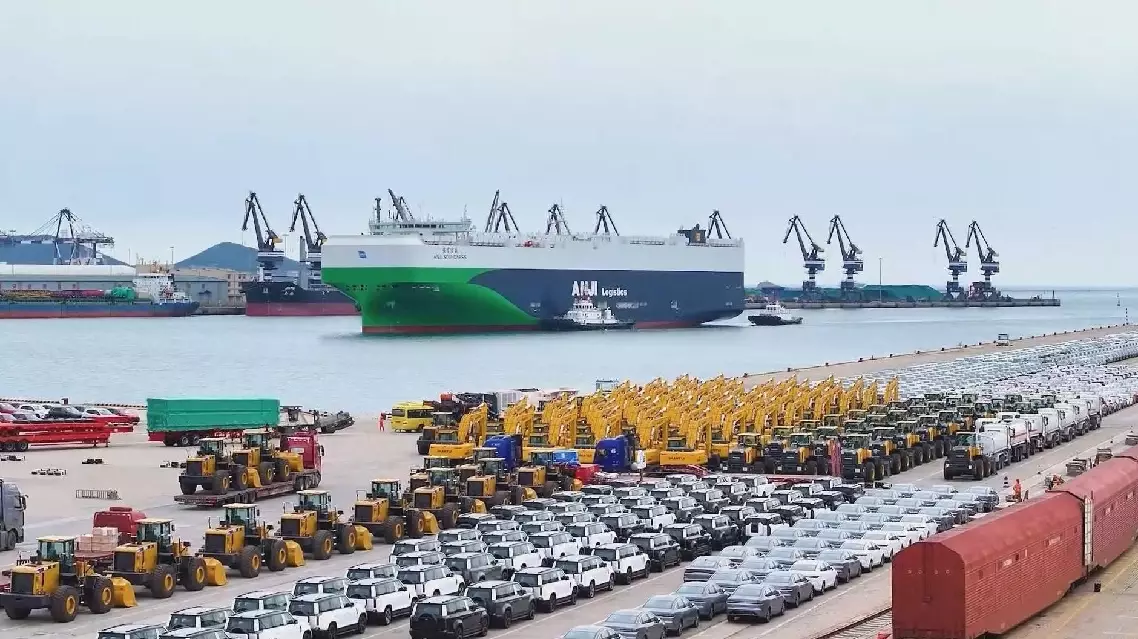
China tops global green trade volume, newly released report finds
The 23rd China-ASEAN Expo opened on Thursday in Nanning, capital of south China's Guangxi Zhuang Autonomous Region, gathering many of the distinctive ASEAN products that traders are used to seeing at the event, alongside the debut of high value-added products.
More than 3,400 companies from over 70 countries and regions are attending, up 5.3 percent from the previous edition. This year's event runs from Sept 17 to 21.
Themed "CAFTA 3.0 Opportunities, Better Life," the expo covers a total exhibition area of about 170,000 square meters, showcasing the latest achievements in cooperation between China and the Association of Southeast Asian Nations (ASEAN).
"A new highlight of the ASEAN exhibition area, summed up in one sentence, is that old friends have arrived along with new technologies. Durian, coffee, fragrant rice and other well-known distinctive ASEAN products are once again making a splendid appearance this year. Old friends will not be absent," said Wang Jicai, secretary-general of the China-ASEAN Expo Secretariat.
"At the same time, the exhibit structure is accelerating its extension toward high-value-added and high-tech fields. For example, Brunei has brought AI companies, while Cambodia's Ministry of Post and Telecommunications (MPTC) and the Ministry of Science, Technology and Innovation of Malaysia have organized high-tech enterprise to participate in the exhibition. Traditional specialties plus cutting-edge technologies make the displayed content more diverse," Wang added.
Timor-Leste, which became ASEAN's 11th member in October 2025, made its debut as a co-organizer at the expo, marking the first time all 11 ASEAN countries have gathered in Nanning.
"This is my first time in Nanning, so I'm really excited to promote my product," said an exhibitor from Timor-Leste.
Also for the first time, the event features a new exhibition area that highlights demand from ASEAN countries and uses intelligent technology to match enterprises with the countries.
Meanwhile, the 23rd China-ASEAN Business and Investment Summit also opened Thursday in Nanning.
China and ASEAN are working to accelerate the implementation of the CAFTA 3.0 Upgrade Protocol. Signed in October 2025, the protocol covers areas such as the digital economy and green development.
Economic ties between China and ASEAN have continued to deepen. Bilateral trade topped 1 trillion U.S. dollars for the first time in 2025, totaling 1.05 trillion dollars, up 7.4 percent year on year. In the first seven months of 2026, trade between the two sides reached 744.41 billion dollars, an increase of 24.7 percent year on year and accounting for 21.8 percent of China's total foreign trade.
China has remained ASEAN's largest trading partner for 17 consecutive years, while ASEAN has been China's largest trading partner for six successive years.
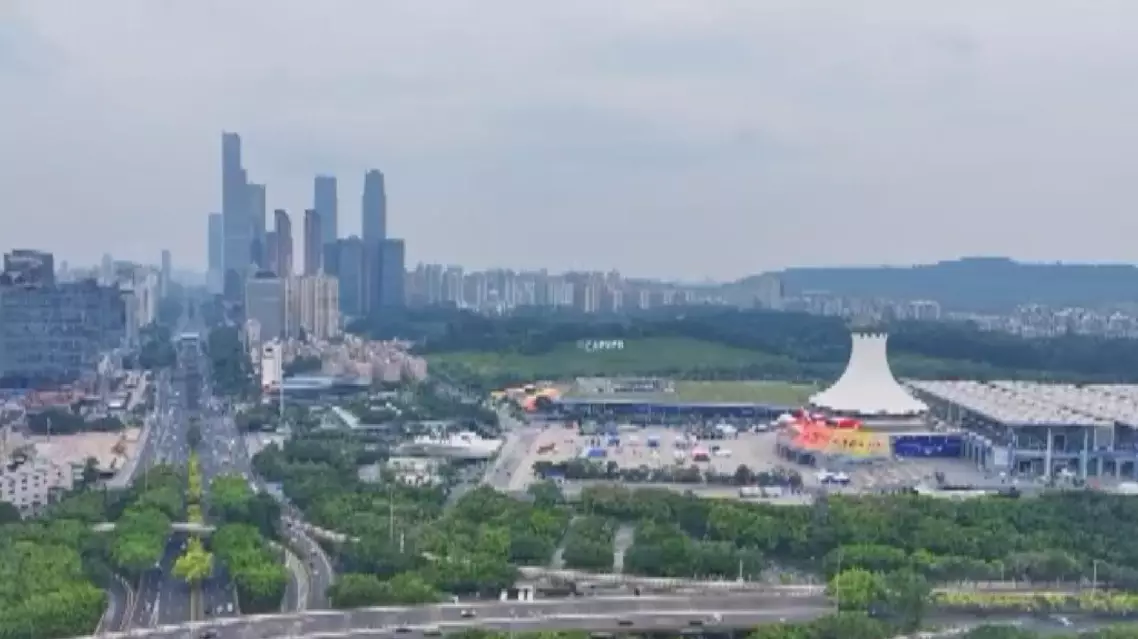
High-value products join regional staples as 23rd China-ASEAN Expo opens in Nanning