A bell-ringing ceremony was held to mark the 95th anniversary of the September 18 Incident in front of a monument at the September 18 Incident History Museum in Shenyang City, northeast China's Liaoning Province, on Friday.
On September 18, 1931, Japanese troops blew up a section of the railway near Shenyang under their control and accused Chinese troops of sabotage as a pretext for subsequent aggression against China.
A bell was struck 14 times, symbolizing the 14 years of fight against Japanese aggressors by the Chinese people.
At 09:18, air raid sirens blared in all cities in Liaoning Province simultaneously for three minutes to remind the public to remember history and cherish peace.
For years, China has kept marking the September 18 Incident.
The incident in 1931, at which Japanese troops began the bloody invasion of China, foreshadowed World War II and made the country the first to resist fascism.
During the Chinese People's War of Resistance Against Japanese Aggression which lasted until 1945, China suffered a total of 35 million military and non-military casualties, accounting for a third of the total casualties of all the countries in World War II.

China marks 95th anniversary of Sept 18 Incident

China marks 95th anniversary of Sept 18 Incident
The Bank of England (BoE) on Thursday kept its benchmark interest rate unchanged at 3.75 percent, as surging global energy prices pushed up inflation and raised the prospect of further price pressures in Britain.
According to the bank, global energy prices had risen significantly since the July Monetary Policy Report and remained volatile. Spot prices of Brent crude and British wholesale gas had risen by 36 percent and 78 percent, respectively, since the period leading up to the July Report, it said.
Data released by the Office for National Statistics on Wednesday showed that Britain's consumer price index (CPI) rose 3.1 percent year on year in August, up from 2.9 percent in July. On a monthly basis, motor fuels made the largest upward contribution.
The bank expected CPI inflation to rise further to around 3.75 percent in the last quarter of 2026 and to reach slightly above 4 percent in the first quarter of 2027, based on energy prices at the close of business on Monday.
The bank said the monetary policy was being set to ensure inflation comes down to 2 percent sustainably as the economy adjusts to the energy shock. The policy stance required to achieve this will depend on the scale and duration of the shock and how it feeds through the economy.
So far, higher global energy costs have had "a limited effect" on price and wage-setting in Britain, said Andrew Bailey, governor of the BoE. But he also noted that "the longer this volatility persists, the bigger the impact it will have on inflation, and the more likely it is we will need to raise bank rate to ensure that inflation falls back to our 2 percent target."
The decision to hold the interest rate came as the BoE's Monetary Policy Committee voted 6-3, with three members voting to increase the rate by 0.25 percentage points to 4 percent.
"Monetary conditions in this country have tightened quite a bit this year because we were expected to cut rates and we haven't," Bailey said.
The bank also noted that, given the time it takes for inflationary pressures to spread, it should not wait too long for evidence that inflation was becoming more entrenched in the economy before raising interest rates.
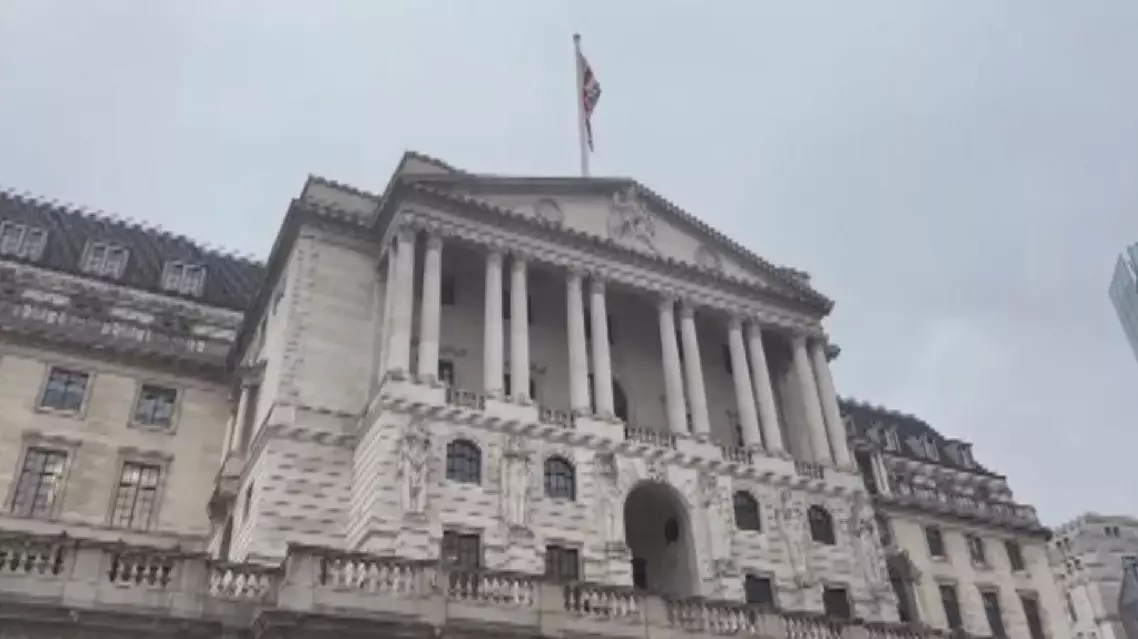
Bank of England holds interest rate at 3.75 pct despite energy price hikes