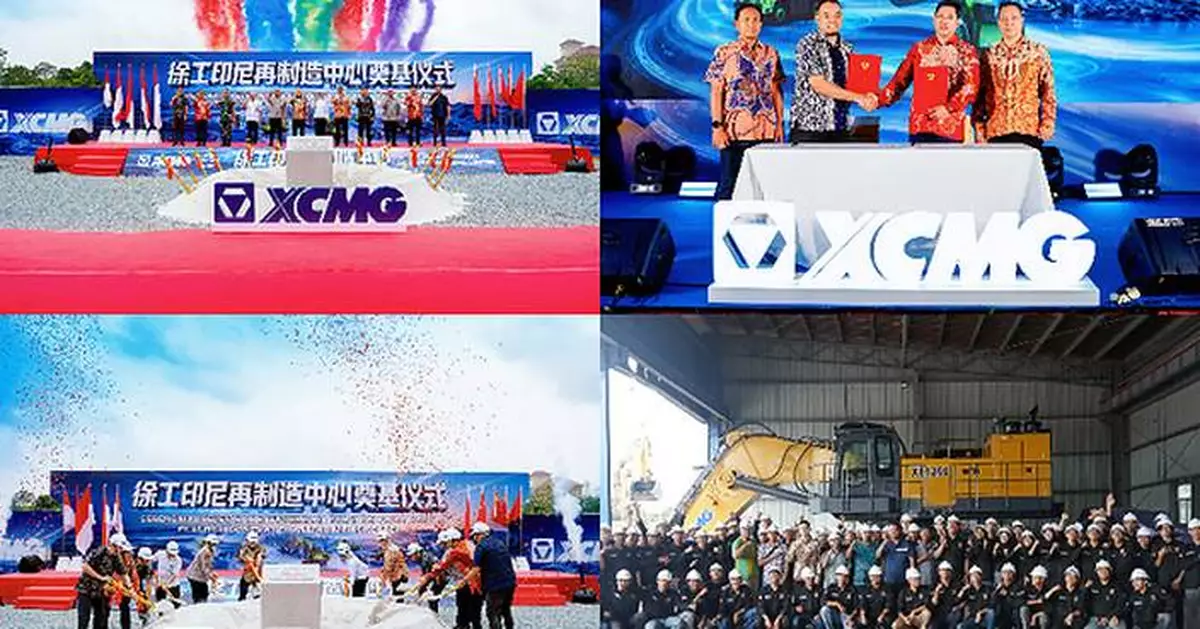
BALIKPAPAN, Indonesia, Sept. 18, 2026 /PRNewswire/ -- XCMG broke ground on the XCMG Indonesia Remanufacturing Center on Sept. 16 in Balikpapan, Indonesia. As XCMG's first overseas base dedicated to the overhaul and remanufacturing of mining equipment components, the project marks the start of a localized aftermarket service center supporting equipment throughout its operational lifecycle and represents a key step in the company's overseas localization strategy.
The center will integrate the overhaul and remanufacturing of core components, regional parts warehousing, local technical talent development and used-equipment refurbishment. It will connect key processes including used-component recovery and inspection, repair and remanufacturing, parts supply and on-site service, creating a localized aftermarket service system spanning the operational lifecycle of mining equipment.
Designed to meet local customer needs, the center will adopt global remanufacturing standards and a lean quality management system. Once operational, major overhaul work can be carried out locally, shortening equipment downtime and service response times while helping ensure restored component performance. These capabilities are expected to help customers better manage operating costs, improve equipment availability and increase operational efficiency, while accelerating XCMG's transition from an equipment supplier to a provider of full-lifecycle solutions.
"With the remanufacturing center located here, overhaul and spare-parts support will be faster, and downtime-related losses will be easier to control," said an Indonesian mining customer representative. "This gives us greater confidence in deepening our cooperation with XCMG."
After more than 30 years in Indonesia, XCMG has steadily expanded its localized capabilities across the equipment value chain. The groundbreaking is the latest in a series of milestones advancing the company's local operations this year.
Days earlier, XCMG officially introduced XCMG Indonesia Finance Company (ABC Multi Finance) at Mining Indonesia 2026, held Sept. 9-12 in Jakarta. The move expanded XCMG's local capabilities beyond equipment, technology and services to include integrated financing solutions.
Earlier this year, the company also completed and commissioned its Indonesia New Energy Manufacturing Base, bringing manufacturing and delivery closer to the local market. It inaugurated an Indonesia R&D center focused on adapting equipment to high-temperature, humid environments and complex operating conditions.
By extending its existing R&D, manufacturing, supply, sales, service and financing capabilities into localized component overhaul and remanufacturing, XCMG aims to provide more comprehensive solutions for Indonesia's mining and infrastructure sectors and support their transition toward greener, more efficient operations.
** This press release is distributed by PR Newswire through automated distribution system, for which the client assumes full responsibility. **
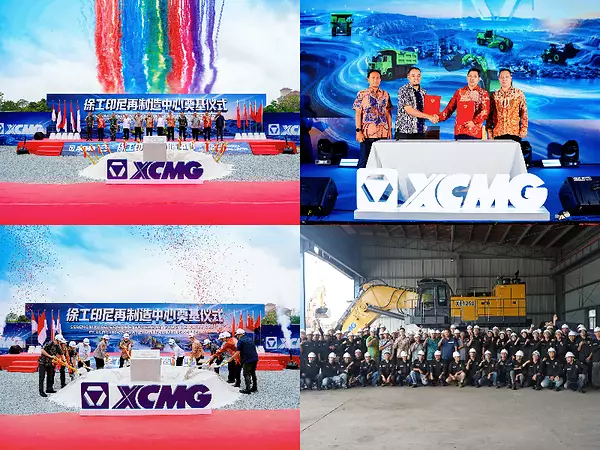
XCMG Breaks Ground on Its First Overseas Base for Mining Equipment Component Overhaul and Remanufacturing in Indonesia
KUNMING, China, Sept. 18, 2026 /PRNewswire/ -- A news report from China Report ASEAN:
A group of Indonesian rural officials arrived in China on September 9 for a week-long study tour to Kunming, Xishuangbanna, and other parts of Yunnan Province as part of the 2026 Indonesian Rural Officials Training Program, also known as the sixth "Village Heads Class." The program is giving participants a close-up look at China's experience in rural revitalization, grassroots governance, distinctive local industry development, and efforts to benefit farmers and boost rural incomes.
Hosted by the Chinese Embassy in Indonesia and organized by Yunnan Minzu University, this program brought together more than 20 Indonesian village officials and relevant staff. The opening and welcome ceremony drew officials from relevant Chinese and Indonesian departments, faculty and student representatives from Yunnan Minzu University, and media representatives, including those from CICG Asia-Pacific.
Wang Xiangang, Deputy Secretary of the Party Leadership Group of the Yunnan Provincial People's Government, said Yunnan—once a key battleground in China's fight against poverty—has marked a historic milestone by eradicating absolute poverty. The province has bolstered safeguards against a return to poverty, refined mechanisms that connect farmers with industry and share development benefits with them, advanced highland agriculture with distinctive local features, and built labor service brands that help rural workers find stable employment. It has also sent numerous village-based work teams, upgraded rural infrastructure and living conditions, and cultivated rural long-stay tourism. Together, these efforts have provided Yunnan with extensive experience in rural development. Today, the province is the world's leading flower producer, its coffee, blueberry, and avocado industries are flourishing, and its agricultural exports have long outpaced those of other western provinces and regions in China.
Wang Xiangang noted that Yunnan and Indonesia enjoy deep historical ties: Yunnan is the birthplace of the great Chinese navigator Zheng He. Friendly exchanges between the two sides—and people-to-people exchanges in particular—have gained strong momentum. In science and technology, Yunnan helped build Indonesia's first waste gasification power plant and deepened cooperation on vaccines and coffee breeding. In agriculture, the two sides partnered on an organic rice project that has significantly raised local grain output, with follow-up projects on photovoltaic lighting and organic farming upgrades in the pipeline. Overall, bilateral cooperation rests on a solid foundation and has produced fruitful results, with broad prospects ahead.
Ruan Chaoqi, Party Secretary of Yunnan Minzu University and Director of Yunnan Training Base for Ethnic Minority Cadres, expressed his hope that the program will help Indonesian participants strengthen their governance capacity and overall competence—and, in turn, contribute more to the comprehensive strategic mutual trust between China and Indonesia. Such people-to-people exchanges and experience-sharing, he noted, will bolster connectivity, deepen cultural exchange, and bring the two peoples closer, creating more opportunities for high-quality Belt and Road cooperation. On behalf of Yunnan Minzu University, he also hoped that more Indonesian officials and young students would choose Yunnan for study and exchange, so that the two sides can learn from each other and grow together.
Indonesia has more than 80,000 villages, each with its own resource endowments. Mulyadin Malik, Head of the Agency for Development and Information at Indonesia's Ministry of Villages and Development of Disadvantaged Regions, said the Golden Indonesia 2045 Vision positions villages as key players in economic development, and Indonesia has rolled out 12 village action plans. Under a multi-stakeholder mechanism, the government, businesses, universities, financial institutions, local communities, and international development partners all contribute to rural development—particularly in food, energy, and water security, export industry incubation, digital transformation, and climate change response. These efforts have yielded substantive progress.
Mulyadin Malik stressed that rural development is vital to a country's progress and future—a view both Indonesia and China share. Though separated by the sea, the two countries enjoy a long-standing friendship. On October 17, 2023, the two sides signed a memorandum of understanding in Beijing on cooperation in rural development and poverty reduction, setting up a framework for policy exchanges, experience-sharing, and capacity-building in these areas. As a concrete example of cooperation under this framework, the Indonesian Rural Officials Training Program seeks to promote mutual learning through the sharing of experience.
"We look forward to learning from China's valuable experience in rural development and adapting it to the resource endowments and on-the-ground needs of Indonesian villages before putting it into practice," said Mulyadin Malik. He hoped that this program will help Indonesian rural specialty products access the Chinese market, strengthen village economies, expand business networks, and improve the well-being of rural communities—ultimately helping build a mutually beneficial partnership between the two countries.
The Joint Statement Between the People's Republic of China and the Republic of Indonesia on Advancing the Comprehensive Strategic Partnership and the China-Indonesia Community with a Shared Future, issued in 2024, explicitly states that the two sides will expand cooperation in poverty alleviation and reduction, agriculture, and rural revitalization, jointly promote agricultural and rural modernization, and steadily improve the well-being of both peoples.
Launched in 2019, the Indonesian Rural Officials Training Program has held six sessions to date, giving more than 100 Indonesian village heads firsthand exposure to rural development in China. After returning home, participants tailored what they had learned to local conditions, yielding a set of cooperation projects that are substantive, replicable, and scalable. Their efforts have helped make mutual learning on grassroots governance a regular feature of China-Indonesia exchanges, turning the program into a signature "small yet beautiful" cooperation project under the Belt and Road Initiative—one closely tied to people's livelihoods and highly exemplary—and earning high praise from the heads of state of both countries.
During the field trip, participants visited Haiyan Village to see rural revitalization in action; explored Luosiwan International Trade City and Dounan Flower Market to learn about trade and specialty industry growth; and traveled to Xishuangbanna, where they got a firsthand look at the local coffee industry, a new business model built on the joint development of three villages, intangible cultural heritage preservation, and digital agriculture bases. They also examined how specialty industries boost rural incomes, how ethnic culture is preserved and passed on, and how new rural business models take shape. Through exchanges with grassroots officials and staff, they gained firsthand insight into China's approach to rural development.
On September 13, grassroots officials from China and Indonesia engaged in a dialogue at the village library in Manzhao Village Group, Menghai County, Yunnan Province. There, the Chinese hosts presented the Indonesian guests with books as study materials, including the English edition of Xi Jinping: The Governance of China (Volume V) and Up and Out of Poverty.
Through this program, the two sides hope to deepen experience-sharing in rural development, strengthen market connectivity, and advance coordinated capacity-building. In doing so, they aim to inject fresh momentum into rural cooperation under the China-Indonesia comprehensive strategic partnership.
** This press release is distributed by PR Newswire through automated distribution system, for which the client assumes full responsibility. **
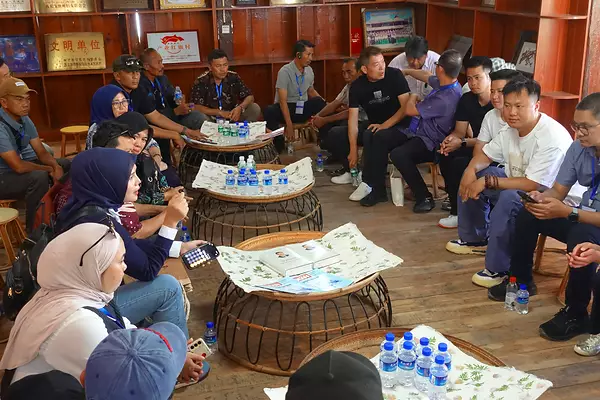
Hearts Meet Along a Shared Path: Indonesian Rural Officials Explore Rural Revitalization in Yunnan