Skip to Content Facebook Feature Image

Russia holds parliamentary vote in areas it seized from Ukraine in the war

News

Russia holds parliamentary vote in areas it seized from Ukraine in the war
News

News

Russia holds parliamentary vote in areas it seized from Ukraine in the war

2026-09-19 12:29 Last Updated At:12:30

Russia’s parliamentary election for the first time includes residents of regions that Moscow illegally annexed from Ukraine after the start of its full-scale invasion more than 4 1/2 years ago, part of Kremlin efforts to cement its gains.

Officials in Kyiv vigorously denounced the action as illegal, and a human rights activist described residents there as being coerced to participate in the election.

While the vote across Russia started Friday and lasts until Sunday to help boost turnout, balloting actually has been underway in the annexed parts of Ukraine and some areas on the Russian side of the border since the end of last month. Officials cited security reasons for the extended period.

Russian authorities say the Donetsk, Luhansk, Kherson and Zaporizhzhia territories, often referred to by Moscow officials as the “new regions,” have over 3.5 million voters. They were annexed by Russia in September 2022, despite not fully being under Moscow's control. The move has not been recognized internationally.

At one polling station in the Russian-held part of the Donetsk region, voters dropped their ballots in a box as an armed Russian soldier stood nearby and watched.

In a speech Wednesday, Russian President Vladimir Putin emphasized the importance of balloting in those regions for the State Duma, the lower house of parliament. Residents there will be voting for the Duma “for the first time since their reunification with Russia.”

He noted that Russian soldiers involved in the fighting also will vote.

Voting also is taking place in Crimea, the Black Sea peninsula that was illegally annexed by Moscow in 2014.

The first wartime election to the State Duma is intended to secure the Kremlin’s political dominance and showcase public support for the war.

“Your choice and resolve will once again demonstrate that millions of people stand behind our fighters, that we are a united people, bound by shared values, historical memory, and love for the Motherland and that nobody can divide or intimidate us, undermine our statehood and political system,” Putin said.

Authorities in Kyiv called the voting in those territories illegal and urged foreign governments and international organizations not to recognize the election. They warned Ukrainians that taking part in organizing the vote could carry criminal liability.

A coalition of nine Ukrainian human rights groups called on residents of the Russia-held territories to stay away from the polls.

“We urge residents of the temporarily occupied territories, above all, to protect their lives and health and to look after their own safety,” the coalition said in a statement. “Holding Russian elections in the temporarily occupied territories is an attempt to use the electoral process to legitimize the Russian occupation and the attempted annexation of Ukrainian territories.”

European Commission spokesperson Christian Wigand said the voting in Russian-held regions represented "another blatant violation of international law. The European Union does not, and will never recognize either the holding of these, so-called elections, sham elections, in the temporarily occupied territories of Ukraine or their results.”

Violeta Artemchuk, coordinator of the Donbas SOS human rights group who was among those who signed the statement, said members of local election commissions were going house to house, escorted by Russian troops and security agents, to force people to vote.

Moscow-appointed authorities exert pressure on residents, threatening those who work in the public sector with dismissal if they fail to vote and making pensions and other social payments conditional on participating, Artemchuk said.

“For instance, if a person with a disability or a pensioner relies on social assistance and does not take part in the ‘voting,’ they could be added to a list of individuals deemed ‘disloyal’ to the so-called authorities and subsequently deprived of their benefits or humanitarian assistance,” she said.

Volodymyr Fesenko, a political analyst with the Kyiv-based Penta Center, emphasized that "elections held at gunpoint are a farce.”

“The very fact that voting takes place amid endless shelling and bombing reflects the Kremlin’s attitude toward the people and the electoral process in the occupied territories," Fesenko told The Associated Press.

"It’s nothing short of a mockery. Any electoral procedures conducted by the Russian occupation authorities have nothing to do with democracy,” he said.
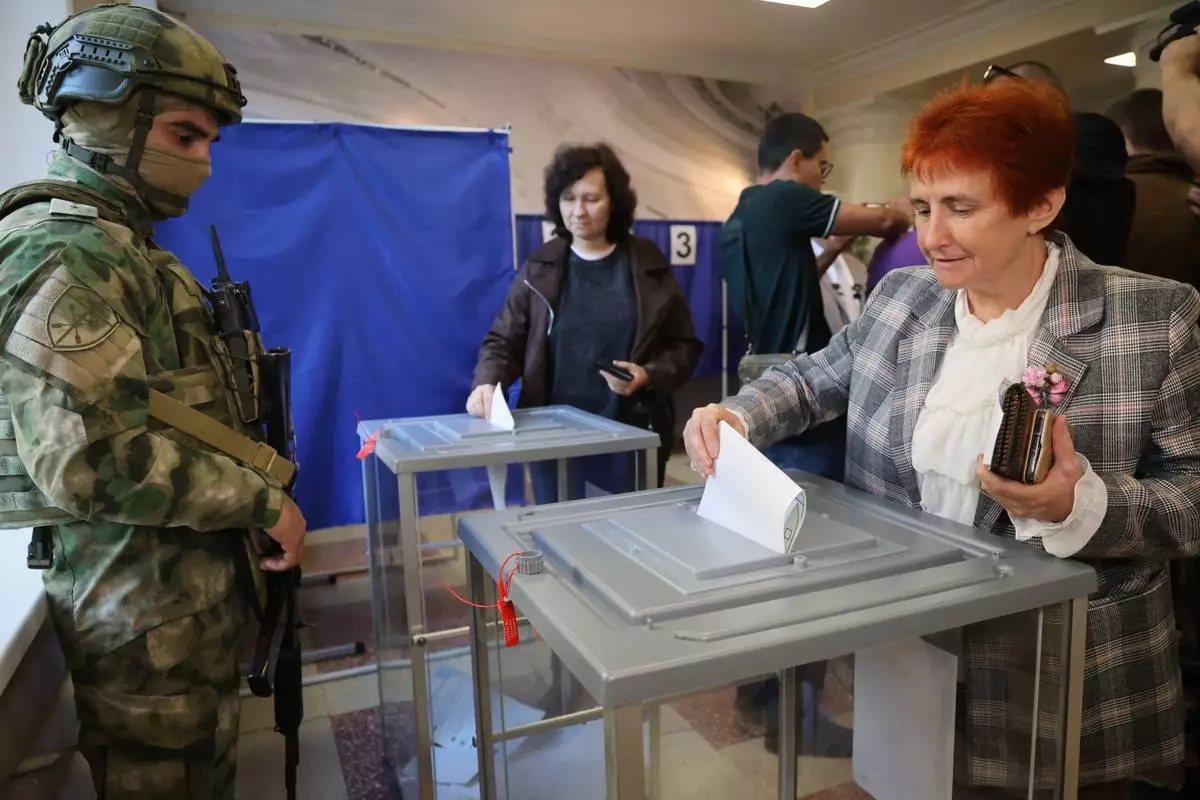
Voters cast ballots at a polling station during Russia's parliamentary election, in the Russian-controlled part of the Donetsk region, Ukraine, Friday, Sept. 18, 2026. (AP Photo)
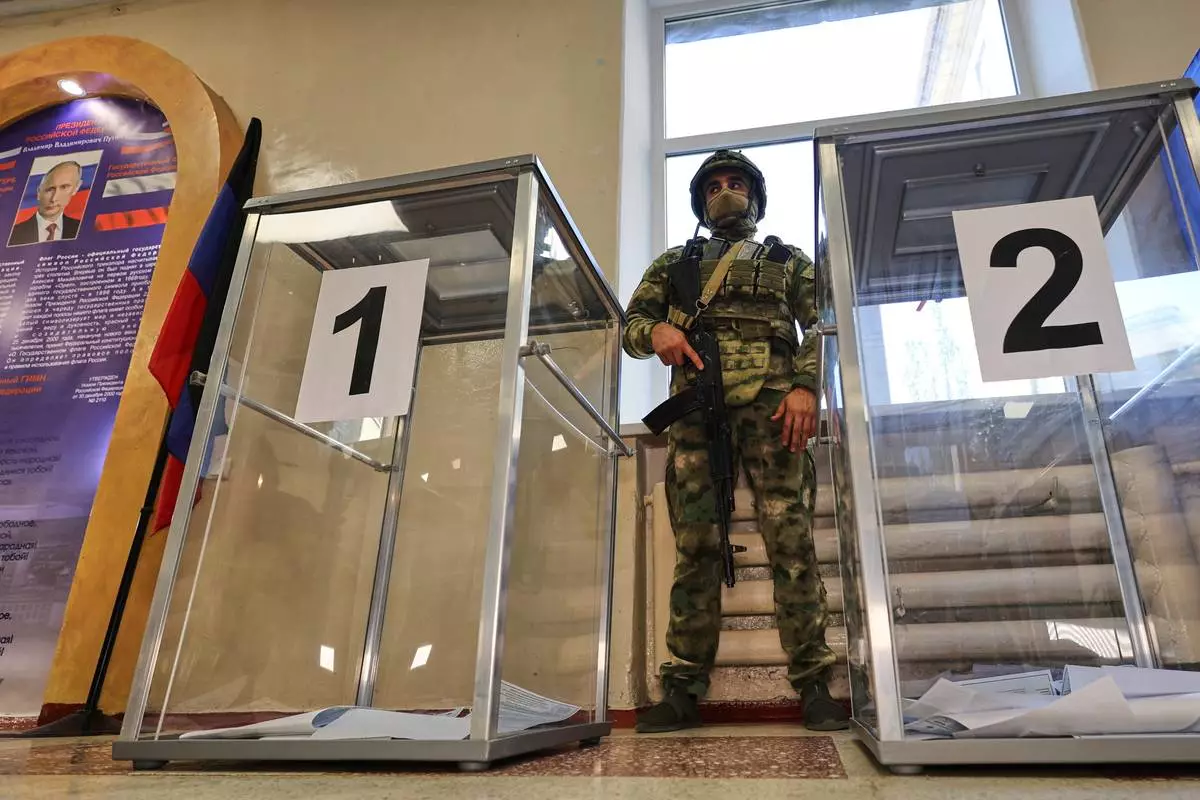
Voters cast ballots at a polling station during Russia's parliamentary election, in the Russian-controlled part of the Donetsk region, Ukraine, Friday, Sept. 18, 2026. (AP Photo)

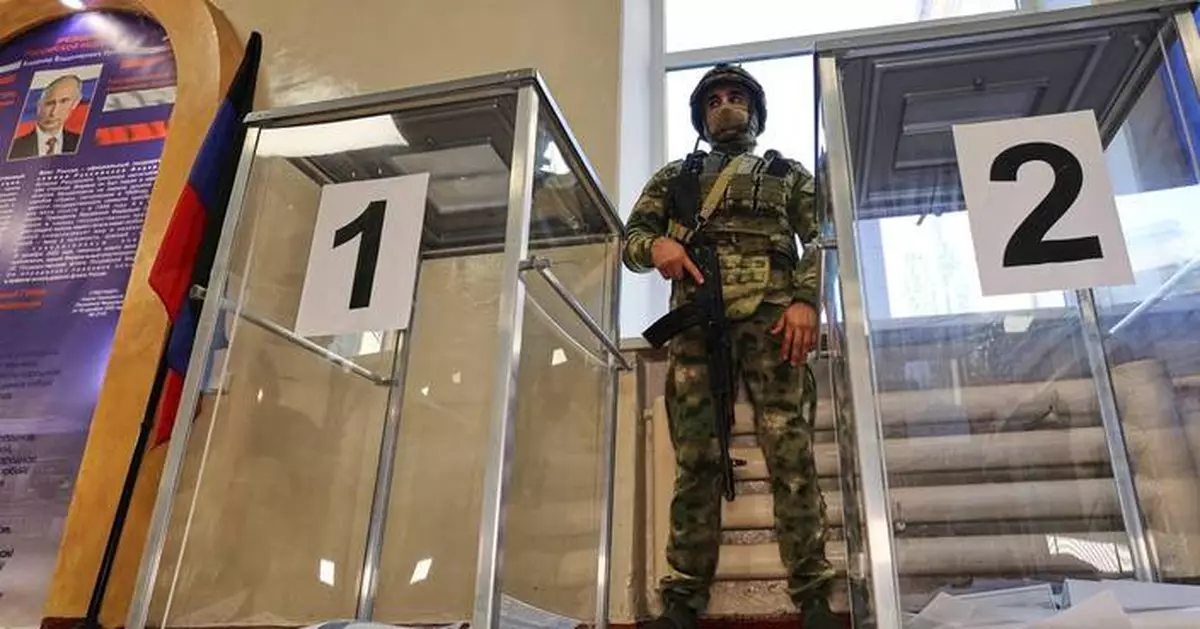
Ballot boxes are seen at a polling station during the parliamentary election in Donetsk, in the Russian-controlled part of the Donetsk region, Ukraine Friday, Sept. 18, 2026. (AP Photo)

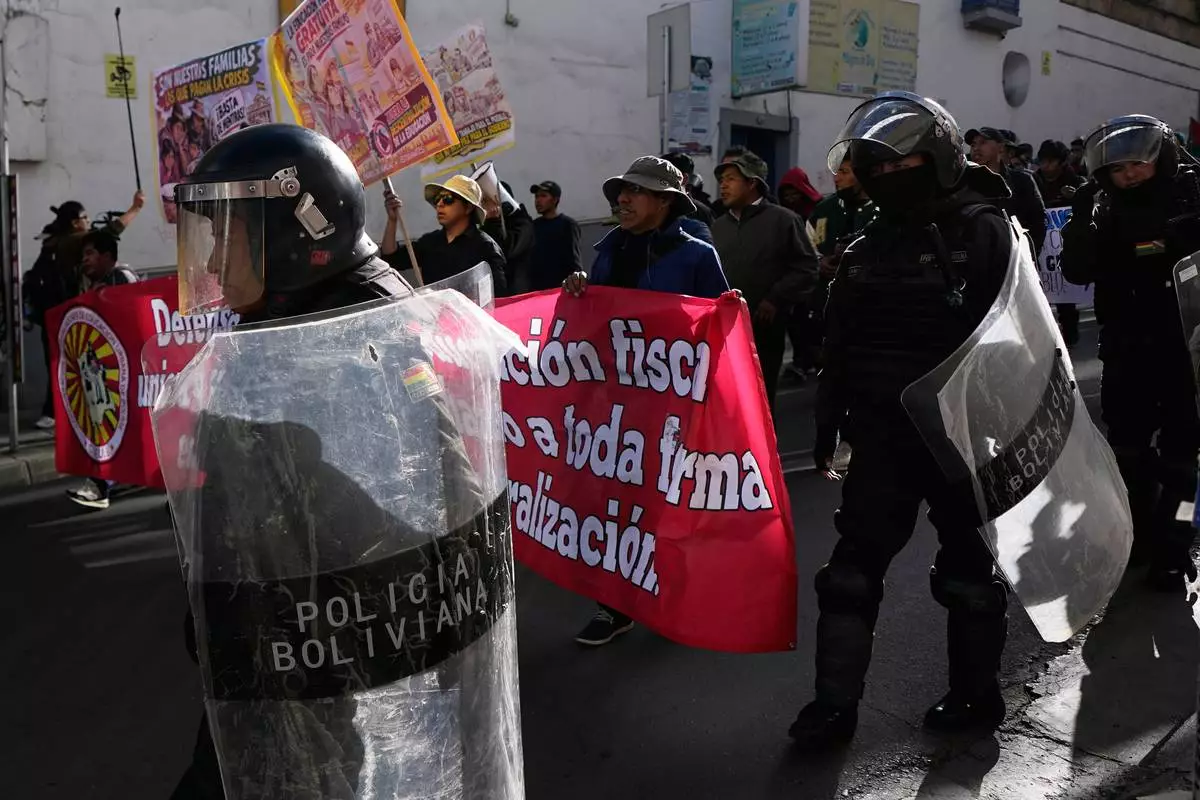
Ballot boxes are seen at a polling station during the parliamentary election in Donetsk, in the Russian-controlled part of the Donetsk region, Ukraine Friday, Sept. 18, 2026. (AP Photo)
LA PAZ, Bolivia (AP) — Bolivian lawmakers approved a $1.9 billion loan agreement with the International Monetary Fund on Friday, delivering the conservative government a key victory in its efforts to ease the country's deep economic crisis as unions threatened renewed protests.

Just hours after Congress approved the loan, President Rodrigo Paz announced an immediate end to subsidies for the diesel powering Bolivia’s trucks, buses and tractors — a step toward meeting IMF demands. Gasoline, used mainly in private cars, would remain subsidized for now, though Paz had already scaled back that support in recent months.

The Senate ratified the IMF agreement a day after the lower house approved it, clearing the final legislative hurdle for the three-year financing program aimed at replenishing dwindling foreign reserves and stabilizing the ailing economy marked by high inflation and weak growth. The IMF first announced the staff-level agreement in July after months of negotiations with Paz’s market-friendly government, which took power last year after nearly two decades of socialist rule as part of a wave of new Latin American leaders allied with the Trump administration.

The program still requires approval from the IMF’s executive board before funds can be disbursed. Economy Minister Christian Morales told senators that the deal would give other lenders, including the World Bank and the Inter-American Development Bank, greater confidence in the government and help it secure about $5 billion in additional financing.

But the assistance is conditioned on tough economic measures, including the elimination of fuel subsidies, that threaten to reignite unrest in Bolivia, where weeks of road blockades in June and July paralyzed much of the South American nation as demonstrators demanded Paz’s resignation. Congress on Thursday extended for another 90 days a state of emergency that Paz had declared to clear roads during the protests. It allows for military intervention and the suspension of some civil liberties.

The Bolivian Workers’ Central, the country’s main labor federation, and other unions have voiced fierce opposition to the IMF loan, warning that the government spending cuts required under the deal would drive up living costs and deepen hardship for struggling families.

Although Paz’s Christian Democratic Party lacks a majority in Congress, the centrist and right-wing lawmakers that dominate both chambers rallied behind the deal. The Movement Toward Socialism, the party that dominated Bolivian politics after the former coca growers’ union leader Evo Morales won the presidency in 2005, now holds just two of the 130 seats in the lower house and none in the 36-member Senate.

Declining natural gas exports have deprived Bolivia of dollars needed to import gasoline and diesel, contributing to chronic fuel shortages that began in 2023 and have persisted under Paz. The Iran war has pushed up global fuel costs, making fuel subsidies an even greater burden on public finances.

“No one can buy something expensive and sell it cheap,” Paz said in his late-night declaration that diesel in Bolivia would now be sold at international prices.

To cushion the blow, he announced about $79 million in cash assistance for 2.9 million Bolivians, along with loans on preferential terms for truckers, small businesses and producers facing higher diesel costs. He pledged to redirect subsidy spending toward schools, hospitals and roads.

He promised the change would end the country’s persistent diesel shortages, which have disrupted harvests and delayed deliveries of imported goods. “With this measure, we guarantee supplies 24 hours a day, seven days a week,” he said.

DeBre reported from Buenos Aires, Argentina.

Police escort teachers during an anti-government protest in La Paz, Bolivia, Tuesday, Sept. 15, 2026. (AP Photo/Juan Karita)

Police escort teachers during an anti-government protest in La Paz, Bolivia, Tuesday, Sept. 15, 2026. (AP Photo/Juan Karita)

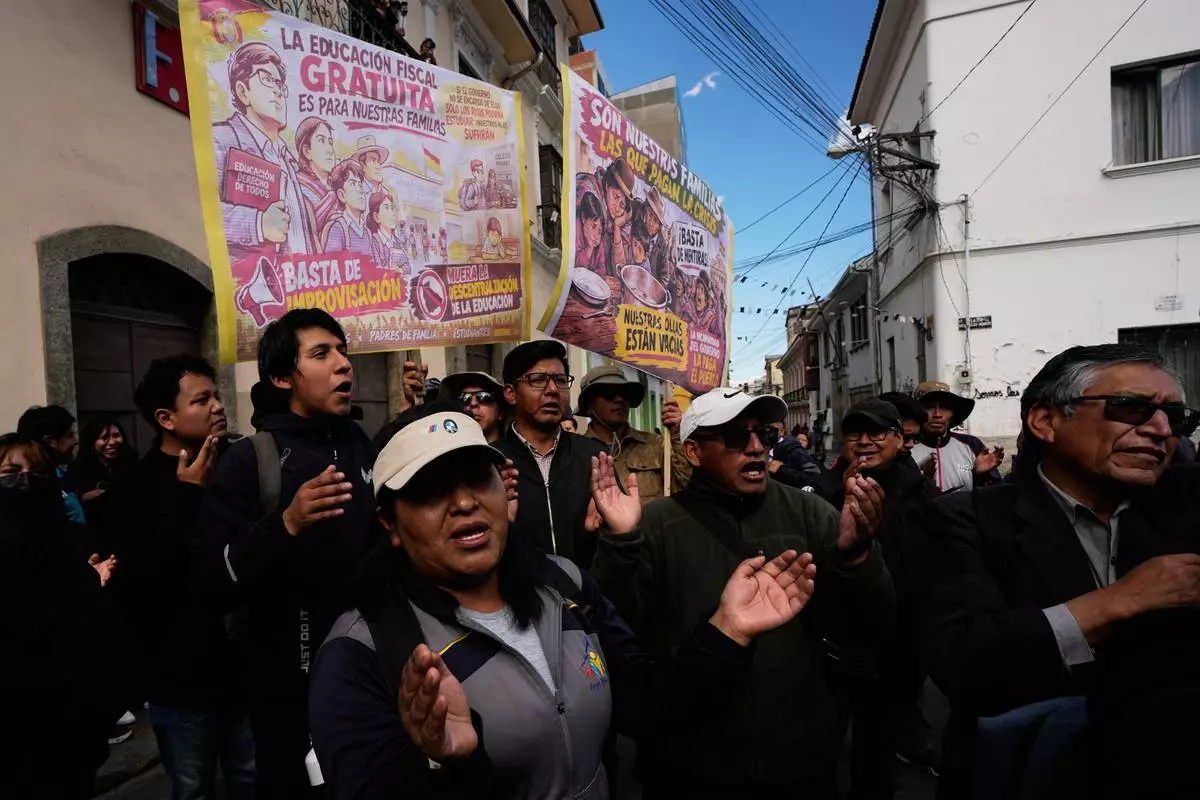
Teachers shout slogans during an anti-government protest in La Paz, Bolivia, Tuesday, Sept. 15, 2026. (AP Photo/Juan Karita)

Teachers shout slogans during an anti-government protest in La Paz, Bolivia, Tuesday, Sept. 15, 2026. (AP Photo/Juan Karita)

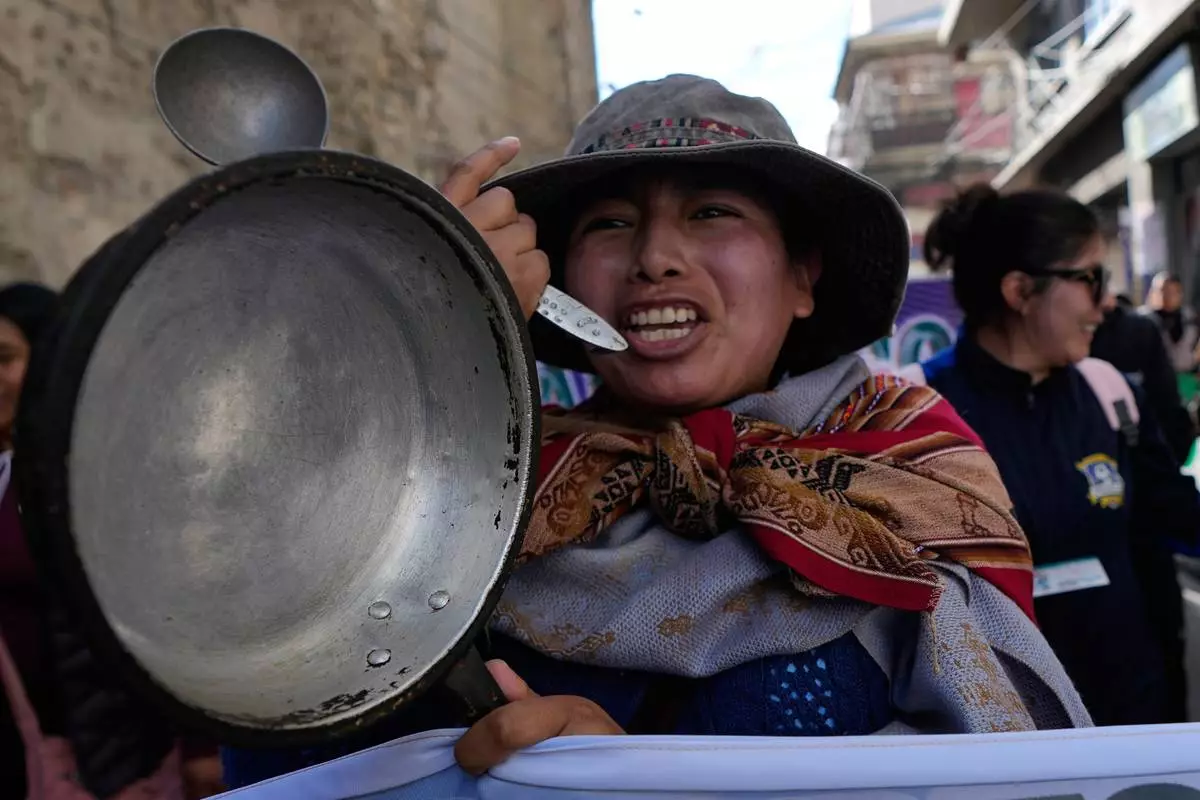
A teacher holds an empty pot during an anti-government protest in La Paz, Bolivia, Tuesday, Sept. 15, 2026. (AP Photo/Juan Karita)

A teacher holds an empty pot during an anti-government protest in La Paz, Bolivia, Tuesday, Sept. 15, 2026. (AP Photo/Juan Karita)

Recommended Articles