The China Manned Space Agency on Sunday released its weekly update on the Shenzhou-23 mission, reporting that the crew has continued scientific research, platform maintenance and health monitoring aboard the Tiangong space station.
Nearly four months into their mission, the three astronauts -- Zhu Yangzhu, Zhang Zhiyuan and Lai Ka-ying -- have been steadily advancing their space science and experiment tasks. Over the past week, they carried out routine maintenance of the space station platform and maintained their daily living and health.
Specifically, the crew conducted research on the spatial interaction between viruses and immune metabolism, accumulating key data for long-term in-orbit health protection. They also completed the replacement of the second batch of in-orbit test samples for the debris migration imaging experiment and experiment samples in the on-orbit maintenance and assembly operation cabinet.
In terms of platform care, the crew took microbial samples from the water dispenser outlet and carried out routine microbial prevention and control work inside the station, reinforcing health safeguards for long-term stays. They also completed personal noise exposure dose measurements and conducted regular cleaning, inspection and maintenance of the cabin environment. For health management, the astronauts completed mass measurements, bone density tests and ultrasound examinations of multiple body parts, including the neck, abdomen, heart, blood vessels and lower limb veins, to continuously monitor changes in their physical condition. While maintaining good exercise habits, they used equipment such as the bone loss countermeasure device to actively counter the physiological effects of weightlessness.
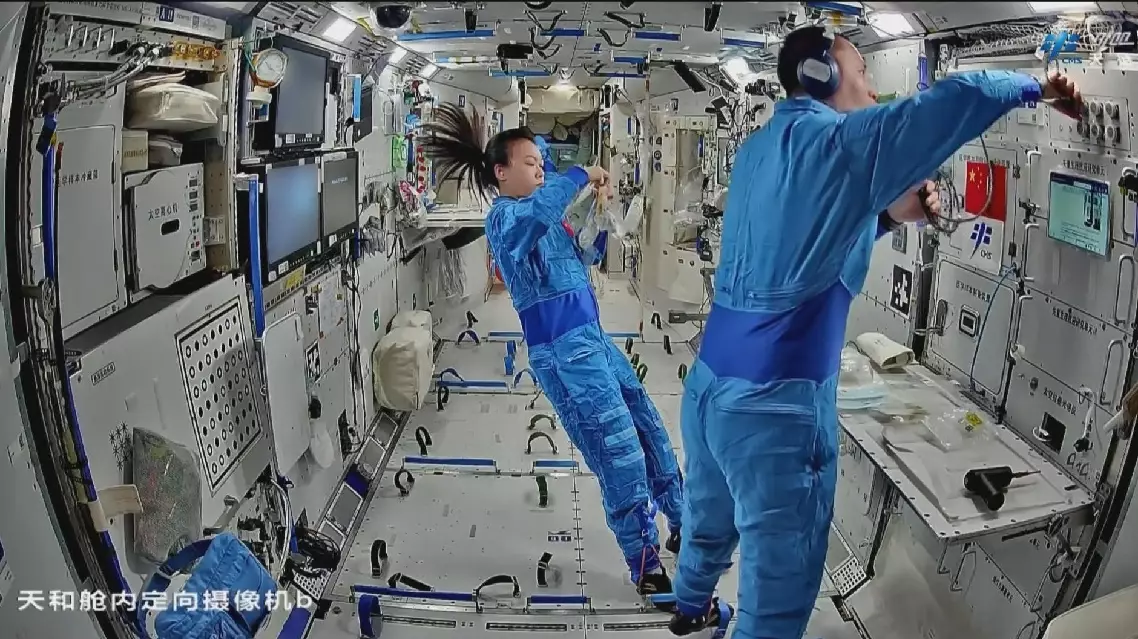
Shenzhou-23 crew conducts science, health checks aboard Tiangong space station
Japanese peace activists screened the Chinese wartime drama "Dead to Rights" in Tokyo on Saturday, with organizers and viewers calling for greater public reflection on Japan's wartime aggression and the Nanjing Massacre.
"Dead to Rights," whose Chinese title translates as "Nanjing Photo Studio," is a 2025 film directed by Shen Ao. Set during the Nanjing Massacre, it follows Chinese civilians who take refuge in a photo studio and risk their lives to preserve photographs documenting Japanese atrocities.
"Japanese society is moving further to the right. Some people even go so far as to claim the Nanjing Massacre never happened. But facts are facts. We must acknowledge them and tell the truth. In that sense, I think people in Japan today lack a sufficient understanding of the history," said Hiroshi Echigo, organizer of the screening.
Dozens of people attended. Viewers said more people in Japan need to learn about the historical facts of the Nanjing Massacre.
"Japanese troops did carry out such massacres in Nanjing, yet some in Japan are trying to suggest that it never happened. It is vital to pass those historical facts on to future generations. Japan is moving toward war again, and I think that is extremely serious. Young people do not know this history, and that is a major problem. That is why it is so important to pass this part of modern history on to the younger generation," one member of the audience said.
Another audience member called for a fuller acknowledgment of Japan's wartime past and stronger exchanges with China.
"Japanese people should learn more about these historical facts and promote friendly exchanges between Japan and China. Japan should acknowledge what it did. On that basis, and to ensure such tragedies are never repeated, I believe every Japanese person has a responsibility to confront this history seriously," she said.
Japanese troops captured Nanjing on Dec 13, 1937, beginning a six-week campaign of mass killing, rape, looting and arson. More than 300,000 Chinese civilians and disarmed soldiers were killed. China observes Dec 13 as the National Memorial Day for Nanjing Massacre Victims.
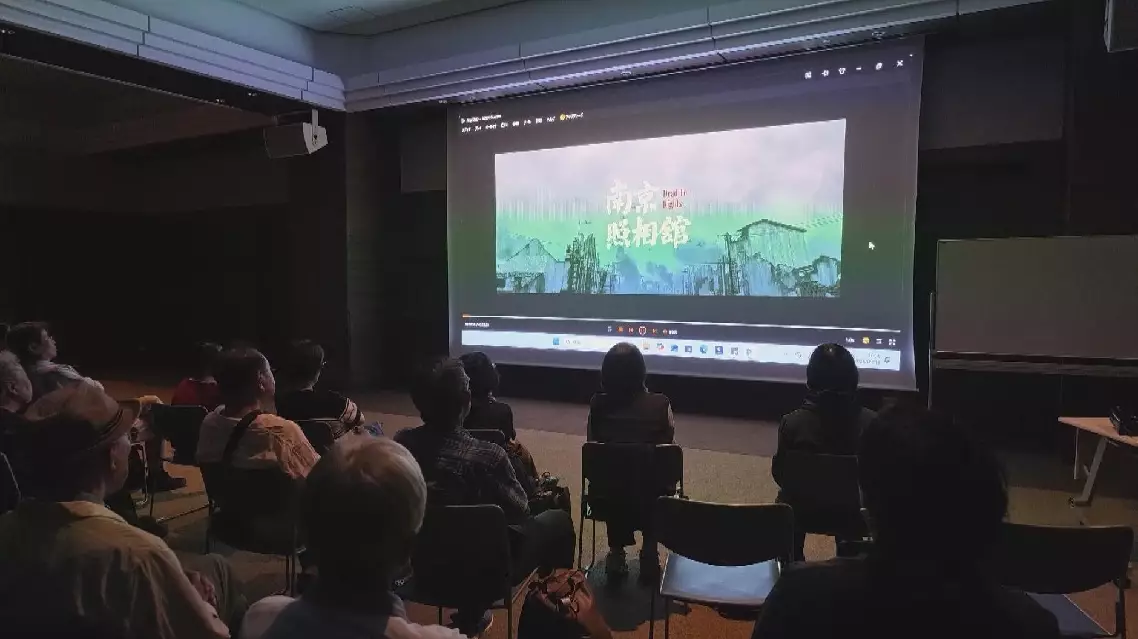
Tokyo screening of "Dead to Rights" prompts calls to face Japan's wartime past