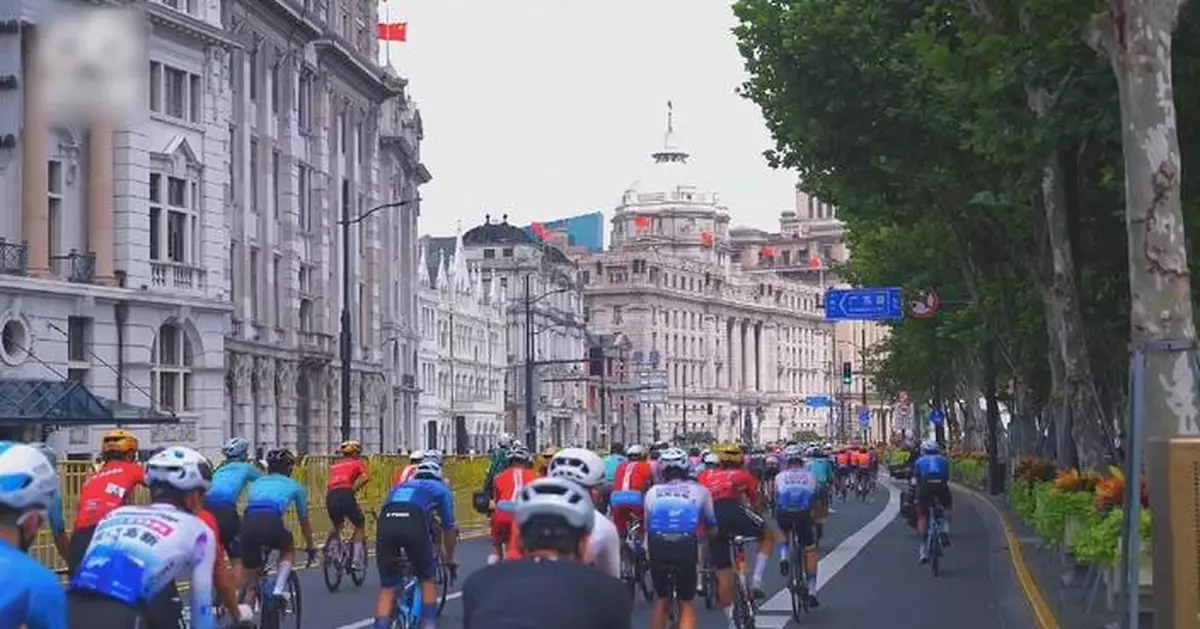
More than 20 professional cycling teams from 12 countries competed in the Tour of Shanghai: New Cities from Sept. 4 to 6, as the UCI Asia Tour event expanded its routes into five suburban districts across the metropolis.
The event took place from Sept 4 to 6 across Shanghai's "five new cities" -- suburban towns in Jiading, Songjiang, Qingpu, Fengxian, and Nanhui, also known as Lin-gang in Pudong New Area.
A total of 21 professional teams from 12 countries -- China, Italy, Spain, Malaysia, Thailand, Colombia, the United States, Slovenia, Estonia, Australia, France, and South Korea -- joined the competition.
In 2025, the race was upgraded to a UCI 2.2 event, becoming Shanghai's first men's road cycling race to join the UCI Asia Tour.
Some participating cyclists said they have been to Shanghai many times, but the metropolis in east China always impresses them on every visit.
"Shanghai is one of the big cities you want to visit once in your life. This is maybe my fourth time already [to visit Shanghai]. People ask me-- if I go to China, where do I have to go? I say, go to Shanghai," said Jesper Rasch, road racing cyclist from Netherlands riding for China Anta Mentech Cycling Team.
The cyclists also visited an ancient village, Jinze Town in Qingpu, where they experienced various water activities, including dragon boating, and tried some local specialties.
"Bicycling in the lake is really nice because we are cyclists. But the dragon boat was really interesting -- I see some videos in TikTok, [but] I never thought it's so hard," said Andreas Miltiadis, a road racing cyclist from Cyprus riding for Quick Pro Team.
Anthony Torr the UCI international commissaire said the competition expanded its routes to include "five new cities" instead of staying just in the downtown, a move that he thought offered a great opportunity for cyclists to have a more comprehensive grasp of Shanghai and even the broader China.
"Quite often we go out in rural areas, while we're racing through suburban areas, it's a great opportunity for more people to actually see and witness firsthand. Not just cycling, but noticing many events that Shanghai and Chinese in general are putting themselves on the world stage is fantastic for your youth and your young people coming through. It's great opportunities," said Torr.
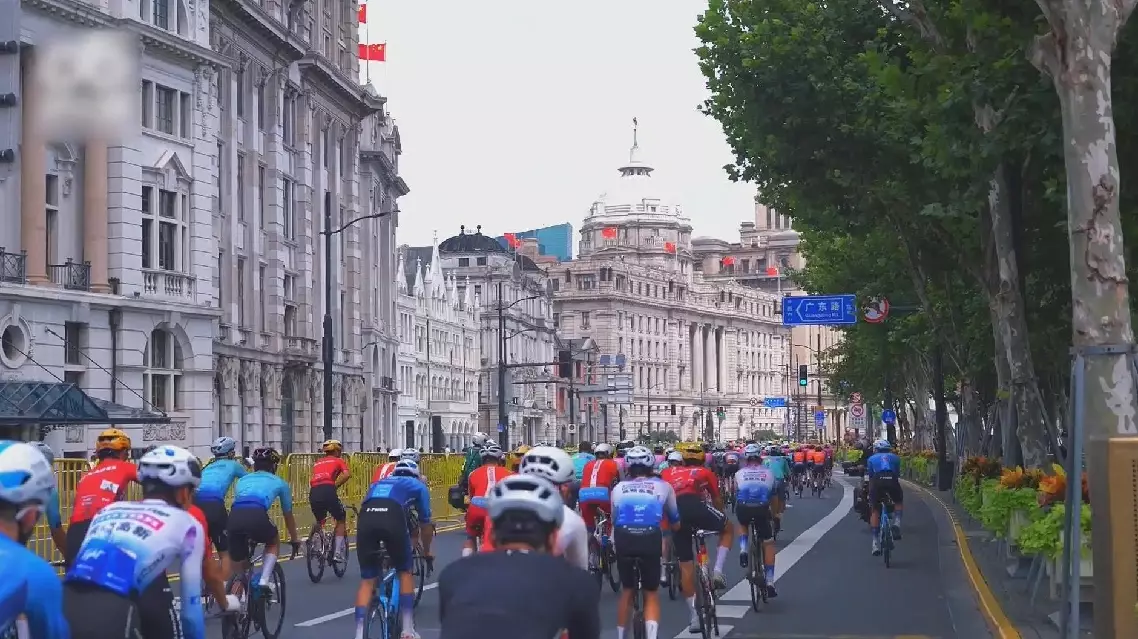
Tour of Shanghai cycling race expands routes to offer cyclists diversified experience
At least 8,000 or more remains are still buried in the rubble in Gaza Strip, and desperate local residents are appealing for international assistance to recover the dead and deliver humanitarian aid to the survivors.
Around half the remains recovered from Gaza City's rubble this month were women and children, the head of the UN Human Rights Office in the Occupied Palestinian Territory, Ajith Sunghay, said on Tuesday.
It is estimated that at the current pace, recovering those still buried in the rubble could take more than a decade.
Sunghay said that Israel has been obstructing excavation and forensic work, making identification harder and risking the loss of evidence.
"The search efforts faced numerous obstacles, including a lack of resources, the Israeli blockade, and the difficulty of official institutions in responding to these accidents and disasters," said Aref Abdul Fattah, a local security officer.
"The civil defense rescue teams in the Gaza Strip are working hard to recover bodies from under the rubble. They have made tremendous efforts. About 8,000 bodies under the rubble are buried beneath more than 300 buildings in Gaza. Rescue workers are cooperating with the International Committee of the Red Cross to search for the victims under the debris. It is exhausting. This is economically, physically, and mentally draining, especially for the civil defense rescue workers. Because of this, they have made enormous efforts on the ground," said Mahmoud Bassal, a civil defense spokesman.
In Islam, burying the deceased is a sacred communal obligation that must be carried out with dignity and care. That is why Gazans are going to extraordinary lengths to recover the bodies of the victims.
"This is one of the most important matters in the lives of Gazans. Their beliefs and Islamic faith urge them to honor the dead by burying them," Aref said.
"Burying the dead is a very important matter, and this, of course, is among the values of our faith," said Bassal.
Calling on Israel to halt the war and destruction and allow aid into the territory, Gazans hope that the international community and relevant institutions will help recover the victims buried beneath the rubble.
"The support of the international community and relevant institutions is crucial, as it helps preserve evidence and confirm identities,"said Bassal.
"We hope to end the war and destruction, and for the Israeli army to withdraw from the Gaza Strip and open the border crossings, so that aid can enter and construction materials can be brought in. In this way, we can rebuild our homes and return to our homeland, so that we can live with dignity on this land," said Tareq Ghanem, a refugee camp representative.
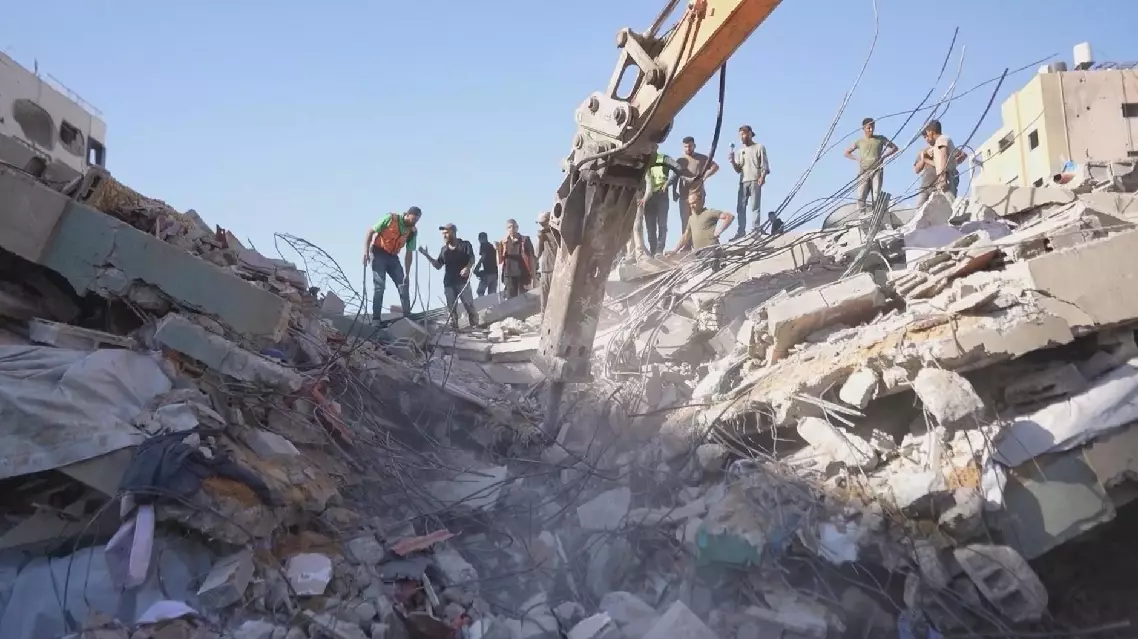
Gazans call for int’l assistance as at least 8,000 bodies still under rubble