Skip to Content Facebook Feature Image

Tokyo screening of "Dead to Rights" prompts calls to face Japan's wartime past

China

China

China

Tokyo screening of "Dead to Rights" prompts calls to face Japan's wartime past

2026-09-20 15:00 Last Updated At:15:07

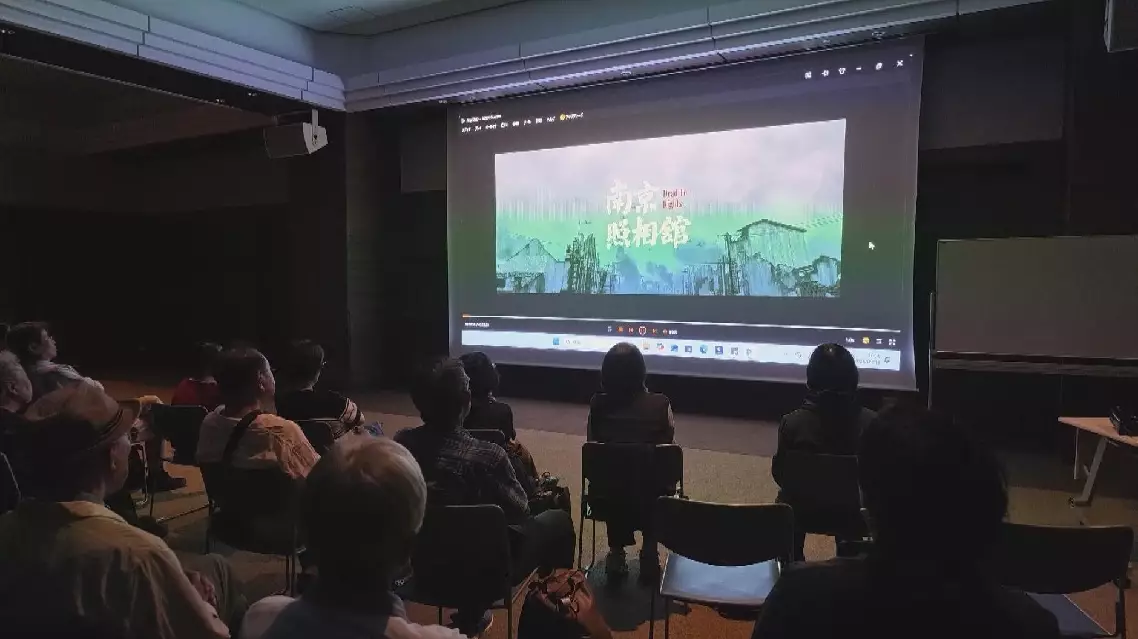
Japanese peace activists screened the Chinese wartime drama "Dead to Rights" in Tokyo on Saturday, with organizers and viewers calling for greater public reflection on Japan's wartime aggression and the Nanjing Massacre.

"Dead to Rights," whose Chinese title translates as "Nanjing Photo Studio," is a 2025 film directed by Shen Ao. Set during the Nanjing Massacre, it follows Chinese civilians who take refuge in a photo studio and risk their lives to preserve photographs documenting Japanese atrocities.

"Japanese society is moving further to the right. Some people even go so far as to claim the Nanjing Massacre never happened. But facts are facts. We must acknowledge them and tell the truth. In that sense, I think people in Japan today lack a sufficient understanding of the history," said Hiroshi Echigo, organizer of the screening.

Dozens of people attended. Viewers said more people in Japan need to learn about the historical facts of the Nanjing Massacre.

"Japanese troops did carry out such massacres in Nanjing, yet some in Japan are trying to suggest that it never happened. It is vital to pass those historical facts on to future generations. Japan is moving toward war again, and I think that is extremely serious. Young people do not know this history, and that is a major problem. That is why it is so important to pass this part of modern history on to the younger generation," one member of the audience said.

Another audience member called for a fuller acknowledgment of Japan's wartime past and stronger exchanges with China.

"Japanese people should learn more about these historical facts and promote friendly exchanges between Japan and China. Japan should acknowledge what it did. On that basis, and to ensure such tragedies are never repeated, I believe every Japanese person has a responsibility to confront this history seriously," she said.

Japanese troops captured Nanjing on Dec 13, 1937, beginning a six-week campaign of mass killing, rape, looting and arson. More than 300,000 Chinese civilians and disarmed soldiers were killed. China observes Dec 13 as the National Memorial Day for Nanjing Massacre Victims.
Tokyo screening of "Dead to Rights" prompts calls to face Japan's wartime past

Tokyo screening of "Dead to Rights" prompts calls to face Japan's wartime past

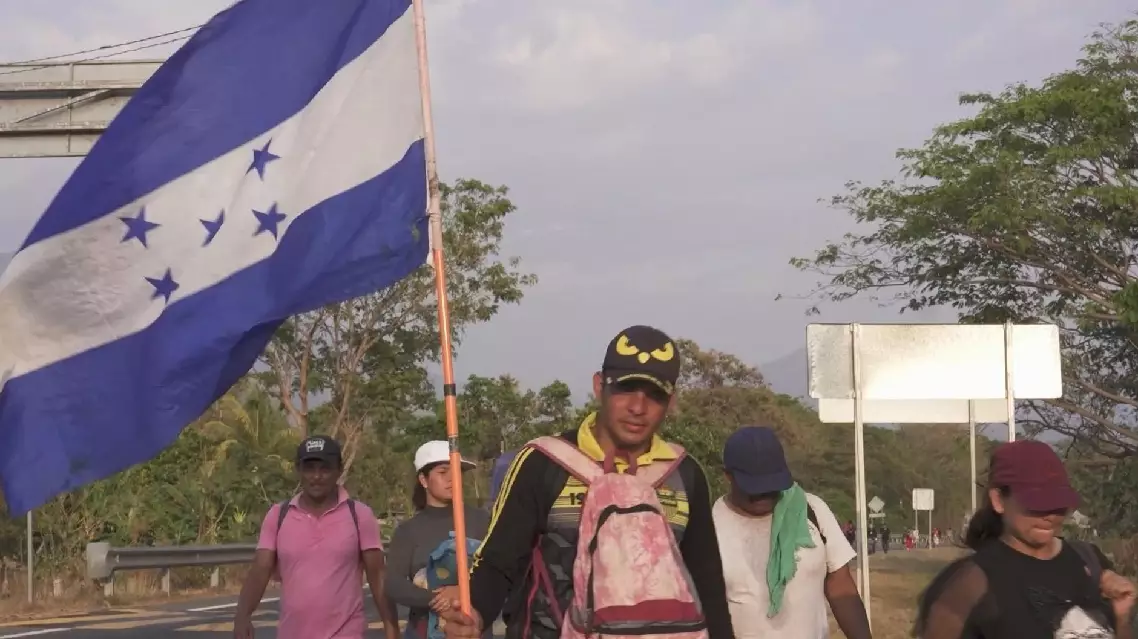
Mexico has transitioned from a transit corridor into a final destination for an increasing number of people in need of international protection, as stricter U.S. immigration and border policies prevent them from entering the country.

The southern border city of Tapachula now has by far the largest concentration of foreign immigrants. The Mexican government estimates some 60,000 migrants are living there.

Meanwhile, the nation's giant capital city has emerged as an important destination for migrants from Cuba, Haiti, Venezuela and other parts of Latin America and the world.

"So, when people seek asylum in Mexico, it is generally understood that what they want is to stay in Mexico," said Gerardo Talavera, a staff member of the CafeMin Refugee House in Mexico City.

Mexico's constitution and federal laws guarantee basic human rights and protections for everyone, including rights to emergency medical care, due process in the justice system, education, protection of children, and the right to request refugee protection.

The Mexican government is working closely with the UN's Refugee Agency to process asylum claims and to support its international agreements to protect refugees in the country.

It also encourages migrants who are going to remain in the country to enter the formal economy. Many migrants now work in the service and construction sectors.

"Here in Mexico City, we want to apply for our papers to see what our future holds. But for now, I have a job and we're doing well, and that's what matters," said Magaly Chicas, a migrant from Honduras, who has been living at the CafeMin Refugee House for two years and has a job in the kitchen.

As more and more migrants decide to stay in the country, Mexico has become one of the top countries in the world receiving asylum applications over the past few years.

Asylum seekers choose to stay in Mexico as US intensifies border enforcement

Asylum seekers choose to stay in Mexico as US intensifies border enforcement

Recommended Articles