Mexico has transitioned from a transit corridor into a final destination for an increasing number of people in need of international protection, as stricter U.S. immigration and border policies prevent them from entering the country.
The southern border city of Tapachula now has by far the largest concentration of foreign immigrants. The Mexican government estimates some 60,000 migrants are living there.
Meanwhile, the nation's giant capital city has emerged as an important destination for migrants from Cuba, Haiti, Venezuela and other parts of Latin America and the world.
"So, when people seek asylum in Mexico, it is generally understood that what they want is to stay in Mexico," said Gerardo Talavera, a staff member of the CafeMin Refugee House in Mexico City.
Mexico's constitution and federal laws guarantee basic human rights and protections for everyone, including rights to emergency medical care, due process in the justice system, education, protection of children, and the right to request refugee protection.
The Mexican government is working closely with the UN's Refugee Agency to process asylum claims and to support its international agreements to protect refugees in the country.
It also encourages migrants who are going to remain in the country to enter the formal economy. Many migrants now work in the service and construction sectors.
"Here in Mexico City, we want to apply for our papers to see what our future holds. But for now, I have a job and we're doing well, and that's what matters," said Magaly Chicas, a migrant from Honduras, who has been living at the CafeMin Refugee House for two years and has a job in the kitchen.
As more and more migrants decide to stay in the country, Mexico has become one of the top countries in the world receiving asylum applications over the past few years.

Asylum seekers choose to stay in Mexico as US intensifies border enforcement

Asylum seekers choose to stay in Mexico as US intensifies border enforcement
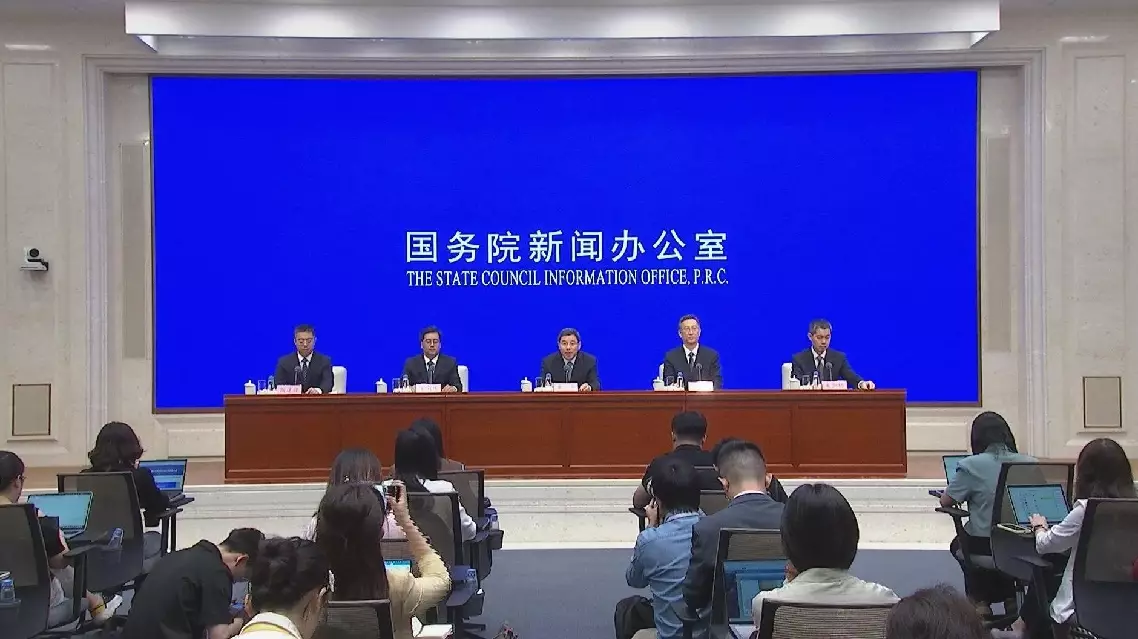
China will further improve its inspection, testing and certification system during the 15th Five-Year Plan period (2026-2030) by boosting the sector's credibility and strengthening its support for industry, a government official said on Sunday.
Speaking at a press conference on the new five-year plan, Shu Wei, deputy administrator of the State Administration for Market Regulation (SAMR), outlined a series of measures to tighten oversight of the sector.
On the credibility front, authorities will deepen reform of the qualification approval system for inspection and testing institutions by introducing a "one list, one database" management approach to strictly control the market entry, Shu said.
Long-term mechanisms will be established to combat fake certification and the buying and selling of certificates, with severe penalties for issuing false reports or conducting tests beyond approved scopes, Shu said.
A traceability and verification system for inspection and testing reports will also be built with unified coding, allowing reports to be looked up with a single code and traced through a single number, he said.
In terms of industrial support, certification will be promoted in key sectors such as Beidou navigation and integrated circuits, alongside the development of national-level quality inspection public service platforms, the official said.
Testing capabilities will be upgraded in areas including core basic components and other foundational industrial equipment, Shu said.
During the five-year period, China plans to build no fewer than 30 national quality inspection centers and no less than 300 public service platforms for inspection and testing, he said.
The official said the reforms are also aimed at facilitating China's trade with the rest of the world.
"Inspection, testing, certification and accreditation can help enterprises and products enter international markets smoothly, which is why they are known as the 'passport' for international trade. We will strengthen the international alignment of testing and certification results, so that one evaluation can gain recognition from multiple countries, helping Chinese products go global," he said.
China to further improve inspection, testing, certification system during 15th Five-Year Plan Period: official