Skip to Content Facebook Feature Image

China's consumption market up 2.5 pct in first 8 months

China

China

China

China's consumption market up 2.5 pct in first 8 months

2026-09-20 14:06 Last Updated At:14:37

China's total retail sales of consumer goods and services grew 2.5 percent year on year in the first eight months of 2026, official data showed, with consumption quality improving and the spending structure steadily upgrading. Retail sales of consumer goods rose 1.1 percent in the January-August period, or 2.7 percent when automobiles are excluded, according to an official at the Ministry of Commerce.

Sales of daily necessities held up well, with grain, oil and food products up 6.8 percent, clothing up 5.1 percent and daily-use goods up 3.8 percent. Certain upgrade-category items grew faster — communication equipment jumped 16.3 percent, while cosmetics and cultural and office supplies rose 6.1 percent and 6.0 percent, respectively.

Sales of petroleum products fell 6.1 percent, a decline the official attributed to the substitution effect of new energy alternatives.

Meanwhile, green, smart and health-related products saw rapid growth. E-commerce data from key platforms showed smart glasses sales more than doubling, up 120 percent, while ECG monitors surged 75 percent, action cameras climbed 26.9 percent and organic food rose 7.4 percent.

Spending patterns are shifting from goods-dominated consumption toward a balance of goods and services, according to the ministry.

Service retail sales grew 4.9 percent in the first eight months, outpacing goods retail by 3.9 percentage points. The summer holiday period injected further vitality, with tourism consulting and rental services, as well as cultural, sports and leisure services, maintaining rapid growth.

The county-level market is emerging as a new driver of consumption.

Rural retail sales reached 4.4 trillion yuan in the first eight months, up 2.3 percent — 1.3 percentage points faster than in urban areas. Retail sales in counties and townships, which include both town and rural areas, accounted for 39 percent of total retail sales, 0.3 percentage points higher than a year earlier.

China's consumption market up 2.5 pct in first 8 months

China's consumption market up 2.5 pct in first 8 months

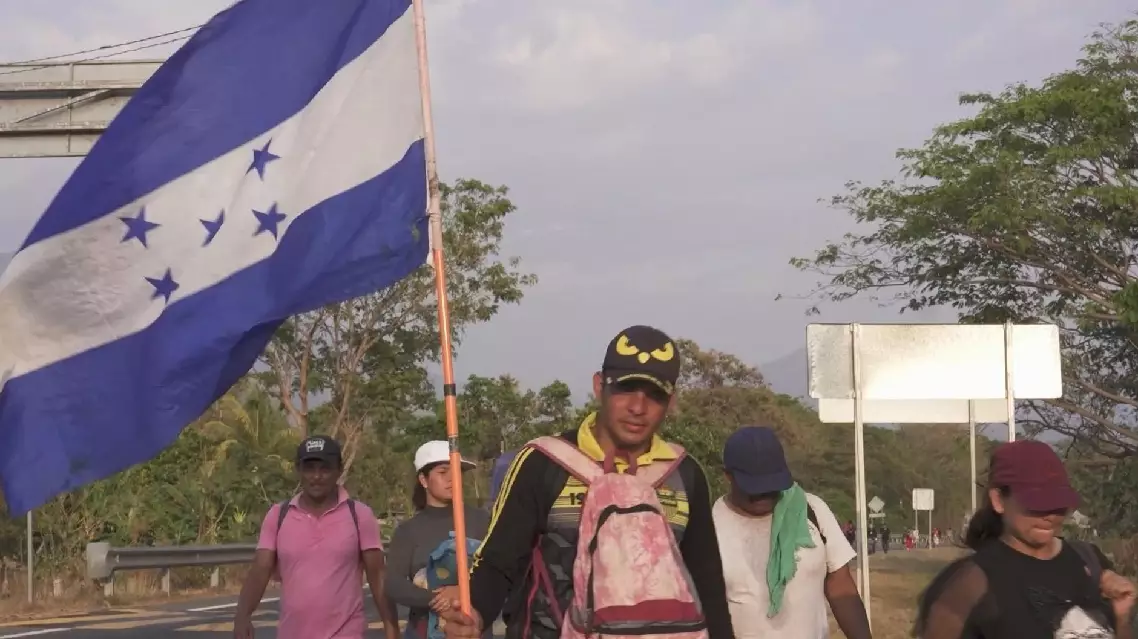
Mexico has transitioned from a transit corridor into a final destination for an increasing number of people in need of international protection, as stricter U.S. immigration and border policies prevent them from entering the country.

The southern border city of Tapachula now has by far the largest concentration of foreign immigrants. The Mexican government estimates some 60,000 migrants are living there.

Meanwhile, the nation's giant capital city has emerged as an important destination for migrants from Cuba, Haiti, Venezuela and other parts of Latin America and the world.

"So, when people seek asylum in Mexico, it is generally understood that what they want is to stay in Mexico," said Gerardo Talavera, a staff member of the CafeMin Refugee House in Mexico City.

Mexico's constitution and federal laws guarantee basic human rights and protections for everyone, including rights to emergency medical care, due process in the justice system, education, protection of children, and the right to request refugee protection.

The Mexican government is working closely with the UN's Refugee Agency to process asylum claims and to support its international agreements to protect refugees in the country.

It also encourages migrants who are going to remain in the country to enter the formal economy. Many migrants now work in the service and construction sectors.

"Here in Mexico City, we want to apply for our papers to see what our future holds. But for now, I have a job and we're doing well, and that's what matters," said Magaly Chicas, a migrant from Honduras, who has been living at the CafeMin Refugee House for two years and has a job in the kitchen.

As more and more migrants decide to stay in the country, Mexico has become one of the top countries in the world receiving asylum applications over the past few years.

Asylum seekers choose to stay in Mexico as US intensifies border enforcement

Asylum seekers choose to stay in Mexico as US intensifies border enforcement

Recommended Articles