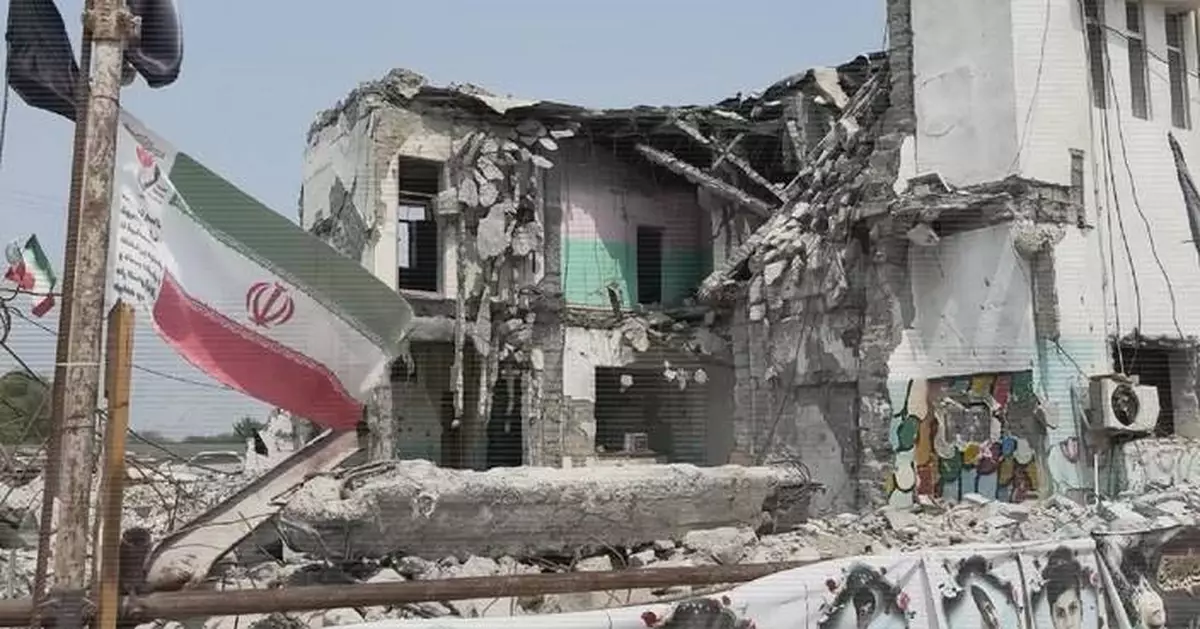
Students across Iran are preparing to return to their classrooms for a new school year. But in the southern city of Minab, where more than 160 pupils and teachers were killed by a U.S. missile strike on February 28, the pain and trauma of loss remain.
Standing at the site of the destroyed Shajarah Tayyebeh elementary school, Yasin, a student who survived the strike, recounted what he saw on the day the missile struck.
"When the sound of the explosion came, we came out of that section and through that door. As we went out, we saw everyone was covered in blood. One held his eye in his hand, another's neck was broken and blood was coming out. I saw one person who was hit by shrapnel here. Everyone was crying and running," said Yasin.
Yasin survived the attack but some of his closest friends did not.
"Amir Mohammad Bagheri was my close friend. He became a martyr. That day, he was standing right here, and I said to him, 'Come on, let's go and take the food container.' He said, 'Yeah,' so we went. But he went out through the hall. I went to pick up my food and came back. When I woke up in the morning, I read the news and saw that he had been martyred," said Yasin.
Months later, Yasin's mother said the attack had left Yasin under intense psychological pressure, and without the excitement he once had for school.
"He has absolutely no enthusiasm or passion for the new school year. He doesn’t say at all 'buy me shoes, buy me a bag for school.' I told him 'come and study,' and he said 'Forget it. I know it. My teacher taught me.' His teacher, of course, was martyred. He has become terribly nervous and aggressive. Whatever he has in his hand, he smashes it against his head. The children who survived the attack are very psychologically devastated, not just Yasin, all of them," said Yasin's mother.
For the new school year, many survivors including Yasin will be transferred to a temporary building to continue their education.
Minab city officials are now building a new school near the old one. Perhaps it will be bigger and better than the one that once stood there. But the pain of what happened there will never leave those who survived the deadly airstrike.
"We miss our friends. New friends will come to our school. We all study together. We learn knowledge. We continue on the path of our friends. I am not the only survivor; there are many others. Our friends are studying in heaven, while we are studying here on Earth," said Yasin.
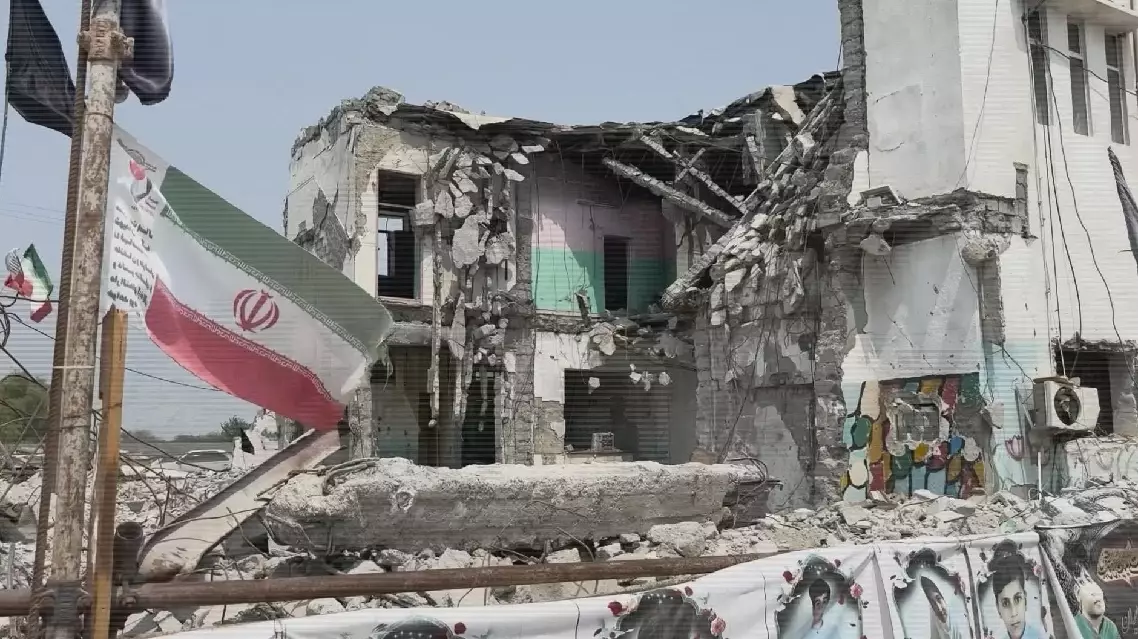
Students in Iran's Minab endure pain, trauma of war as new school year begins
At least 8,000 or more remains are still buried in the rubble in Gaza Strip, and desperate local residents are appealing for international assistance to recover the dead and deliver humanitarian aid to the survivors.
Around half the remains recovered from Gaza City's rubble this month were women and children, the head of the UN Human Rights Office in the Occupied Palestinian Territory, Ajith Sunghay, said on Tuesday.
It is estimated that at the current pace, recovering those still buried in the rubble could take more than a decade.
Sunghay said that Israel has been obstructing excavation and forensic work, making identification harder and risking the loss of evidence.
"The search efforts faced numerous obstacles, including a lack of resources, the Israeli blockade, and the difficulty of official institutions in responding to these accidents and disasters," said Aref Abdul Fattah, a local security officer.
"The civil defense rescue teams in the Gaza Strip are working hard to recover bodies from under the rubble. They have made tremendous efforts. About 8,000 bodies under the rubble are buried beneath more than 300 buildings in Gaza. Rescue workers are cooperating with the International Committee of the Red Cross to search for the victims under the debris. It is exhausting. This is economically, physically, and mentally draining, especially for the civil defense rescue workers. Because of this, they have made enormous efforts on the ground," said Mahmoud Bassal, a civil defense spokesman.
In Islam, burying the deceased is a sacred communal obligation that must be carried out with dignity and care. That is why Gazans are going to extraordinary lengths to recover the bodies of the victims.
"This is one of the most important matters in the lives of Gazans. Their beliefs and Islamic faith urge them to honor the dead by burying them," Aref said.
"Burying the dead is a very important matter, and this, of course, is among the values of our faith," said Bassal.
Calling on Israel to halt the war and destruction and allow aid into the territory, Gazans hope that the international community and relevant institutions will help recover the victims buried beneath the rubble.
"The support of the international community and relevant institutions is crucial, as it helps preserve evidence and confirm identities,"said Bassal.
"We hope to end the war and destruction, and for the Israeli army to withdraw from the Gaza Strip and open the border crossings, so that aid can enter and construction materials can be brought in. In this way, we can rebuild our homes and return to our homeland, so that we can live with dignity on this land," said Tareq Ghanem, a refugee camp representative.
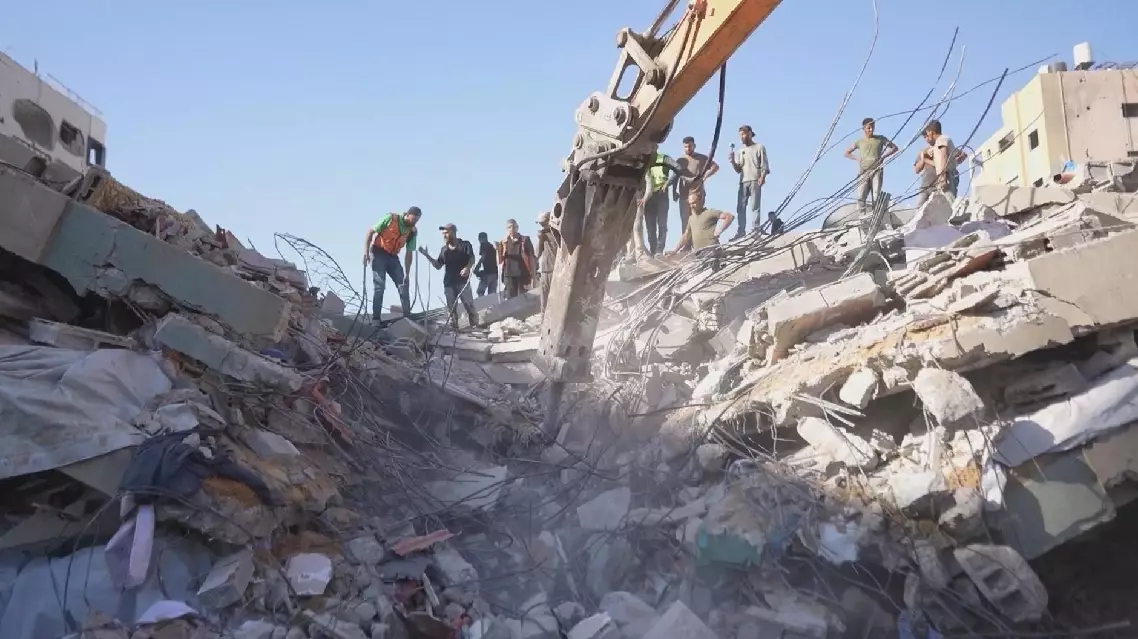
Gazans call for int’l assistance as at least 8,000 bodies still under rubble
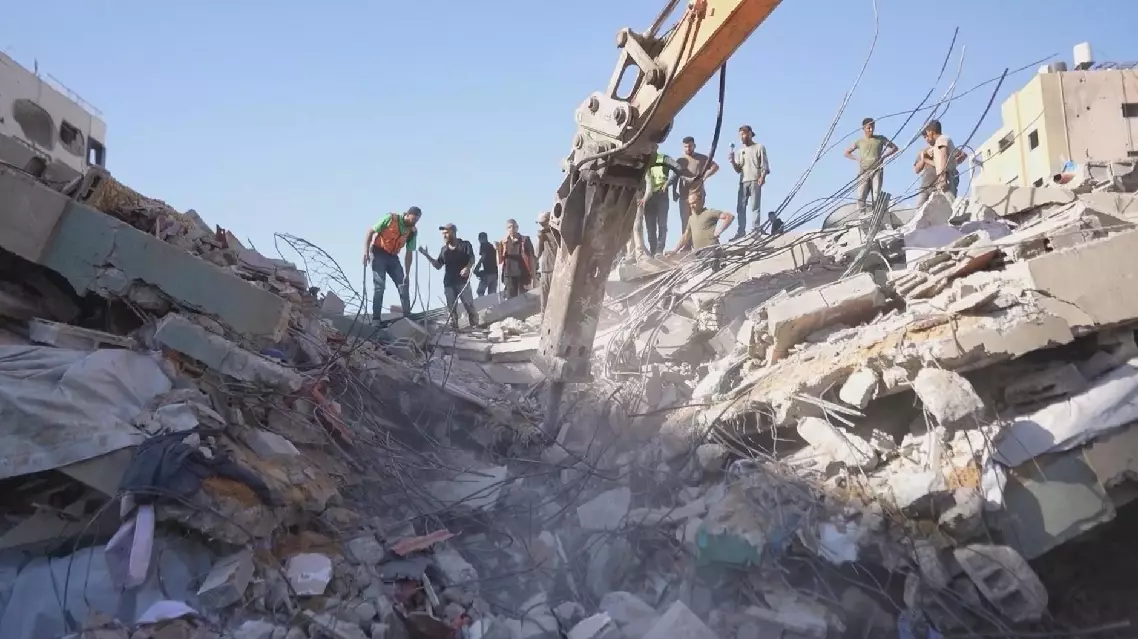
Gazans call for int’l assistance as at least 8,000 bodies still under rubble