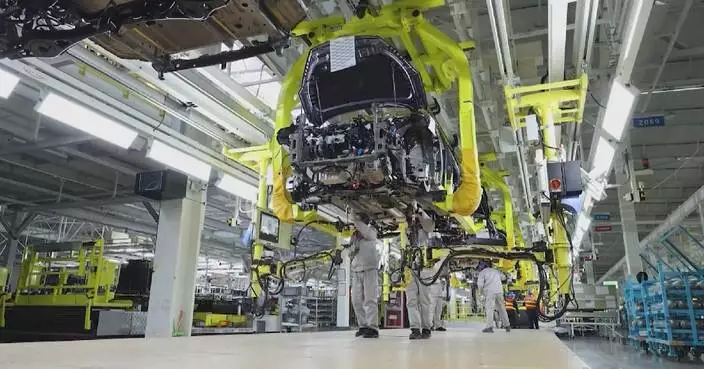
China and the Association of Southeast Asian Nations (ASEAN) will enhance collaboration on a wide range of sectors including green technology, sustainability, digital economy and trade facilitation, an Indonesian trade official said on the sidelines of the ongoing 23rd China-ASEAN Expo.
The expo opened on Thursday in Nanning, capital of south China's Guangxi Zhuang Autonomous Region, featuring more than 3,400 companies from over 70 countries eager to tap surging regional trade and unlock new market opportunities.
Marking a major milestone, the five-day event brings together all 11 ASEAN members in Nanning for the first time, with Timor-Leste joining as a co-organizer.
Under the theme "CAFTA 3.0 Opportunities, Better Life," the expo spans everything from traditional industries and digital communications to green development and artificial intelligence.
This year's expo focuses on the construction of the upgraded China-ASEAN Free Trade Area (CAFTA) 3.0, with an aim to boost regional economic growth.
Deden Muhammad Fajar Shiddiq, director of Export Development for Manufactured Products of the Indonesian Ministry of Trade, said the upgrade will move beyond tariff cuts to green technology, sustainability, digital economy and trade facilitation.
"Before, the free trade agreement between China and ASEAN focused only on how to lower the tariff in phase 1.0 and 2.0. Now in 3.0, we switched the focus to other aspects like all the green technology, sustainability, the digital, also our other facilitation in trade. So, our small and medium enterprises can enjoy the profitability of this free trade agreement. Our Ministry of Trade has implemented a new technology, the system for our small and medium enterprise to be automatically adjusted with the preference tax in other free trade agreements that we have. From now on, our exporters, they don't need to know the free trade agreement, but the tariff will be implemented automatically by the system," he said.

China, ASEAN to enhance cooperation on green technology, sustainability, digital economy: Indonesian official
The surging U.S. immigration crackdown since 2025 has negatively impacted Latino businesses in Los Angeles, home to the country's biggest Hispanic population, where increases in federal arrests of migrants have led to fewer customers and lower sales.
Teodoro Cuevas, a Mariachi musician who has come to the Mariachi Plaza in Boyle Heights -- a cultural hub for Los Angeles' Latino community -- to play music for 25 years, is one of many workers and business owners feeling the effects of a major expansion in immigration enforcement.
"There used to be a lot of people here. The mariachis were here, dressed and ready to work every day. The work isn't the same anymore," he said.
Federal immigration arrests nationwide reached nearly 51,000 in August, a record for a third consecutive month.
In Los Angeles County, business owners say greater enforcement has spread fear through Latino neighborhoods.
A study by the Latino Policy and Politics Institute at University of California, Los Angeles (UCLA) found the June 2025 Immigration and Customs Enforcement (ICE) raids led to 46,000 fewer customer visits and more than 3 million U.S. dollars in estimated losses near nine immigration enforcement sites in the two weeks after the operations, including the Fashion District, an iconic commercial and cultural landmark of Downtown Los Angeles.
"Before, there were so many people you could barely walk. Now, there's more space and fewer people," said Eric Vaquero, a fabric store worker.
Leonardo Crespo, owner of a restaurant in Boyle Heights, said he used to serve about 100 customers a day, but the figure is now closer to 20 in some days.
"The concern about other people, it's just getting hauled in, because you look a certain way. That's it. It doesn't matter. I had my mother telling me. 'You should carry your birth certificate.' I said I'm not going to do that," he said.
Those concerns are not limited to undocumented immigrants. A ProPublica investigation documented more than 170 U.S. citizens held by immigration agents in the first nine months of 2025.
At least 53 people died in ICE custody between the beginning of President Donald Trump's second term on January 20, 2025 and mid-July 2026, according to a joint report by Human Rights Watch and Physicians for Human Rights.
"So, if you are a Hispanic person that even was born in the U.S., a citizen, you may be scared of going out, because ICE has big pressure to detain people, and they are known for being hostile. So you actually fear for your life or safety or think 'I don't want to be detained.' Right?" said Julio Sevilla, a professor at University of Georgia.
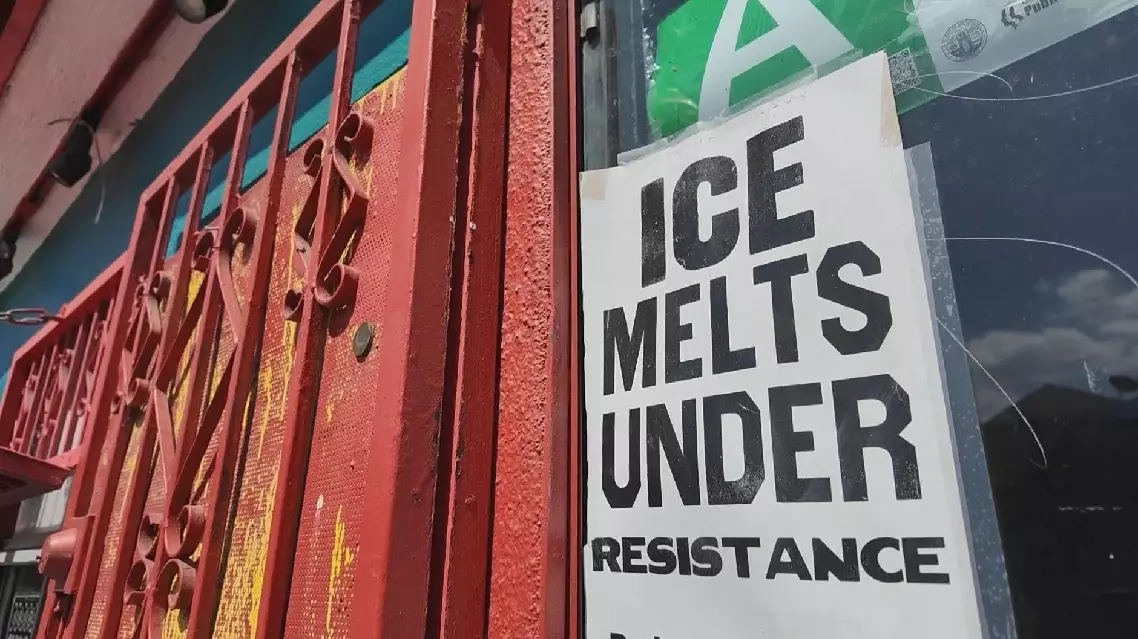
Latino businesses in Los Angeles struggling amid surging federal immigration enforcement