The cycle of retaliatory strikes between Yemen's Houthi group and Saudi Arabia will continue, while the wider Middle East will remain mired in a fragile state of neither war nor peace, Samuel Ramani, an associate fellow at the Royal United Services Institute (RUSI) Think Tank, said in London on Saturday.
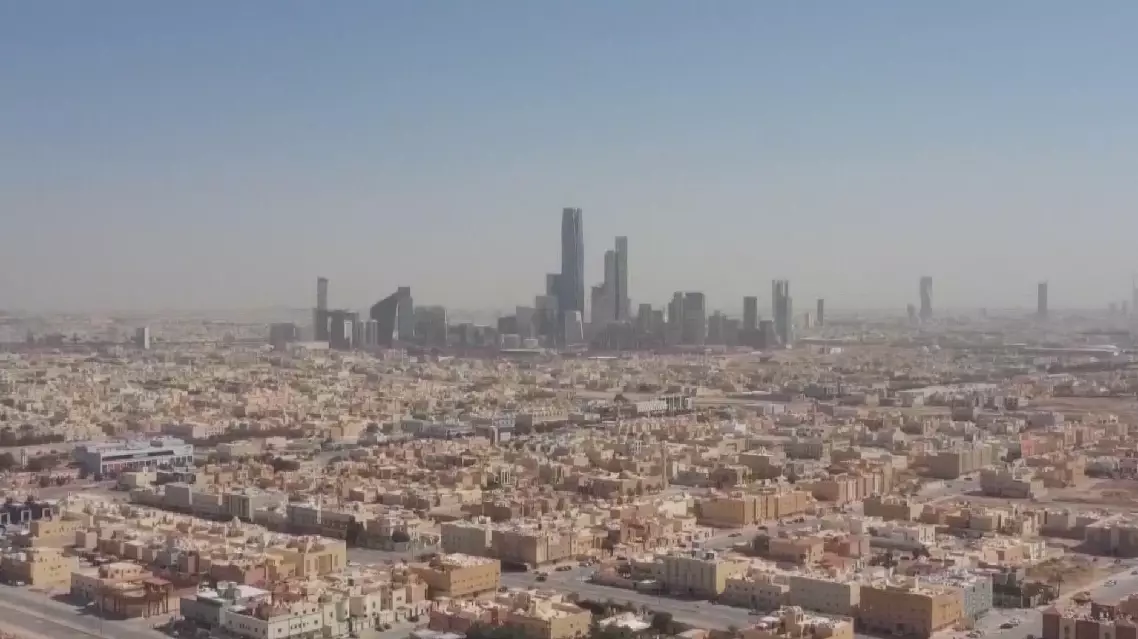
Yemen's Houthi group said Saturday that it had launched large-scale attacks on the Saudi capital of Riyadh and Yanbu, a major industrial and energy hub on Saudi Arabia's Red Sea coast, marking a major escalation in the confrontation between the two sides.
Strikes targeting the Saudi capital marks a new development in this round of conflict that began in mid-July, when the Yemeni Armed Forces attacked the Houthi-controlled Sanaa International Airport to prevent an Iranian passenger plane from landing, Ramani, also CEO of Pangea Geopolitical Risk, said during an interview with China Global Television Network (CGTN).
"While the possibility that there were strikes in Riyadh was not unheard of because the Houthis had targeted Riyadh, including making attempts with Burkan missiles against the King Khalid International Airport back in 2017 and 2018. The predominant locus of attacks was really in the south, so Jizan and regions around it. Obviously, the Saudis were rattled by the attack on Mecca, which the Houthis and the Iranians tried to walk back. But it was pretty clear that this situation is escalating, but the security of the capital being breached is relatively a new development in this round of attacks," said the analyst who had just returned from Saudi Arabia.
The attack came after Houthis have said Saudi Arabia carried out 26 attacks against areas under the group's control within 24 hours.
Ramani noted that the exchange of accusations and attacks made it evident that the tit-for-tat strikes would continue.
"I mean, definitely it's something that will cause a psychological scar. I mean, at the daily life of Riyadh in terms of the traffic congestion, the shops and offices will remain as it was. This is not like what we saw during some of the Gulf countries during the February and March period. It's a one-off attack. But it does show and does add some credibility to the Houthi argument that we will strike back as the Saudis attack us. The Houthis are claiming that the Saudis have launched 300 strikes against their targets in Yemen. And they also accused the Saudis of attacking Sanaa just hours before attempting an attack on Sanaa of a significant variety, just hours before this. So it's pretty clear that this tit-for-tat dynamic will continue," he said.
On the future of the Middle East, Ramani described the region as remaining in a state of neither war nor peace, adding that regional countries who trusted the United States with their security will look for other options.
"I think that the Middle East remains a protracted state of neither war nor peace and it's a pretty fragile state of affairs over there. Obviously, the Houthis putting pressure on the Bab al-Mandab combined with the ongoing Iranian blockade of Strait of Hormuz does increase the pressure from the Gulf countries on the United States to pursue a deal and quite possibly from countries that have relationships with Israel like the UAE (the United Arab Emirates) to Israel to push for a deal. But the reality is we remain somewhere away from this," he said.
"There's a conflict that's simmering in Lebanon, escalating civil war in Yemen. And the biggest thing as war continues is that Gulf countries and Arab partners who have trusted the U.S. with their security will be looking more at regional security arrangements or an alternative partnership. This is probably more likely than any resolution of the war in the near term," he added.
Middle East to remain in fragile state of neither war nor peace: analyst