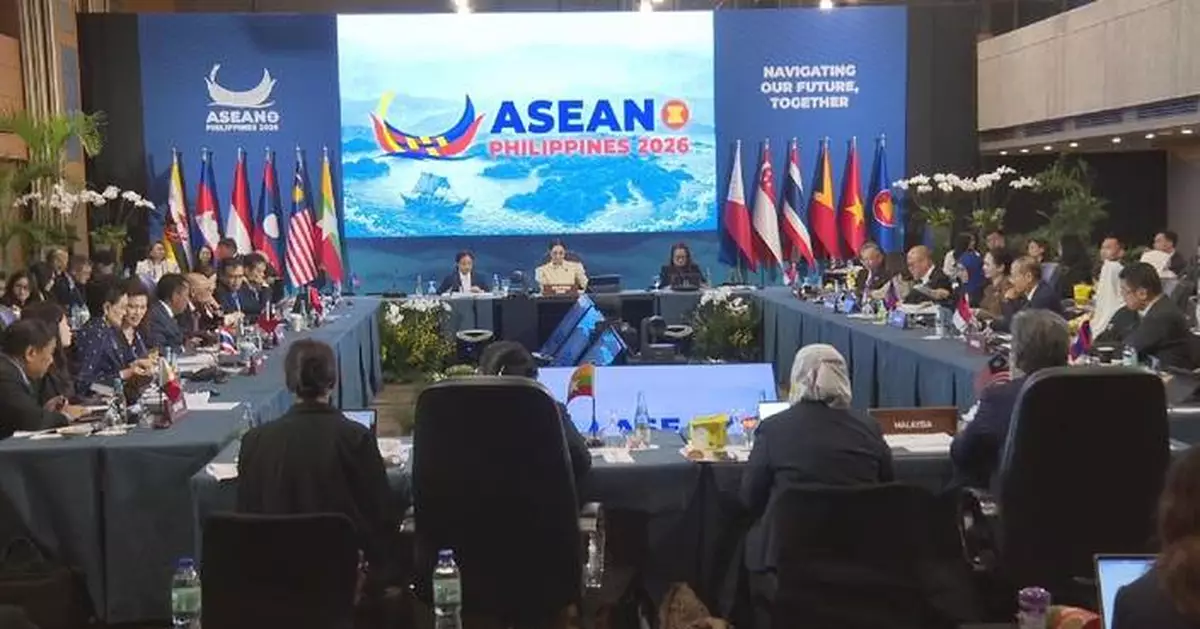
Economic ministers from the Association of Southeast Asian Nations (ASEAN) gathered in Manila on Saturday to push for deeper regional integration.
The move aims to sustain investment, strengthen supply chains, and build resilience against external shocks as the bloc navigates growing global trade uncertainty.
ASEAN is navigating an increasingly uncertain global economic landscape. Disruptions to trade, fragile supply chains, volatile energy markets and heightened geopolitical tensions are prompting businesses across Southeast Asia to reconsider where they invest, source and produce.
Yet ASEAN economic ministers say the region is entering this period of uncertainty with solid foundations and considerable strengths of its own.
"ASEAN remains one of the few regions that stands as one of the brightest economic powerhouses on Earth. Combining young tech savvy demographics, market openness and unmatched growth potential," said Philippines' Trade Secretary Cristina Roque.
Merchandise trade reached 4.4 trillion dollars, an increase of nearly 14 percent from 2024. Foreign direct investment also rose by more than 10 percent, reaching almost 246 billion dollars.
The challenge now is to translate that growth into greater opportunities for businesses across the region. China is an important part of that equation.
Chinese companies have expanded their investments across ASEAN, spanning sectors such as manufacturing, renewable energy, mining and mineral processing.
"China is one of the major trading and investment partners for Asian as a whole, therefore for purposes of engaging with China, it is very important that we make sure that the implementation of the ASEAN-China free trade agreement is optimally utilized by the parties," said Allan Gepty, Undersecretary for International Trade of Philippine Department of Trade and Industry.
The ASEAN China Free Trade Area 3.0 is designed to modernize the region's trade framework with China as economic ties continue to evolve. The agreement also complements the broader Regional Comprehensive Economic Partnership, or RCEP, which brings together ASEAN with China, Japan, the Republic of Korea, Australia and New Zealand.
Ministers are also working to deepen trade within ASEAN, including by upgrading the ASEAN Trade in Goods Agreement (ATIGA), which has been in place for 16 years. The Philippines says the global trading environment has changed significantly since ATIGA took effect, and that ASEAN's trade rules need to evolve with it. The region is also looking to its digital economy as a new engine of growth. The sector surpassed 300 billion dollars in gross merchandise value last year, with three in five people across Southeast Asia now shopping online.
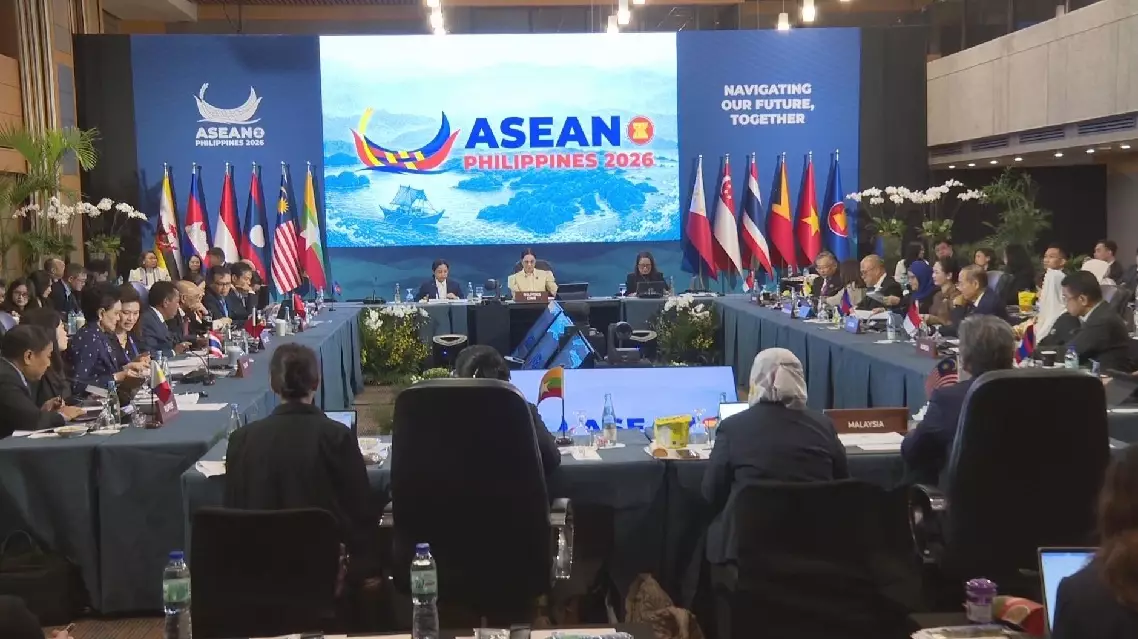
ASEAN economic ministers meet in Manila, push for deeper cooperation to build regional resilience