Skip to Content Facebook Feature Image

HealthTrust Helps Lead Main-Stage Conversation at 2026 Healthcare Sessions

Business

HealthTrust Helps Lead Main-Stage Conversation at 2026 Healthcare Sessions
Business

Business

HealthTrust Helps Lead Main-Stage Conversation at 2026 Healthcare Sessions

2026-09-21 21:10 Last Updated At:21:20

NASHVILLE, Tenn.--(BUSINESS WIRE)--Sep 21, 2026--

HealthTrust Performance Group ™ (HealthTrust) took the main stage at 2026 Healthcare Sessions, Sept. 13-15 in Nashville, Tenn., bringing clinical, operational and strategic viewpoints to conversations about how healthcare organizations can strengthen results amid rising complexity, persistent cost pressures and rapid technological change.

This press release features multimedia. View the full release here: https://www.businesswire.com/news/home/20260918973075/en/

Produced by the Nashville Health Care Council, Healthcare Sessions convenes leading healthcare decision-makers and change-makers in Nashville, the Healthcare City, for dialogue centered on innovation, finance, collaboration and the forces shaping the industry’s future.

With a mission to help make healthcare missions possible, HealthTrust’s involvement spanned both the conference main stage and a HealthTrust-presented program focused on a central challenge for healthcare leaders: moving beyond isolated solutions to create stronger connections across the continuum of care.

On Monday, Aashish Shah, M.D., J.D., Senior Vice President and Chief Medical Officer, HealthTrust, moderated the main-stage panel “Strengthening the System: How Health Systems Are Adapting for What’s Next” featuring:

The panel focused on what it takes for health systems to successfully adapt and execute in a fast-changing environment. Speakers discussed the importance of building change-ready cultures, moving from point-solution vendors toward more multifaceted, shared-risk partnerships, and creating greater intelligence in clinical operations through stronger data and analytics infrastructure. They also emphasized operational excellence as the foundation for successful transformation—whether organizations are implementing AI, advancing new technology or pursuing broader strategic initiatives.

“Healthcare’s most consequential challenges do not exist in silos, and neither can the solutions,” said Dr. Aashish Shah. “Progress depends on stronger collaboration across health systems, technology partners and other industry stakeholders. By bringing different perspectives together, we can better align around shared priorities, build more effective partnerships and create the operational foundation needed to improve care and performance.”

That theme carried into Tuesday, when HealthTrust presented “Operations Perspectives: Navigating the Ever-Evolving Healthcare Ecosystem,” bringing together stakeholders from different parts of the industry to examine the challenges and opportunities shaping modern care delivery.

The session featured:

The conversation examined what happens when clinical, operational and investment priorities intersect, including where friction can emerge and how cross-industry collaboration can contribute to a more resilient, accessible and sustainable system.

“Operational rigor is about more than controlling cost—it is about creating the discipline to make better decisions across price, utilization and outcomes,” said John Baker, VP, CFO & Chief Administrative Officer, GPO. “As healthcare organizations evaluate new technologies, automation and AI, the real test is whether those investments can be integrated into workflows, supported by reliable data and tied to measurable operational and financial impact. That requires CFOs to think as operators, work closely with clinicians and remain focused on the changes that can create sustainable value.”

For AdvantageTrust, part of HealthTrust Performance Group, the conversation also highlighted the distinct realities of organizations operating outside the traditional acute-care setting.

“Healthcare is increasingly delivered beyond the four walls of the hospital, and that requires a different way of thinking about how organizations operate,” said Jeff Easterling, CEO of AdvantageTrust. “Non-acute providers work across diverse and often highly distributed settings while facing many of the same pressures around cost, labor, technology and consumer expectations. The opportunity is to bring the benefits of scale, discipline and connectivity to those organizations while preserving the flexibility they need to serve their individual markets.”

The session also considered how executive responsibilities are changing as organizations contend with more complex demands. From strengthening operational rigor and supporting clinical consistency at scale to assessing investments through the lens of long-term value, each stakeholder has a distinct role in building more durable organizations.

Across both sessions, a common principle emerged: sustainable improvement requires connecting priorities that have historically been managed separately.

Clinical quality, workforce strategy, supply chain, technology, financial discipline and market execution are deeply interdependent. Better coordination across those areas can help organizations reduce unwarranted variation, make more informed decisions and develop operating models equipped for continued change.

“Operational resilience is not simply about responding to the next disruption,” said Rich Philbrick, Chief Customer Officer of HealthTrust. “It is about creating the rigor, relationships and capabilities that allow organizations to execute consistently as conditions evolve. Bringing stakeholders together around shared priorities is essential to making meaningful progress.”

HealthTrust’s participation at Healthcare Sessions reflects its continued focus on engaging with industry leaders and connecting the clinical, operational and strategic expertise needed to address complex challenges.

Learn more about how HealthTrust Performance Group supports its members at healthtrustpg.com.

About HealthTrust Performance Group

HealthTrust Performance Group ™ (HealthTrust) is a leading healthcare improvement organization owned and operated by seven health systems. Dedicated to making missions possible, HealthTrust strengthens provider performance and clinical excellence through an aligned membership model and business advisory solutions that leverage expertise, scale and innovation. Headquartered in Nashville, Tennessee, HealthTrust is the only national GPO with direct responsibility for the performance and outcomes of some of the largest healthcare supply chains—bringing a uniquely accountable perspective, supporting 25% of U.S. hospitals, including eight of the 15 largest health systems, with a membership including more than 1,900 acute care and over 90,000 non-acute care facilities across the U.S. and U.K. For five years, HealthTrust has been recognized as a Top Workplace. Learn more at healthtrustpg.com.

Rich Philbrick, Chief Customer Officer of HealthTrust, presented “Operations Perspectives: Navigating the Ever-Evolving Healthcare Ecosystem,” bringing together stakeholders from different parts of the industry to examine the challenges and opportunities shaping modern care delivery.

Rich Philbrick, Chief Customer Officer of HealthTrust, presented “Operations Perspectives: Navigating the Ever-Evolving Healthcare Ecosystem,” bringing together stakeholders from different parts of the industry to examine the challenges and opportunities shaping modern care delivery.

Aashish Shah, M.D., J.D., Senior Vice President and Chief Medical Officer, HealthTrust, moderated the main-stage panel “Strengthening the System: How Health Systems Are Adapting for What’s Next” featuring: • David Dill, Chairman and CEO, Lifepoint Health • Erin Satterwhite, CEO, Optum Insight Provider, Optum • Fahad Tahir, President and CEO, Ascension Saint Thomas • Seema Verma, Executive Vice President and General Manager, Oracle Health and Life Sciences

Aashish Shah, M.D., J.D., Senior Vice President and Chief Medical Officer, HealthTrust, moderated the main-stage panel “Strengthening the System: How Health Systems Are Adapting for What’s Next” featuring: • David Dill, Chairman and CEO, Lifepoint Health • Erin Satterwhite, CEO, Optum Insight Provider, Optum • Fahad Tahir, President and CEO, Ascension Saint Thomas • Seema Verma, Executive Vice President and General Manager, Oracle Health and Life Sciences
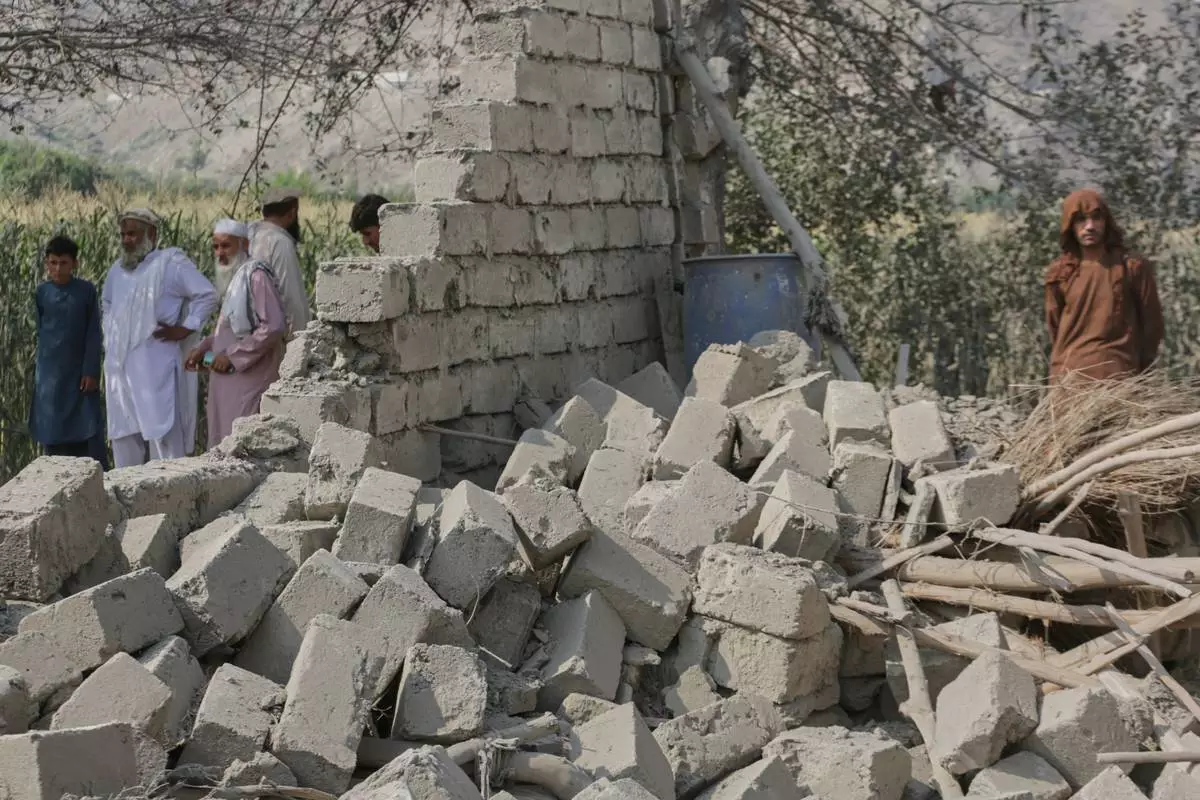
ISLAMABAD (AP) — Pakistani fighter jets on Monday struck sites in eastern Afghanistan that Pakistani officials described as suspected militant hideouts. Pakistan said 28 militants were killed, while authorities in Kabul reported at least three civilian deaths.

The strikes near the countries’ shared border marked a renewed escalation in tensions, raising the prospect of further cross-border hostilities. They also threatened to complicate mediation efforts by regional powers, including China.

The strikes came after Pakistan warned that it could target militants inside Afghanistan following two deadly attacks on Pakistani security forces near the border in recent days.

The United Nations Mission in Afghanistan, known by its acronym UNAMA, said in a social media post on X that it had confirmed that “at least three civilians, including a man, a woman and a girl, were killed and four injured in apparent airstrikes” in Afghanistan’s Kunar province in the early hours of Monday.

UNAMA said it had documented over 1,100 civilian deaths and injuries in Afghanistan from cross-border violence so far this year.

“We reiterate our call for respect for international humanitarian law to prevent civilian casualties,” it added.

Militant attacks targeting Pakistan’s police and security forces have surged in recent years. The escalation follows months of military action. Hundreds of people have been killed in cross-border fighting since February, when Afghanistan launched retaliatory strikes after Pakistan carried out airstrikes inside Afghan territory.

Authorities in Islamabad have blamed the Pakistani Taliban and allied militant groups for most of the violence. The Pakistani Taliban are separate from but allied with the Afghan Taliban that returned to power in 2021.

Pakistan’s Information Ministry said security forces conducted a planned, intelligence-driven ground operation in the northwest following a series of militant attacks in the country. The operation was followed by “calibrated airstrikes against the hideouts and safe havens of terrorist organizations responsible for these attacks.”

The ministry said in a post on X that the airstrikes killed 28 militants along the Afghan border.

Afghanistan’s government, however, said the strikes killed three civilians and wounded four others - a toll confirmed by the UN.

In a post on X, Afghan government spokesman Zabiullah Mujahid condemned the airstrikes and said there would be a response.

“We condemn this aggression and oppression, regarding it as a repetition of such crimes. Pakistani military circles have once again committed such a crime to divert attention from their country’s security failures,” he wrote. “The Afghans will give a fitting response to this, God willing.”

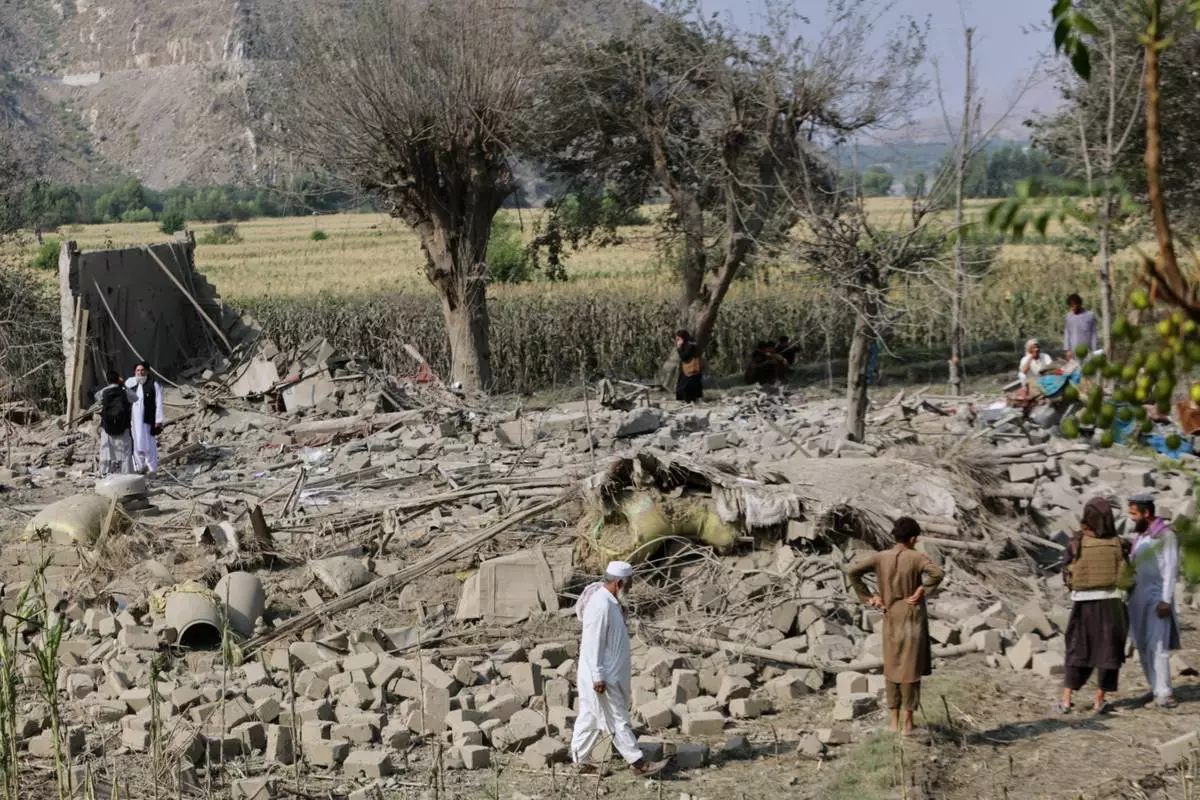
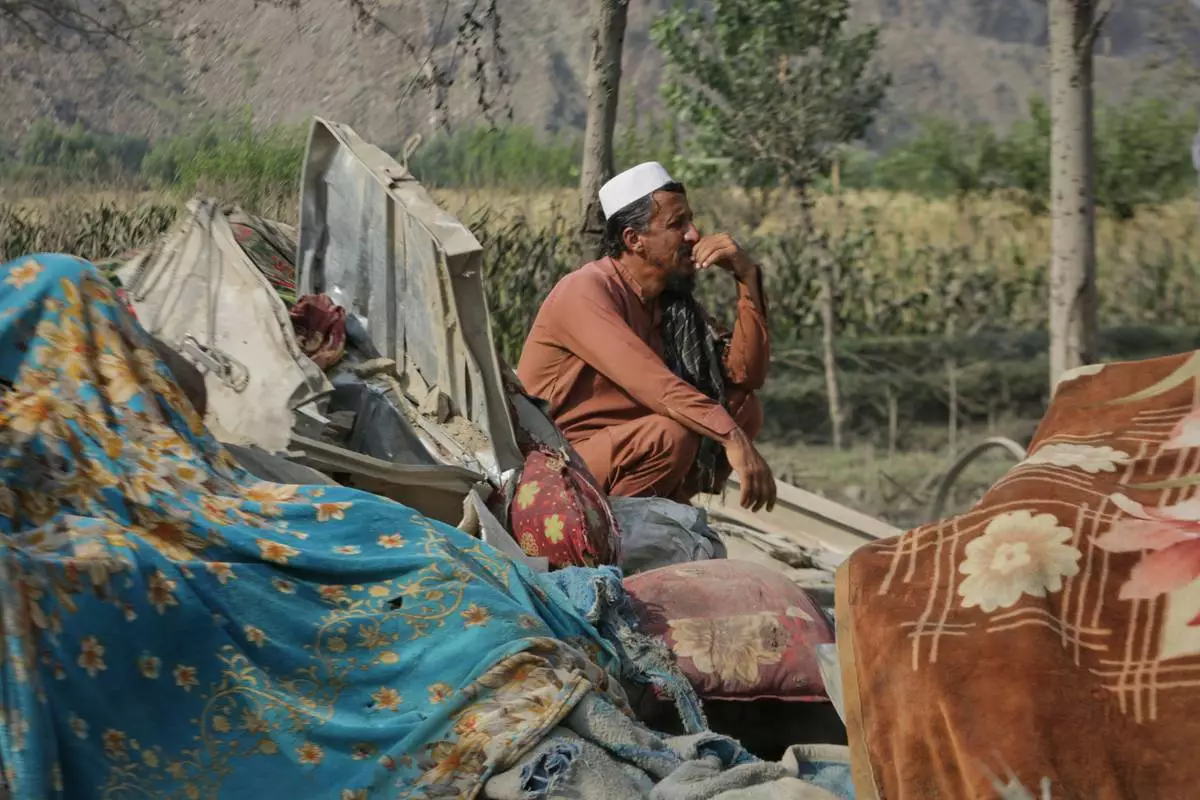
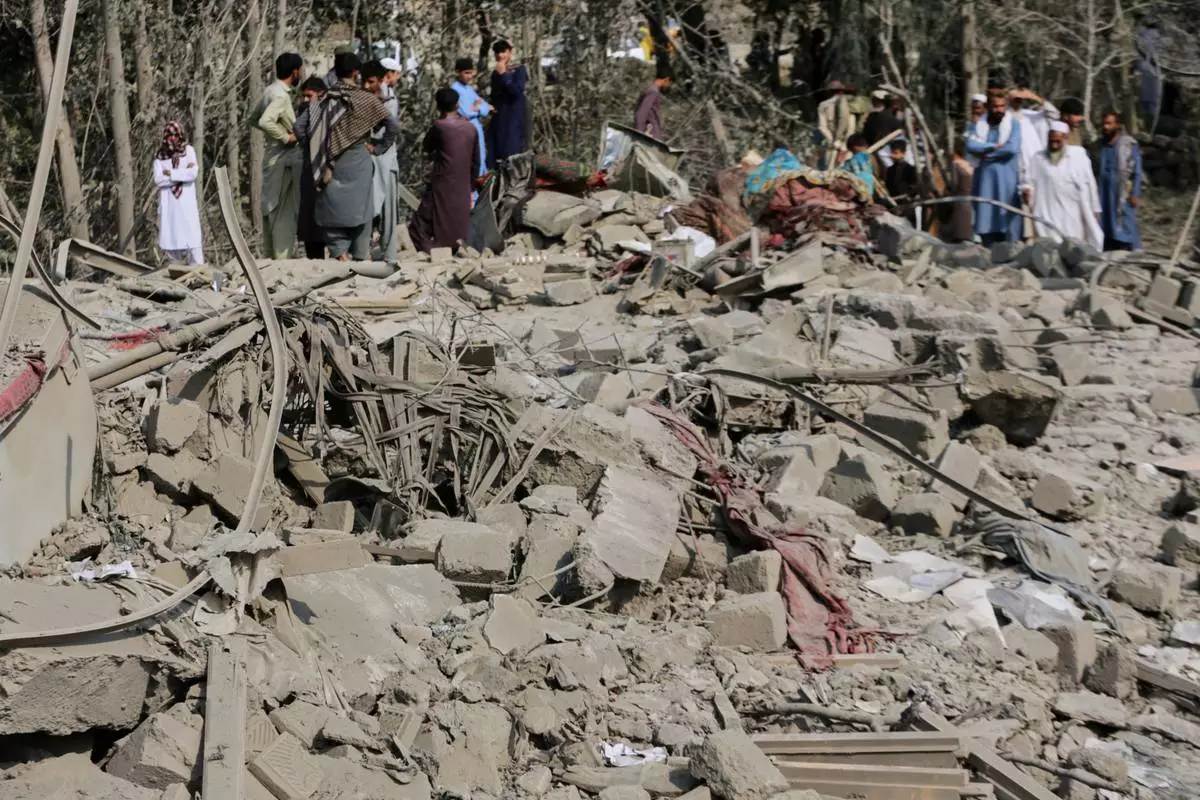
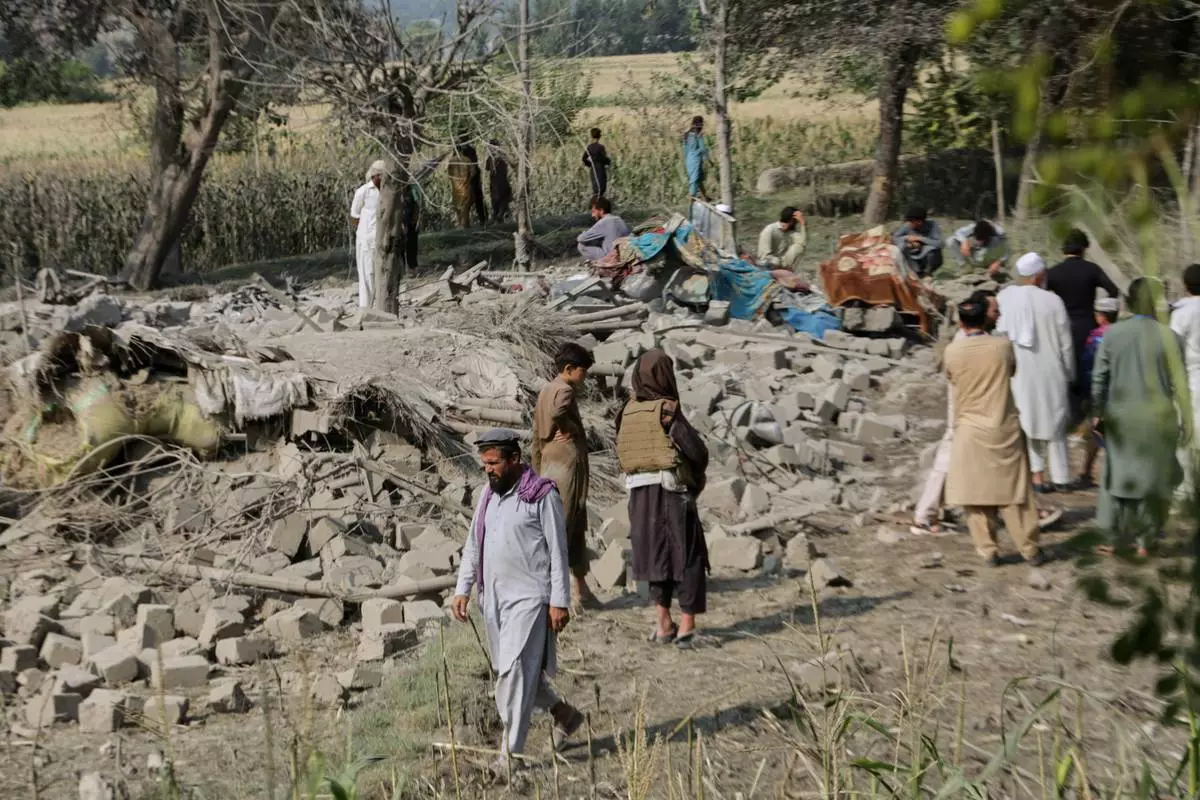
Afghan deputy government spokesperson Hamdullah Fitrat said the strikes occurred around 3 a.m. in Nurgal district of Kunar province and Barmal district of Paktika province. Citing preliminary information, Fitrat said a local resident's home was struck, killing three family members and wounding four other relatives.

Fitrat said strikes in the Rakhah and Tor Kundi areas of Barmal destroyed a shop and an unoccupied house, but caused no casualties.

The strikes came a day after six Pakistani security personnel, including two army officers, were killed in a shootout with militants in Hangu, a district in northwestern Khyber Pakhtunkhwa province near the Afghan border.

On Friday, a suicide bomber struck a mosque inside a police compound in the Pakistani city of Kohat. Eight gunmen stormed offices, setting off a 20-hour gunbattle during which at least 21 people, most of them police officers, were killed and more than 100 were wounded, Pakistani officials said.

Pakistan’s Information Ministry warned on Saturday that the country could strike militants inside Afghanistan in response to attacks on Pakistan. It blamed the Kohat attack on militants allegedly based in Afghanistan and accused the Afghan Taliban government of sheltering and supporting groups that carry out attacks in Pakistan.

Afghanistan has long denied Pakistan's claims that it provides shelter or support to militants.

“Pakistan has both the will and the capability to eliminate terrorist threats wherever they are,” the ministry said. It also called on Kabul to take “credible, verifiable and sustained measures” to dismantle what Pakistan describes as militant sanctuaries and recruitment and training networks in Afghanistan.

No group had claimed responsibility for the attacks in Kohat or Hangu by the time of Monday’s strikes. Suspicion fell on the Pakistani Taliban, formally known as Tehrik-e-Taliban Pakistan, or TTP, which has intensified attacks on police and other security forces in Pakistan in recent years.

Pakistan has repeatedly accused the Taliban government in Kabul of sheltering TTP leaders and allowing militants to launch cross-border attacks. Afghanistan’s government denies the allegations.

Afghan reported from Kabul, Afghanistan. Associated Press writer Riaz Khan in Peshawar, Pakistan, and Elena Becatoros in Athens, Greece contributed to this report.

Residents inspect the rubble of a house destroyed in a strike in Patan village, Kunar province, eastern Afghanistan, Monday, Sept. 21, 2026. (AP Photo/Shafiullah Kakar)

Residents inspect the rubble of a house destroyed in a strike in Patan village, Kunar province, eastern Afghanistan, Monday, Sept. 21, 2026. (AP Photo/Shafiullah Kakar)

Residents stand near a collapsed wall of a house damaged in a strike in Patan village, Kunar province, eastern Afghanistan, Monday, Sept. 21, 2026. (AP Photo/Shafiullah Kakar)

Residents stand near a collapsed wall of a house damaged in a strike in Patan village, Kunar province, eastern Afghanistan, Monday, Sept. 21, 2026. (AP Photo/Shafiullah Kakar)

Residents inspect the rubble of a house destroyed in a strike in Patan village, Kunar province, eastern Afghanistan, Monday, Sept. 21, 2026. (AP Photo/Shafiullah Kakar)

Residents inspect the rubble of a house destroyed in a strike in Patan village, Kunar province, eastern Afghanistan, Monday, Sept. 21, 2026. (AP Photo/Shafiullah Kakar)

A man sits amid household belongings and the wreckage of a house destroyed in a strike in Patan village, Kunar province, eastern Afghanistan, Monday, Sept. 21, 2026. (AP Photo/Shafiullah Kakar)

A man sits amid household belongings and the wreckage of a house destroyed in a strike in Patan village, Kunar province, eastern Afghanistan, Monday, Sept. 21, 2026. (AP Photo/Shafiullah Kakar)

Residents inspect the rubble of a house destroyed in a strike in Patan village, Kunar province, eastern Afghanistan, Monday, Sept. 21, 2026. (AP Photo/Shafiullah Kakar)

Residents inspect the rubble of a house destroyed in a strike in Patan village, Kunar province, eastern Afghanistan, Monday, Sept. 21, 2026. (AP Photo/Shafiullah Kakar)

Recommended Articles