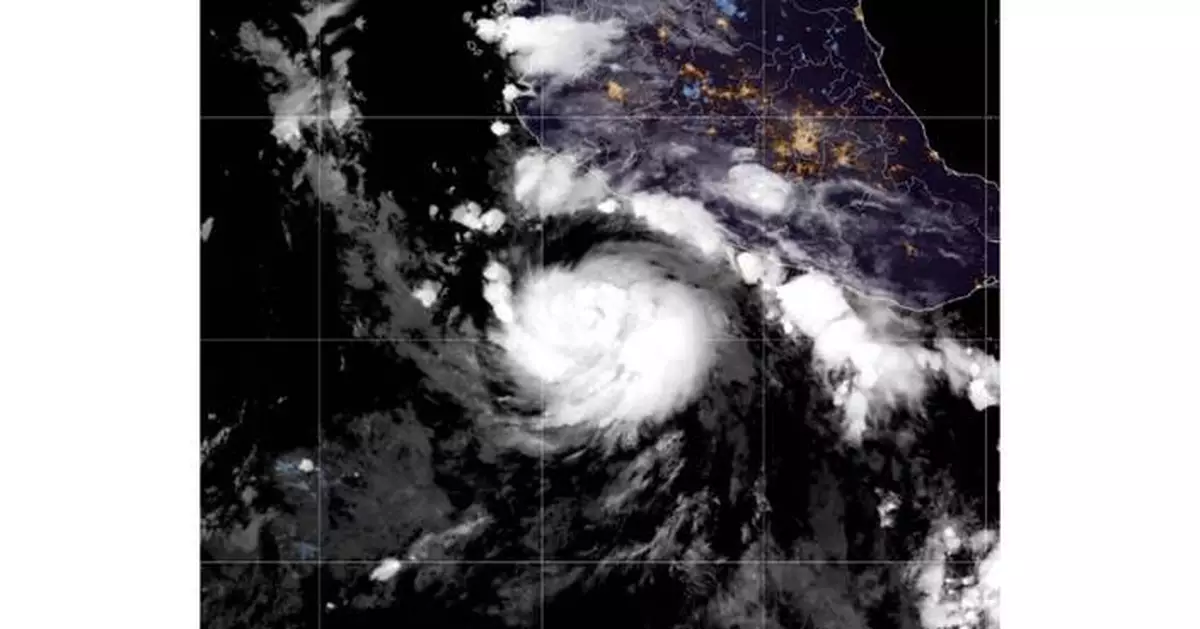
MIAMI (AP) — Tropical Storm Polo will rapidly intensify in the Pacific Ocean and become a major hurricane later this week, forecasters said Monday.
Polo could bring heavy rain, rough surf and tropical-storm-force wind to parts of Mexico late Tuesday into early Wednesday, according to an advisory from the Miami-based National Hurricane Center.
Meteorologists predicted Monday that Polo would drop 4 to 8 inches (10 to 20 centimeters) of rain, with isolated totals near 12 inches (30 centimeters), across coastal portions of the Mexican states of Guerrero, Michoacán, Colima, and Jalisco through Thursday. Flooding and mudslides were possible.
Still a tropical storm as of Monday, Polo had maximum sustained winds of 50 mph (80 kph). It was centered about 240 miles (386 kilometers) south of Manzanillo, Mexico, and 200 miles (322 kilometers) southwest of Zihuatanejo. The system was moving northeast at 5 mph (8 kph).
Farther west in the Pacific Ocean, Tropical Storm Odalys was far from land but expected to become a hurricane by midweek.
Odalys had maximum sustained winds Monday of 45 mph (72 kph). It was located nearly 1,400 miles (2,253 kilometers) west-southwest of the southern tip of Mexico's Baja California peninsula. It was moving northwest at 13 mph (21 kph).
In the Atlantic Ocean, Tropical Storm Fay was weakening. Top winds were around 65 mph (105 kph) and Fay was 405 miles (652 kilometers) southwest of the Azores.
No Atlantic hurricanes have formed yet this year, and this year has set a record for the longest a season has begun without a hurricane. The effects of this year's El Nino crush storms before they get going.
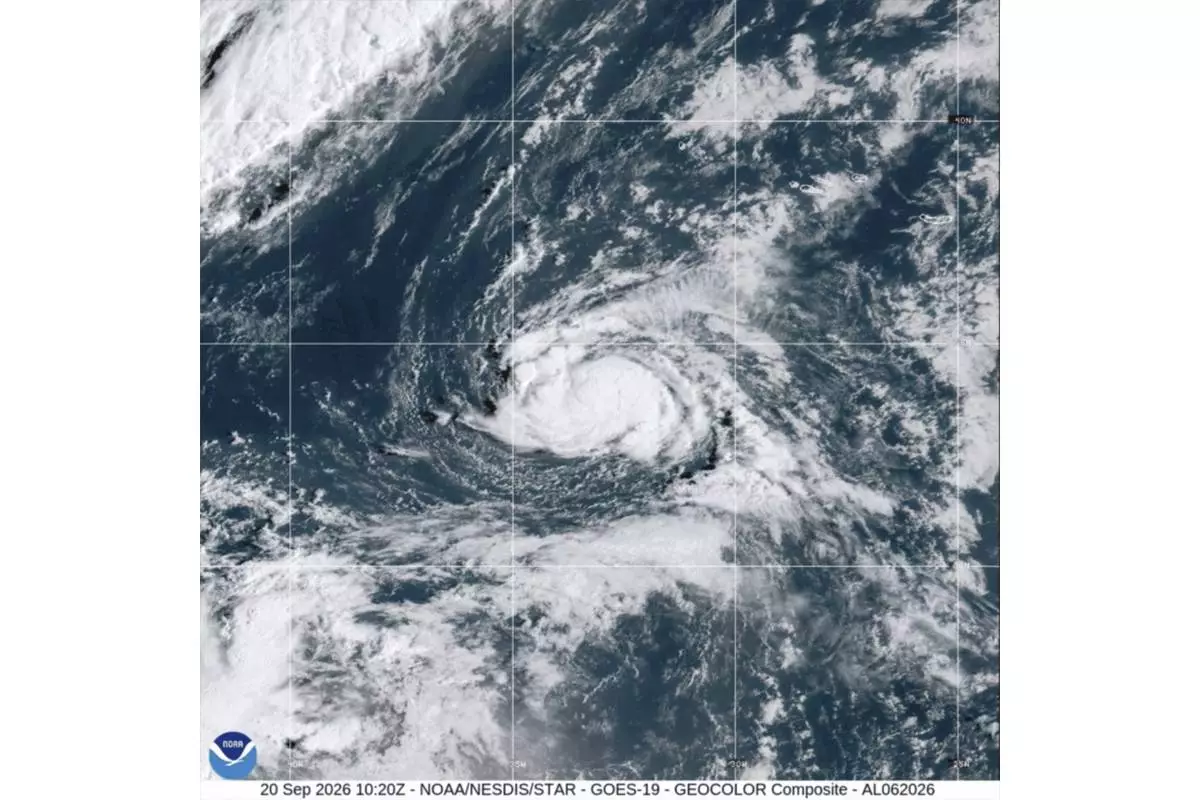
This satellite image from the National Oceanic and Atmospheric Administration shows Tropical Storm Fay, Sunday, Sept. 20, 2026. (NOAA via AP)
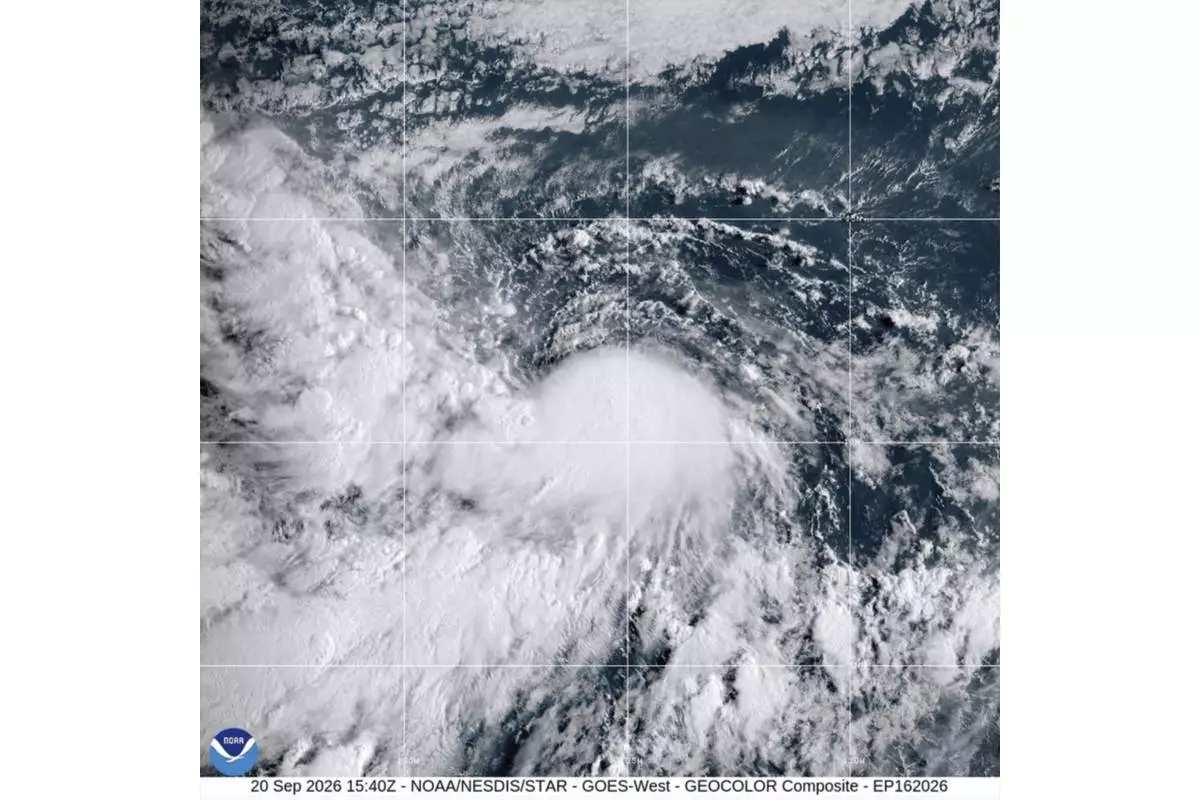
This satellite image from the National Oceanic and Atmospheric Administration shows Tropical Storm Odalys, Sunday, Sept. 20, 2026. (NOAA via AP)
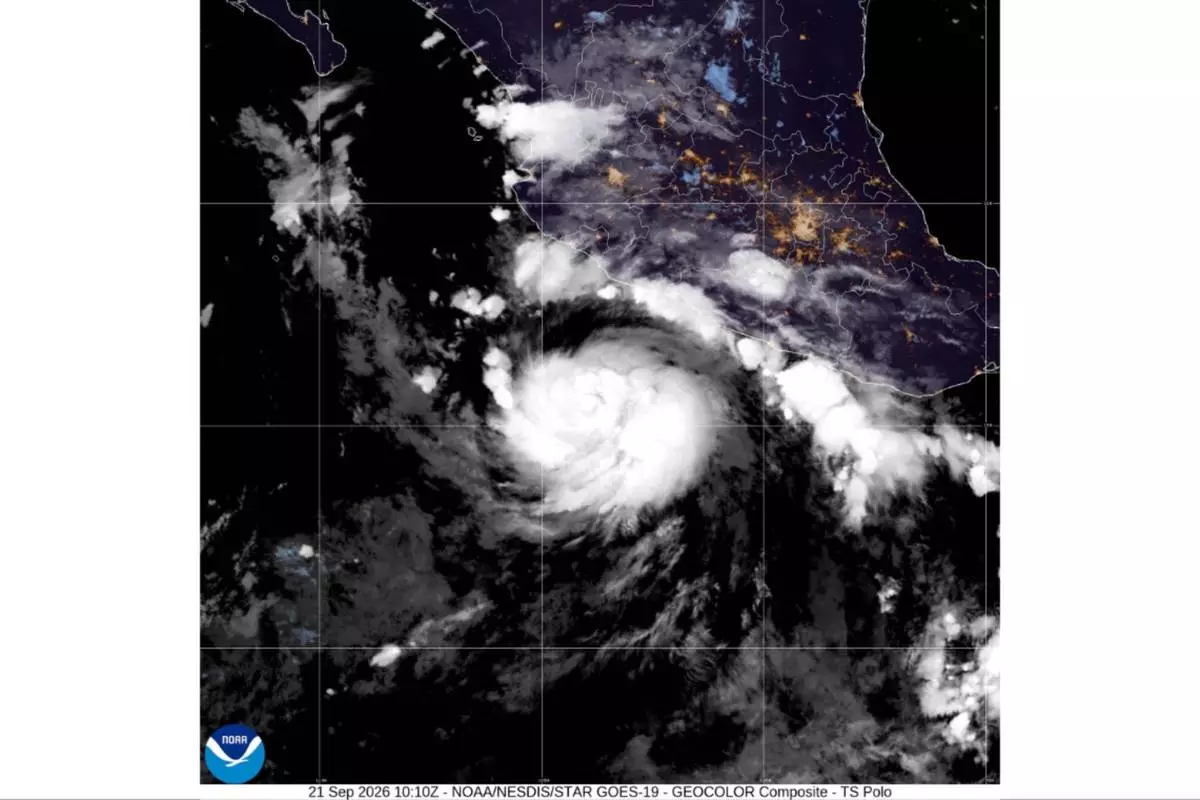
This satellite image from the National Oceanic and Atmospheric Administration shows Tropical Storm Polo, Monday, Sept. 21, 2026. (NOAA via AP)
NEW YORK (AP) — U.S. stocks are climbing with markets worldwide after oil prices and yields in the bond market gave back some of their jumps from last week. The S&P 500 rose 0.6% Monday and pulled within 1.3% of its all-time high set last month. The Dow Jones Industrial Average added 301 points, and the Nasdaq composite climbed 0.8%. They benefited from the price for a barrel of Brent oil falling back toward $100, while the 10-year Treasury yield dropped to 4.95%. The easing pressure helped indexes rise more than 1% around much of the world, from Germany to Hong Kong to South Korea.
THIS IS A BREAKING NEWS UPDATE. AP’s earlier story follows below.
U.S. futures are climbing as oil prices decline and investors await an expected meeting between U.S. President Donald Trump and Chinese leader Xi Jinping this week in Washington, which could cover trade, artificial intelligence and geopolitics.
Futures for the S&P 500 gained 0.7% on Monday, while those for the Dow Jones Industrial Average rose 0.8%. Nasdaq futures climbed 1.1%.
Oil prices fell more than 3% Monday as vessel traffic and energy flows through the Strait of Hormuz picked up, although the Strait has remained largely closed and uncertainty persisted over U.S.-Iran tensions. Saudi Arabia on Saturday confirmed that Yemen’s Houthi rebels tried to attack its capital with a ballistic missile, the first targeting of Riyadh since the escalation in fighting with the Tehran-backed rebels that has opened a new front in the Iran war.
Brent crude, the international standard, fell 3.2% to $100.50 per barrel. It was at roughly $72 a barrel in late February, before the start of the war in Iran. Oil prices shot past $100 a barrel earlier in the month. It was the first time prices had reached triple digits since July.
Benchmark U.S. crude lost 3.2% to $92.98 per barrel.
Oil supply concerns remain elevated, ING commodities strategists Ewa Manthey and Warren Patterson wrote in a commentary on Monday. However, they said profit-taking by investors after the recent jump in oil prices, together with hopes for constructive discussions at this week’s U.N. General Assembly and at the Trump-Xi meeting, helped improve market sentiment.
Treasury Secretary Scott Bessent told reporters following talks Sunday with Chinese Vice Premier He Lifeng in New York that the U.S. had “a very successful engagement” with the Chinese side.
Bessent said talks with China touched on trade and AI. China and the United States have been discussing reciprocal tariff reductions on $30 billion worth of goods from each side.
In Beijing, China’s Foreign Ministry on Monday confirmed that Xi will pay a state visit to the U.S. between Sept. 23 and 25. Experts and policymakers believe trade, tariffs, AI safety, among other items, are likely to be on the agenda. The war in Iran and developments in the Middle East and ties between China and Iran could also be discussed.
Investors are also watching the bond market as the yield on the U.S. 10-year Treasury hit 5% and the Federal Reserve last week decided to raise rates for the first time in three years. The yield on the U.S. 10-year Treasury was at around 4.96% on Monday. The Bank of Japan last week also raised rates to a 31-year high.
Government bond yields have been elevated since the war also because of growing inflationary pressure from the war-driven energy shock as well as concerns about rising U.S. national debt.
In Europe, Britain's FTSE 100 added 1% to 10,761.35. France's CAC 40 rose 1% to 8,142.14. Germany's DAX was up 1.1% to 25,591.79.
Markets in Japan were closed Monday and will remain closed through Wednesday for holidays.
The U.S. dollar rose to 157.27 Japanese yen from 156.81 yen. The euro was trading at $1.1481, down from $1.1483.
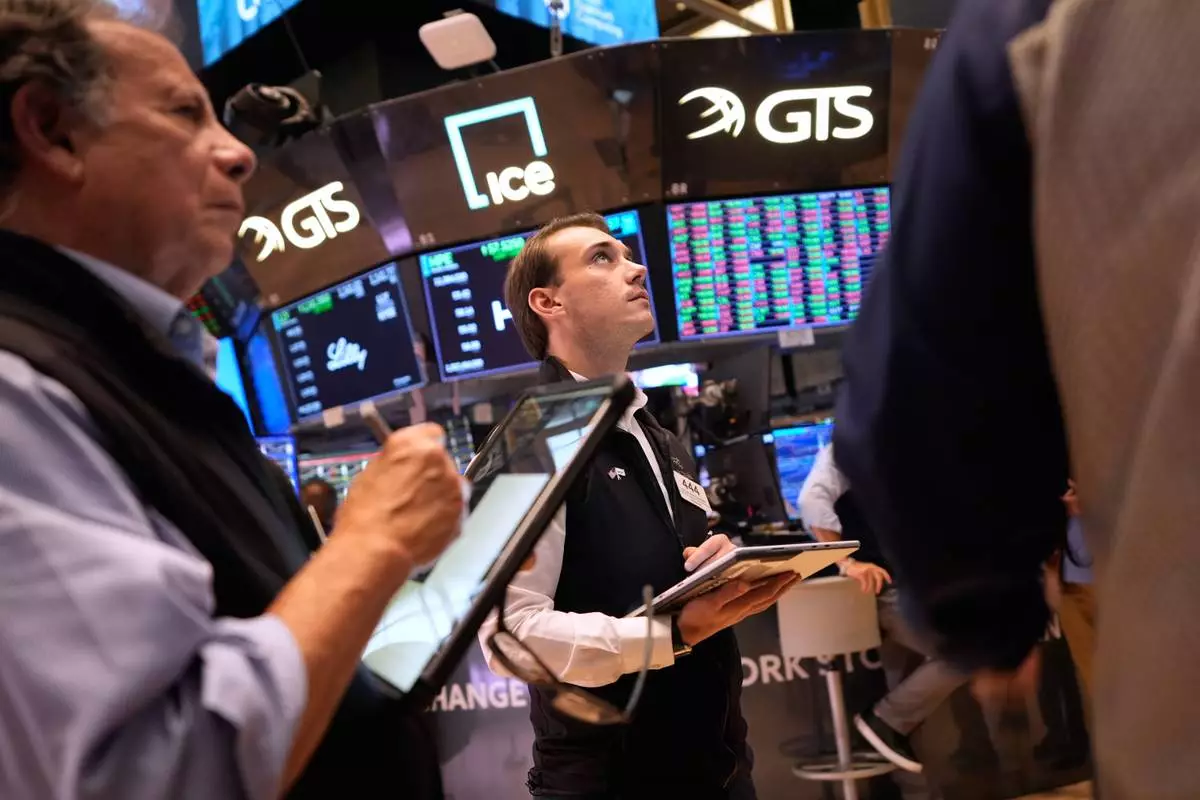
Traders work on the floor at the New York Stock Exchange in New York, Wednesday, Sept. 16, 2026. (AP Photo/Seth Wenig)
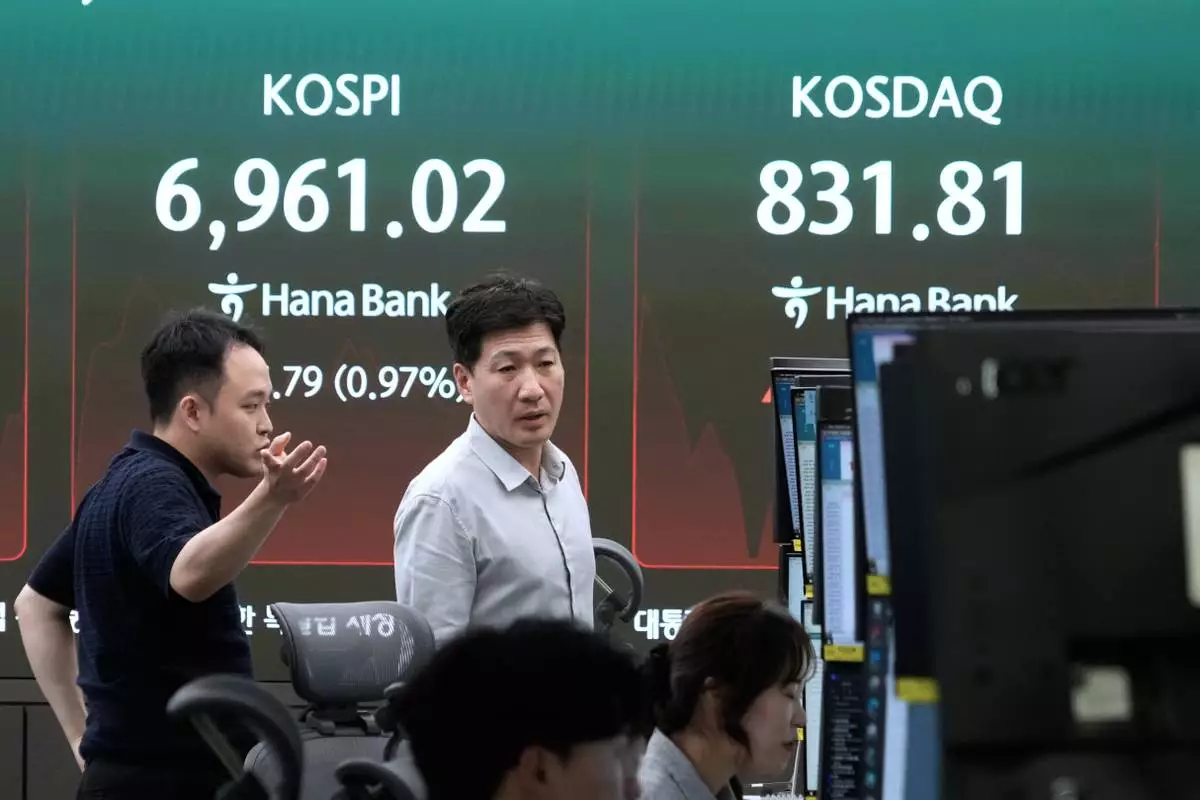
Currency traders work near a screen showing the Korea Composite Stock Price Index (KOSPI) in the foreign exchange dealing room at the Hana Bank headquarters in Seoul, South Korea, Monday, Sept. 21, 2026. (AP Photo/Ahn Young-joon)
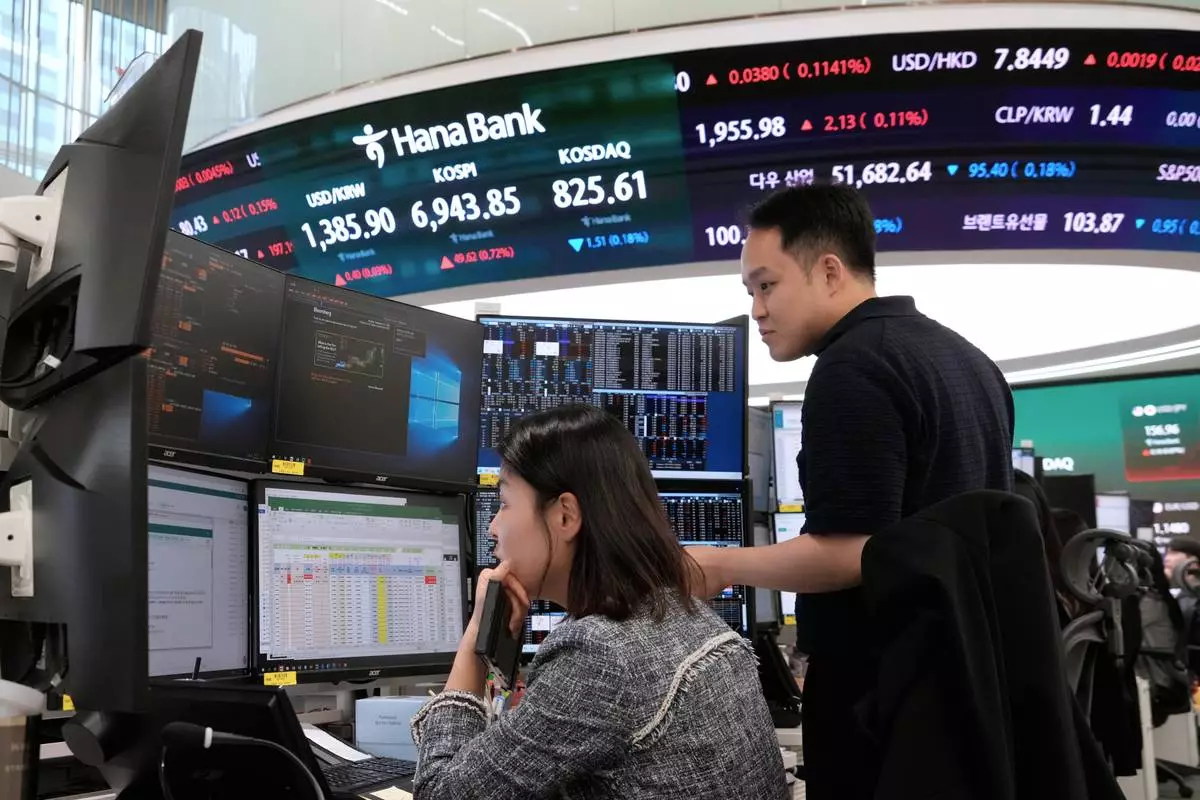
Currency traders work in the foreign exchange dealing room at the Hana Bank headquarters in Seoul, South Korea, Monday, Sept. 21, 2026. (AP Photo/Ahn Young-joon)
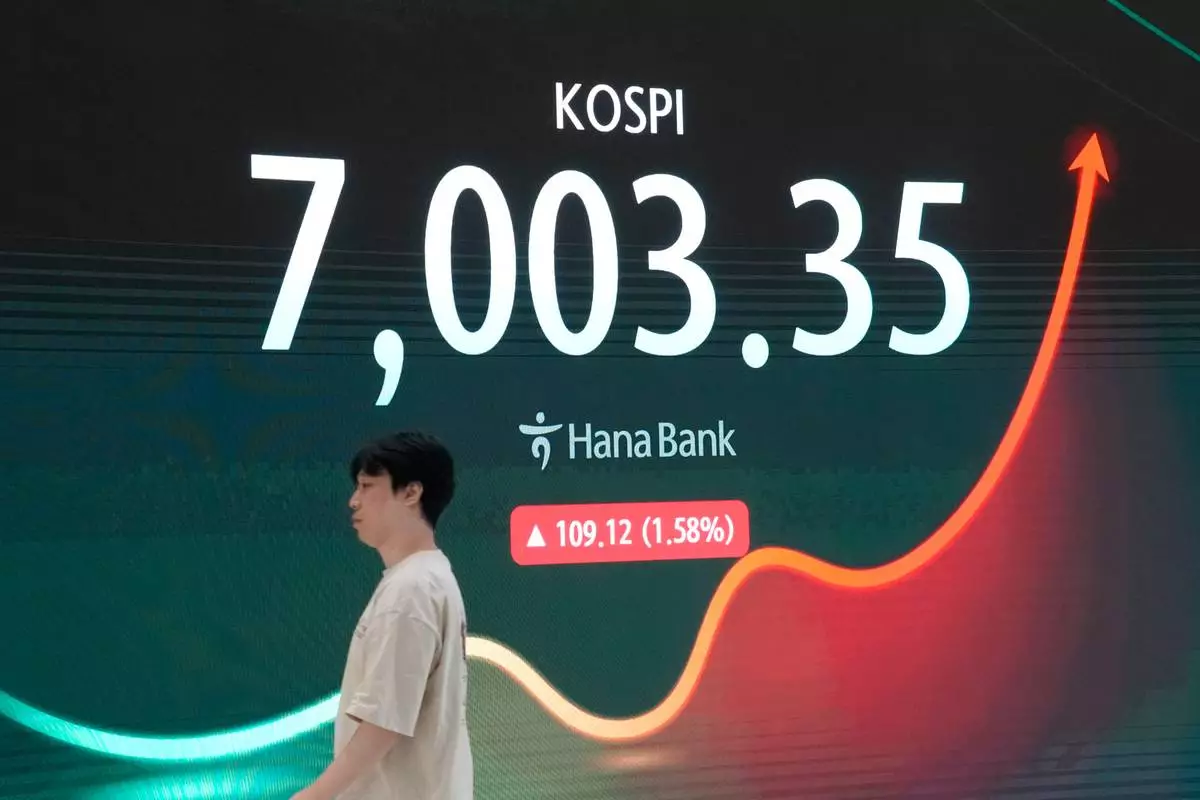
A screen shows the Korea Composite Stock Price Index (KOSPI) in the foreign exchange dealing room at the Hana Bank headquarters in Seoul, South Korea, Monday, Sept. 21, 2026. (AP Photo/Ahn Young-joon)