BUTTE, Mont.--(BUSINESS WIRE)--Sep 21, 2026--
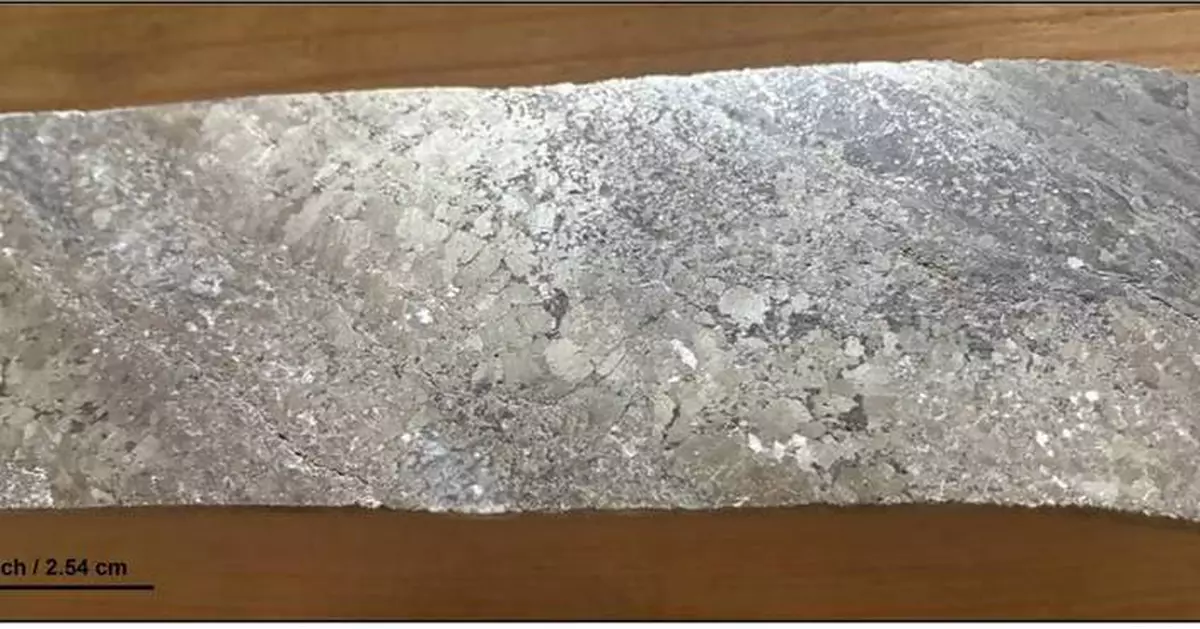
Silver Bow Mining Corp. (NYSE American: SBMT) (“Silver Bow Mining” or the “Company”) is pleased to announce that drill hole SBM26-09 has intersected chalcocite-bornite-chalcopyrite-bearing massive sulfide mineralization (see Figure 1) on the Black Rock Copper Vein at the Company’s Rainbow Block Project in Butte, Montana.
This press release features multimedia. View the full release here: https://www.businesswire.com/news/home/20260921745554/en/
Highlights
Diamond drill hole SBM26-09 intersected 0.82 meters (2.7 feet) of vein-hosted, massive sulfide mineralization from 662.15 to 662.97 meters (2,172.4 to 2,175.1 feet) downhole grading 8.20% CuEq. The sulfides comprise massive pyrite with disseminations and blebs of bornite and chalcopyrite, and narrow fractures filled with chalcocite. Based on the interpreted vein orientation, the true width of the 0.82-meter recovered mineralized interval is estimated to be approximately 50% to 60% of its reported downhole length. However, because the upper Black Rock Copper Vein contact was not preserved and core recovery in the immediately overlying 1.95-meter (6.4 foot) interval was only 9%, the full true width of the vein at this location is uncertain.
The intercept is located approximately 30 meters (98 feet) below a copper-silver block shown as unmined in Anaconda’s historical underground development records (see Figure 3). The Company has not verified that historical copper-silver block as a current mineral resource or mineral reserve, and no tonnage or grade can be attributed to it from the historical estimate. The drill result is consistent with the location of mineralization documented in the historical records but does not verify the historical estimate. The Black Rock Copper Vein was mined by Anaconda for copper and silver from the 1600 Level down to the 3900 Level (approximately 500 m to 1,220 m below surface).
Hole SBM26-09 was drilled to test a series of silver-zinc vein systems as well as the Black Rock Copper Vein (see Figure 3). Assays remain pending for the silver-zinc vein systems intersected by SBM26-09, including the Rainbow, Boston and Jersey Blue veins.
Silver Bow Mining has initiated a follow-up drill hole, SBM26-10, collared from surface, with the goal of intersecting the Black Rock Copper Vein up-dip from the SBM26-09 intersection.
“In Butte, this style of high-grade copper-bearing massive sulfide mineralization is known as Main-Stage mineralization, and it has been the primary source of historical production in this storied copper district,” said Phillip Nickerson, PhD, CPG, Vice President of Exploration. “Intersecting Main-Stage mineralization in the Black Rock Copper Vein is an encouraging result. The intercept is located immediately below a historical copper-silver block shown in Anaconda’s underground development records and is consistent with the location of mineralization documented in those records. While the high-grade interval is narrow, it gives us clear geological evidence for follow-up work. We see potential both to define more Main-Stage copper-silver mineralization and to expand the silver-lead-zinc-gold Mineral Resource currently outlined at the Rainbow Block. Going forward, we’ll continue drawing on more than a century of historic Anaconda records in our drill hole targeting.”
“This intersection illustrates the potential value of combining modern drilling with more than a century of geological information from the Butte District,” said Travis Naugle, Chairman and Chief Executive Officer. “Subject to additional drilling, the Black Rock Copper Vein may provide Silver Bow Mining the opportunity to evaluate the broader copper-silver potential of the Rainbow Block. Our next work will focus on testing continuity, geometry and grade so that we can determine whether this historic target can contribute to the Company’s longer-term resource growth plans.”
Anaconda Vein-type Copper-Silver Historical Records
Anaconda maintained extensive, detailed records of the high-grade Main-Stage vein systems historically evaluated and mined in its Butte District underground operations. Anaconda’s final report, “ Ore Reserves and Resources, The Anaconda Company, Butte District, Montana, to January 1, 1978”, dated May 10, 1978, and prepared by Anaconda’s Geological Department—Butte Operations, describes a systematic approach to selective vein-type copper-silver estimates using underground sampling and mine development.
Under Anaconda’s historical resource estimation methodology, selective vein-type copper-silver blocks were required to contain at least 2.0% copper, or its equivalent including silver, over a minimum mining width of 7 feet (2.13 meters), and to contain sufficient volume to warrant mining. Anaconda’s historical use of the term “resource” does not correspond to current Mineral Resource classifications under NI 43-101 or S-K 1300.
Historical Estimates: Anaconda’s historical records contain district-wide estimates prepared before Silver Bow Mining acquired its interests in the Butte Project. Although National Instrument 43-101 – Standards of Disclosure for Mineral Projects (“NI 43-101”) permits disclosure of historical estimates when conditions are satisfied, the Company has elected not to disclose those estimates in this news release to align the news release with the limitations applicable to the Company’s SEC filings under Subpart 1300 of Regulation S-K (“S-K 1300”). The estimates have not been verified as current Mineral Resources or Mineral Reserves, and the portion, if any, attributable to the Black Rock Copper Vein cannot be quantified. The Company is not treating the historical estimates as current Mineral Resources or Mineral Reserves.
Technical Disclosures
Qualified Person: Phillip Nickerson, PhD, CPG, Vice President of Exploration of Silver Bow Mining Corp., is a “Qualified Person” as defined by NI 43-101 and a “qualified person” as defined by S-K 1300. Dr. Nickerson has reviewed and approved the scientific and technical information contained in this news release. Dr. Nickerson is not independent of the Company.
Dr. Nickerson specifically reviewed the analytical and quality assurance and quality control (“QA/QC”) data supporting the drill results reported in this news release and considers the results reliable for the purposes of this disclosure. No limitations on or failures to verify the data were identified that could materially affect the results reported herein.
Sample Preparation and Analytical Methods: Diamond drill core was logged, photographed and sampled by Silver Bow Mining personnel at the Company’s Butte core logging facility. Sample intervals are selected based on geological criteria and may range from approximately 1 to 5 feet. Core selected for analysis was sawn longitudinally, with one-half submitted for analysis and the remaining one-half retained for reference in Silver Bow Mining’s secure core storage facilities.
Samples were individually bagged and transported under chain-of-custody procedures by courier to American Analytical Services (“AAS”) in Osburn, Idaho. AAS is independent of Silver Bow Mining. The laboratory used for the analyses reported herein is accredited to ISO 17025:2005 (accreditation number 66670). Silver and gold were analyzed by fire assay using AAS code FA-Ag/Au, and copper and zinc were analyzed by atomic absorption using AAS method M-AA-2A. No other elements were analyzed by AAS.
Quality Assurance and Quality Control: Silver Bow Mining maintains QA/QC program for its diamond drilling that includes the systematic insertion of blanks and certified reference materials into the sample stream at a combined rate of approximately 10%, or one QA/QC sample per 10 samples. AAS also performs its own internal laboratory QA/QC procedures.
Equivalent Grade Calculation:
AgEq grades reported in this news release use metal prices and estimated recovery assumptions consistent with the Company's current Inferred Resource. The following metal prices were used to calculate both AgEq and CuEq: silver – $25.00/oz; copper - $4.00/lb; and zinc – $1.31/lb. Estimated metallurgical recoveries of 90% were applied to each metal included in the calculation.
AgEq and CuEq are calculated by determining the per-ton in-situ value of individual metals in the equations, applying the respective estimated metallurgical recovery to each metal, summing the resulting values and dividing the total by the primary equivalent metal price adjusted by the primary equivalent metal estimated recovery.
The metallurgical recovery assumptions used in the AgEq calculation are consistent with those used in the current Rainbow Block Inferred Resource estimate. Actual metallurgical recoveries have not been established for the specific mineralized intervals reported in this release and may differ from the assumptions used.
About Silver Bow Mining Corp.
Silver Bow Mining Corp. is a minerals exploration company advancing its Butte Project, including the Rainbow Block, located in the Butte Mining District of Montana. The Company is targeting a broad suite of U.S.-designated Critical Minerals, including silver, copper, zinc, lead, manganese, germanium, gallium, antimony, bismuth and indium, alongside gold. The Company holds approximately 4,210 acres of patented mineral claims and approximately 1,427 acres of surface lands across multiple claim blocks in this historically prolific district, including the flagship Rainbow Block.
On Behalf of Silver Bow Mining Corp.,
Travis Naugle
Chairman and Chief Executive Officer
Cautionary Note on Forward-Looking Statements
This news release contains forward-looking statements within the meaning of the U.S. Securities Act of 1933, as amended, the U.S. Securities Exchange Act of 1934, as amended, and forward-looking information within the meaning of applicable Canadian securities laws. The forward-looking information in this news release is based on material assumptions regarding the availability of sufficient funding, personnel, drilling equipment and contractors; continued access to the project and maintenance of required permits; the ability to complete planned drilling substantially as currently contemplated; the reliability of geological interpretations and historical records; timely receipt of assay results; and the absence of material adverse changes in commodity prices, market conditions or applicable laws.
All statements, other than statements of historical fact, included in this news release that address activities, events or developments that Silver Bow Mining expects or anticipates will or may occur in the future are forward-looking statements and forward-looking information. When used in this news release or elsewhere, words such as “anticipate,” “believe,” “estimate,” “expect,” “intend,” “may,” “plan,” “potential,” “project,” “target,” “will,” “could,” “should” and similar expressions, or statements that certain actions, events or results “may,” “could,” “would,” “should,” “might” or “will” occur or be achieved, often, but not always, identify forward-looking statements and forward-looking information.
Forward-looking statements and forward-looking information in this news release include, but are not limited to, statements regarding the potential grade, true width, continuity, geometry, scale, extent and quality of mineralization on the Black Rock Copper Vein; the Company’s plans to complete drill hole SBM26-10 and conduct other follow-up drilling on the Black Rock Copper Vein; the continuation and timing of the Company’s exploration and drilling programs at the Rainbow Block; the potential to identify or extend known mineralized vein systems; the potential copper-silver mineralization and resource growth of the Rainbow Block; the potential incorporation of current drilling results and historical drilling, assay, sampling, geological and mining information into a future Mineral Resource estimate; the Company’s ability to compile, validate and verify historical information; and other similar statements regarding the Company’s exploration and development plans for the Rainbow Block.
Forward-looking statements and forward-looking information are based on the Company’s current expectations and are subject to known and unknown risks and uncertainties that may cause actual results to differ materially. These risks and uncertainties include that additional drilling may not confirm the continuity, grade, geometry, extent or quality of mineralization on the Black Rock Copper Vein; that SBM26-10 or other planned drill holes may be relocated, reoriented, delayed or not completed; that drilling may not extend known mineralized vein systems or support expansion of the Rainbow Block Mineral Resource; that historical information may be incomplete, inaccurate, unverifiable or unsuitable for inclusion in a future Mineral Resource estimate; uncertainty associated with Mineral Resource estimates, including the high degree of geological uncertainty associated with Inferred Mineral Resources; the risk that Inferred Mineral Resources may not be upgraded to a higher category through continued exploration or ultimately converted to Mineral Reserves; the timing and completion of the Company’s exploration and drilling programs and any updated Mineral Resource estimate; changes in U.S. laws, regulations, executive orders, policies or government priorities relating to critical and strategic minerals; the Company’s future capital costs, operating costs and non-operating costs; the Company’s ability to raise capital on acceptable terms or at all; risks relating to the Company’s exploration activities in Montana; risks related to the Company’s mineral claims, including the validity, title and maintenance of mineral claims and property rights; risks in obtaining, maintaining or amending permits, licenses and future permitting and regulatory approvals; commodity-price fluctuations; litigation; and the inherently hazardous nature of mineral exploration and mining-related activities, including operational and environmental risks.
Additional risk factors are discussed under the headings “Forward-Looking Statements” and “Risk Factors” in the Company’s Registration Statement on Form S-1, as amended, filed with the U.S. Securities and Exchange Commission on April 21, 2026, the Company’s Canadian prospectus dated April 29, 2026, filed on SEDAR+, and in other documents filed by the Company with the U.S. Securities and Exchange Commission and Canadian securities regulatory authorities.
Although the Company has attempted to identify important factors that could cause actual results to differ materially from those described in forward-looking statements and forward-looking information, there may be other factors that cause results not to be as anticipated, estimated or intended. Readers are cautioned not to place undue reliance on forward-looking statements and forward-looking information, which speak only as of the date of this news release. Except as required by applicable law, the Company undertakes no obligation to update or revise any forward-looking statements or forward-looking information, whether as a result of new information, future events or otherwise.
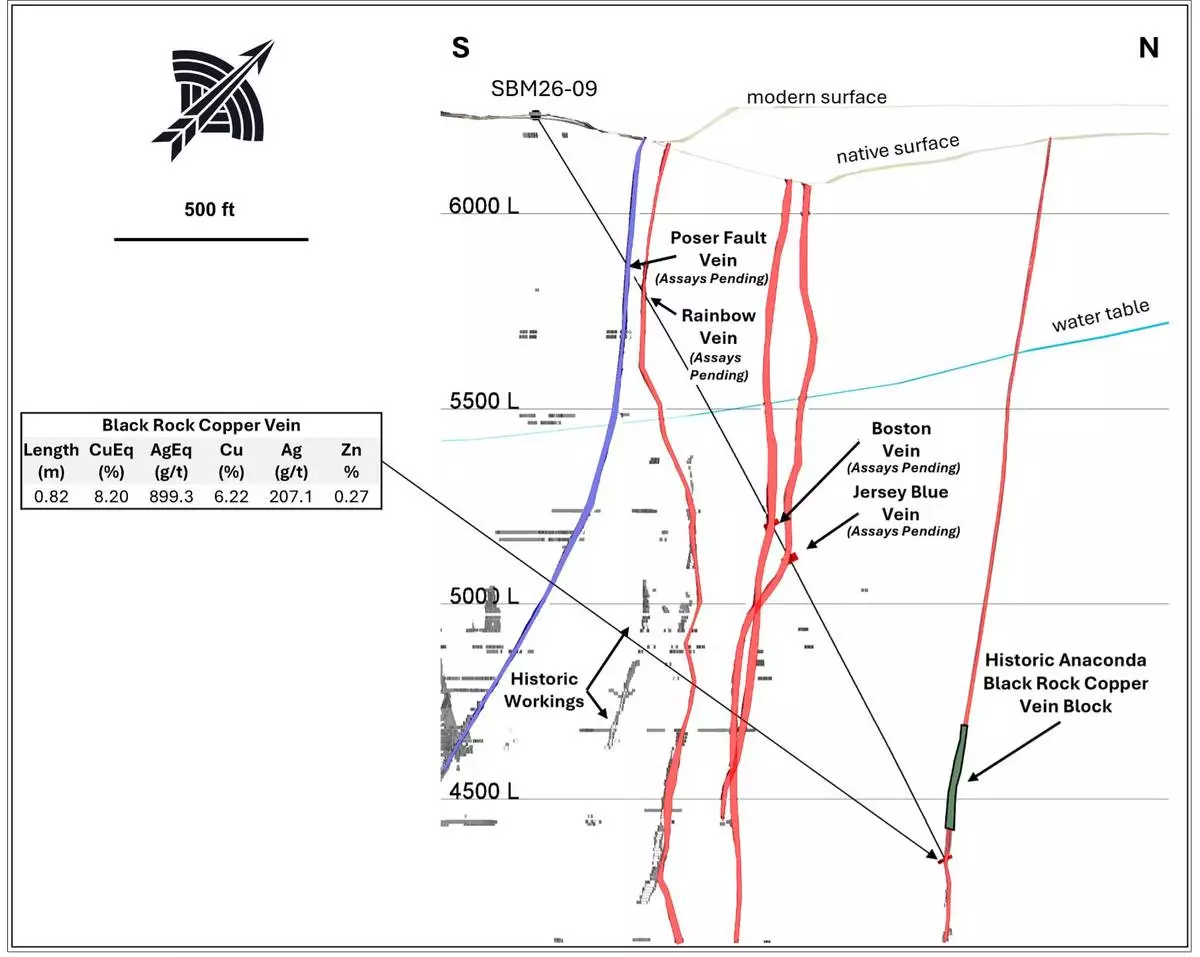
Figure 3 – Cross-sectional view of hole SBM26-09 showing modeled veins, location of the Black Rock Copper Vein intercept, and the historical Black Rock Copper Vein block identified in Anaconda records.
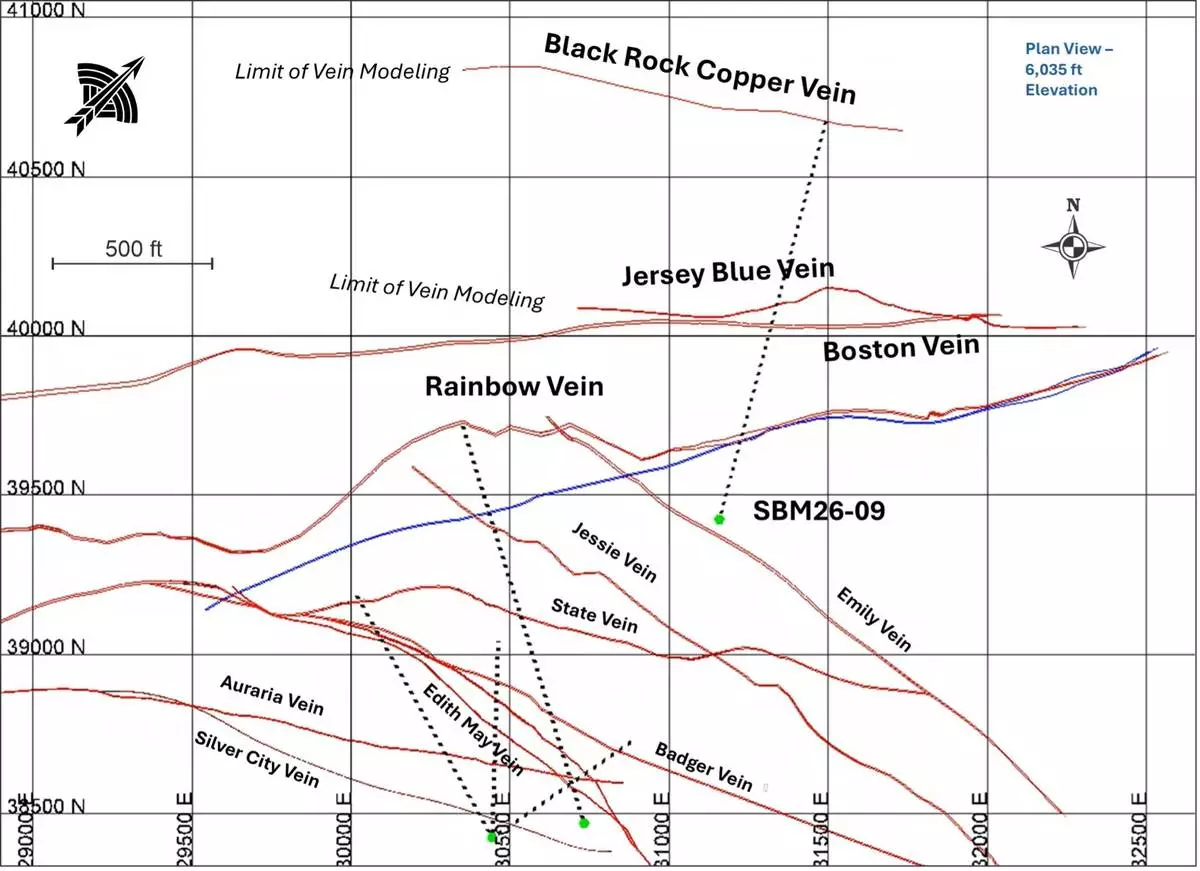
Figure 2 – Plan view (6,035 ft Level) of eastern portion of the Rainbow Block showing trace of drill hole SBM26-09, key modeled veins, and location of the Black Rock Copper Vein intercept.
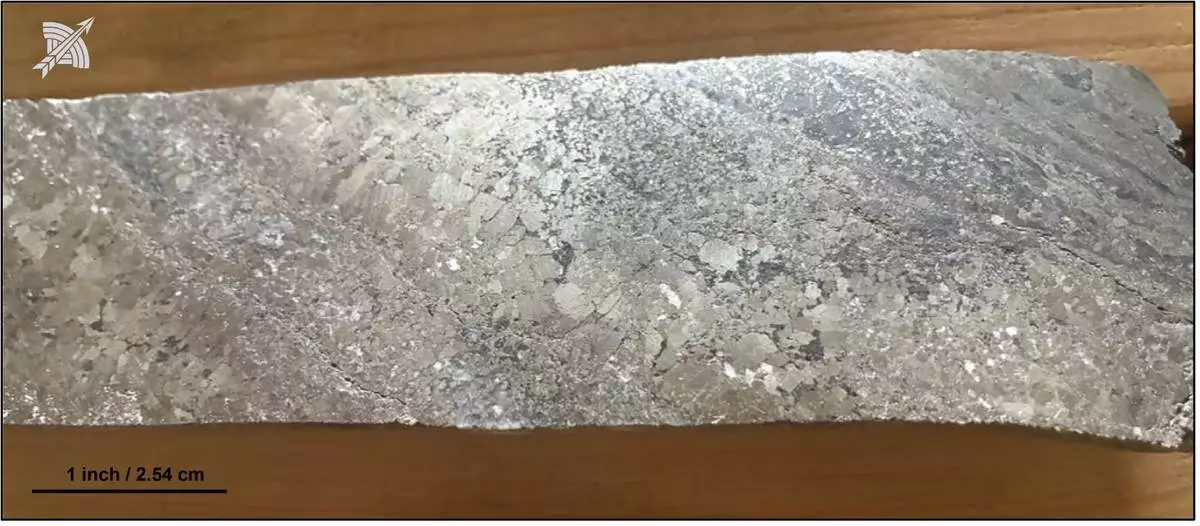
Figure 1 – Massive pyrite with chalcocite-bornite-chalcopyrite from DDH SBM26-09, Black Rock Copper Vein, at a downhole distance of 662.3 meters (2,173 feet).