Chinese automakers are moving beyond vehicle exports to build local manufacturing, sales and service networks overseas, seeking longer-term positions in global markets.
The push comes as these companies gain increased support and guidance from China's central government. On Sept. 9, nine agencies issued a plan to advance the industry to world-leading levels by 2030.
The blueprint calls for trade, investment and technology cooperation to advance in tandem, backed by China's industrial ecosystems, service networks and stronger overseas compliance support. It also sets targets for several Chinese automakers to achieve a top-10 global ranking by sales volume.
The strategy was on display at IAA Transportation, a major commercial-vehicle, transport and logistics trade fair held in Hanover, Germany, that ended on Sunday. Chinese companies accounted for 363 exhibitors, or more than 20 percent of the total.
Several Chinese commercial-vehicle makers came with more than trucks, presenting international expansion plans that combine research and development, local manufacturing, sales and after-sales support.
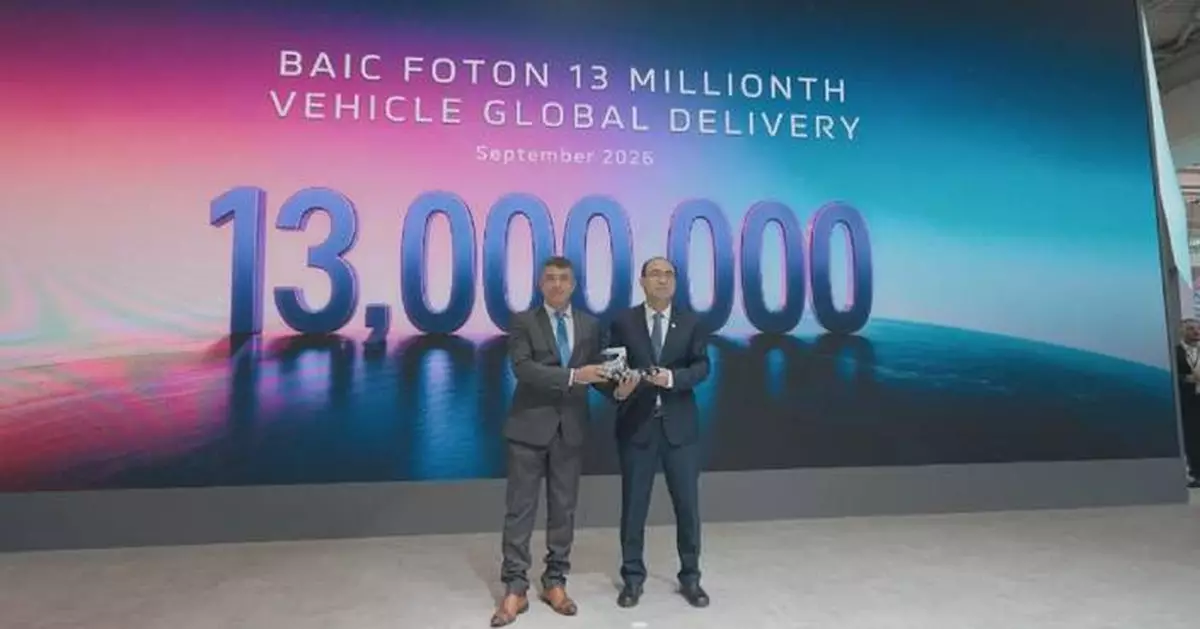
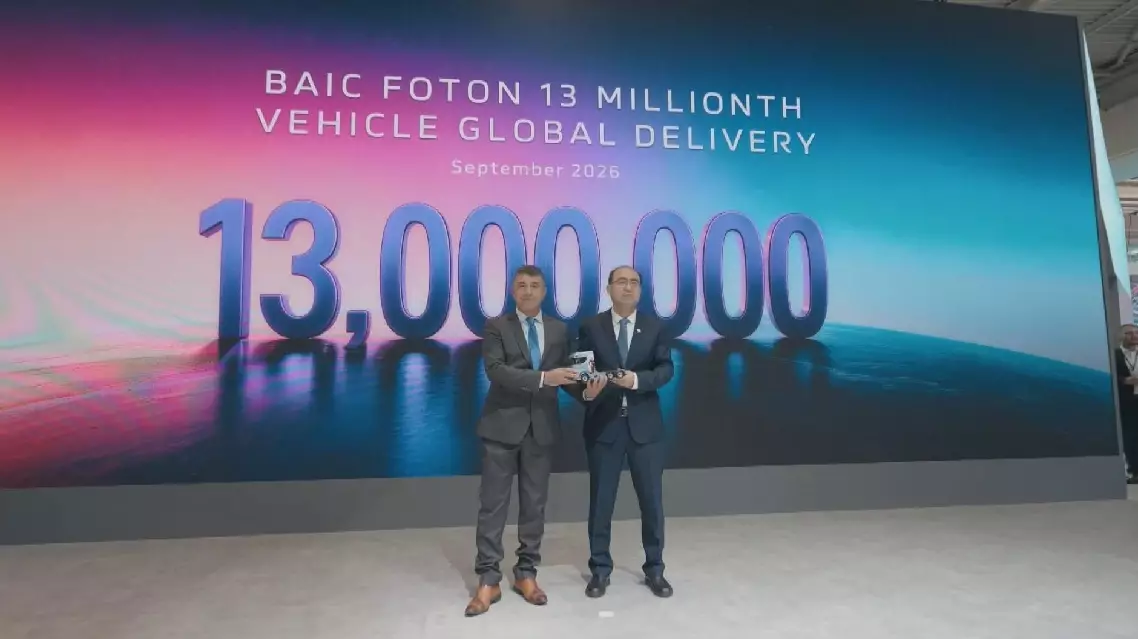
Foton Motor, the commercial-vehicle subsidiary of Beijing Automotive Group Co., Ltd., or BAIC Group, has operated abroad for more than 20 years. It marked the delivery of its 13 millionth vehicle worldwide with a handover to a customer in Spain.
"They have really nice products, all of them certified following EU regulation and certifications, and also the ecosystem that we have with spare parts, training, that really gives good [profitablility] to our business," said Guillem Pueyo, a Spanish distributor.
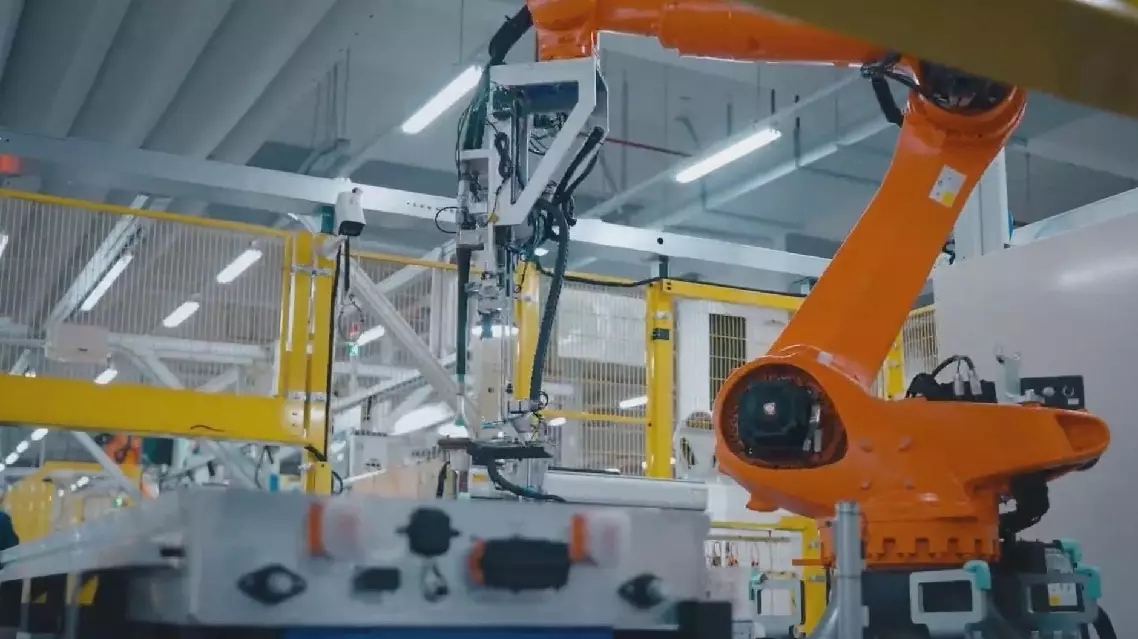
At its Beijing headquarters, Foton representatives said the automaker had moved beyond an export-led model to establish manufacturing bases and local sales and service networks in markets around the world.
"The logic of competition in global commercial-vehicle markets has changed fundamentally. Short-term product sales cannot support long-term development. The core of our approach is to move from selling products to building businesses in local markets. We work with local partners to develop industrial ecosystems, establish capabilities locally and build a lasting competitive edge," said Lu Zhenghua, general manager of Foton Motor.
This move toward local operations is also gaining traction among Chinese new-energy vehicle makers, whose technology, products and supply-chain strengths have supported expansion across overseas markets.
Chinese new-energy vehicle maker BYD sold 188,700 vehicles overseas in August, up 134.6 percent from a year earlier. Revenue from its overseas markets exceeded domestic revenue for the first time in the first half of the year.
A Ministry of Commerce official said recently that China's auto exports had maintained solid growth this year as Chinese brands gained wider international recognition. Vehicle exports, technology licensing and other forms of cooperation are expanding in parallel, the official said.
Chinese vehicles are now sold in more than 200 countries and regions, while Chinese companies have invested in vehicle and parts manufacturing in more than 80 countries and regions, expanding networks of production and supply-chain partners.
"Under the new global competitive landscape, Chinese automakers are moving beyond exporting products to pursue a more integrated form of international expansion, combining technology, brands, services and industrial ecosystems. By providing technical services across the value chain, we can help them meet overseas regulatory requirements, improve quality and build stronger brands in global markets," said Gong Jinfeng, general manager of the China Automotive Technology and Research Center.
Chinese automakers take global push beyond vehicle exports