Joint research highlights the importance of equitable safeguards as AI companions become more widely adopted
SINGAPORE, Sept. 22, 2026 /PRNewswire/ -- As AI companions become more commonplace, new research from Singapore Management University (SMU) and Duke-NUS Medical School argued that the real question is no longer whether these technologies are beneficial or harmful, but who benefits, who is most at risk, and how society can ensure AI serves everyone equitably.
Published recently in Nature Human Behaviour, the paper titled How AI companions could deepen social inequality, introduced a new framework for understanding how AI companions may shape existing social inequalities. The study was led by first author Zhang Qiyang (张起阳), Assistant Professor in Learning Analytics from SMU College of Integrative Studies, Zhang Renwen, Nanyang Assistant Professor from the Wee Kim Wee School of Communication and Information at Nanyang Technological University, and senior author Liu Nan (柳楠), Associate Professor from the Centre for Biomedical Data Science at Duke-NUS Medical School.
Rather than viewing AI companions through a simple "good or bad" lens, the researchers examined how differences in users' social support, technology design and governance can lead to uneven outcomes, and outlined practical recommendations to help policymakers, technology developers and users maximise the technology's benefits while mitigating its risks.
"The debate around AI companions has largely focused on whether the technology is beneficial or harmful. Our research shows that this is the wrong question," said Assistant Prof Zhang. "The more important question is who benefits, who bears the risks, and why those outcomes are so unevenly distributed. Without deliberate safeguards, AI companions risk reinforcing existing social inequalities, leaving those who most need human support the most exposed to harm."
Why AI companions benefit some people more than others
The study introduced a new framework for understanding how AI companions may reinforce existing inequalities across three interconnected dimensions: users, platform design and governance. Rather than viewing risks in isolation, the framework showed how these factors interact to shape unequal outcomes, and proposed practical interventions at each level.
The study unveiled a key insight of a "rich-get-richer" dynamic in human relationships. People with strong family ties and social networks are more likely to use AI companions to supplement existing relationships. For example, to rehearse difficult conversations or manage stress.
In contrast, those who are lonely, socially isolated or have limited access to mental health support are more likely to rely on AI companions as a substitute for human connection. Over time, this reliance may contribute to social deskilling - the gradual erosion of interpersonal skills through reduced opportunities to practise authentic human interaction.
A systems approach to understanding AI risks
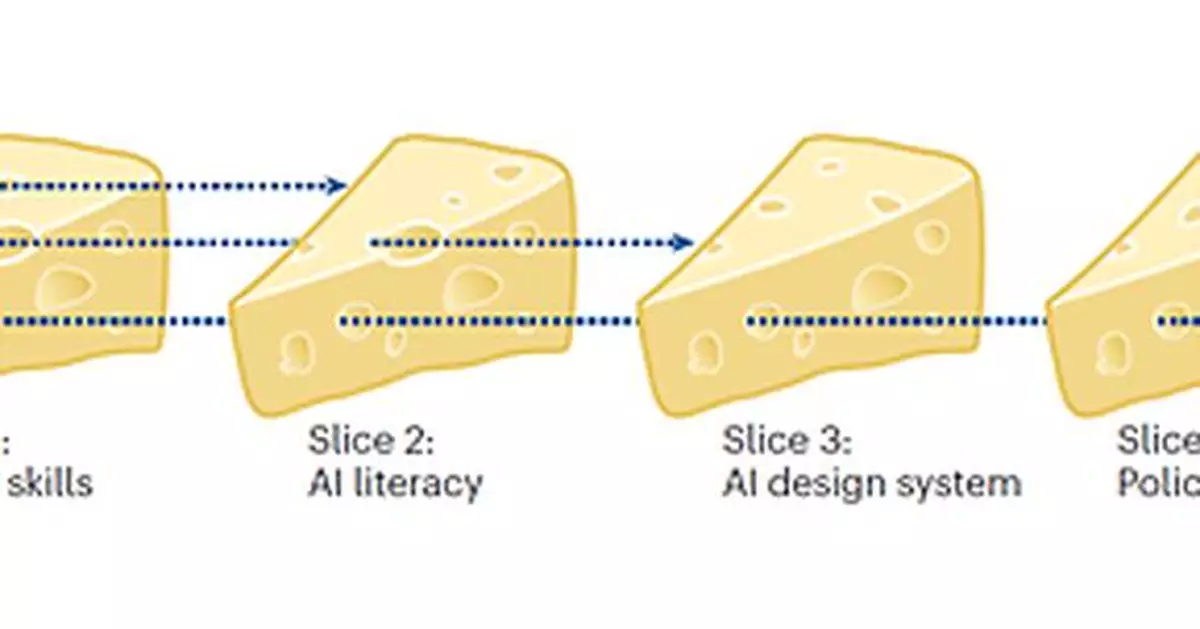
To explain how these inequalities emerge, the study adapted the Swiss cheese model, a framework widely used in engineering and safety science to explain how multiple small failures align to produce larger systemic risks.
Instead of viewing AI companionship as a problem caused by any single factor, the study argued that harm occurs when several protective layers fail simultaneously. These included users' AI literacy, social support networks, platform design choices and regulatory oversight.
Each layer held weaknesses, or "holes". When these weaknesses aligned, vulnerable users became significantly more exposed to harmful outcomes.
According to the study, this systems perspective represented a significant shift from existing approaches that tend to focus on individual users, technology companies or regulation in isolation.
Governance remains the largest gap
Among the four protective layers examined, the study identified governance as the most pressing concern.
Despite increasingly being used for emotional support and mental well-being, AI companions currently occupy a regulatory grey area in many countries. Most are governed as consumer applications rather than technologies with potential psychosocial or mental health impacts.
According to the study, recognising AI companions as health-related technologies could unlock stronger protections, including:
- age-appropriate design requirements;
- transparent disclosure that users are interacting with AI;
- limits on emotionally manipulative engagement features;
- clearer data governance and privacy standards; and
- mandatory crisis-response protocols for users disclosing self-harm or other high-risk situations.
Assistant Prof Zhang is also developing a global policy dashboard tracking countries' governance frameworks for AI mental health technologies. Early findings indicate that many jurisdictions have yet to establish dedicated policies or guidelines for AI companions.
Why the research matters for Singapore
The study highlighted Singapore as both particularly well positioned and uniquely exposed to the rapid rise of AI companionship.
Singapore's advanced digital infrastructure, strong policymaking capabilities and history of proactive technology governance position it to lead internationally in developing responsible safeguards.
At the same time, high smartphone adoption, widespread AI usage, an ageing population, growing numbers of older adults living alone, and increasing concerns around youth mental health and loneliness create conditions where AI companions are likely to be adopted quickly, particularly among vulnerable groups.
"The rapid evolution of AI companions presents an opportunity to shape their role in society before widespread adoption outpaces governance. Young people, in particular, may be less equipped to recognise the limitations or commercial incentives behind these systems, making thoughtful safeguards especially important. We hope this research contributes to a broader conversation on how AI can support human wellbeing while strengthening, rather than replacing, meaningful human connections," commented Assoc Prof Liu, who is also the Director of the Duke-NUS AI + Medical Sciences Initiative (DAISI).
Recommendations for policymakers
Building on its framework, the study outlined practical measures to help ensure AI companions enhance rather than erode social wellbeing:
1. Recognise AI companions as technologies with psychosocial and mental health implications
- Rather than regulating them solely as consumer or entertainment applications, the researchers argue that AI companions warrant governance frameworks proportionate to their potential influence on users' emotional wellbeing.
- Such an approach could support age-appropriate design standards, clearer disclosure that users are interacting with AI, stronger privacy protections and consistent crisis-response protocols.
2. Adopt a layered governance approach
- The study argued that no single intervention can adequately address the risks associated with AI companionship. Instead, policymakers could combine regulation with efforts to strengthen AI literacy, encourage responsible platform design and support real-world social connection, reducing the likelihood that vulnerable users become overly reliant on AI for emotional support.
"The future impact of AI companions will depend less on the technology itself than on how society chooses to design, govern and use it. By combining thoughtful regulation, responsible product design and stronger public AI literacy, AI companions can complement human relationships while reducing the risk of exacerbating existing social inequalities," said Assistant Prof Zhang.
To access the full study, please click here.
** This press release is distributed by PR Newswire through automated distribution system, for which the client assumes full responsibility. **
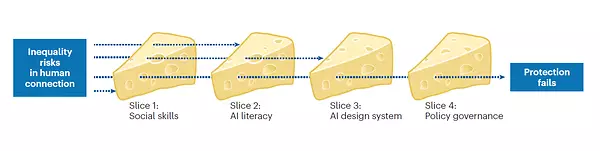
SMU-Duke-NUS study offers new framework for understanding how AI companions may shape social inequality
Download high-res photo here: https://bit.ly/4rcZWOx
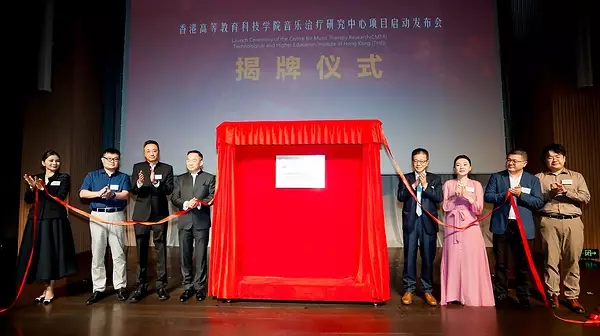
HONG KONG, Sept. 22, 2026 /PRNewswire/ -- The fast pace of modern life and an aging population drive demand for mental health and non-pharmacological holistic wellness. In alignment with the health development priorities of the national 15th Five-Year Plan and the Healthy China Initiative, the Technological and Higher Education Institute of Hong Kong (THEi) held the launch ceremony for its Centre for Music Therapy Research (CMTR) at the Sky Concert Hall in Shenzhen on 16 September. The launch aims to address the demand for innovative healthcare talent while fostering Guangdong-Hong Kong integration.
The event gathered prominent leaders across government, business, higher education, and technology sectors, including Mr Paul CHONG Kin-lit, BBS, MH, Vice Chairman, THEi's Board of Governors; Professor Alan LAU Kin-tak, President of THEi; Ms LIU Ying,
Adjunct Associate Professor, Department of Digital Innovation and Technology, THEi and
Director of Centre for Music Therapy Research, THEi; Mr YANG Pengda, Education Entrepreneur and Deputy Director of Centre for Music Therapy Research, THEi; Mr WAN Kun, Deputy Director-General, Development and Reform Bureau of Futian District, Shenzhen Municipality; Ms MA Hui, Director of Tchaikovsky Conservatory (China) International Exchange Centre; Dr CAI Yuejun, Key Laboratory of AI-Enabled Music Therapy, Shanghai Conservatory of Music; Dr PANG Yan, Associate Research Professor, Shenzhen Institutes of Advanced Technology, Chinese Academy of Sciences (CAS); Doctoral Supervisor, University of Chinese Academy of Sciences (UCAS).
The event featured strategic partnership signing ceremonies and a cross-industry networking reception, alongside an immersive "Emotional Healing Show" concert performed by celebrated musicians, including winners of 'Golden Bell Awards' and 'Wenhua Award', as well as former members of the renowned Twelve Girls Band. A key highlight was the live instrumental and choral performance of the iconic pop song Beneath the Lion Rock, which resonated with the Centre's positioning of "Hong Kong's International Connectivity"—marking a major milestone of advancing interdisciplinary mind-body wellness in the GBA.
Empowering Big Health with Applied Sciences: Nurturing "Work-Ready" Professionals in the GBA
Mr Paul CHONG Kin-lit, BBS, MH, Vice Chairman, THEi's Board of Governors, delivered opening remarks, stating: "As an applied discipline bridging art, science, and medicine, music therapy plays a pivotal role in tackling mental stress, broader wellness demands, and specialised healthcare needs. Guided by our education philosophy of 'applied science and immediate application,' THEi drives industry-academia-research integration. By extending the reach of our Centre to Shenzhen, we leverage the GBA's innovative ecosystem and expanding demand to pair global music therapy standards with cutting-edge technology—building a premier hub for scientific research, practical application, and community service."
Professor Alan LAU Kin-tak, President of THEi, emphasised in his keynote that higher education must stay attuned to modern trends and national developments: "Music is undergoing a redefinition where sound, emotion, and AI intersect. As a pioneer in applied science and work-ready education, THEi sees growing demand in the GBA for expertise in non-pharmacological therapies, mental wellness, and the silver economy. By launching the Centre in Shenzhen, we fuse academic research with regional innovation. Through short-term and professional training programmes, we aim to fast-track market-ready, multidisciplinary talent equipped with technological, clinical, and commercial expertise to directly address key social needs.
Top Academic Talent Joins Forces
The newly launched Music Therapy Research Centre is directed by Ms LIU Ying, Visiting Associate Professor in the Department of Digital Innovation and Technology at THEi. A distinguished expert in Chinese traditional music, Ms LIU leads the Centre's core content strategy, backed by international innovation expertise from Dr PANG Yan, Associate Research Professor, Shenzhen Institutes of Advanced Technology, Chinese Academy of Sciences (CAS); Doctoral Supervisor, University of Chinese Academy of Sciences (UCAS) and his team.
As the champion of the Guzheng category at the 9th Chinese Music 'Golden Bell Awards', and the exclusive recipient of the gold, silver, and bronze awards in this category. Ms LIU noted that the Centre maximises synergy between Hong Kong and Shenzhen by pairing "Hong Kong's global perspective with Shenzhen's development speed" to construct a regional cross-disciplinary hub. Guided by the vision of "medical treatment in hospitals, healing in daily life," the Centre uses Five-Tone theory and AI-based EEG technologies to deliver non-clinical wellness solutions. She stressed that with a clear focus on problem-solving over sheer size, the Centre will advance practical training programs, therapeutic products, and industry benchmarks through the integration of arts, science, and commercialisation.
Mr YANG Pengda, Education Entrepreneur and Deputy Director of Centre for Music Therapy Research, THEi, underscored his belief that "investing in education is a high-value commitment, not a cost," – a vision driving his multi-year support for THEi's research centres. Praising THEi's work-ready degree's programmes - which features a 100% internship placement and over 95% graduate employment, he noted that the Institute's programmes are tailored to industry needs. He emphasised that the new Centre is grounded in societal demand, tackling issues like sleep disorders affecting 300 million individuals and elder care for 320 million seniors—effectively leveraging technology and humanity to improve the quality of lives.
The Centre signed strategic MoUs with Key Laboratory of AI-Enabled Music Therapy, Shanghai Conservatory of Music and Tchaikovsky Conservatory (China) International Exchange Centre The partnerships will foster deep collaboration across music arts research, professional talent training, and international exchange, laying a solid artistic foundation for the Centre's ongoing development.
Moving ahead, the Centre will focus its efforts on four core strategic pillars: advancing AI-assisted music therapy research to improve personalised non-pharmacological treatments; exploring traditional Chinese music to unlock its therapeutic emotional benefits; delivering arts-based healing to support seniors and individuals with special needs; and integrating digital music with immersive technology to drive music therapy beyond traditional stages into a smart, holistic era of care.
Following the official launch of the Centre and its upcoming professional training programmes, THEi is set to reinforce its leadership in regional applied science education—accelerating sustainable innovation to support high-quality development across the GBA and nationwide.
About the Bachelor of Arts (Honours) in Music Technology
The programme places a strong emphasis on cross-cultural exchange, covering three major professional domains: game music design, contemporary music composition, and film scoring. By integrating artificial intelligence and augmented reality/virtual reality (AR/VR) technologies into practical learning, the programme equips students with professional mastery in audio engineering and sound design, enhancing their ability to combine artistic creativity with technological innovation.
About Technological and Higher Education Institute of Hong Kong (THEi)
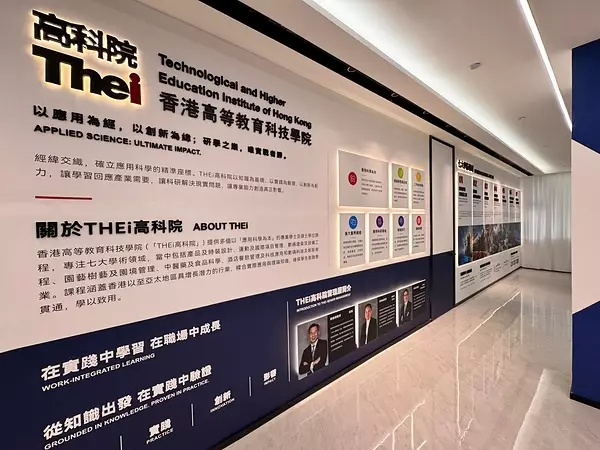
Founded in 2012, the Technological and Higher Education Institute of Hong Kong (THEi) is a member institute of the Vocational Training Council (VTC). THEi offers over 20 professional "Applied Science-Oriented" undergraduate and postgraduate degree programmes across seven academic areas: Product and Fashion Designs, Sports and International Events Management, Digital Construction and Building Services, Horticulture, Arboriculture and Landscape Management, Chinese Medicine and Food Science, Hotel Management and Culinary Arts and Technology, and Digital Technology and Innovative Business. The programmes integrate theoretical knowledge with practical applications, and cover industries with growth potential in Hong Kong and the Asia-Pacific region, ensuring that students can apply what they learn effectively.
THEi's undergraduate and postgraduate degree programmes are accredited by the Hong Kong Council for Accreditation of Academic and Vocational Qualifications. The curriculum emphasises the practical application of applied science, aligning with the latest developments in business and industry. The undergraduate degree programmes offer 100% work-integrated learning training to support students in building their career paths at an earlier stage.
THEi Chai Wan Campus was awarded the "Leadership in Sustainable Design and Performance Award - Institutional" of the Asia Pacific Leadership in Green Building Awards presented by the World Green Building Council (WorldGBC) in 2020.
Media Contact:
Ms Janice Lam
Tel: (852) 3890 8227 / (852) 9718 0817
Email: janicelam@thei.edu.hk / media@thei.edu.hk
Ms Rainbow Chiu
Tel: (852) 3890 8520
Email: rainbowh@thei.edu.hk / media@thei.edu.hk
** This press release is distributed by PR Newswire through automated distribution system, for which the client assumes full responsibility. **
When Music Reads Emotion: THEi Launches Centre for Music Therapy Research to Deepen Guangdong-Hong Kong Integration and Leverage AI to Fill the Healthcare Talent Gap
When Music Reads Emotion: THEi Launches Centre for Music Therapy Research to Deepen Guangdong-Hong Kong Integration and Leverage AI to Fill the Healthcare Talent Gap