The 48th WorldSkills Competition opened in Shanghai on Tuesday evening, with 1,385 competitors from 68 countries and regions vying in 64 skill events.
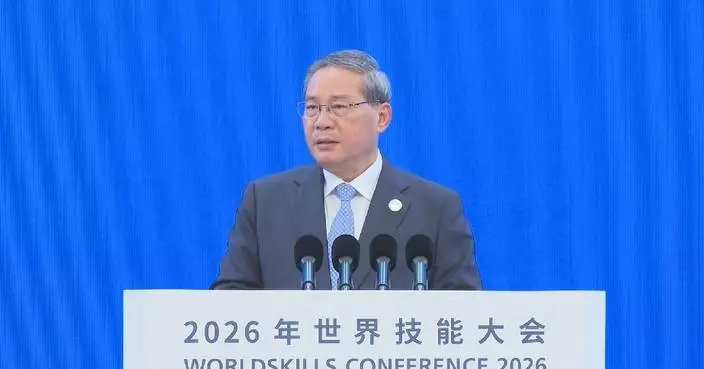
Chinese President Xi Jinping sent a congratulatory letter to the event, which was read out at the opening ceremony. Chinese Premier Li Qiang attended the opening ceremony and declared the competition open.
China has sent 71 competitors, who will compete in all 64 events, covering six sectors -- transportation and logistics, construction and building technology, manufacturing and engineering technology, information and communication technology, creative arts and fashion, and social and personal services, according to organizers.
The competition brings together young skilled professionals from around the world to showcase their expertise and exchange experience.
The WorldSkills Conference 2026 and the WorldSkills Shanghai 2026 Expo are also held alongside the competition. Competition events will conclude on Sept 27.
Malaysian Prime Minister Anwar Ibrahim attended the opening ceremony, along with officials from relevant departments of multiple countries and regions and heads of relevant international organizations.
The WorldSkills Competition, held every two years and operated by WorldSkills International, is widely regarded as the world's leading vocational skills competition.

48th WorldSkills Competition kicks off in Shanghai
China will push for the rollout of next-generation communication networks ahead of market demand in the coming five years, a senior official with the Ministry of Industry and Information Technology (MIIT) said on Wednesday at the annual International Postal and Telecommunications Expo (PT Expo).
The push mirrors the development plan recently issued by the ministry for the information and communications industry during the 15th Five-Year Plan period (2026-2030).
According to the plan, a new-generation communications network with comprehensive coverage and leading performance is expected to be fully established by 2030, the 5G user penetration rate will reach 95 percent, gigabit-capable broadband will connect to 320 million households, and intelligent computing power will reach 9,800 EFLOPS -- a unit of computing performance, with each unit representing one quintillion floating-point operations per second.
"We will systemically promote the development of an application-driven and appropriately future-oriented next-generation communications network, push broadband networks toward dual 10-gigabit evolution, and advance the construction of low-Earth orbit satellite internet systems. We will also holistically optimize a communications network that links ground and sea, expand and improve computing facilities, and strengthen computing-network integration and the interconnection of computing power, so as to better support the national integrated computing network," said Yu Xiaohui, vice minister of the Ministry of Industry and Information Technology.
The move came as breakthroughs in digital intelligence technologies -- represented by artificial intelligence -- brought opportunities for the development of information and communication.
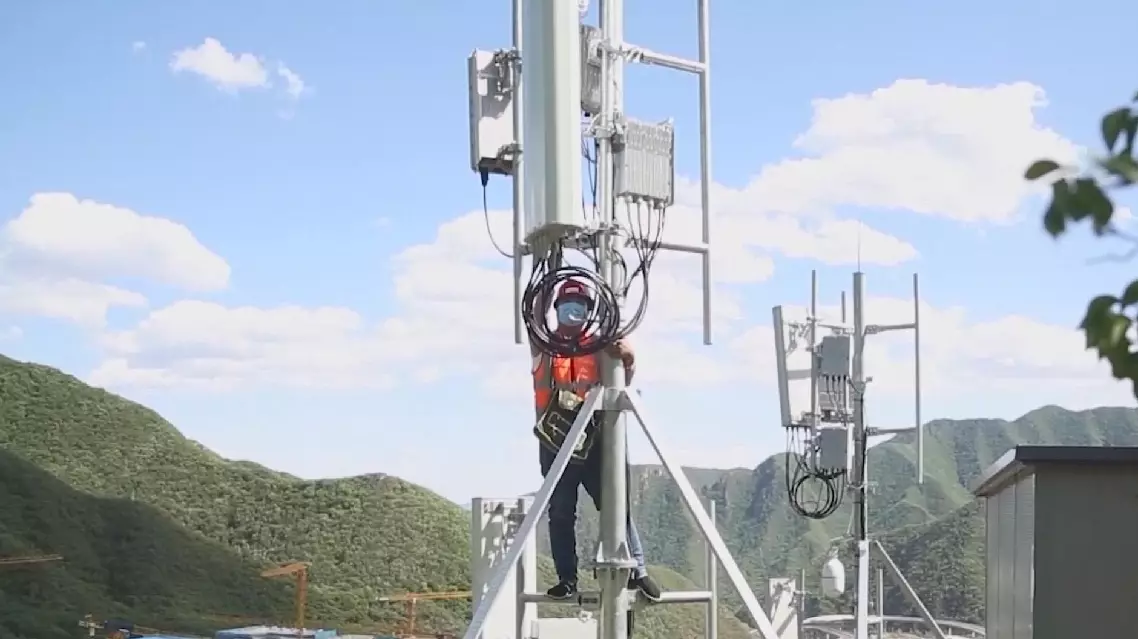
As of the end of July, China had deployed over 5.15 million 5G base stations, with early-stage deployment of 10-gigabit optical networks already underway and intelligent computing power standing at 2,185 EFLOPs, according to official data.
China will also deepen the integration of terrestrial and satellite networks, including commercial applications for smartphone direct-to-satellite services and the Internet of Things (IoT), ramp up research and development for 6G base stations, and advance the development of standards in key information and communication sectors, such as computing power networks and quantum communication, according to the development plan.
The PT Expo this year is being held from Tuesday to Thursday in Beijing.
China to push ahead-of-demand rollout of next-generation communications networks