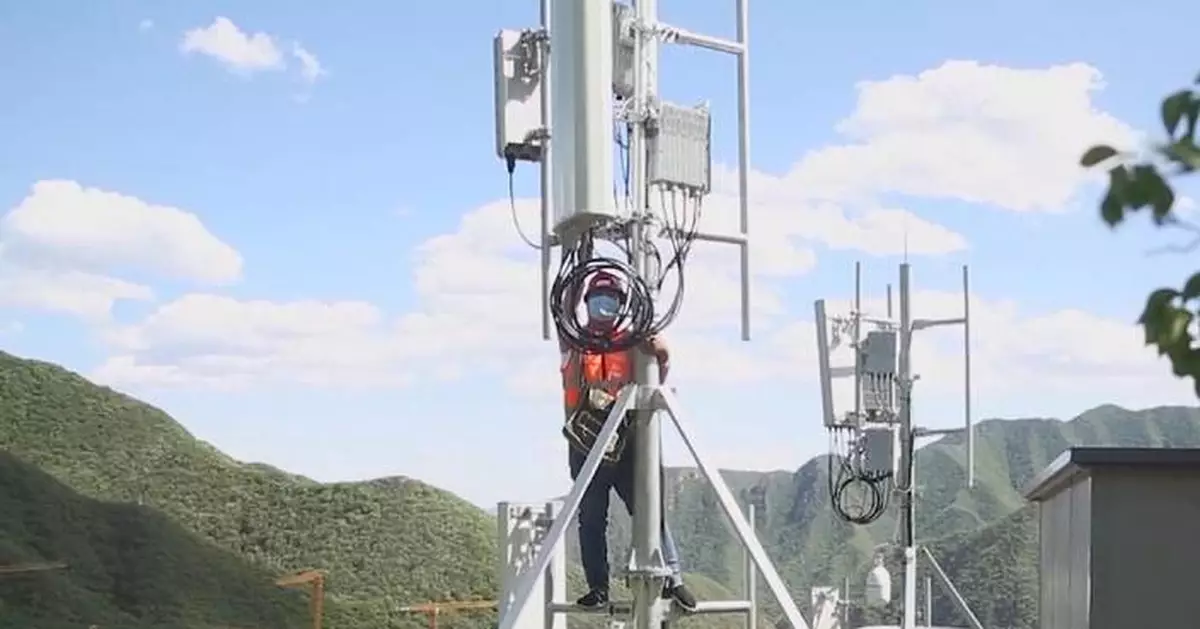
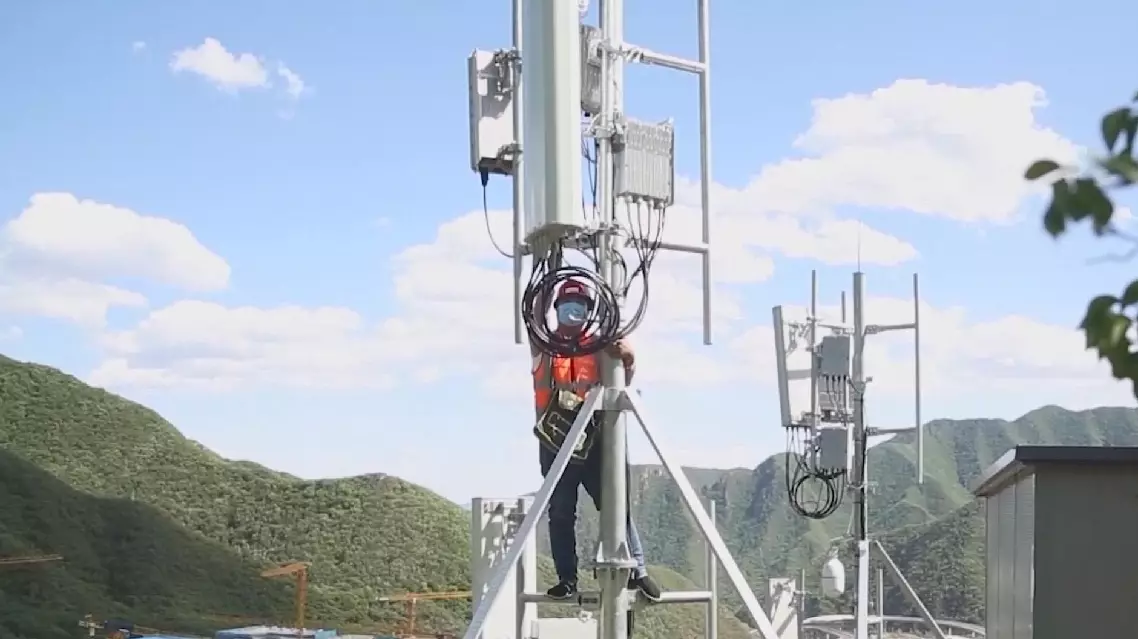
China will push for the rollout of next-generation communication networks ahead of market demand in the coming five years, a senior official with the Ministry of Industry and Information Technology (MIIT) said on Wednesday at the annual International Postal and Telecommunications Expo (PT Expo).
The push mirrors the development plan recently issued by the ministry for the information and communications industry during the 15th Five-Year Plan period (2026-2030).
According to the plan, a new-generation communications network with comprehensive coverage and leading performance is expected to be fully established by 2030, the 5G user penetration rate will reach 95 percent, gigabit-capable broadband will connect to 320 million households, and intelligent computing power will reach 9,800 EFLOPS -- a unit of computing performance, with each unit representing one quintillion floating-point operations per second.
"We will systemically promote the development of an application-driven and appropriately future-oriented next-generation communications network, push broadband networks toward dual 10-gigabit evolution, and advance the construction of low-Earth orbit satellite internet systems. We will also holistically optimize a communications network that links ground and sea, expand and improve computing facilities, and strengthen computing-network integration and the interconnection of computing power, so as to better support the national integrated computing network," said Yu Xiaohui, vice minister of the Ministry of Industry and Information Technology.
The move came as breakthroughs in digital intelligence technologies -- represented by artificial intelligence -- brought opportunities for the development of information and communication.
As of the end of July, China had deployed over 5.15 million 5G base stations, with early-stage deployment of 10-gigabit optical networks already underway and intelligent computing power standing at 2,185 EFLOPs, according to official data.
China will also deepen the integration of terrestrial and satellite networks, including commercial applications for smartphone direct-to-satellite services and the Internet of Things (IoT), ramp up research and development for 6G base stations, and advance the development of standards in key information and communication sectors, such as computing power networks and quantum communication, according to the development plan.
The PT Expo this year is being held from Tuesday to Thursday in Beijing.
China to push ahead-of-demand rollout of next-generation communications networks
Global economic growth is projected to stand at 2.9 percent in 2026 and 3.0 percent in 2027, according to the Economic Outlook Interim Report released by the Organization for Economic Cooperation and Development (OECD) on Wednesday.
Growth in the advanced G20 economies, as well as in the G20 emerging-market economies, is projected to remain broadly stable, the report said.
The report also forecasted inflation levels for the two years, predicting that some major economies will see price rises that outstrip global growth levels. G20 headline inflation is expected to rise from 3.4 percent in 2025 to 4.1 percent in 2026, before easing to 3.6 percent in 2027.
In the advanced G20 economies, headline inflation is projected to rise from 2.5 percent in 2025 to 3.2 percent in 2026, before falling to 2.6 percent in 2027, while in emerging-market G20 economies it is expected to increase from 4.1 percent to 4.8 percent before easing to 4.3 percent.
The OECD noted that the projections are based on a technical assumption that Brent crude prices and TTF gas prices will peak in the fourth quarter of 2026 and then decline steadily through the end of 2027.
The assumed Brent crude price path is broadly consistent with the "short disruption" scenario in the OECD's June 2026 Economic Outlook, while the assumed gas price path is about 60 percent higher.
Persistent uncertainty over the evolution of the conflict in the Middle East remains a key risk to the baseline projections, the OECD warned, adding that constraints on exports through the Strait of Hormuz, additional disruptions to alternative export routes such as the Bab al-Mandeb Strait, or further significant damage to energy production facilities in the region could prompt a further sustained rise in energy prices and potentially lead to shortages of key commodities, particularly in net importing countries.
Low European gas reserves and uncertain scope for sustained further reductions in oil inventories in some countries could exacerbate supply disruption risks.
Further monetary policy rate adjustments may be needed, the OECD said, noting that faced with renewed energy price shocks, stronger-than-expected demand pressures, and above-target inflation in many economies, central banks need to ensure that underlying inflation pressures are durably contained.
The OECD also called for further structural policy reforms to help economies cope with future supply shocks, including diversifying energy supply, improving energy efficiency, enhancing product and labor market adjustment, and ensuring workers have adaptable skills.

Global economic growth projected at 2.9 pct in 2026: OECD