WASHINGTON (AP) — Former FBI employees involved in the criminal investigation into President Donald Trump's retention of classified documents have been subpoenaed to appear before a grand jury in a broad Florida-based conspiracy probe, their lawyers revealed Thursday as they asked a judge to clarify whether they can testify without violating an order restricting the release of information.
The subpoenas require the former FBI employees to testify in Fort Pierce, Florida, as the Justice Department pursues an ill-defined theory of a “deep state” conspiracy to deprive Trump of his civil rights and keep him from power.
The investigation so far has been focused largely on former government officials who examined ties between Russia and Trump's 2016 presidential campaign, but the subpoenas disclosed Thursday hint at the far-reaching nature of an investigation that is also scrutinizing the FBI's 2022 search of Trump's Mar-a-Lago estate in Florida for classified documents. That search formed the basis of one of four criminal cases Trump faced between his first and second terms.
Justice Department officials are pressing ahead with what's commonly known as the “grand conspiracy” investigation after the resignation this month of Joseph diGenova, a Trump ally who had been brought in to help lead the probe that has animated right-wing commentators who have long alleged former law enforcement and intelligence officials conspired against the Republican president.
The filing on behalf of the subpoenaed employees tees up a fresh legal question for U.S. District Judge Aileen Cannon, the Trump-appointed judge who not only dismissed the classified documents prosecution of Trump but also sits in the Fort Pierce courthouse where the Justice Department has centered its yearlong conspiracy probe of Trump's perceived foes.
Cannon last February issued an order blocking the release of a report on the classified documents investigation prepared by special counsel Jack Smith, whose team in 2023 brought dozens of felony charges against the then-Republican candidate, and barring the release of non-public information about the case to people outside the Justice Department.
Now, lawyers for the subpoenaed former employees are asking Cannon to clarify whether that order precludes their clients from being able to testify before the grand jury since they'll be asked detailed questions about the investigation.
Without that clarification, they say, they may be forced to decide between being in contempt of the order if they testify, “not providing full, unconstrained testimony" in order to comply with the order or invoking their constitutional rights against self-incrimination — an option they say “creates unnecessary negative options for innocent former civil servants.”
“Specifically, clients seek to confirm that they can freely discuss non-public information related to their work on the investigation with individuals outside the DOJ, including but not limited to the grand jury and client's own counsel, without running afoul of the terms of the order,” the lawyers wrote.
The attorneys observed that the Justice Department has already taken the position that testimony about the Mar-a-Lago investigation would violate Cannon's order, noting that government lawyers emailed attorneys for Smith before he testified before Congress that he was not permitted to reveal non-public information. But they say officials in the current conspiracy investigation in Florida have declined to articulate a position or seek clarity from the court about its order.
The lawyers say their clients are happy to testify about the investigation if legally cleared to do so.
“If allowed by the court to testify unconstrained by the order, clients will readily provide to the grand jury a detailed account of the investigation, reasoning, decision-making, and other ‘non-public’ information spanning from the time the classified documents investigation was first referred to the FBI up through and including the execution of the warrant," the filing says. “Clients will each detail their firsthand memories of investigating a properly predicated allegation that then-citizen Trump had unlawfully retained hundreds of highly classified documents at his Mar-a-Lago residence.”
The filing reveals new details about the scope of the investigations and negotiations with the government.
Submitted on behalf of a group of current and former agents and analysts who participated in the Mar-a-Lago investigation, the filing says that the FBI in July and August reached out to request voluntary interviews and told the attorneys that grand jury testimony would follow those interviews.
The lawyers say two clients received subpoenas on Monday. One individual was subpoenaed to testify next week and two others, including one represented by separate lawyers, have been subpoenaed to appear the following week, according to the filing.
They say the Justice Department has broached the possibility of giving immunity to the witnesses but has not formally offered that yet. But they say immunity wouldn't resolve the issues, in part because their clients don't believe they or anyone else involved in the Mar-a-Lago investigation broke any laws.
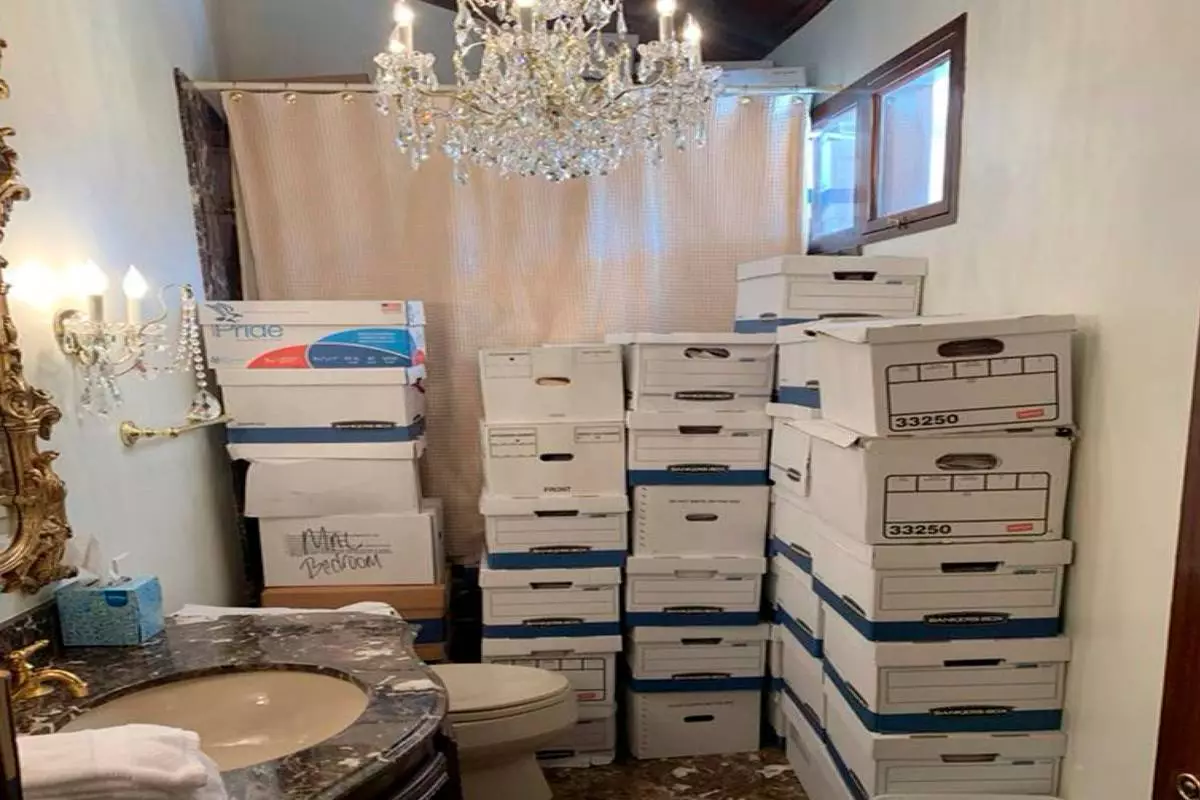
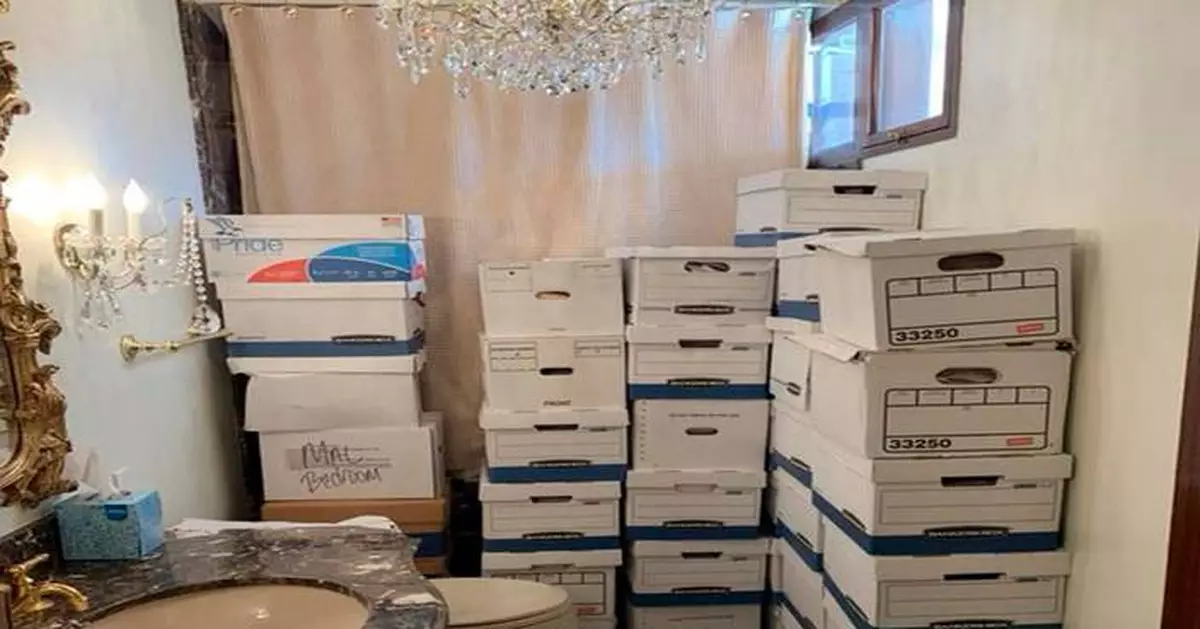
FILE - This image, contained in the indictment against former President Donald Trump, shows boxes of records stored in a bathroom and shower in the Lake Room at Trump's Mar-a-Lago estate in Palm Beach, Fla. (Justice Department via AP)
ALLENTOWN, Pa. (AP) — The Energy Department said Thursday that it will spend almost $2 billion to try to squeeze more electricity out of the nation's aging and stressed power grid, as President Donald Trump's administration steps up efforts to avoid blackouts amid skyrocketing energy demand spurred by artificial intelligence.
The money will go toward 31 projects across 26 states that are expected to produce more than 23 gigawatts of additional electricity capacity — enough to power 16 million homes. The projects will use new technologies such as sensors to measure real-time weather conditions to ensure safe transmission or direct power away from congested paths, the department said.
The upgrades could improve power reliability and lower electricity costs for about 100 million Americans, officials said.
“This is a quick way to lower electricity prices and increase reliability: using fibers that are already in the transmission lines to analyze what’s the temperature out, what’s the wind out, how can we use this transmission line to distribute more power, but safely and only in the right conditions," Energy Secretary Chris Wright said in a news conference promoting the grants Thursday at a PPL Corp. facility in Allentown.
The eastern Pennsylvania electric utility says two data centers in its territory came online this year and six more are under construction, with enough other data centers in the advanced planning stages that its peak electric demand could quintuple by 2032.
PPL said it is receiving $71.5 million to modernize an existing high-voltage transmission line across roughly 30 miles in northern Pennsylvania.
The announcement comes amid warnings that AI’s voracious demand for power is threatening to overwhelm U.S. power supplies, as massive new data centers come online faster than new power plants can be built. It also comes as electricity bills rise faster than inflation in many parts of the U.S., blamed in some areas on demand from data centers.
The snowballing opposition to data centers in communities across the country has thrown a wrench into the plans of the world’s richest companies and transformed the midterm election landscape.
Trump continues to stick up for data centers, even as politicians from both major political parties criticize them and many communities try to block them.
In the meantime, Congress and some states are trying to push utilities to expand their use of new technologies to make grids more efficient and to lessen the need to build new power plants.
Julia Selker, the executive director of the WATT Coalition, a trade association for grid-enhancing technologies, said both the projects and the scale of the investment are significant. Utilities in the U.S. are lagging places like Europe in adopting the technologies, despite federal investment in the past to develop and test them, Selker said.
Still, Drew Maloney, CEO of the Edison Electric Institute, a trade association of for-profit utilities, said America's electric utilities are making a “significant investment” every year in new technologies to strengthen the grid and reduce outages.
Wright said that work on the projects should begin right away and that he hoped some efficiencies are in place before this winter to tamp down price spikes when extreme weather sends demand skyrocketing.
Wright said he didn't know whether the projects would have gotten done without federal funding. Many, he said, had been under consideration before the grants were offered, but the grant recipients hadn't “quite pulled the trigger” on them.
Projects being announced Thursday will involve component enhancements on more than 1,500 miles (2,400 kilometers) of transmission lines and technological enhancements across nearly 21,000 miles (34,000 kilometers), the department said.
Projects were prioritized based on those that can be put into operation quickly, officials said. Money for the grants comes from the bipartisan infrastructure law enacted by Congress under then-President Joe Biden, a Democrat. The government's $1.9 billion in funding will be matched by $3.35 billion from the recipients, the department said.
Recipients include utilities, cooperatives and four state agencies. The state agencies — in Colorado, Indiana, Ohio and Oklahoma — were the biggest recipients, collectively drawing $810 million, with the Colorado and Oklahoma projects promising improvements to regional grids.
Trump has vowed to “unleash” the nation's energy sector in his second term, aiming to drive up record-setting domestic oil and gas production, strip away pollution restrictions on power plants and keep expensive coal-fired power plants operating past their retirement dates.
The administration also has pledged nearly $4 billion to buy back offshore wind leases as Trump seeks to discourage the expansion of wind energy in favor of fossil fuels.
His administration meanwhile has pushed to help tech giants build and connect data centers to power plants and high-voltage power lines and convert Cold War-era uranium enrichment plants into data center and power plant complexes.
Daly reported from Washington.
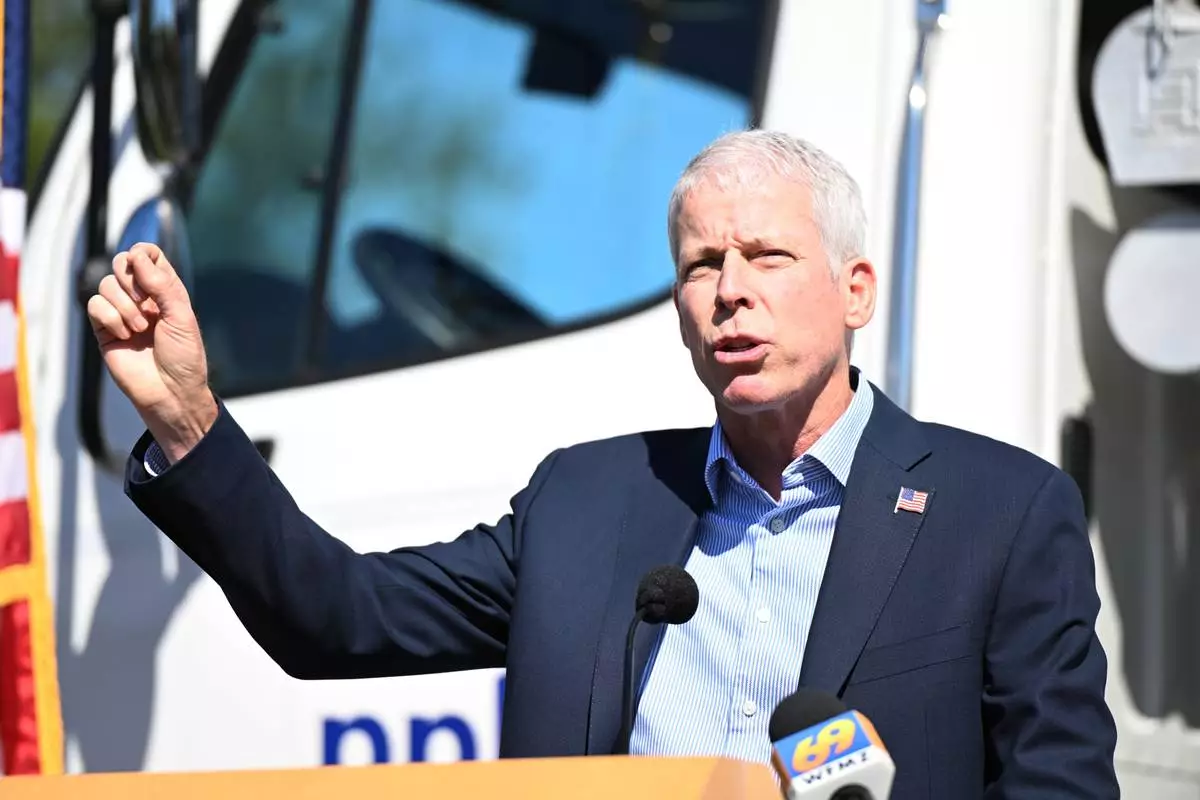
Energy Secretary Chris Wright speaks at a news conference at a PPL Corp. facility to announce that the Energy Department will spend almost $2 billion to try to squeeze more electricity out of the nation's aging and stressed power grid, Wednesday, Sept. 24, 2026, in Allentown, Pa. (AP Photo/Marc Levy)
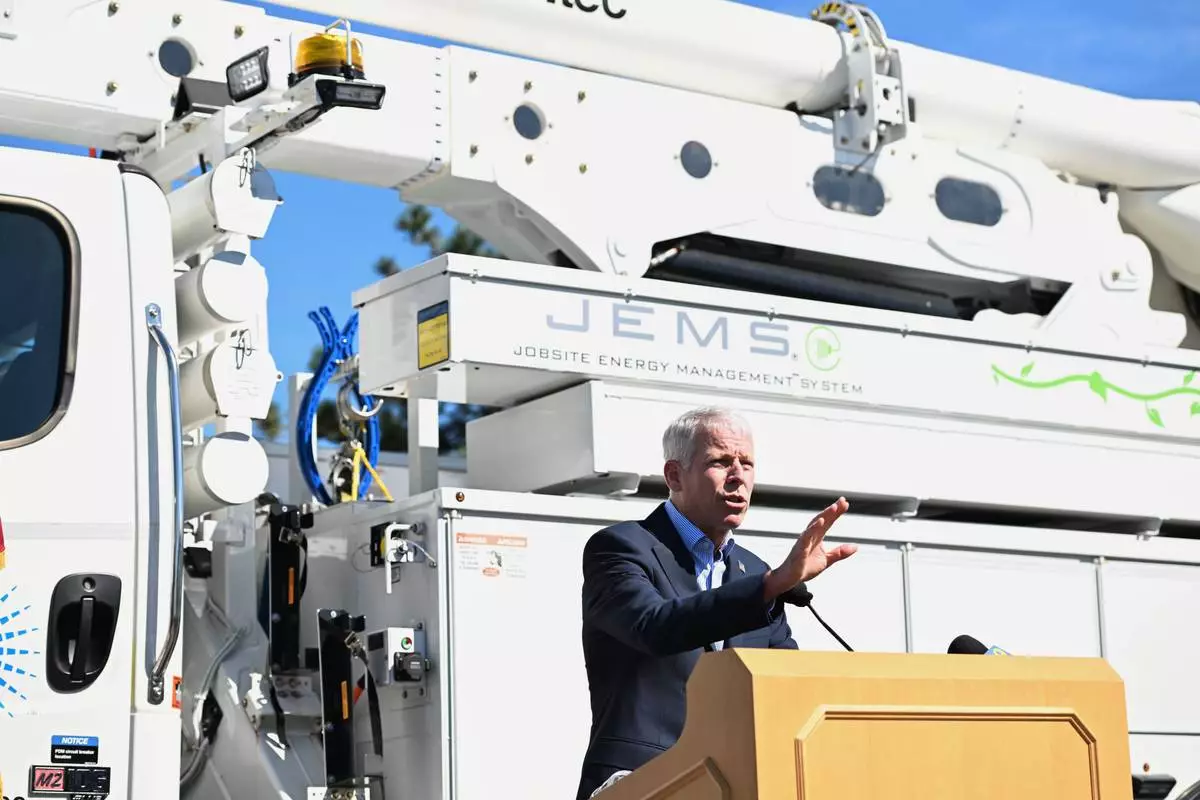
Energy Secretary Chris Wright speaks at a news conference at a PPL Corp. facility to announce that the Energy Department will spend almost $2 billion to try to squeeze more electricity out of the nation's aging and stressed power grid, Thursday, Sept. 24, 2026, in Allentown, Pa. (AP Photo/Marc Levy)
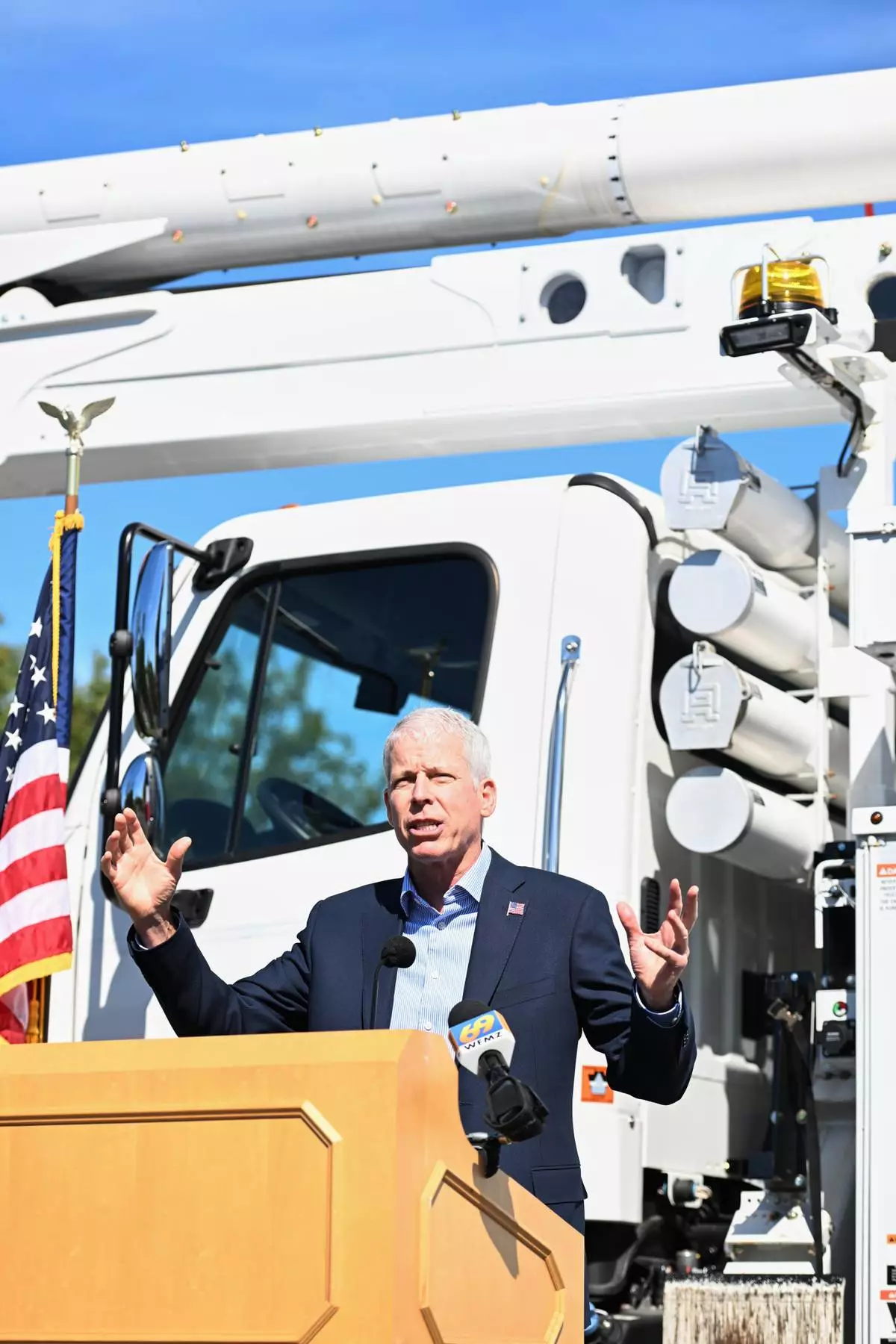
Energy Secretary Chris Wright speaks at a news conference at a PPL Corp. facility to announce that the Energy Department will spend almost $2 billion to try to squeeze more electricity out of the nation's aging and stressed power grid, Thursday, Sept. 24, 2026, in Allentown, Pa. (AP Photo/Marc Levy)
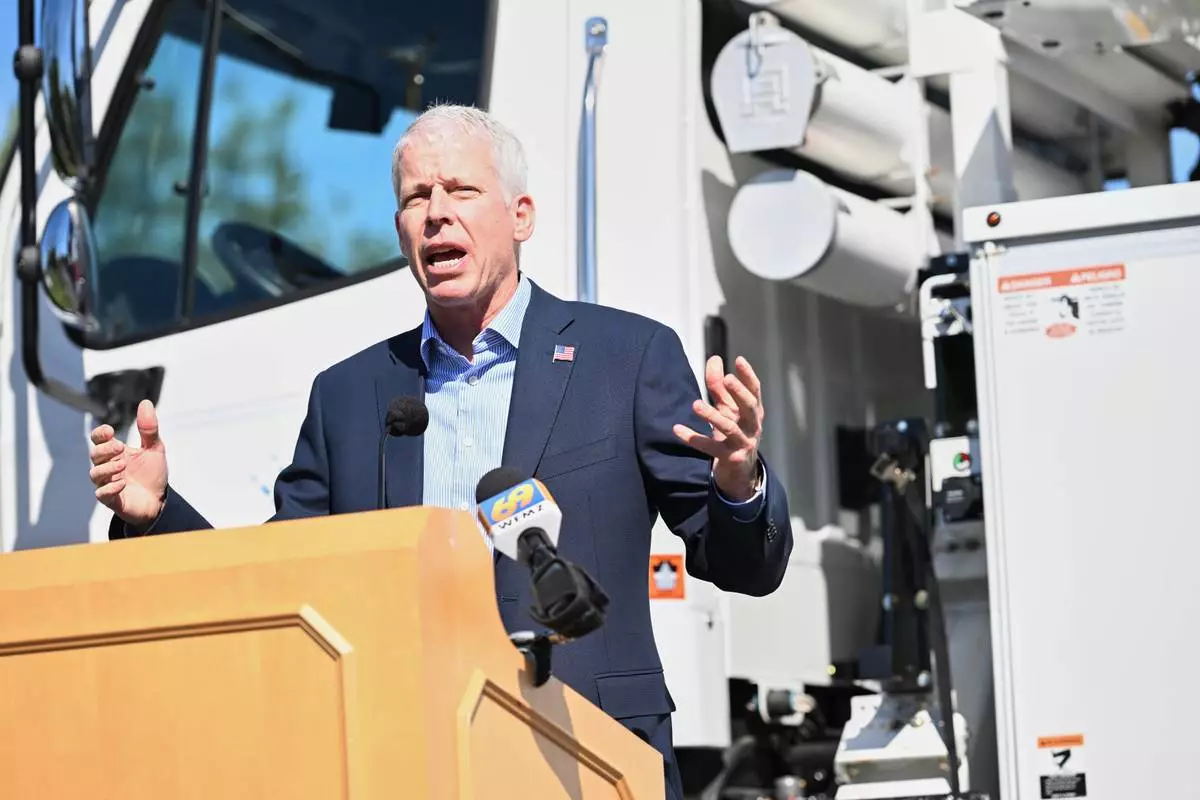
Energy Secretary Chris Wright speaks at a news conference at a PPL Corp. facility to announce that the Energy Department will spend almost $2 billion to try to squeeze more electricity out of the nation's aging and stressed power grid, Thursday, Sept. 24, 2026, in Allentown, Pa. (AP Photo/Marc Levy)
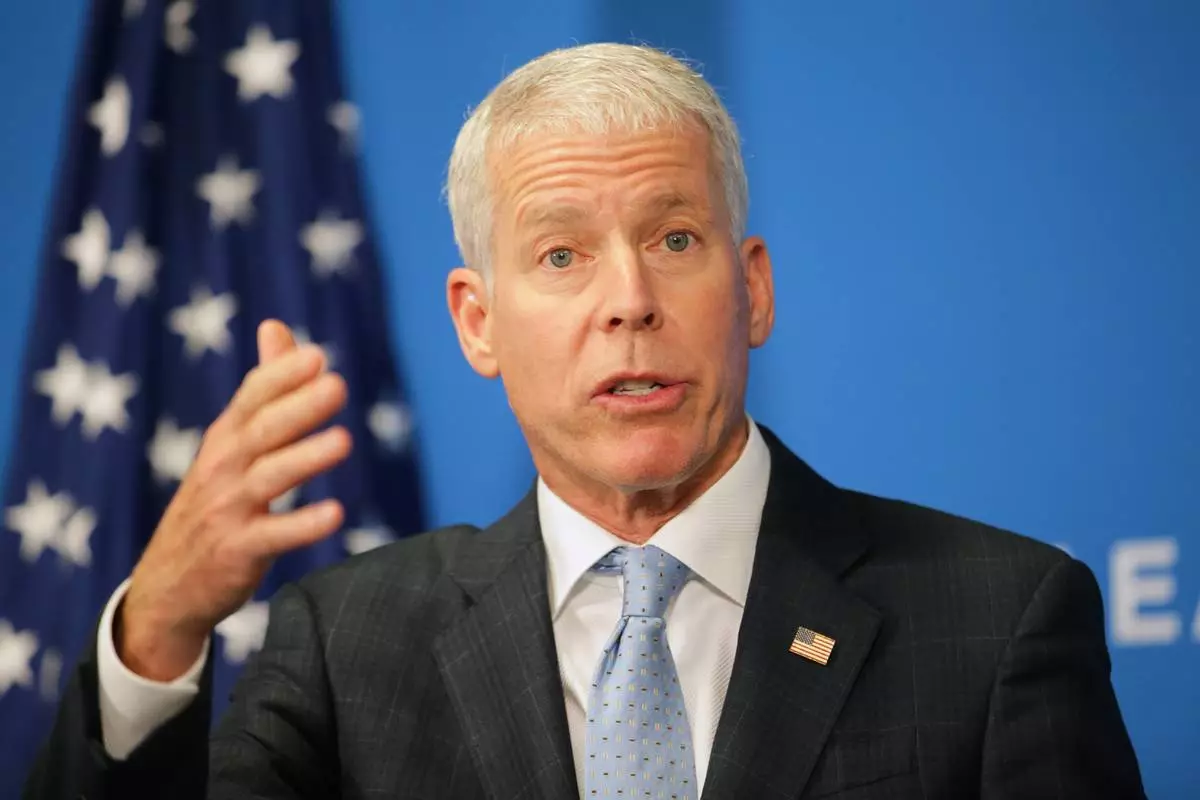
United States Secretary of Energy Chris Wright, talks to the media during a press conference on the sidelines of the annual General Conference of the International Atomic Energy Agency (IAEA) in Vienna, Austria, Monday, Sept. 14, 2026. (AP Photo/Heinz-Peter Bader)