SANTA CLARA, Calif. (AP) — The NFL fined San Francisco 49ers All-Pro fullback Kyle Juszczyk for what it deemed an “offensive” celebration similar to one he had been doing for several years with no issues.
Juszczyk was fined $14,926 after he imitated drinking a beverage following a catch in the third quarter of San Francisco's win over the Miami Dolphins on Sunday.
“Your imitation of chugging a beer constituted an offensive demonstration and could reasonably be construed as being in poor taste,” the league wrote in the fine letter to Juszczyk, which was obtained by The Associated Press. “Players are expected to conduct themselves in a manner that reflects positively on the game and is consistent with NFL standards of sportsmanship.”
Juszczyk, whose nickname is “Juice,” has been doing a version of that celebration throughout his career in San Francisco in response to 49ers fans chanting his nickname after catches or other big plays.
“I don't know how else to say it. I wasn’t drinking beer in my celebration,” Juszczyk said Thursday. “I think you guys all know my nickname is Juice. I have Juice on my pads. The stadium yells ‘Juice’ when I catch the ball. When I celebrate, I celebrate by drinking juice, and it’s been that way for years. So I was surprised as anybody when I got a fine this week.”
The fine was first reported by ESPN.
Juszczyk said he initially thought coach Kyle Shanahan was joking when he told him about the fine and hopes it gets removed after his appeal next week.
The NFL has vowed to crack down on celebrations this season and Juszczyk wasn't the only player to get fined this week. Juszczyk said he was told about six other players got fined. That includes Cincinnati receivers Ja'Marr Chase and Tee Higgins with Chase saying the two were docked for their new “people’s elbow” celebration.
Chase insisted the “people’s elbow” celebration, which involves grabbing his right elbow with his left hand and flopping the right arm forward, isn’t the sort of off-color humor others have made it out to be on social media, and they are simply creating a new way to signal a first down.
Juszczyk said he doesn't remember what the players were told about the crackdown during preseason but he never would have thought it would have applied to his longtime celebration.
Juszczyk's teammates are amused by the situation, with tight end George Kittle saying that his new nickname will be “Beer” instead of “Juice.”
Juszczyk himself had fun with it. Before talking to the media, he put a container on his locker shelf wrapped in white paper and “NOT BEER” written on it. He also had a picture of a juice box with his uniform number 44 displayed.
“That’s the other side of it, is I don’t even drink beer,” Juszczyk said. “I maybe drink like five times a year in the offseason. It’s usually with George because he peer pressures me.”
Juszczyk has been the 49ers' nominee for the Art Rooney Award for sportsmanship for the past six seasons. The only fines he has had previously are for illegal use of the helmet and low blocks. Juszczyk was fined $20,033 for illegal use of helmet in Week 1 and will be appealing that as well next week.
Juszczyk is in his 14th season in the NFL and 10th with San Francisco. He has made the Pro Bowl 10 times and was an All-Pro in 2023 and '25.
AP Pro Football Writer Rob Maaddi and AP freelancer Jay Morrison contributed to this report.
See AP’s full NFL coverage here

San Francisco 49ers fullback Kyle Juszczyk (44) celebrates after an NFL football game against the Miami Dolphins in Santa Clara, Calif., Sunday, Sept. 20, 2026. (AP Photo/Jed Jacobsohn)

FILE - San Francisco 49ers fullback Kyle Juszczyk gestures after a play against the Miami Dolphins during the second half an NFL football game in Santa Clara, Calif., Sept. 20, 2026. (AP Photo/Kelley L Cox, File)
ALLENTOWN, Pa. (AP) — The Energy Department said Thursday that it will spend almost $2 billion to try to squeeze more electricity out of the nation's aging and stressed power grid, as President Donald Trump's administration steps up efforts to avoid blackouts amid skyrocketing energy demand spurred by artificial intelligence.
The money will go toward 31 projects across 26 states that are expected to produce more than 23 gigawatts of additional electricity capacity — enough to power 16 million homes. The projects will use new technologies such as sensors to measure real-time weather conditions to ensure safe transmission or direct power away from congested paths, the department said.
The upgrades could improve power reliability and lower electricity costs for about 100 million Americans, officials said.
“This is a quick way to lower electricity prices and increase reliability: using fibers that are already in the transmission lines to analyze what’s the temperature out, what’s the wind out, how can we use this transmission line to distribute more power, but safely and only in the right conditions," Energy Secretary Chris Wright said in a news conference promoting the grants Thursday at a PPL Corp. facility in Allentown.
The eastern Pennsylvania electric utility says two data centers in its territory came online this year and six more are under construction, with enough other data centers in the advanced planning stages that its peak electric demand could quintuple by 2032.
PPL said it is receiving $71.5 million to modernize an existing high-voltage transmission line across roughly 30 miles in northern Pennsylvania.
The announcement comes amid warnings that AI’s voracious demand for power is threatening to overwhelm U.S. power supplies, as massive new data centers come online faster than new power plants can be built. It also comes as electricity bills rise faster than inflation in many parts of the U.S., blamed in some areas on demand from data centers.
The snowballing opposition to data centers in communities across the country has thrown a wrench into the plans of the world’s richest companies and transformed the midterm election landscape.
Trump continues to stick up for data centers, even as politicians from both major political parties criticize them and many communities try to block them.
In the meantime, Congress and some states are trying to push utilities to expand their use of new technologies to make grids more efficient and to lessen the need to build new power plants.
Julia Selker, the executive director of the WATT Coalition, a trade association for grid-enhancing technologies, said both the projects and the scale of the investment are significant. Utilities in the U.S. are lagging places like Europe in adopting the technologies, despite federal investment in the past to develop and test them, Selker said.
Still, Drew Maloney, CEO of the Edison Electric Institute, a trade association of for-profit utilities, said America's electric utilities are making a “significant investment” every year in new technologies to strengthen the grid and reduce outages.
Wright said that work on the projects should begin right away and that he hoped some efficiencies are in place before this winter to tamp down price spikes when extreme weather sends demand skyrocketing.
Wright said he didn't know whether the projects would have gotten done without federal funding. Many, he said, had been under consideration before the grants were offered, but the grant recipients hadn't “quite pulled the trigger” on them.
Projects being announced Thursday will involve component enhancements on more than 1,500 miles (2,400 kilometers) of transmission lines and technological enhancements across nearly 21,000 miles (34,000 kilometers), the department said.
Projects were prioritized based on those that can be put into operation quickly, officials said. Money for the grants comes from the bipartisan infrastructure law enacted by Congress under then-President Joe Biden, a Democrat. The government's $1.9 billion in funding will be matched by $3.35 billion from the recipients, the department said.
Recipients include utilities, cooperatives and four state agencies. The state agencies — in Colorado, Indiana, Ohio and Oklahoma — were the biggest recipients, collectively drawing $810 million, with the Colorado and Oklahoma projects promising improvements to regional grids.
Trump has vowed to “unleash” the nation's energy sector in his second term, aiming to drive up record-setting domestic oil and gas production, strip away pollution restrictions on power plants and keep expensive coal-fired power plants operating past their retirement dates.
The administration also has pledged nearly $4 billion to buy back offshore wind leases as Trump seeks to discourage the expansion of wind energy in favor of fossil fuels.
His administration meanwhile has pushed to help tech giants build and connect data centers to power plants and high-voltage power lines and convert Cold War-era uranium enrichment plants into data center and power plant complexes.
Daly reported from Washington.
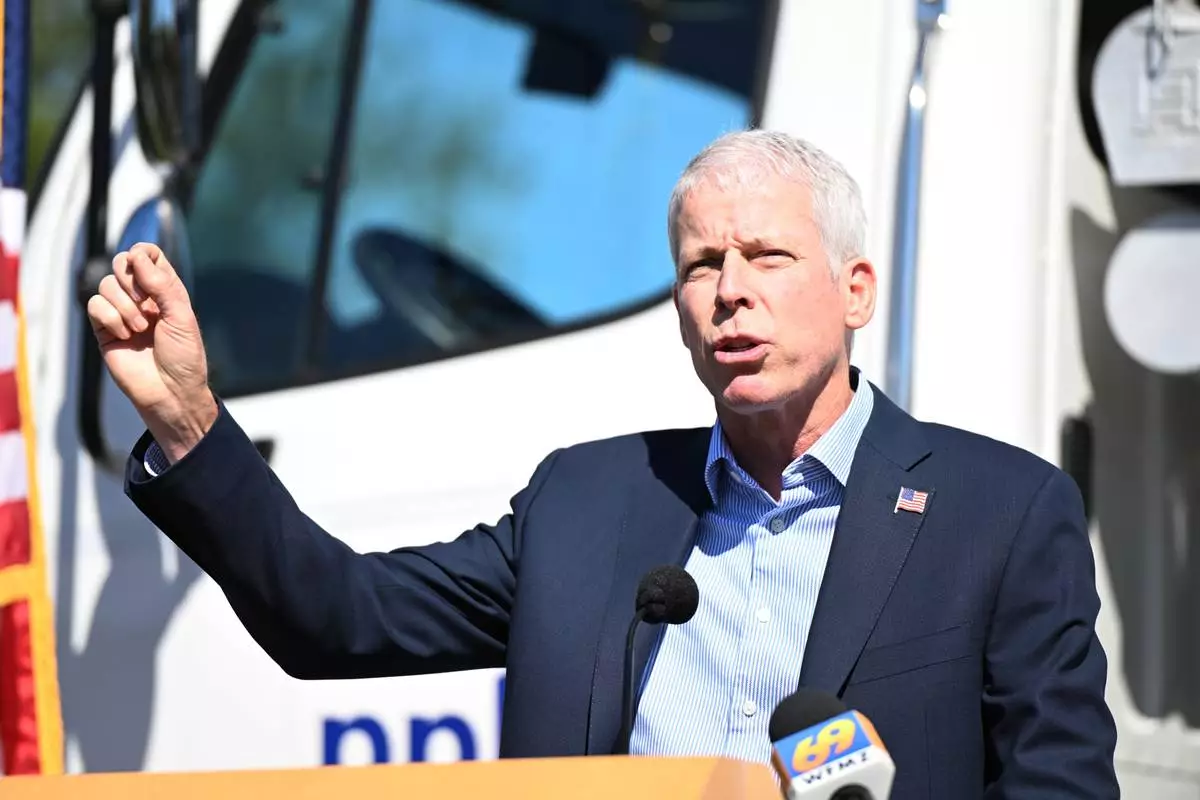
Energy Secretary Chris Wright speaks at a news conference at a PPL Corp. facility to announce that the Energy Department will spend almost $2 billion to try to squeeze more electricity out of the nation's aging and stressed power grid, Wednesday, Sept. 24, 2026, in Allentown, Pa. (AP Photo/Marc Levy)
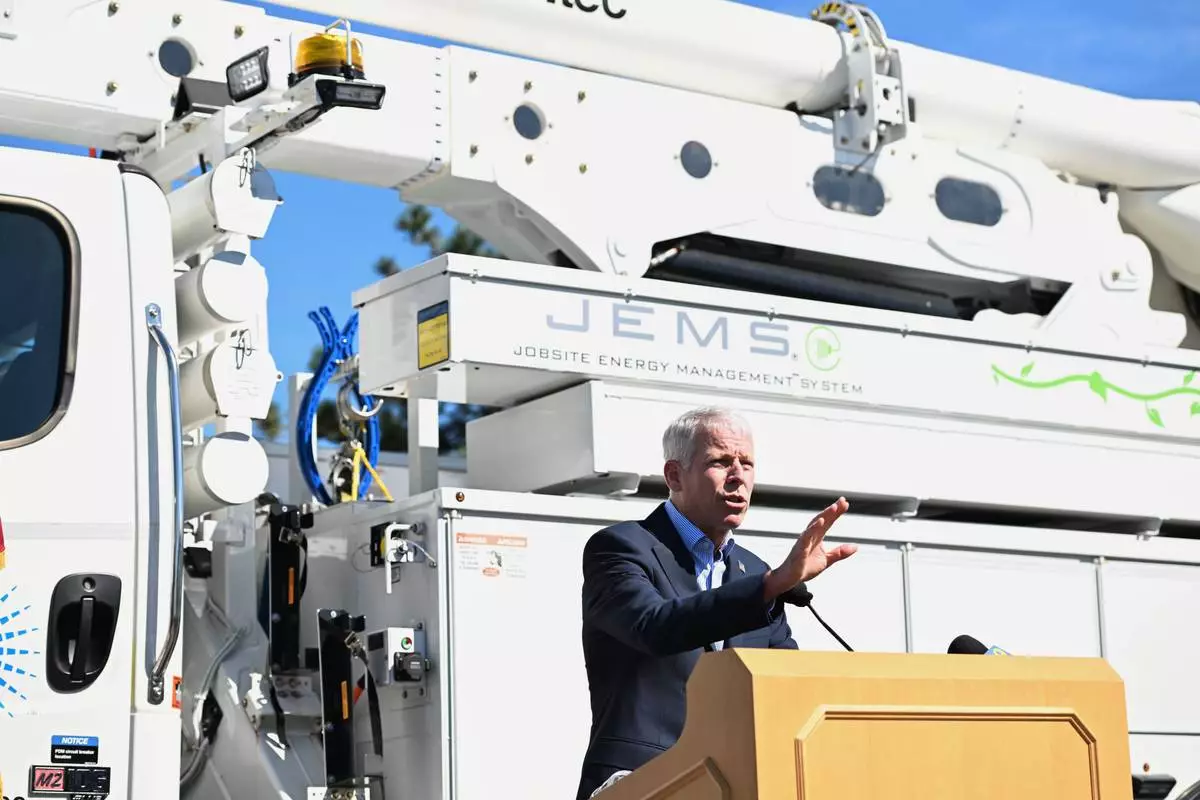
Energy Secretary Chris Wright speaks at a news conference at a PPL Corp. facility to announce that the Energy Department will spend almost $2 billion to try to squeeze more electricity out of the nation's aging and stressed power grid, Thursday, Sept. 24, 2026, in Allentown, Pa. (AP Photo/Marc Levy)
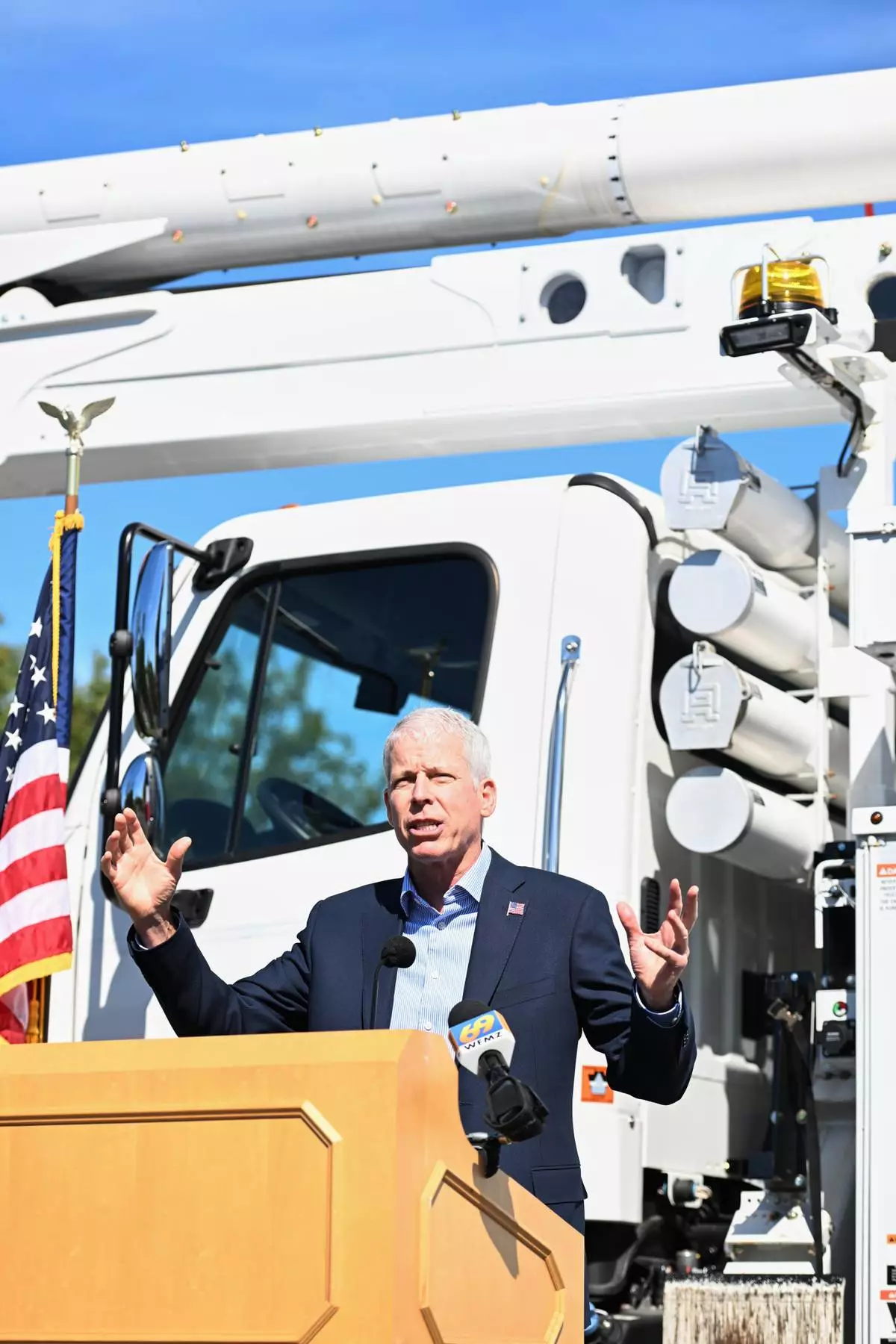
Energy Secretary Chris Wright speaks at a news conference at a PPL Corp. facility to announce that the Energy Department will spend almost $2 billion to try to squeeze more electricity out of the nation's aging and stressed power grid, Thursday, Sept. 24, 2026, in Allentown, Pa. (AP Photo/Marc Levy)
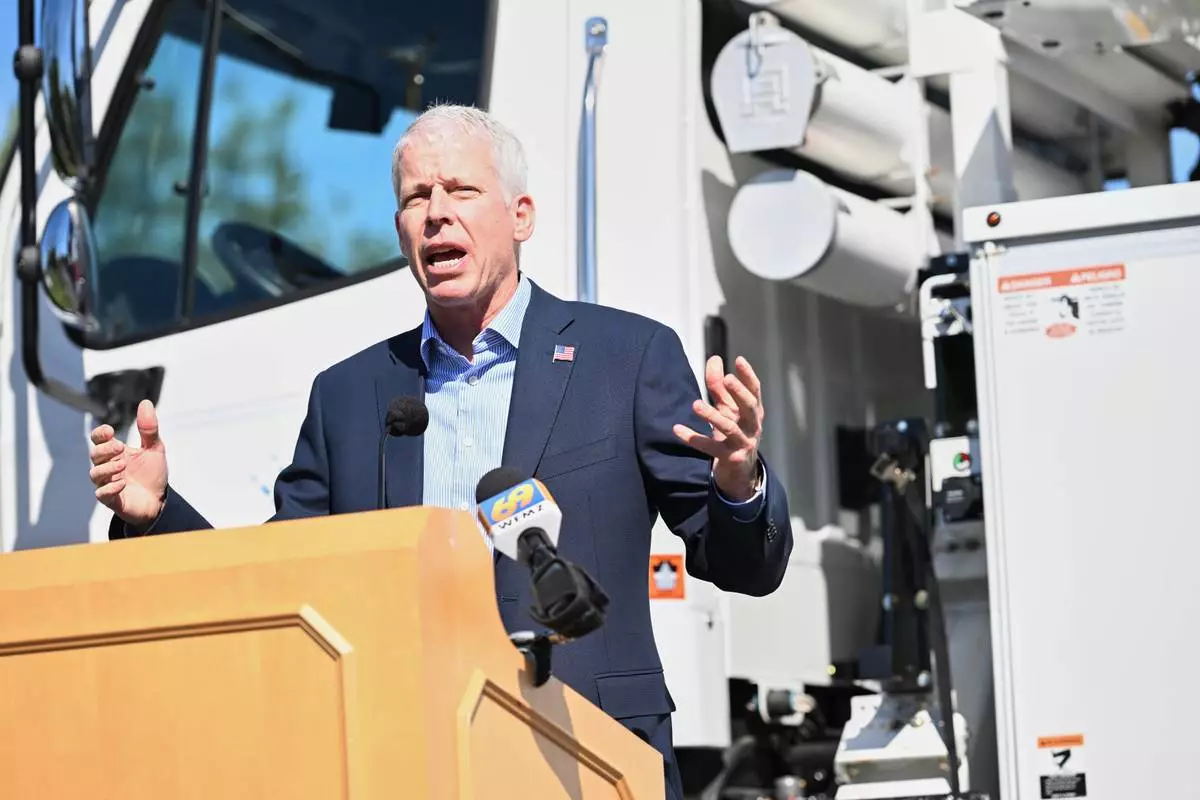
Energy Secretary Chris Wright speaks at a news conference at a PPL Corp. facility to announce that the Energy Department will spend almost $2 billion to try to squeeze more electricity out of the nation's aging and stressed power grid, Thursday, Sept. 24, 2026, in Allentown, Pa. (AP Photo/Marc Levy)
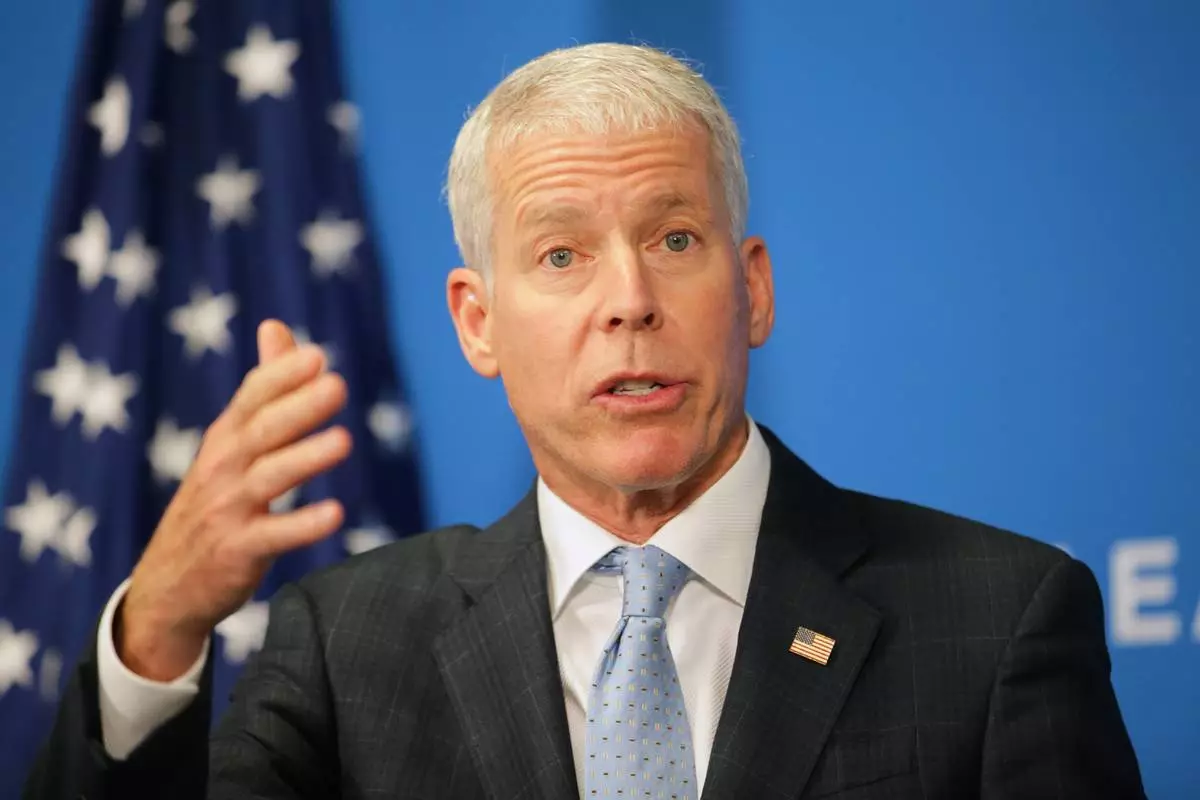
United States Secretary of Energy Chris Wright, talks to the media during a press conference on the sidelines of the annual General Conference of the International Atomic Energy Agency (IAEA) in Vienna, Austria, Monday, Sept. 14, 2026. (AP Photo/Heinz-Peter Bader)