FLORHAM PARK, N.J. (AP) — New York Jets tight end Mason Taylor has been ruled out to play against the Lions in Detroit on Sunday because of a thumb injury.
Coach Aaron Glenn announced Friday that Taylor, who was injured against Green Bay last Sunday, would join safety Minkah Fitzpatrick (groin) and linebacker Kiko Mauigoa (quadriceps) as players who won't suit up this weekend.
Taylor, coming off a rookie season in which he caught 46 passes, has just two receptions for minus-2 yards through two games.
Wide receiver Adonai Mitchell injured a finger when he caught it in a jersey during practice Thursday, Glenn said, and was expected to be limited at practice. Glenn added that he didn't think Mitchell broke the finger, but the receiver's status for the game was uncertain.
Mitchell has nine catches, two behind Garrett Wilson for the team lead, for 123 yards in two games.
Not having Taylor or potentially Mitchell leaves the offense short-handed after New York previously lost rookie wide receiver Omar Cooper Jr., who's on injured reserve with a sprained ankle, and speedy receiver Arian Smith, who's out for the season with a torn ACL. Veteran Tim Patrick is also on IR with a groin strain.
Glenn said either Sterling Shepard or Tyler Johnson, both of whom are on the practice squad, will either be elevated or signed to the active roster to give the Jets another wide receiver.
"We'll see which one of them gives us the best chance and we'll end up bringing up one of those guys," Glenn said.
Earlier in the week, the Jets signed undrafted rookie Malik McClain from the practice squad. The former Arizona State standout flashed at times during training camp and is expected to help on offense and special teams.
“I'm excited to see him get out there and mix it up a little bit,” Glenn said.
Edge rusher Joseph Ossai was expected to be a full participant at practice for the first time since suffering a ruptured plantar fascia in his left foot during the preseason finale against the Giants on Aug. 28. Signed to a three-year, $36 million contract in March, Ossai is expected to boost the Jets' pass rush. Glenn was coy on whether Ossai would be ready to play Sunday.
"He'll be full in practice," Glenn said with a smile. “We'll see how that goes.”
As expected, Jason Sanders will be the Jets' kicker in Detroit.
Glenn confirmed that Sanders will be brought up from the practice squad for the third straight week. Sanders made his first field goal for the Jets in the opener, then missed badly on a 54-yard attempt. He has since made three field goals — including from 51, 52 and 32 yards — and all four of his extra points.
The Jets will have to make a decision next week on Sanders. Per NFL practice squad rules, players can be elevated three times. In order for that player to be active again after that, he must be signed to the active roster.
Blake Grupe, who was claimed off waivers from Indianapolis before the season, is currently on the active roster but hasn't played as New York has gone with Sanders.
—
See AP’s full NFL coverage here
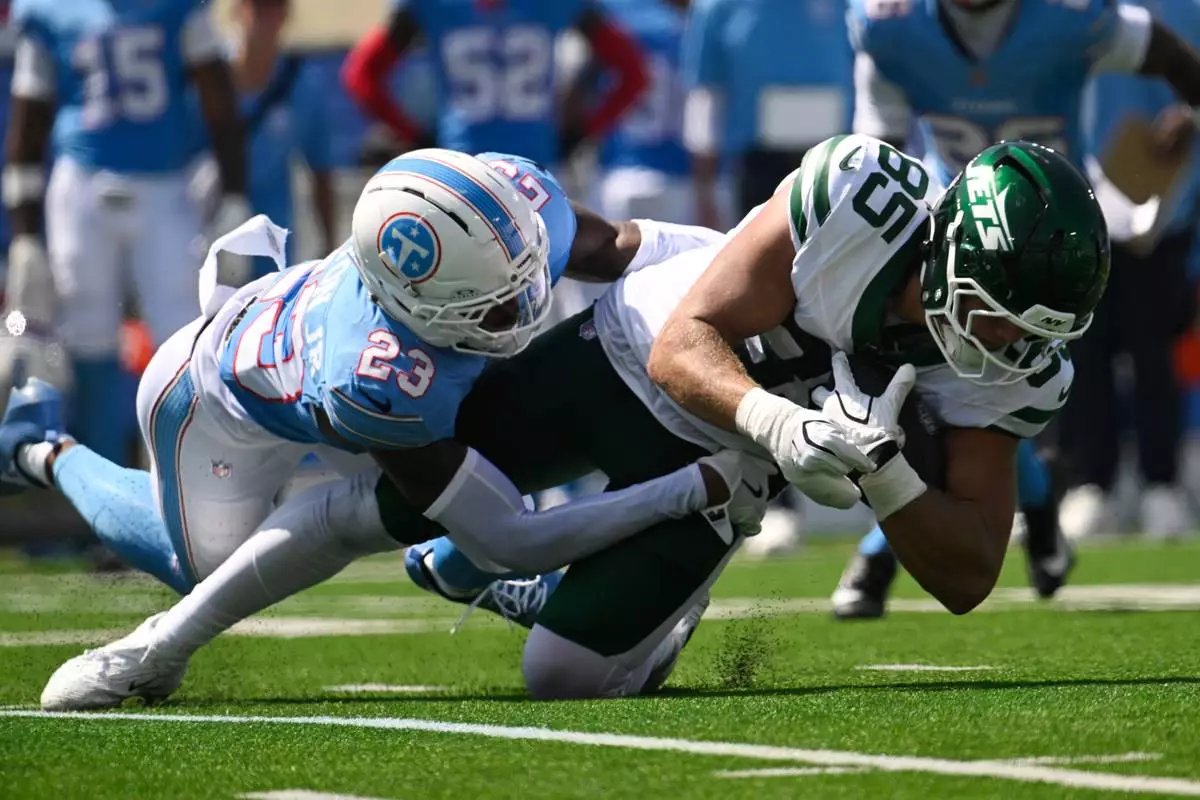
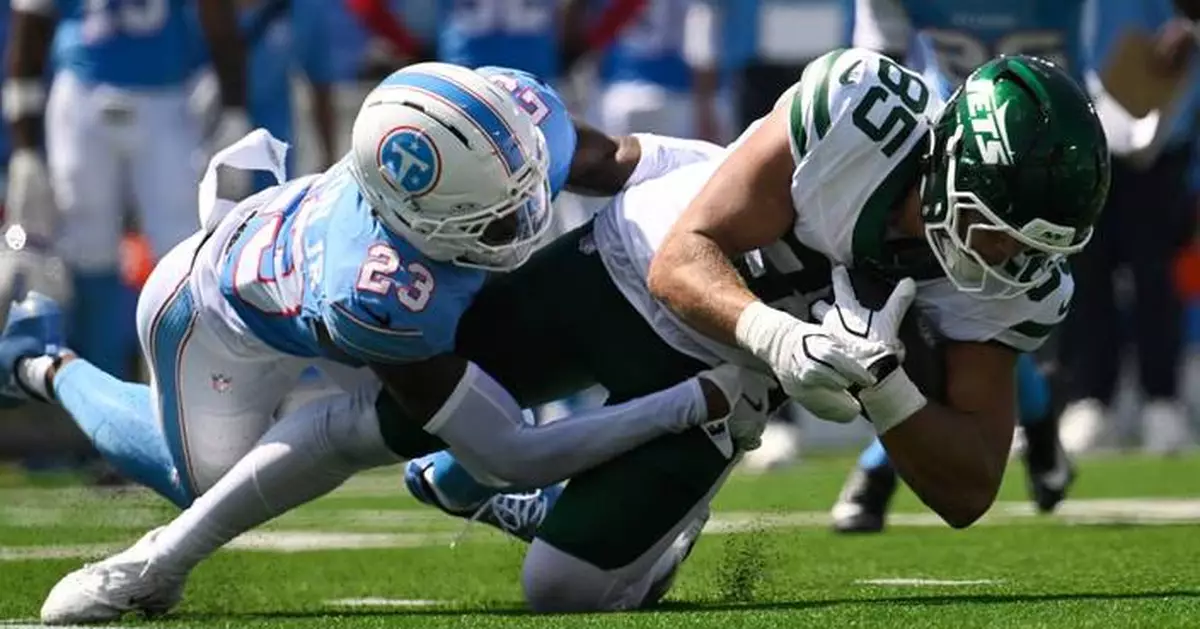
New York Jets tight end Mason Taylor (85) is tackled by Tennessee Titans safety Kevin Winston Jr. (23) during the first half of an NFL football game Sunday, Sept. 13, 2026, in Nashville, Tenn. (AP Photo/John Amis)
NEW YORK (AP) — The Supreme Court on Friday lifted restrictions on a controversial federal voter database before November’s elections, granting President Donald Trump a temporary win in his aggressive campaign against noncitizen voting.
The court's three liberal-leaning justices publicly dissented from the decision.
The emergency order allows states, for now, to use the Department of Homeland Security program, called Systematic Alien Verification for Entitlements, or SAVE, in their efforts to verify the eligibility of voters on their rolls. But because existing law blocks most states from systematically purging voters from their rolls within 90 days of an election, the immediate impact on the upcoming midterms is likely limited.
States' use of the SAVE program is voluntary.
The court’s order puts on hold a federal judge’s June ruling that had deemed the Republican administration’s recently revamped version of SAVE illegal. U.S. District Court Judge Sparkle L. Sooknanan had blocked the use of the tool, saying it violated Americans’ privacy rights and could result in voters being wrongly removed from the rolls.
A federal appeals court let her order stand.
But the Supreme Court majority found that a 1996 law explicitly allows DHS to get information about citizenship and immigration from other federal agencies. The federal government also has “an obligation to respond” to states seeking to verify citizenship.
“The order below prevents the Federal Government from using the program it believes is best suited to the task,” the majority wrote in the unsigned order.
Justice Ketanji Brown Jackson dissented, joined by Justices Elena Kagan and Sonia Sotomayor. The database has long been seen to fall under federal privacy laws, she wrote, and there are real risks that legitimate voter registrations could be mistakenly revoked.
“The harm caused by burdening or disenfranchising even a few lawful voters outweighs the nonexistent harm that the Government experiences when it is prevented from taking an action that it likely lacks the authority to take,” Jackson wrote.
The SAVE program was created under an immigration law mandating that DHS help federal, state and local agencies prevent government benefits from going to noncitizens. The Trump administration last year moved to significantly expand its search abilities. Since then, at least 67 million registrations have been scanned through the program, but critics worry it could end up purging valid voters from the rolls.
Some registrants have already been wrongly flagged. In Travis County, Texas, for example, officials said they investigated 97 voters flagged by SAVE as apparent noncitizens and found that at least 10% of them — and likely up to 21% — were U.S. citizens. The county urged the Supreme Court to reject the administration’s appeal, while the state of Texas submitted its own brief defending the database.
Even though the use of the SAVE program has been blocked for months, the administration said in court filings that DHS officials have continued using Social Security Administration data "in certain cases to verify information and help determine whether illegal voting may have occurred."
DHS in August launched its own investigation to find noncitizen voters on state rolls, according to a federal whistleblower statement that said the effort is rushed, filled with errors and potentially violates state laws. DHS has defended that investigation as being conducted “diligently and professionally.”
The effort to create a national voter list is among numerous steps Trump has taken during his second term to try to overhaul the way elections are run. Most of those steps have been blocked by various courts, in part because the Constitution gives states and Congress the authority to set election rules, but provides no such power to the president. In mid-September, the Supreme Court rejected a bid from Trump to restrict mail ballot procedures before the midterms.
Research shows that noncitizen voting, which is already illegal and punishable as a potential felony that could lead to deportation, is exceptionally rare. But Trump has remained fixated on the idea that massive numbers of noncitizens are voting in U.S. races.
Associated Press writer Lindsay Whitehurst in Washington contributed to this report.
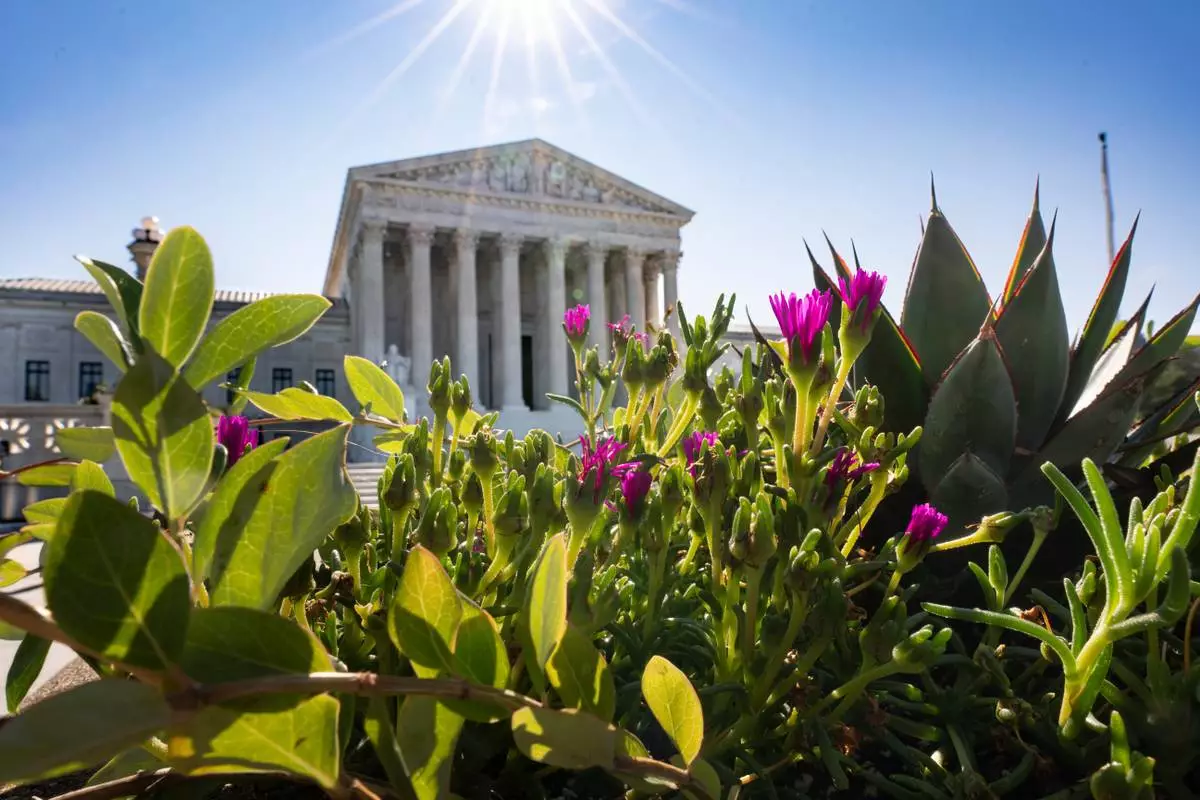
FILE - The Supreme Court is seen on Capitol Hill in Washington, Aug. 25, 2026. (AP Photo/J. Scott Applewhite, file)