Skip to Content Facebook Feature Image

From Gaza to Sudan to Nepal, more than 500 million children are in desperate need of education

News

From Gaza to Sudan to Nepal, more than 500 million children are in desperate need of education
News

News

From Gaza to Sudan to Nepal, more than 500 million children are in desperate need of education

2026-09-26 03:54 Last Updated At:04:01

UNITED NATIONS (AP) — In a stifling sixth grade classroom in war-torn Sudan, a very motivated teacher was giving a lesson to 120 very committed children. Among them: an 18-year-old girl uprooted three years ago by fighting, forced into marriage and motherhood too soon, but determined to finish her education.

That wasn’t all, Maysa Jalbout, the director of Education Can’t Wait, recounted of her visit to the school a few weeks ago. Even with a classroom temperature of 44 degrees Celsius (111 degrees Fahrenheit) and no water or electricity, “She pleaded with me to make sure that her siblings and her cousins and her orphan friends are also able to attend school.”

But the school was so small that hundreds more kids waiting outside couldn’t get in, Jalbout said. They asked her and the other visitors to deliver a message to build more schools – and she said that’s what she has been urging at the U.N.’s annual meeting of world leaders at the United Nations this week.

The plight of the more than 500 million children in desperate need of an education has been one of the key issues on the sidelines of the meeting – and the appeal for money to make it possible is having some success.

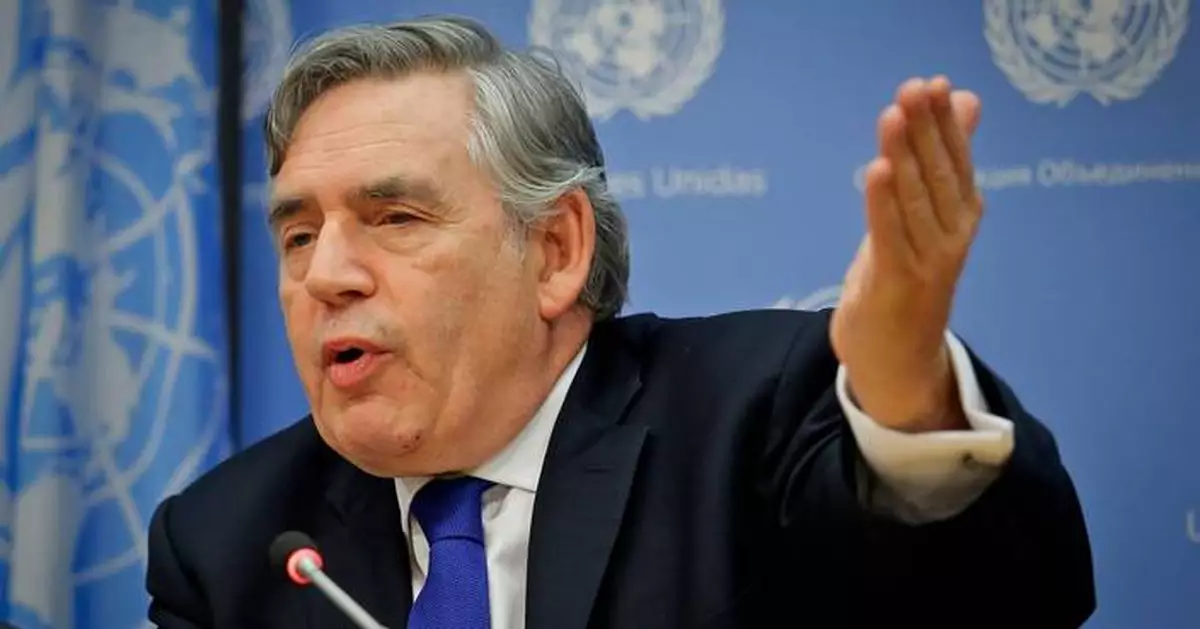
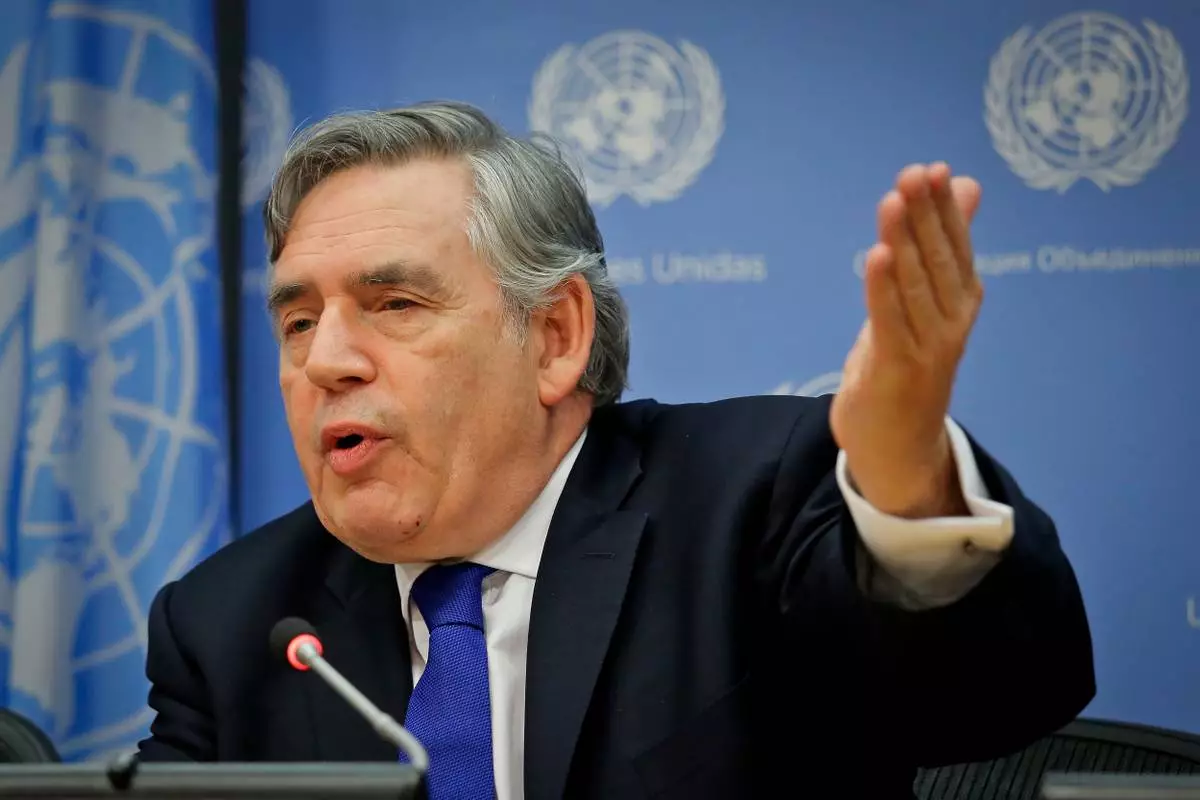
Gordon Brown, the former British prime minister is now the U.N. special envoy for global education. He said Thursday that 273 million children are not in school and 270 million others are at school but aren’t learning enough to read and write or be proficient in arithmetic by age 11. Many of them are in areas affected by conflict or climate change, he said.

“The message, I think, is clear," he said. “Instead of the world developing only some of the potential of some children in some countries, we must be determined to develop the potential of all children at all times in every country.”

Governments whose children are not in school must be reminded, he said, that they promised 20% of their spending would go to education, and to remind countries giving aid that in 2015 they signed up for U.N. development goals including achieving quality education for all children by 2030. “We’re so far away from the goal."

Brown said it’s disappointing that the numbers of children not going to school isn’t falling and the message is clear: “If you deny a child the basic right to education, you are doing something that will affect their whole life and, indeed, the life of the family around them."

But the gathering of global leaders did produce some results.

At an event Wednesday, the Global Partnership for Education said $3.5 billion was mobilized from partners and funds to support over 90 lower income countries in transforming their education system to provide quality learning.

It said $2.1 billion came from confirmed and anticipated pledges from governments and private donors, and $1.4 billion in co-financing -- $1 billion from development finance institutions and $400 million from a growing coalition of philanthropic and private sector partners.

Nigerian President Bola Tinubu, co-host of the campaign, said the funding empowers “dynamic and youthful nations like Nigeria to break down the barriers that keep our children, especially our girls, out of school and away from learning, so they can achieve their full potential.”

Education Cannot Wait, which Jalbout heads, focuses on the 258 million school-age children worldwide affected by crises – “far greater than the number that we are able to reach.”

She announced a $3 million emergency investment for children in Gaza and the West Bank to help up to 13,000 of the most vulnerable children and adolescents — with priority given to those with conflict-related injuries and disabilities and to youngsters who have lost parents and are unaccompanied or separated.

Gaza now has more child amputees per capita than anywhere in the world. “For these children," Jalbout said, "survival is only the beginning — a child who has survived this war, lost a limb and perhaps lost their family should not also lose their future because we failed to organize around their needs.”

But the enormous needs far outstrip the funds. For a third year, she said, 660,000 children remain out of school in Gaza, and some 70,000 of the youngest have no access to preschool. Elsewhere, she said, the organization gave $1 million to help children from Nepal’s recent devastating floods start learning again.

During her recent Sudan trip, she said she announced $22 million in funding to help several hundred thousand children — but there are 8 million youngsters out of school.

Edith M. Lederer has covered international affairs for The Associated Press for more than a half century.
FILE - Gordon Brown, United Nations Special Envoy for Global Education and former Prime Minister of the United Kingdom, holds a news conference at U.N. headquarters, Sept. 16, 2016. (AP Photo/Bebeto Matthews, File)

FILE - Gordon Brown, United Nations Special Envoy for Global Education and former Prime Minister of the United Kingdom, holds a news conference at U.N. headquarters, Sept. 16, 2016. (AP Photo/Bebeto Matthews, File)
A new report on Charlie Kirk’s assassination says his Turning Point USA organization insisted he speak outdoors despite security concerns, while the university where he was killed didn’t properly assess dangers such as the possibility of a rooftop shooter.

Those were among the key findings in an after-action report released Friday by Utah Valley University. The external, independent review found that the university failed to conduct a formal security assessment, did not create a written event action plan and deferred critical decision making for the conservative activist’s talk to Turning Point USA.

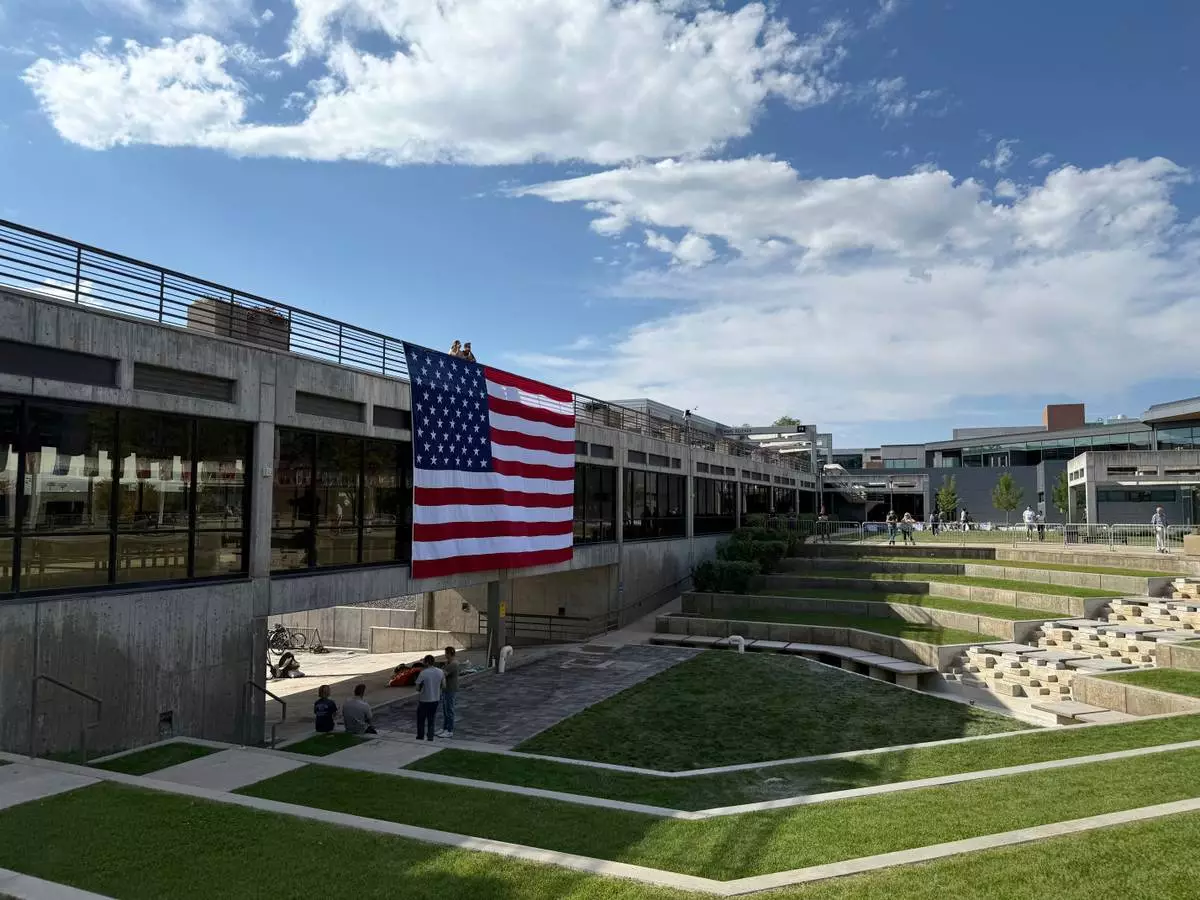
Kirk, 31, was killed on Sept. 10, 2025, by a sniper perched on a rooftop more than 400 feet (122 meters) away, authorities said. He had been debating students in an outdoor courtyard on the Orem, Utah, campus surrounded by tall buildings and elevated walkways, and with several thousand people in attendance.

The report makes nearly 150 recommendations, including hiring a police sergeant to focus on campus events and creating clear criteria for when events must be moved indoors or to more controllable venues because of crowd size and line-of-sight concerns.

In a statement, Utah Valley President Jon Anderson said the university has a responsibility to “learn from the findings of this review, and follow through on its recommendations.”

“This requires humility, an honest examination of our policies and practices, and a commitment to act on what we learn,” Anderson said, adding that the university has made “meaningful progress in strengthening campus safety over the past year.”

That includes hiring a chief public safety officer to coordinate with campus police and other emergency response agencies and hiring more campus police officers. At the time of the shooting, the university had just 13 sworn officers, which the report said was not sufficient for Utah Valley's size and the types of events and activities held on its campus. Utah Valley is the state's largest university, with about 50,000 students on a sprawling campus beneath the Wasatch Mountains.

Tyler Robinson has pleaded not guilty to aggravated murder in the shooting, a charge that could make him eligible for the death penalty if convicted. Prosecutors say he told his romantic partner that he “had enough of his (Kirk’s) hatred.” No trial date has been set.

Last week, Kirk’s family sent a wrongful death notice — a precursor to a possible lawsuit — accusing Utah Valley officials of hastening his death with a string of “reckless decisions.”

The family’s allegations mirrored much of the report’s findings, including the university’s failure to conduct an adequate risk assessment, to establish a secure perimeter and to have first responders immediately available, which led to Kirk being taken to a hospital in a private vehicle rather than an ambulance.

According to the after-action report, a Turning Point representative insisted at an August 2025 planning meeting that Kirk speak at a courtyard on campus because he had been there previously and the organization was familiar with the location. Some Utah Valley officials expressed reservations about holding the event in an outdoor space with tall buildings around, but ultimately allowed the event to proceed.

“In our assessment, those decisions were consequential,” the report said.

The location “created significant protective operations considerations,” the report said, but the planning process failed to include a documented line-of-sight assessment, pre-event briefing or walk-through with security stakeholders. Nor was there clear coordination with the speaker’s private security team and external law enforcement partners, the report said.

An Associated Press review found that the campus did not use several public safety practices that have become standard at events around the country. Among other things, campus police did not fly a drone to monitor rooftops or coordinate with local law enforcement to secure the event attended by about 3,000 people. Nor were there bag checks or metal detectors.

FILE - People gaze down at the site where Charlie Kirk was shot, above which hangs an American flag, at Utah Valley University, Sept. 15, 2025, in Orem, Utah. (AP Photo/Jesse Bedayn, File)

FILE - People gaze down at the site where Charlie Kirk was shot, above which hangs an American flag, at Utah Valley University, Sept. 15, 2025, in Orem, Utah. (AP Photo/Jesse Bedayn, File)

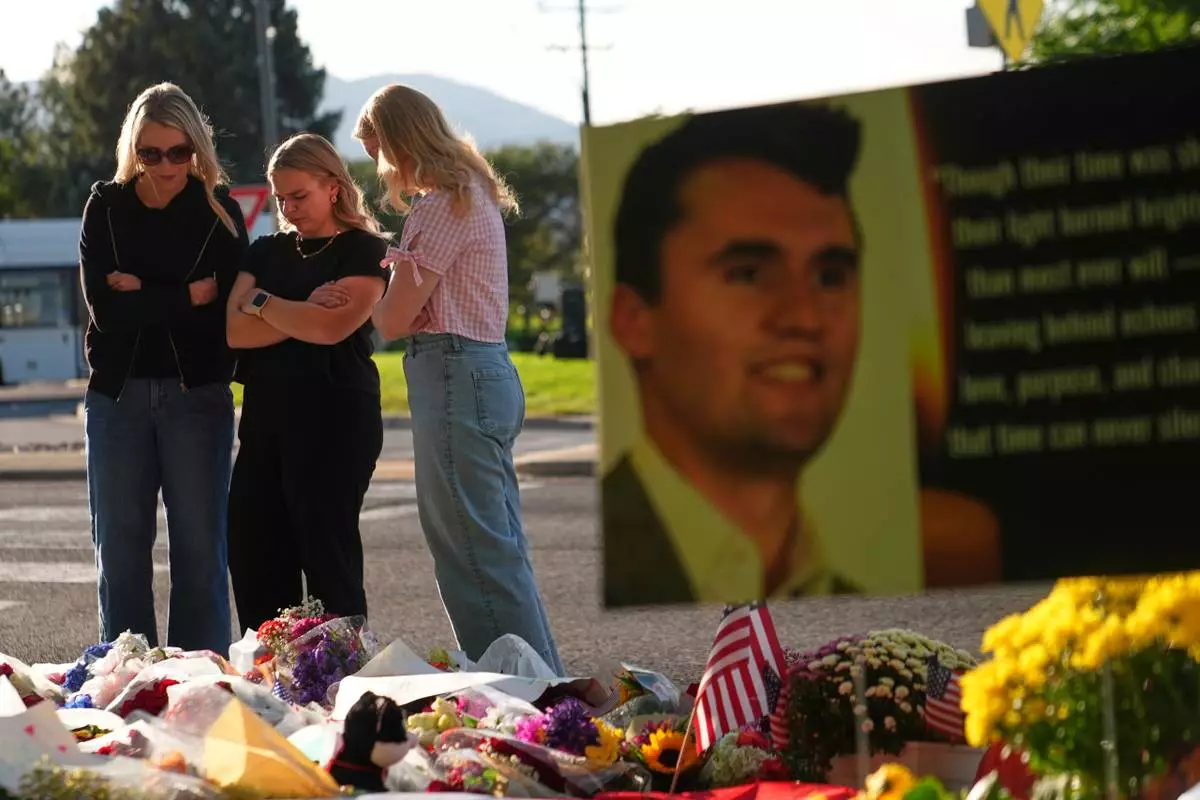
FILE - Women pray at a memorial outside Utah Valley University after Turning Point USA CEO and co-founder Charlie Kirk was shot and killed, Sept. 13, 2025, in Orem, Utah. (AP Photo/Lindsey Wasson, File)

FILE - Women pray at a memorial outside Utah Valley University after Turning Point USA CEO and co-founder Charlie Kirk was shot and killed, Sept. 13, 2025, in Orem, Utah. (AP Photo/Lindsey Wasson, File)

Recommended Articles