MISSION, Kan. (AP) — Meatpacking industry groups raised concerns Friday that recent heightened immigration operations in Texas, Kansas and Oklahoma have caused employees to miss work, leading to problems at meat-related businesses that could ultimately raise prices for consumers.
The Texas Cattle Feeders Association, Oklahoma Cattlemen’s Association and Kansas Livestock Association said in a statement that U.S. Immigration and Customs Enforcement operations have prompted delays in the shipment of thousands of cattle, resulting in millions of dollars in lost revenue. The groups say ICE operations have disrupted operations at feedlots, dairy processors, feed and grain companies, and transportation hubs.
Scarlett Mabinger, the vice president of communications for the Kansas Livestock Association, said they have received multiple calls from their members reporting an increase in absences at their southwest Kansas businesses after these communities noticed an increase in federal immigration officers this week.
The Department of Homeland Security confirmed their presence in Kansas but said they are not conducting worksite raids.
DHS Secretary Markwayne Mullin said in a statement that ICE has been “targeting heinous criminals,” but he didn't give a breakdown on the number of people arrested.
Several meatpacking plants in the Kansas cities of Dodge City, Liberal and Garden City typically process thousands of cattle every day, but Mabinger said some had to shut down temporarily and send cattle back to feedlots.
“So then they’re having to be returned back to the feed yard to wait, which, of course, causes an animal health issue, causes financial issues," she said.
The Kansas Livestock Association did not receive reports of arrests happening at worksites, but community members started noticing the arrival of officers on Tuesday.
Amy Soberanes, a 25-year-old community organizer in Dodge City, Kansas, has been helping deliver food to people who are afraid to leave their homes. She said cleaning crews stopped showing up at some locations, forcing plants to close.
“I have worked with so many moms who have told me that they don’t know what they’re gonna do because their provider has been taken,” Soberanes said. “I have seen kids cry to me because their mom and dad are gone. It brought a lot of hurt, and a lot of pain, and a lot of trauma for our community."
Several of the Kansas cities where ICE enforcement appears to have increased have large Hispanic populations. Their populations have risen in the last decade from new immigrant arrivals, mostly from Cuba and Haiti, according to federal data obtained and analyzed by The Associated Press.
Voters in these counties heavily favored Donald Trump in the last election, with more than 65% casting ballots in favor of the Republican Party.
Republican politicians, who typically have sided with Trump on immigration, are making careful pivots in their messaging.
Kansas Sen. Roger Marshall, a Republican incumbent in a tight race against a Democrat, and Sen. Jerry Moran said they were both concerned and urged the federal administration to coordinate with local authorities. “Secretary Mullin assured me these warrants are only for the purpose of arresting individuals who have been charged with criminal activities,” Moran said in a statement shared on social media.
The administration has repeated claims of targeting immigrants with criminal histories, but recent data suggests more than half of those arrested in July had not been convicted of any crimes and were not facing any criminal charges. Less than a quarter of those arrested had been convicted of a crime.
Members of the Kansas Livestock Association are urging federal officials to conduct more targeted enforcement actions and provide more transparency.
Beef prices have soared to record highs in the past year, largely thanks to the smallest national herd in 75 years. The Trump administration has made efforts to bring down prices, like allowing some beef imports without high tariffs and reopening the border to cattle from Mexico, which had been closed because of an outbreak of a pest that can be deadly to cattle called the New World screwworm.
“If it continues for a long enough period of time, then it could therefore lead to increased prices, because we are not processing the amount of beef that consumers are currently demanding,” Mabinger said.
——————————
Gonzalez reported from McAllen, Texas.
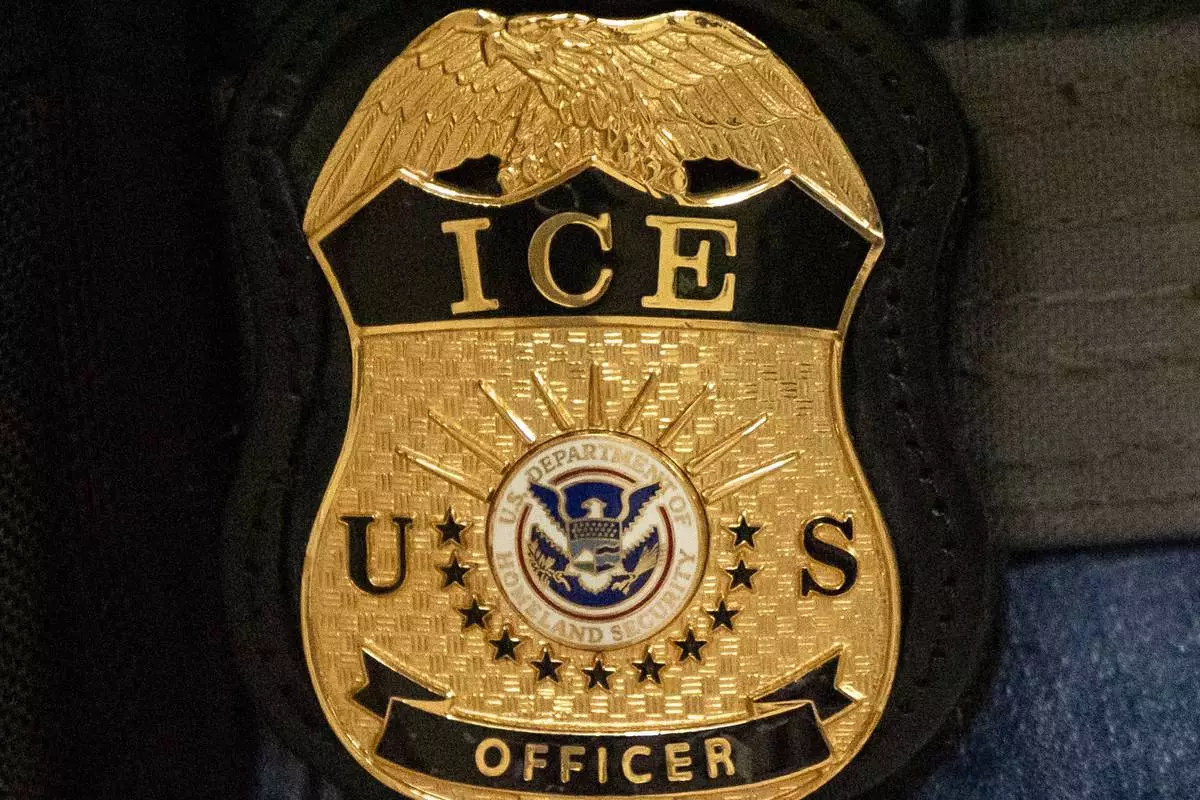
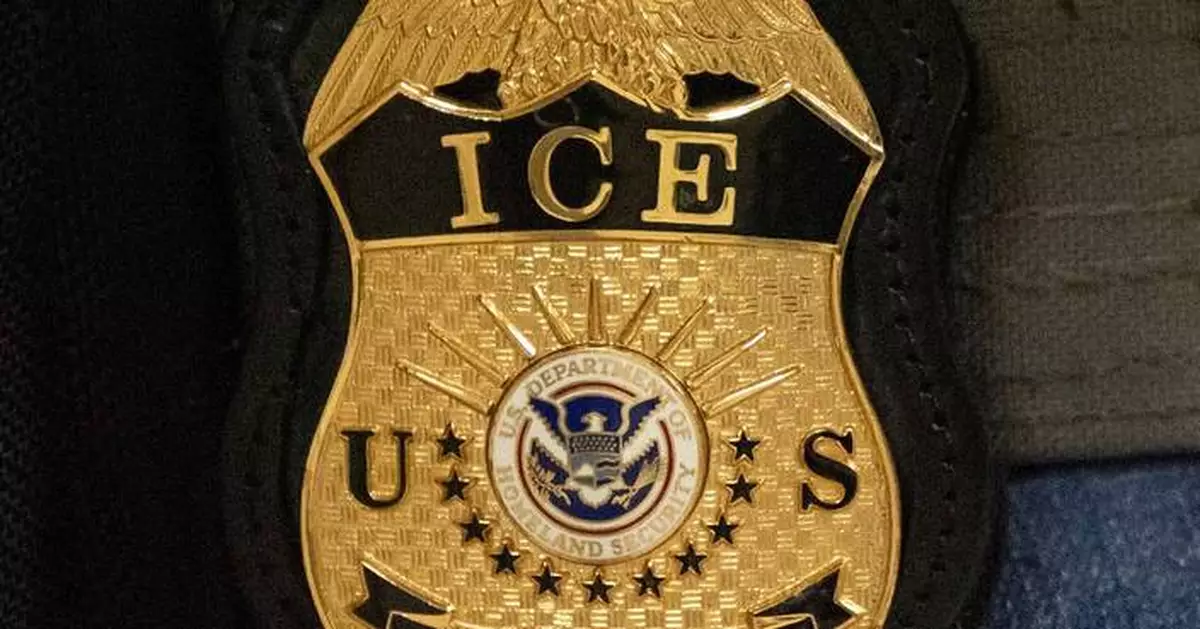
FILE - A federal agent wears an Immigration and Customs Enforcement badge in New York, June 10, 2025. (AP Photo/Yuki Iwamura, File)
NEW YORK (AP) — The Supreme Court on Friday lifted restrictions on a controversial federal voter database before November’s elections, granting President Donald Trump a temporary win in his aggressive campaign against noncitizen voting.
The court's three liberal-leaning justices publicly dissented from the decision.
The emergency order allows states, for now, to use the Trump administration's revamped version of a Department of Homeland Security program, called Systematic Alien Verification for Entitlements, or SAVE, in their efforts to verify the eligibility of voters on their rolls. It's a program that has drawn scrutiny for its use of voters' sensitive personal data and its tendency to wrongly flag some eligible voters as noncitizens.
States' use of the SAVE program is voluntary, limiting the ruling's impact on the midterm elections. Existing law also blocks most states from systematically purging voters from their rolls within 90 days of an election, said David Becker, an election law expert who leads the Center for Election Innovation and Research. He said DHS itself has admitted the data is not perfect.
Maine Secretary of State Shenna Bellows, a Democrat who has refused to participate in the SAVE program, said the ruling will have no effect in her state because it “does not force states to change the way we run our elections.”
The plaintiffs and their lawyers in the case called the ruling “profoundly disappointing” and said it puts “millions of Americans at risk of being unlawfully targeted by the administration’s unreliable voter purge database” before the midterms.
On X, James Percival, the general counsel for DHS, responded to a post about the decision with, “Yes, you read that right. We had to file an emergency petition in the Supreme Court just so we could use government data to help states stop noncitizens from illegally voting.”
The White House did not immediately respond to a message seeking comment.
The court’s order puts on hold a federal judge’s June ruling that had deemed the Republican administration’s recently revamped version of SAVE illegal. U.S. District Court Judge Sparkle L. Sooknanan had blocked the use of the tool, saying it violated Americans’ privacy rights and could result in voters being wrongly removed from the rolls.
A federal appeals court let her order stand.
But the Supreme Court majority found that a 1996 law explicitly allows DHS to obtain information on citizenship and immigration from other federal agencies. The federal government also has “an obligation to respond” to states seeking to verify citizenship.
“The order below prevents the Federal Government from using the program it believes is best suited to the task,” the majority wrote in the unsigned order.
Justice Ketanji Brown Jackson dissented, joined by Justices Elena Kagan and Sonia Sotomayor. The database has long been seen to fall under federal privacy laws, she wrote, and there are real risks that legitimate voter registrations could be mistakenly revoked.
“The harm caused by burdening or disenfranchising even a few lawful voters outweighs the nonexistent harm that the Government experiences when it is prevented from taking an action that it likely lacks the authority to take,” Jackson wrote.
The plaintiffs pledged to do “everything in our power” to ensure the district court decision stands.
The SAVE program was created under an immigration law mandating that DHS help federal, state and local agencies prevent government benefits from going to noncitizens. The Trump administration last year moved to significantly expand its search abilities. Since then, at least 67 million registrations have been scanned through the program, but critics worry it could purge valid voters from the rolls.
Some registrants have already been wrongly flagged. In Travis County, Texas, for example, officials said they investigated 97 voters flagged by SAVE as apparent noncitizens and found that at least 10% of them — and likely up to 21% — were U.S. citizens. The county urged the Supreme Court to reject the administration’s appeal, while the state of Texas submitted its own brief defending the database.
In Denton, Texas, north of Dallas, voter Anthony Nels was disappointed that the Supreme Court allowed the continued use “of a system that harms people’s constitutional right to vote.”
Last year, after Texas ran its voter registrations through the SAVE system, Nels, 29, was flagged as a potential noncitizen, even though the South Africa native had become a U.S. citizen more than a decade ago. His local election office temporarily canceled his registration while he obtained a new passport to replace an expired one.
“This just seems like another illegitimate way to affect upcoming and future elections,” he said in a text to The Associated Press.
Stephen Richer, the Republican former top election official in Arizona's largest county, said the Supreme Court's ruling could be a positive step “if used responsibly.”
“That being said, the SAVE program has been shown time after time to be a highly-imperfect tool, so election administrators should only use it as a starting point, not as a definitive indicator of citizenship,” he wrote on social media.
Even though the use of the SAVE program was blocked for months ahead of Friday's ruling, the administration has said in court filings that it has continued using Social Security Administration data "in certain cases to verify information and help determine whether illegal voting may have occurred."
DHS in August launched its own investigation to find noncitizen voters on state rolls, according to a federal whistleblower statement that said the effort is rushed, filled with errors and potentially violates state laws. DHS has defended that investigation as being conducted “diligently and professionally.”
Homeland Security Secretary Markwayne Mullin also suggested over the summer that there could be as many as 250,000 noncitizens registered to vote across four states, an unsubstantiated claim that puzzled state election officials who said the numbers dramatically exceeded their own findings. In one of those, Nevada, DHS said it had identified 185 noncitizens on the voter rolls, but the state attorney general's office wrote to the agency earlier this week, saying a records check found that all of them were, in fact, U.S. citizens.
The effort to create a national voter list is one of the many steps Trump has taken during his second term to try to overhaul how elections are run. Most of those steps have been blocked by various courts, in part because the Constitution gives states and Congress the authority to set election rules, but provides no such power to the president. In mid-September, the Supreme Court rejected Trump’s bid from Trump to restrict mail ballot procedures before the midterms.
Trump has remained fixated on the idea that massive numbers of noncitizens are voting in U.S. races, but all evidence says otherwise.
Ahead of the 2024 presidential election, Georgia’s secretary of state found that 20 of the state’s 8.2 million registered voters were not U.S. citizens. In Ohio, prosecutors secured indictments against nine people for voting as noncitizens over the span of 10 years. The state has some 8 million registered voters. Even with the Trump administration laser-focused on the issue in his second term, DHS said its investigations into potential noncitizens on voter rolls nationwide had led to 160 arrests.
Those numbers are supported by a mountain of research at the national and state level that has found the percentage of noncitizens on voter rolls is a tiny fraction of the nation's nearly 228 million registered voters.
Hanna reported from Topeka, Kansas, and Whitehurst reported from Washington. Associated Press writer Jessica Hill in Las Vegas also contributed.
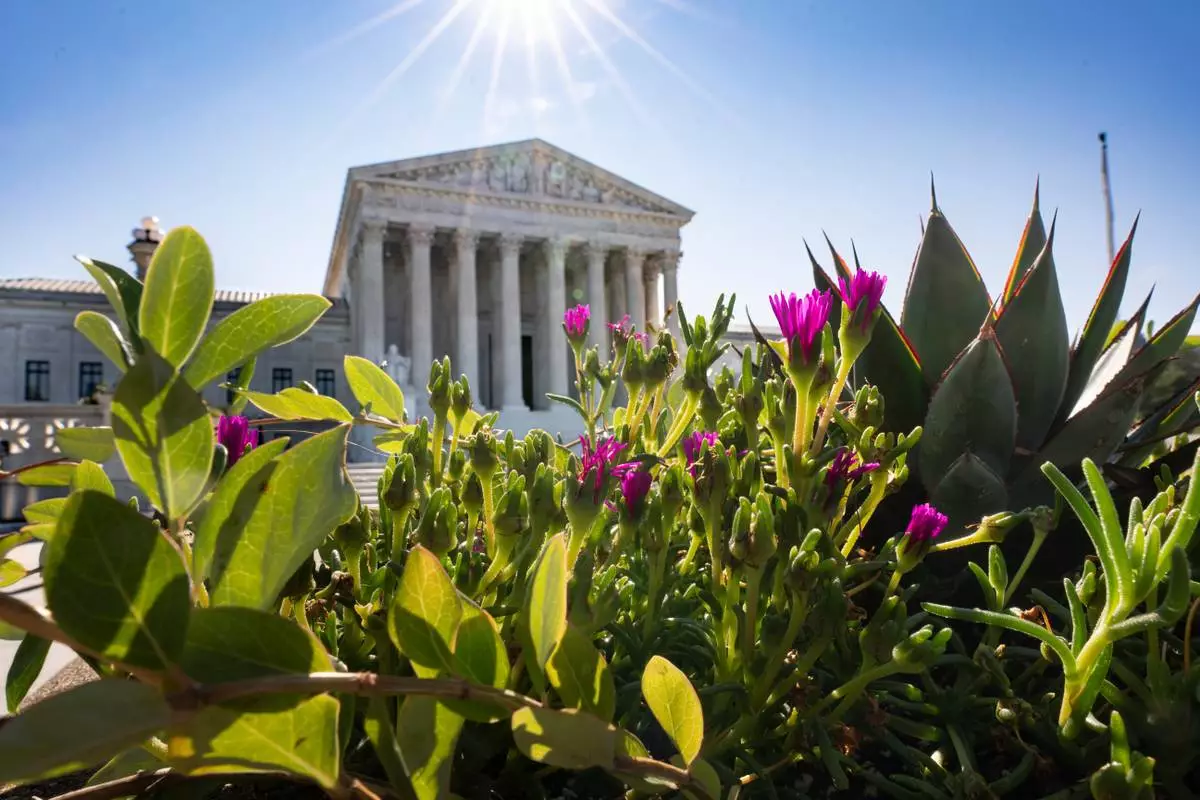
FILE - The Supreme Court is seen on Capitol Hill in Washington, Aug. 25, 2026. (AP Photo/J. Scott Applewhite, file)