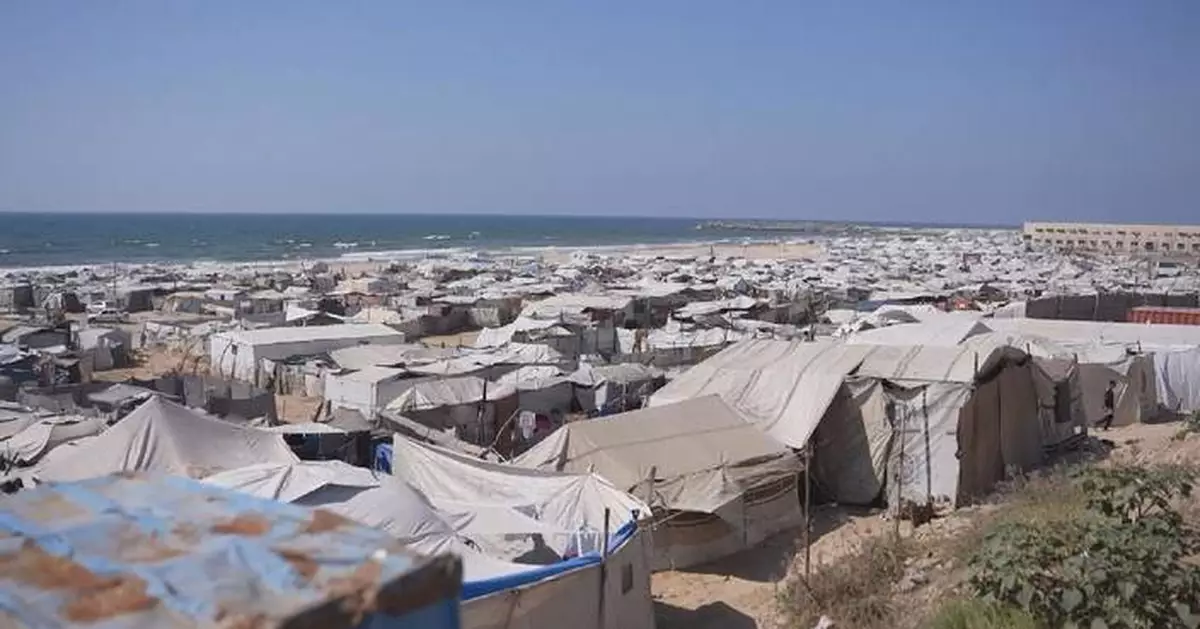
As heat wave is showing no signs of letting up in Gaza, thousands of displaced families living in worn-out makeshift tents are facing increasingly harsh conditions.
Muhammad and his family have been displaced since October 2023 and still live in a tent. Every morning at dawn since the start of this summer, he leads his family out of the tent. He is well aware that their flimsy shelter, made of worn canvas and dark plastic sheets, rapidly heats up like a greenhouse. While the daytime peak outdoor temperature in the Gaza has dropped to around 30 degrees Celsius, the temperature inside the tent can reach nearly 40 degrees Celsius at the same time.
To cool themselves down, Muhammad's family sit on the bare ground outside their tent, each fanning themselves repeatedly with a piece of cardboard. When the heat intensifies, adults place their children in a simple wooden basin and splash water over their bodies for relief. However, the humanitarian plight of displaced people in Gaza continues to worsen amid Israel's strict restrictions on the entry of drinking water, daily necessities and temporary housing reconstruction supplies. Under such harsh conditions, the sea has become their only option to escape the relentless heat. Amid the ongoing conflict, most of Gaza's main water supply and wastewater treatment facilities have been destroyed and remain largely unrepaired. Massive volumes of raw sewage flow daily from broken pipelines and tent camps directly into the sea.
"We often go to the seaside and sit there for an hour before heading back to the tent. We repeat this same grueling routine every day. I swim in the sea and splash water on myself after getting out to cool down, but the intense heat soon returns," said Muhammad.
"We have nowhere else to escape the heat except the beach. But the seawater is clean sometimes and contaminated with sewage and wastewater at other times. Yesterday I took the children to the beach, yet we only stayed there for 10 minutes and left because I found the seawater there was polluted," said Muhammad's father.
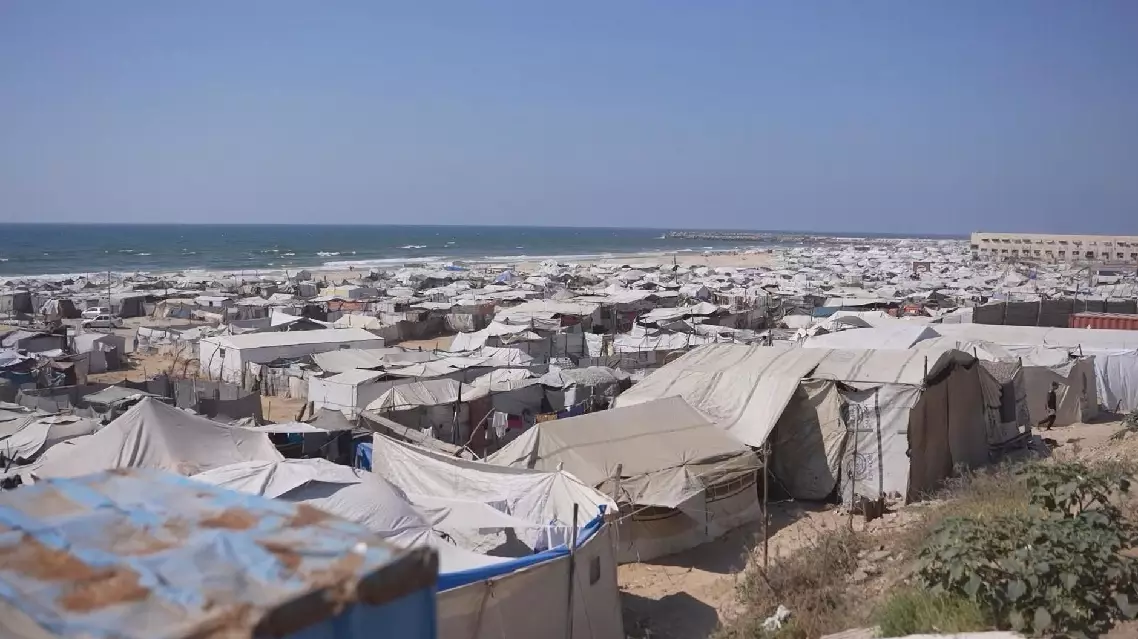
Summer heat deepens hardship for Gaza's tent-dwelling families
People-to-people exchanges between China and the United States can make a significant contribution to mutual understanding, said a former U.S. diplomat, noting that there is a lot of room for subnational engagement between the two countries.
While attending a welcome ceremony held by U.S. President Donald Trump at the White House on Thursday morning, President Xi Jinping pledged to invite 100,000 young Americans to visit China for exchanges and study over the next five years.
During an interview with China Global Television Network (CGTN), David Firestein, president and CEO of the George H. W. Bush Foundation for U.S.-China Relations and a former diplomat, lauded President Xi's invitation, calling for more such exchanges in both directions.
"As the Chinese saying goes, hearing 100 times is not as good as seeing once. And I think it's really important that people have the opportunity to see for themselves what's happening, by the way, in both directions. But the work that China has done to catalyze and facilitate greater numbers of young Americans getting to China, I think, is laudable. And I think it's a significant contribution to mutual understanding and certainly to U.S. understanding of China. And by the same token, the Chinese in China who interact with those Americans no doubt learn quite a bit about the United States as well. So that's very positive. I think we need to do a lot more of that in both directions," Firestein said.
Beyond exchanges at national level, the expert stressed that there is more room for subnational engagement between China and the United States.
"It's not just the federal government in the United States or the central government in China that is involved in facilitating or catalyzing these exchanges. But just as you've said, it's cities, it's states, it's universities, non-profits, individual actors, there's a lot of room for what we might call subnational engagement, and it takes everyone kind of rowing in the same direction, to use that metaphor, to really make a difference and to have an impact when you're dealing with countries of this scale," Firestein said.
He said that there are signs of changing attitudes in the United States, as more people come to see that their country must take a "more pragmatic and results-oriented" approach to China.
"I do think that we are starting to see a change in the mindset in the United States. I think people are starting to realize we need to be more pragmatic and results-oriented in dealing with China because provocative, politicized, incendiary rhetoric isn't solving anybody's problems. And ultimately, the bottom line metric is solving problems and making people's lives better. I think we're starting to see a bit of a shift and a bit of a rethink in the United States, and I think that's healthy, and it'll be very interesting to see how that unfolds," said Firestein.
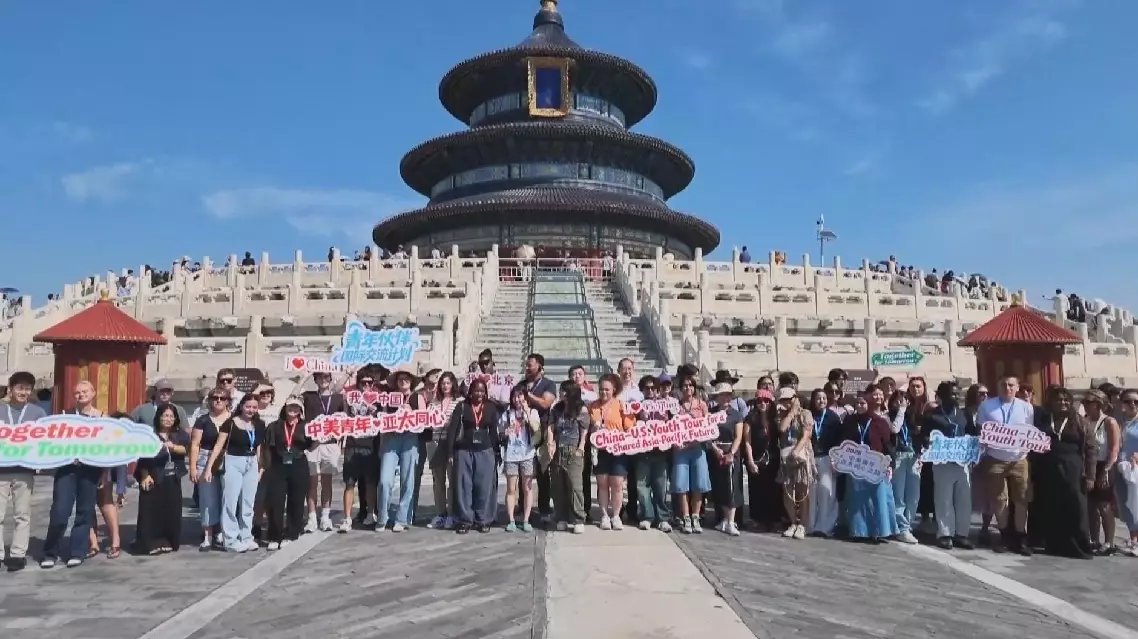
China-US people-to-people exchanges contribute to mutual understanding: former diplomat