Skip to Content Facebook Feature Image

China, US reach consensus on eight outcomes in Xi's visit

China

China, US reach consensus on eight outcomes in Xi's visit
China

China

China, US reach consensus on eight outcomes in Xi's visit

2026-09-26 19:56 Last Updated At:21:47

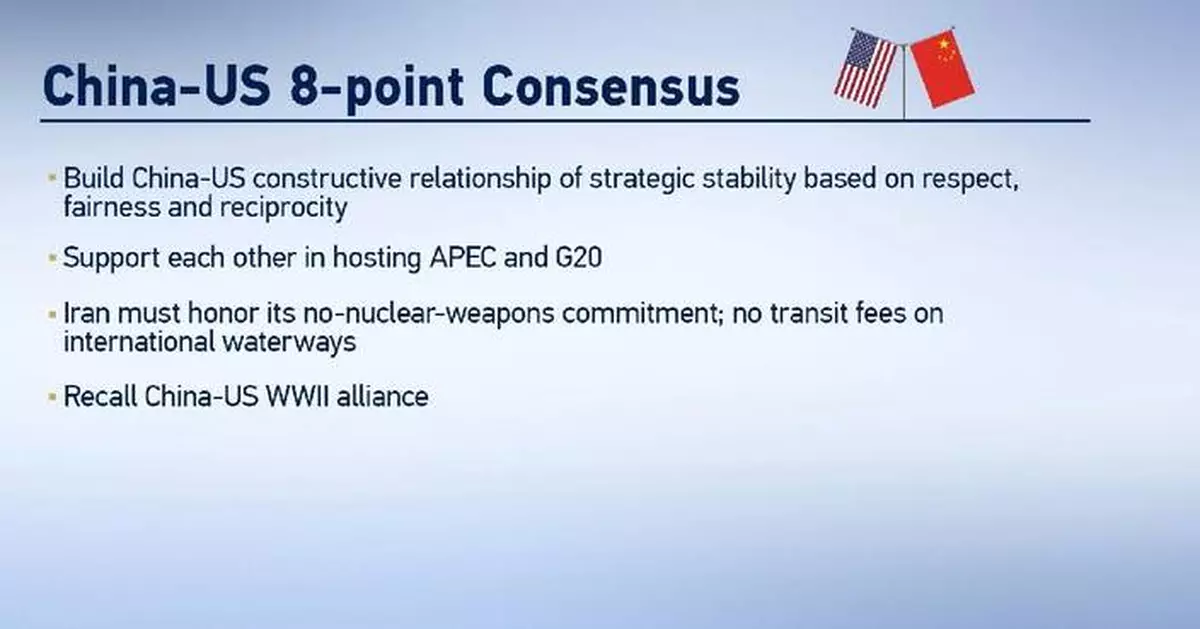
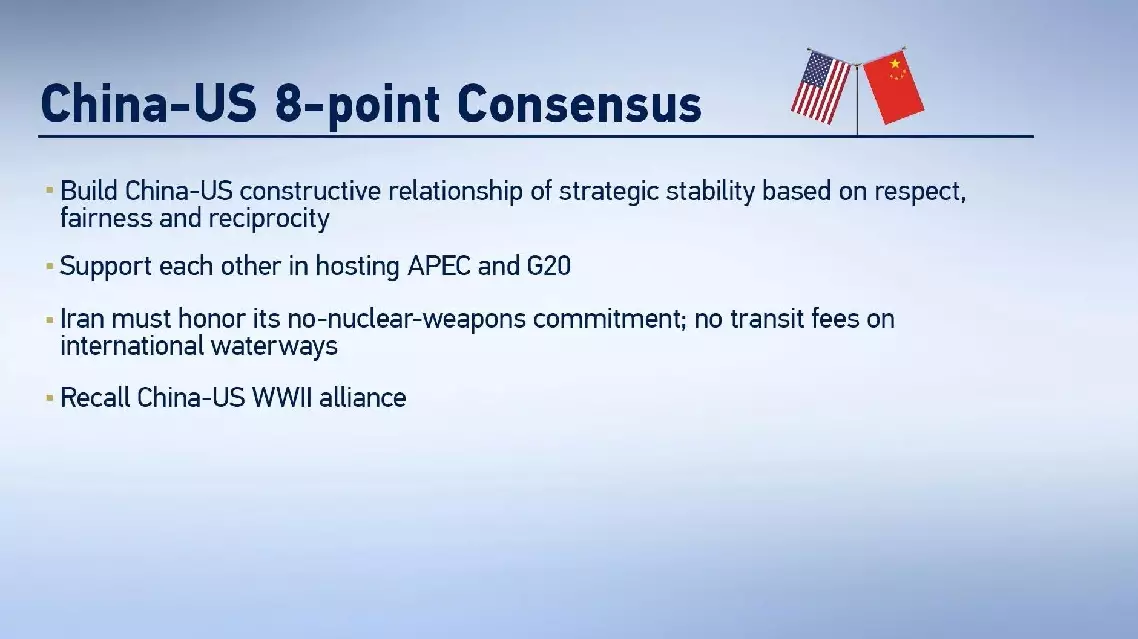
Chinese President Xi Jinping and his U.S. counterpart, Donald Trump, have reached a consensus on eight outcomes, according to a release made public after Xi wrapped up his U.S. visit on Friday.

Xi paid a state visit to the United States from Wednesday to Friday, during which he had an in-depth exchange of views with Trump on bilateral relations as well as major international and regional issues.

The two leaders have agreed to build a constructive China-U.S. relationship of strategic stability based on respect, fairness and reciprocity, said the release.

They also agreed to support each other as China will host the 2026 APEC Economic Leaders' Meeting in November and the United States will host the G20 Leaders' Summit in December, expressing intention that they will attend each other's event.

On Iran, Xi and Trump have agreed that Tehran should fulfill its commitment not to develop nuclear weapons. No country or institution shall charge transit fees for passage through international waterways, they said.

The release noted that the two leaders recalled that China and the United States were allies during World War II, and fought side by side to win the war.

Ahead of Xi's state visit, Chinese and U.S. economic and trade teams concluded their latest round of consultation in New York.

The two leaders acknowledged the positive role of the China-U.S. economic and trade consultation mechanism, and recognized the outcomes achieved by their respective economic and trade teams, namely the establishment and advancement of such mechanisms as a trade council, a 30-billion-U.S.-dollar reciprocal tariff reduction arrangement, and an extension of what have been achieved in the Kuala Lumpur consultation.

They instructed that those outcomes be implemented.

On bilateral counternarcotics law enforcement cooperation, Xi and Trump commended the tangible results. The release said recently, the two sides have worked closely to jointly crack multiple cases involving new psychoactive substances and precursor chemicals, and arrest dozens of suspects in both countries.

As to artificial intelligence (AI), they agreed to establish China-U.S. AI dialogue to exchange views on AI-related risks and benefits, with the next round to be held in November. A communication channel for AI-related incidents will also be set up.

The U.S. side welcomes the upcoming arrival of two giant pandas leased by China to Zoo Atlanta, according to the release.

In addition to the eight outcomes, the Chinese and U.S. militaries agreed to sign a memorandum of understanding as soon as possible on strengthening crisis communication and prevention.

The two militaries will continue cooperation on searching for the remains of U.S. soldiers in China, said the release.
China, US reach consensus on eight outcomes in Xi's visit

China, US reach consensus on eight outcomes in Xi's visit

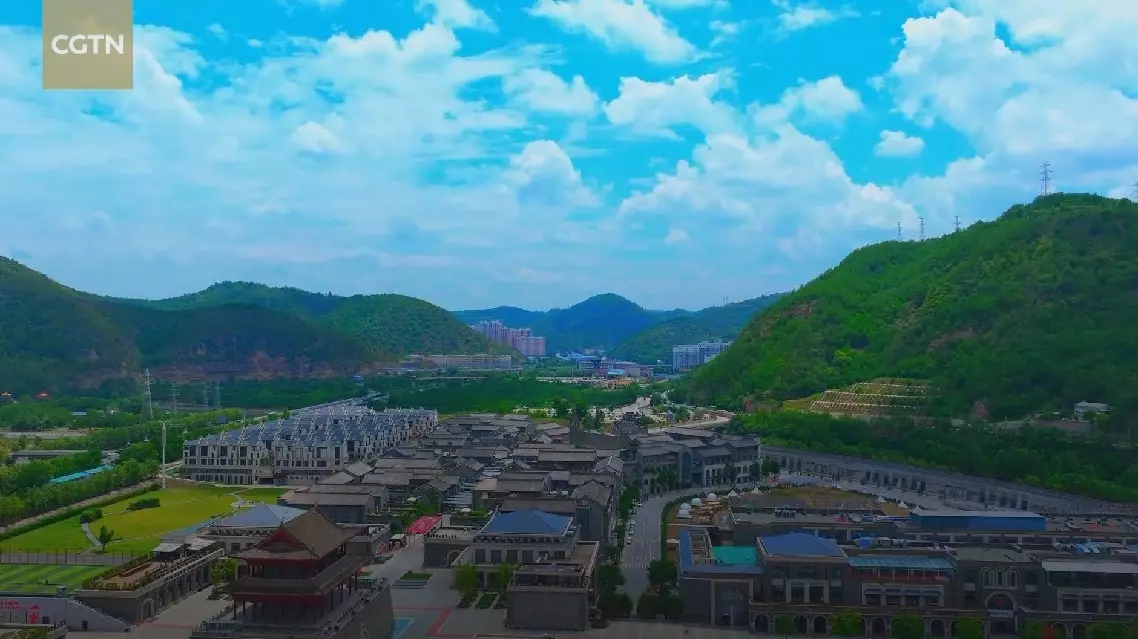
Building on the legacy of the Long March, a landmark event in the history of the Communist Party of China (CPC), Yan'an in northwest China's Shaanxi Province has transformed its historic wartime grounds into a thriving hub of modern agriculture and green tourism, showcasing how the resilient spirit of the past continues to drive rural revitalization today.

This year marks the 90th anniversary of the Long March, a crucial turning point in Chinese history that contributed to the founding of the People's Republic of China.

In the special series Marching On, China Global Television Network (CGTN) correspondents are retracting the original route of the Long March across several provinces to show how the enduring spirit of determination and resilience continues to inspire generations of Chinese people as they pursue better lives through innovation and hard work.

In the third episode of the series, a CGTN correspondent travels to Shaanxi, where the Red Army finally concluded its epic journey and established a revolutionary base.

The episode highlights Nanniwan, an area once known in the early 1940s as a barely inhabited marshland and overgrown wilderness cut off by economic blockades. Facing extreme adversity, the 359th Brigade of the Eighth Route Army -- veterans of the Long March -- embarked on a legendary production campaign, turning the barren soil into bountiful farmland.

Today, that same pioneering spirit lives on through advanced technology and modern agricultural drive. Local farmers and agricultural experts have achieved full mechanization by utilizing automated water-and-fertilizer integration systems, pesticide-distributing drones, and high-yield greenhouses. This modernization has driven a steady rise in Nanniwan's annual grain output, while providing dependable income boosts for surrounding communities and demonstrating how the enduring legacy of the Long March remains alive in contemporary China's pursuit of a high-quality green economy.

The Red Army soldiers, forerunners of today's People's Liberation Army, began their strategic retreat in 1934. They endured raging rivers, snow-capped mountains, and vast grasslands -- some marching as far as 12,500 kilometers -- before reaching Yan'an in Shaanxi Province in 1936, where they established the CPC headquarters ahead of the founding of the People's Republic of China in 1949.

From barren to bountiful: exploring golden fields in Shaanxi's Nanniwan

From barren to bountiful: exploring golden fields in Shaanxi's Nanniwan

Recommended Articles