Chinese President Xi Jinping's just-concluded state visit to the United States has written a new chapter in the history of bilateral relations.
The visit was from Wednesday to Friday at the invitation of U.S. President Donald Trump. It followed Trump's state visit to China back in May.
In less than six months, the Chinese and U.S. presidents have exchanged state visits, making history in their bilateral engagement.
The purpose of this visit was to carry on friendship, expand cooperation, and promote the well-being of the peoples of both countries. During his stay, Xi and Trump had a candid and in-depth exchange of views, reaching many new points of consensus, including further enriching the substance of the new positioning of China-U.S. relations.
The two leaders agreed to build a constructive relationship of strategic stability relationship based on respect, fairness, and reciprocity, providing clearer strategic guidance for China and the United States to explore the right way for major countries to get along.
Upon arriving at the Joint Base Andrews on Wednesday afternoon, Xi and his wife Peng Liyuan were warmly welcomed by Trump and his wife Melania Trump in a rare planeside greeting. The welcome ceremony featured a 21-gun salute, the playing of both countries' national anthems, and a military flyover.
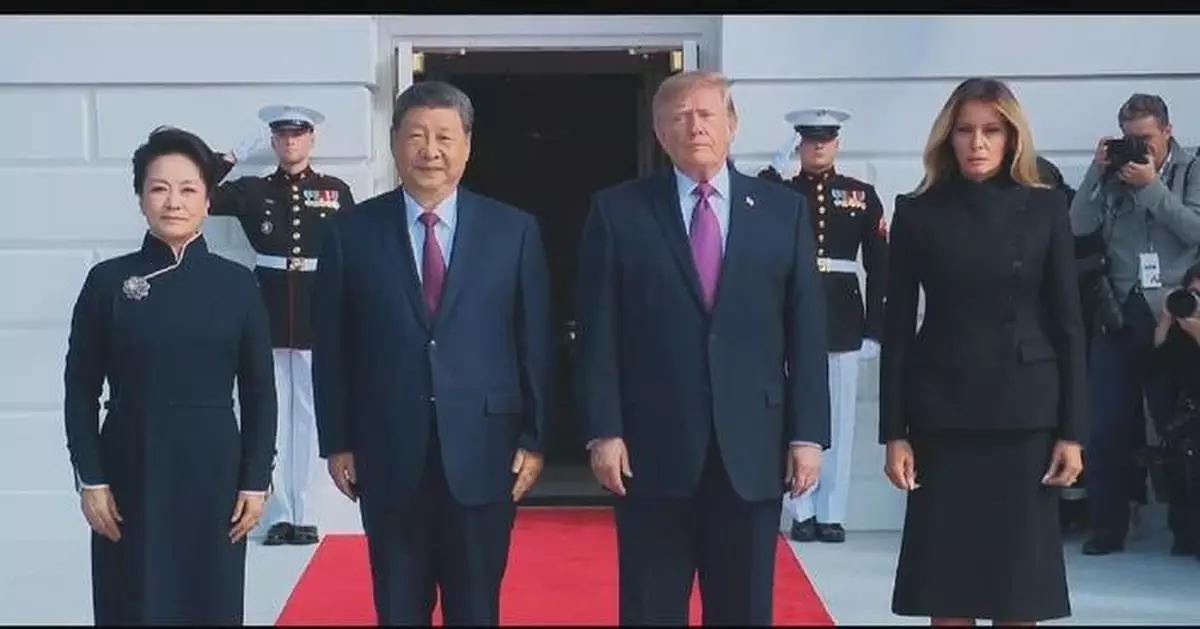
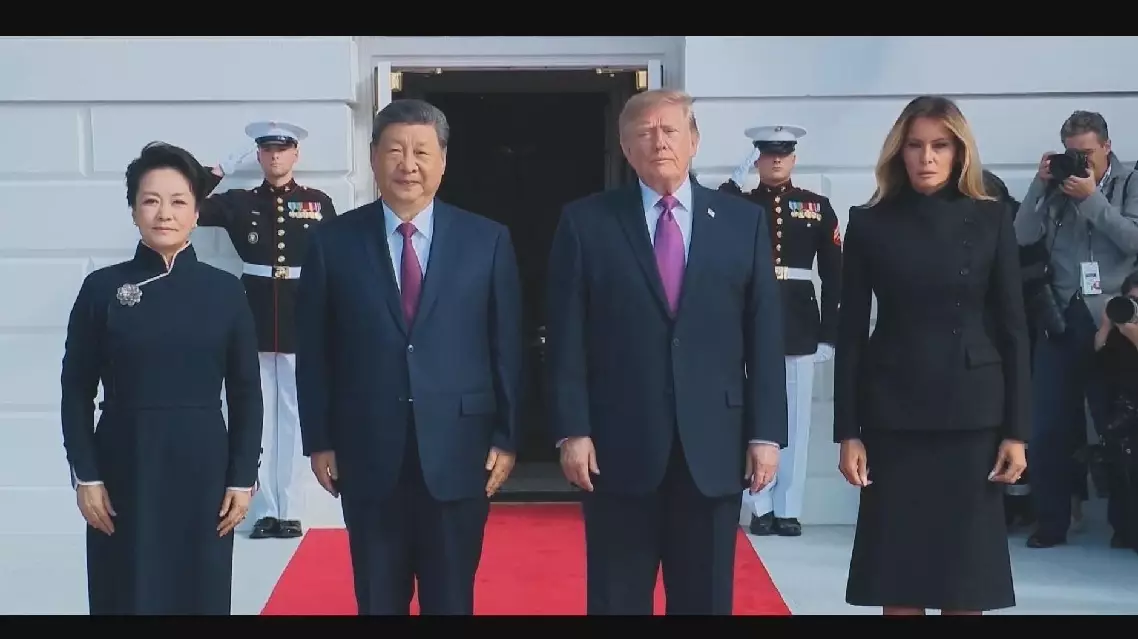
On Thursday morning, Xi attended a welcome ceremony held by Trump at the White House. Upon arrival, Xi and Peng were greeted by Trump and Melania.
"I am visiting the United States at President Trump's invitation to carry on our friendship, expand cooperation, and promote the well-being of both our peoples," Xi said at the arrival ceremony.
He said that "the interests of China and the United States are deeply intertwined, and there is plenty of room for us to work together. China-U.S. cooperation may not solve every problem in the world. But, without our cooperation, it would be hard to solve many of the world's problems."
"China and the United States must hold the line of no conflict and no confrontation between us, and we can certainly find the right path for our two great countries to get along on this planet we both call home," Xi also said.
Following their speeches, Xi and Trump, accompanied by their wives, stepped onto a balcony overlooking the South Lawn of the White House to watch a presidential salute performed by the U.S. Marine Corps Silent Drill Platoon.
The two couples then proceeded to the Rose Garden for a military review, which featured trumpeters and flag-bearers on the rooftop and a series of performances and demonstrations by traditional military bands. Multiple combat aircraft flew over the White House in honor of the Chinese and U.S. presidents and their wives.
After the welcome ceremony, the two heads of state and their spouses entered the Oval Office for friendly exchanges.
Later that evening, Xi and Peng attended a welcome banquet hosted by Trump and Melania at the White House, where both leaders delivered addresses.
On the final day of the visit, Xi and Peng had a chat over tea with Trump and Melania at the White House. The two heads of state agreed to add new substance to the vision for the China-U.S. relationship, building a constructive relationship of strategic stability based on respect, fairness and reciprocity.
The two presidential couples also visited the U.S. National Archives in Washington, D.C.
Xi concluded his state visit on Friday, departing Washington with a ceremonial send-off from senior U.S. officials, which included a 21-gun salute.
Xi's state visit to US writes new chapter in history of bilateral relations