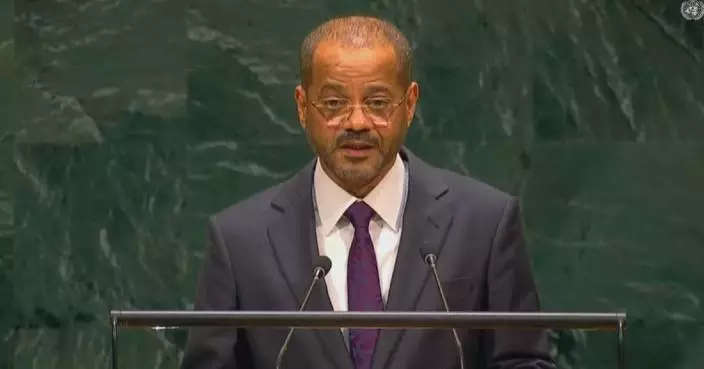
Cuban Foreign Minister Bruno Rodriguez Parrilla on Saturday condemned U.S. decades-long blockade of Cuba as "collective punishment" aimed at triggering a humanitarian crisis, during his address at the 81st UN General Assembly General Debate.
"In Cuba, as is known to all, we face a multidimensional aggression from the U.S. government -- a permanent, abusive, and ruthless hostility that has lasted for nearly seven decades. Since January 2026, it has intensified and become more cruel and dangerous with the imposition of an energy blockade that, through intimidation and coercion, prohibits all countries from exporting fuel to Cuba -- which amounts to a naval blockade, defined under international law as an act of war," he said.
The foreign minister stressed that Cuba is a peaceful country and dismissed the U.S. claim that Cuba poses a threat. "Cuba is not a threat; the blockade is!" he declared.
He also said Cuba does not represent a threat to the United States and stands ready to engage in dialogue with Washington on the basis of sovereign equality and respect for international law.
"We have always been, and remain, willing to engage in dialogue with the U.S. government to seek solutions to our bilateral differences on the basis of seriousness, respect, sovereign equality, and observance of international law, without interference in internal affairs, and with no preconditions," he said.
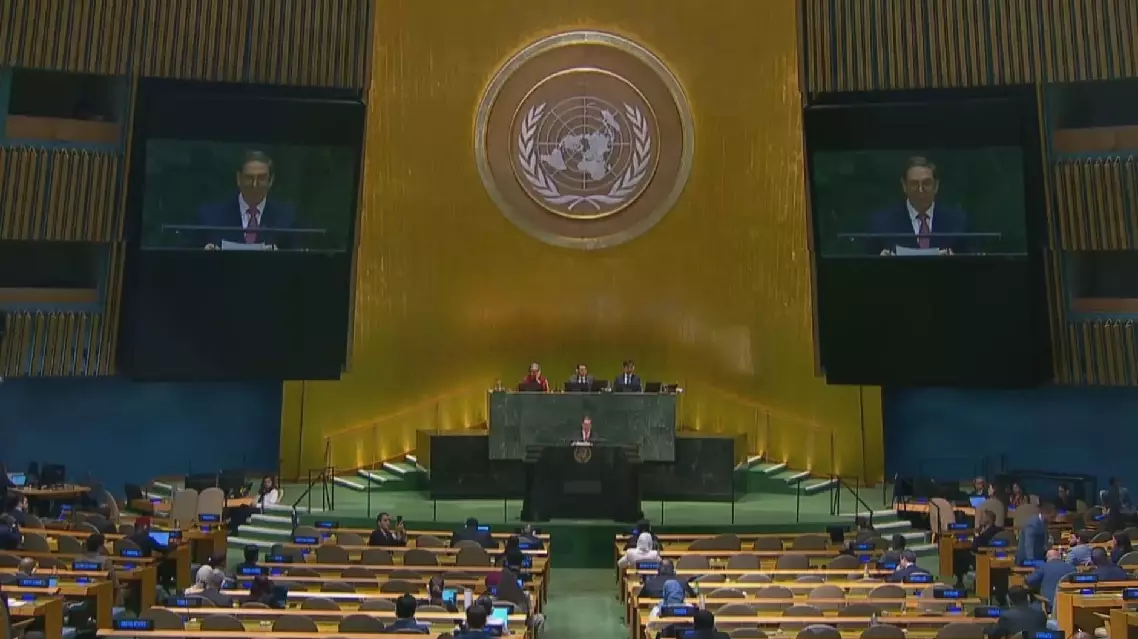
Cuba slams US blockade as 'collective punishment' at UN General Assembly
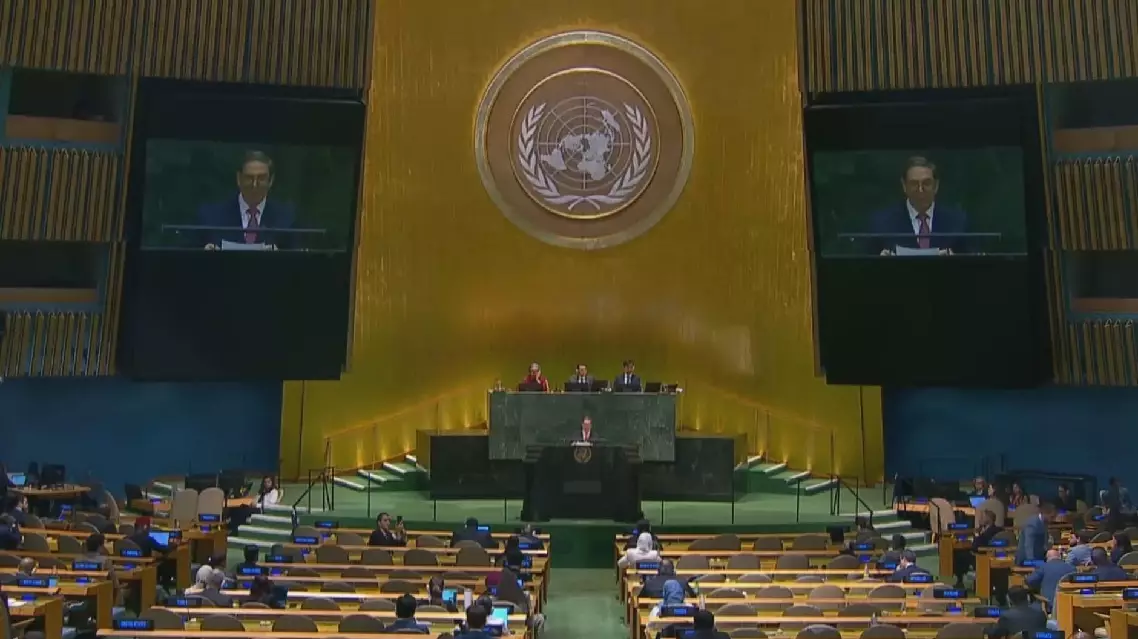
Cuba slams US blockade as 'collective punishment' at UN General Assembly
Chinese women artists in New York are advancing exchange and deepening mutual understanding across cultures through local galleries, art exhibitions and genuine interpersonal connections built on a passion for art.
One such artist is Christina Wong, who has long integrated her personal artistic practice into cross-cultural interaction. Based in Lower Manhattan, a vibrant hub for global artistic creation and communication, she founded Lumen Studio and regularly visits galleries in the area.
Originally from east China's Shandong and south China's Shenzhen, Wong has settled in New York and immersed herself in the city's diverse art community. She believes artistic passion transcends cultural boundaries, allowing people from all walks of life to connect naturally and build sincere friendships across different backgrounds and perspectives.
"I feel like if you share a passion for art, literally, you can just talk to anybody. And if you go to an art show, there're so many art shows and beautiful galleries in New York, and you can meet people from all walks of life. And you just immediately understand, if you share this passion, and it's so easy for you to make friends," said Wong.
Wong's artistic friendship with Shihui Zhou, founder and director of Latitude Gallery, exemplifies the organic cultural exchanges that take place in the city. Established in 2020 in downtown Manhattan, Latitude Gallery focuses on showcasing emerging talents from the Asian diaspora, amplifying contemporary Asian artistic voices within the Western art scene.
"When we achieve a connection, it's very joyful. And then it's exchange and it's just simply very wonderful to see that people are curious," said Zhou.
She noted that art offers a unique, accessible channel for cross-cultural communication.
"It's great for people to compare and to really experience both different cultures," the gallery founder said.
In New York, a global melting pot of cultures, the two female artists have proven that art serves as a powerful bridge for cultural integration and mutual learning.
"I've made so many friends, honestly, just by being a little bit more present in the art world," said Wong.
Both artists acknowledged that while art cannot resolve international political differences, it can cultivate mutual respect on a much smaller canvas.
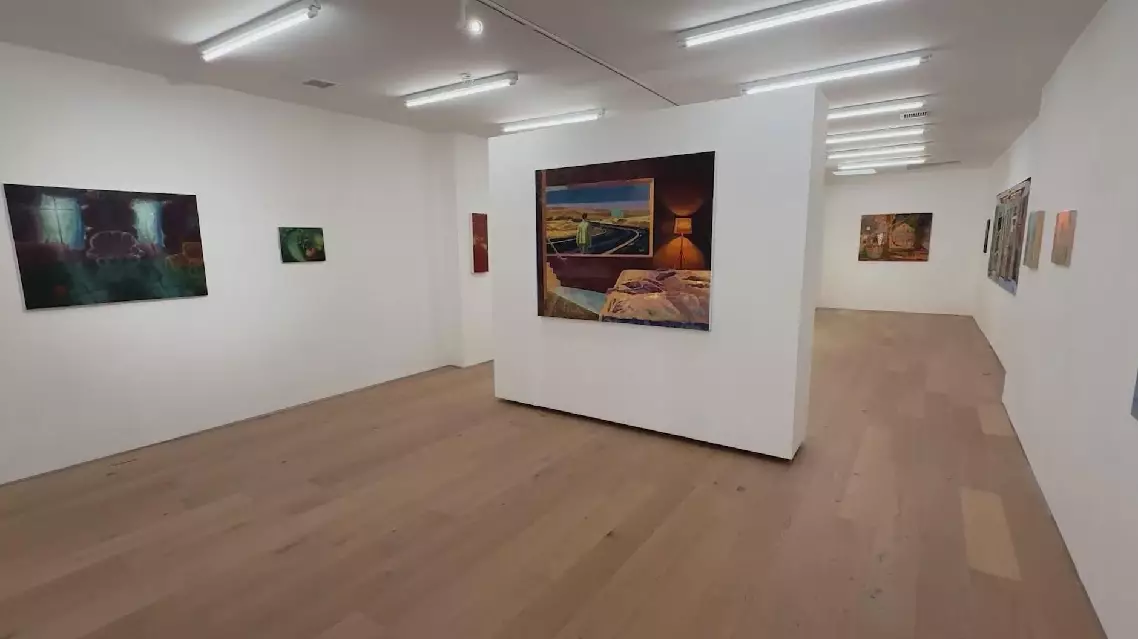
Chinese women artists bridge China-US ties through art