Chinese women artists in New York are advancing exchange and deepening mutual understanding across cultures through local galleries, art exhibitions and genuine interpersonal connections built on a passion for art.
One such artist is Christina Wong, who has long integrated her personal artistic practice into cross-cultural interaction. Based in Lower Manhattan, a vibrant hub for global artistic creation and communication, she founded Lumen Studio and regularly visits galleries in the area.
Originally from east China's Shandong and south China's Shenzhen, Wong has settled in New York and immersed herself in the city's diverse art community. She believes artistic passion transcends cultural boundaries, allowing people from all walks of life to connect naturally and build sincere friendships across different backgrounds and perspectives.
"I feel like if you share a passion for art, literally, you can just talk to anybody. And if you go to an art show, there're so many art shows and beautiful galleries in New York, and you can meet people from all walks of life. And you just immediately understand, if you share this passion, and it's so easy for you to make friends," said Wong.
Wong's artistic friendship with Shihui Zhou, founder and director of Latitude Gallery, exemplifies the organic cultural exchanges that take place in the city. Established in 2020 in downtown Manhattan, Latitude Gallery focuses on showcasing emerging talents from the Asian diaspora, amplifying contemporary Asian artistic voices within the Western art scene.
"When we achieve a connection, it's very joyful. And then it's exchange and it's just simply very wonderful to see that people are curious," said Zhou.
She noted that art offers a unique, accessible channel for cross-cultural communication.
"It's great for people to compare and to really experience both different cultures," the gallery founder said.
In New York, a global melting pot of cultures, the two female artists have proven that art serves as a powerful bridge for cultural integration and mutual learning.
"I've made so many friends, honestly, just by being a little bit more present in the art world," said Wong.
Both artists acknowledged that while art cannot resolve international political differences, it can cultivate mutual respect on a much smaller canvas.
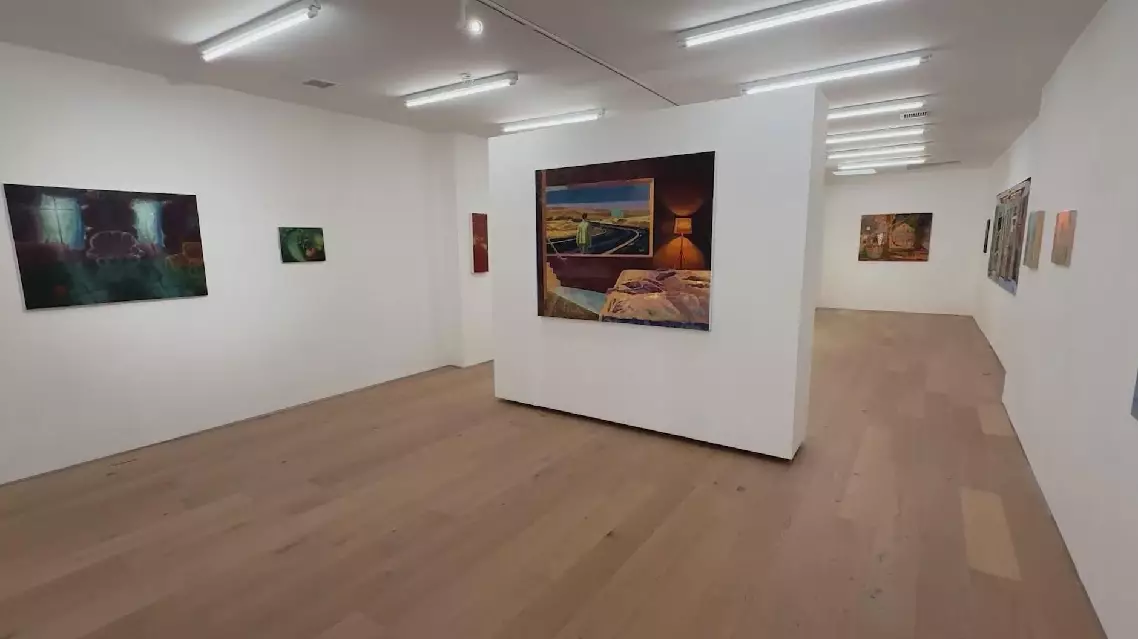
Chinese women artists bridge China-US ties through art
Frequent engagements between the leaders of the United States and China can help build trust and create positive momentum for the growth of bilateral ties, said David Firestein, president and CEO of the George H. W. Bush Foundation for U.S.-China Relations at an interview with the China Global Television Network (CGTN) on Saturday.
Firestein made the statement in an interview with China Global Television Network one day after Chinese President Xi Jinping conlcuded a three-day state visit to the United States running from Sept 23 to 25.
"I think when leaders of countries spend more time with each other and get to know each other better, if they can build out a relationship, they can increase at least to some degree trust between them as leaders of nations. And it can create positive momentum for the two countries to tackle issues that have been on the agenda and that are not yet resolved. And we do have a common interest on many other issues. And I think that by setting a tone that's more constructive and less adversarial, I think we can do a better job tackling those issues," said Firestein.
On economic ties, Firestein noted that strong commercial demand between the two peoples argues against decoupling.
He said the business community is calling for a more predictable and stable bilateral relationship to enable stronger trade and commercial cooperation.
"The American people continue to want to purchase hundreds of billions of dollars worth of Chinese goods, and that speaks for itself. If that weren't the case, then one could plausibly talk about decoupling and so on. But the fact is, the United States and the American people want engagement with China. We need engagement with China. And so it is in reverse [against talks of decoupling], where the Chinese people value American products, value the opportunity to do business with American companies to engage American consumers. And I know from my own experience dealing with the business community that they're arguing for a more predictable and stable U.S.-China relationship that will allow for more robust commercial and trade engagement," he said.
Firestein also stressed the importance of collaboration between the two countries on artificial intelligence.
"Unquestionably it makes sense for the United States and China to have a deep and substantive dialogue around how we, the two countries, as the two leading AI superpowers in the world, can work together in the common cause to mitigate some of the threats associated with AI to humanity itself," he said.
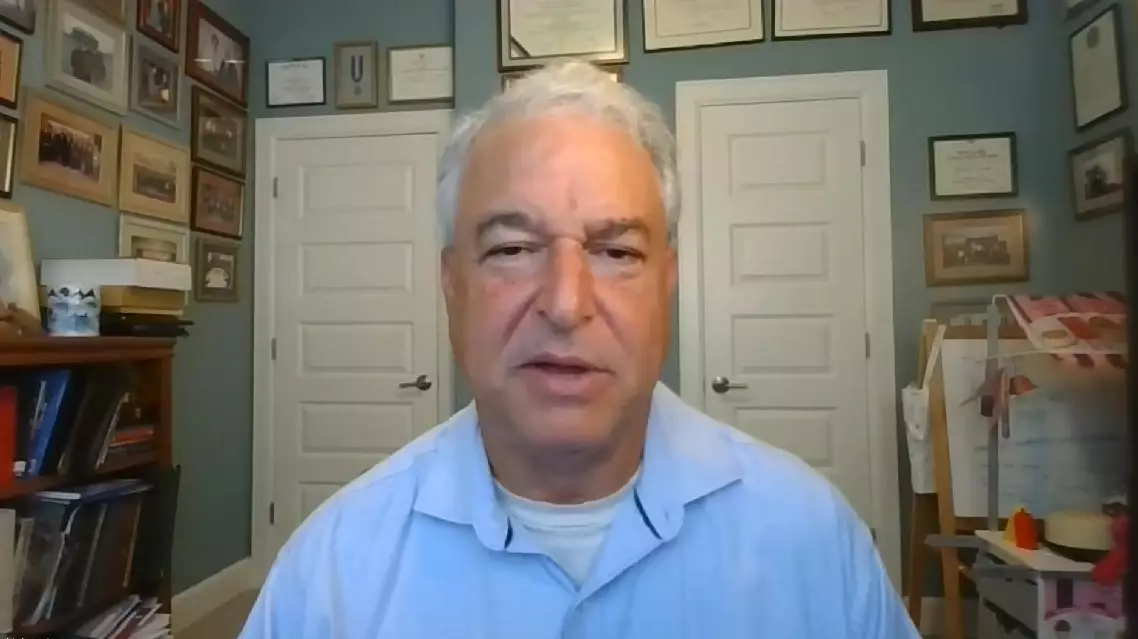
More frequent leader-level engagements can build trust, create positive momentum: expert