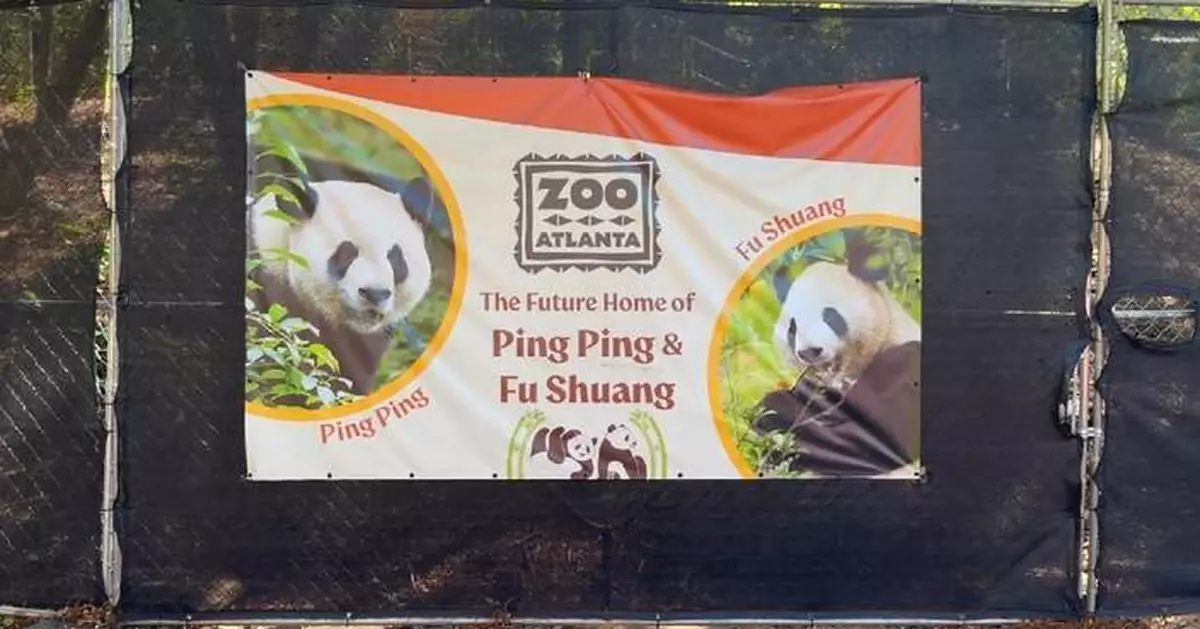
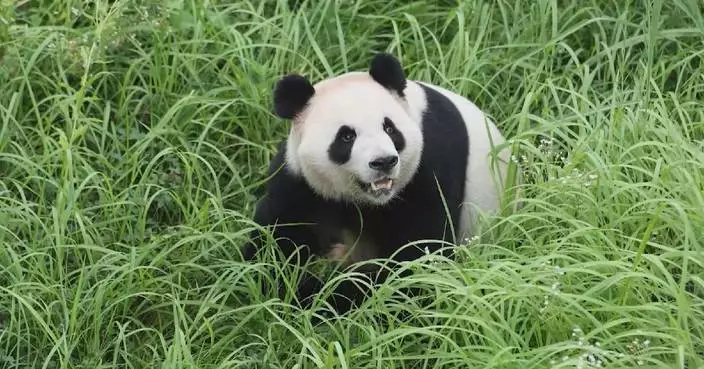
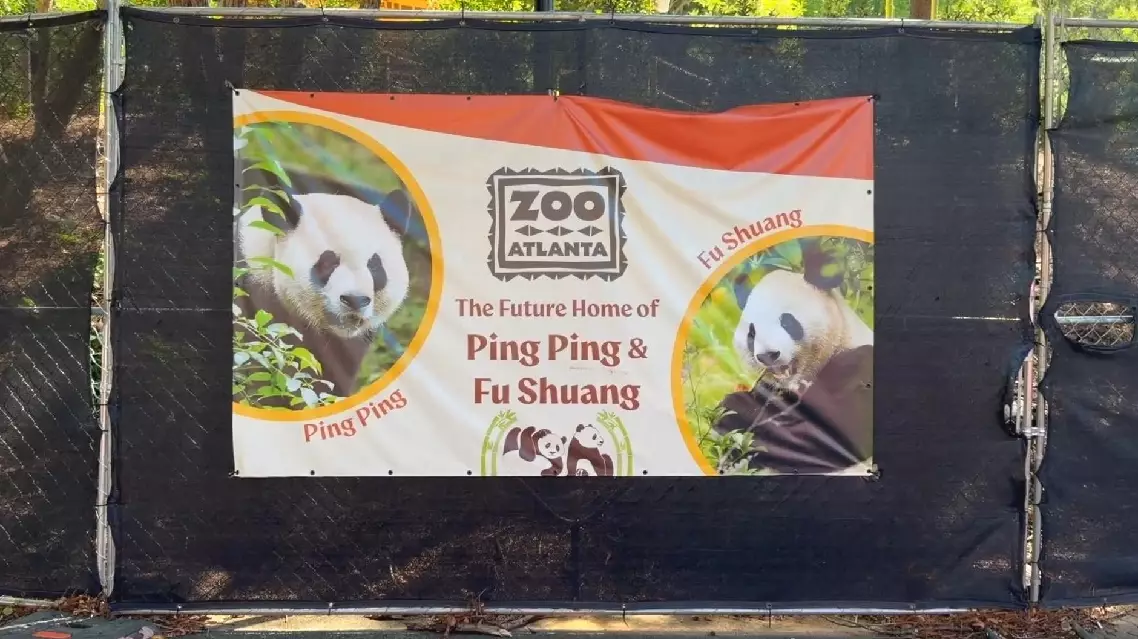
Two giant pandas from China landed in Atlanta on Sunday morning, as visitors at the city's zoo looked forward to seeing pandas there again after a nearly two-year absence.
Male Ping Ping and female Fu Shuang arrived aboard a chartered FedEx cargo plane after departing from the Chengdu Shuangliu International Airport in southwest China's Sichuan Province.
Ping Ping was born on March 17, 2020, and Fu Shuang on Oct. 18, 2020. They are expected to stay at Zoo Atlanta for 10 years under a conservation agreement with the China Wildlife Conservation Association.
Alex Haller, a visitor from Miami, said on Saturday, before the pandas arrived, that she wanted to come back to see them.
"I'm so excited! I heard it's been a while, so I'm really excited that you guys are getting your pandas back! Can't wait to come back and see them," Haller said.
Another visitor, Nikki Roberts, showed photos she had taken three years earlier of Ya Lun and Xi Lun, twin sisters born at the zoo.
"I'm excited. I love pandas. They're so cute, they look squishy. This is the pandas when we came here," Roberts said.
Ya Lun and Xi Lun were the youngest of seven cubs born in five litters to Lun Lun and Yang Yang, who arrived from China in 1999. Their first cub, Mei Lan, went on to father Meng Lan and the twins He Hua and He Ye, all of whom have become celebrity pandas in China.
Lun Lun and Yang Yang left for China with Ya Lun and Xi Lun in October 2024, ending 25 years of giant pandas at Zoo Atlanta.
Visitors will have to wait a little longer to meet Ping Ping and Fu Shuang. The pair will undergo quarantine and be given time to adjust to their new surroundings before going on public view. Chinese veterinarians and caretakers arrived ahead of them to help with their care.
New pandas arrive in Atlanta, stirring excitement and fond memories
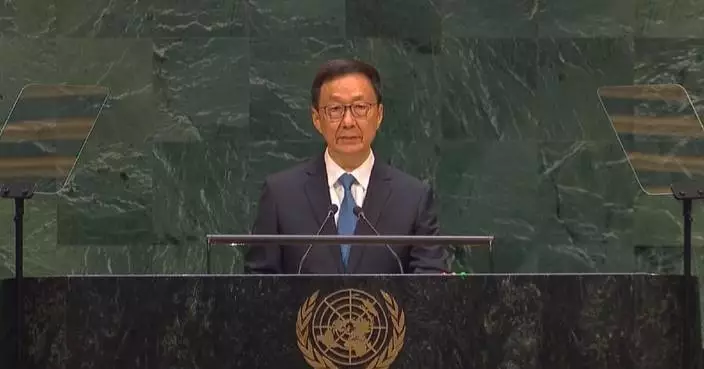
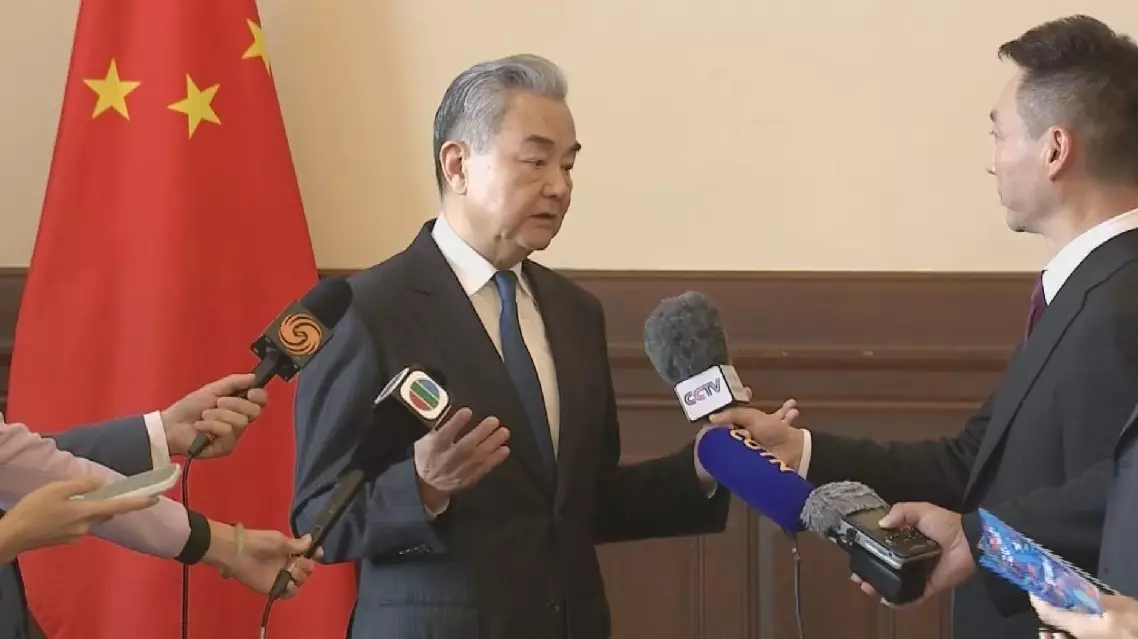
Chinese President Xi Jinping's state visit to the United States has led to new progress in a constructive China-U.S. relationship of strategic stability, Chinese Foreign Minister Wang Yi said after Xi wrapped up his U.S. visit on Friday.
Wang, also a member of the Political Bureau of the Communist Party of China Central Committee, made the remarks while briefing reporters on Xi's state visit to the United States from Sept. 23 to 25.
President Xi and President Donald Trump had a candid and in-depth exchange of views in a friendly atmosphere of mutual respect on strategic and overarching issues concerning China-U.S. relations and the broader global landscape, Wang said.
Since President Trump began his second term, the two heads of state have maintained close exchanges, including three in-person meetings and five phone talks, and fostered a pattern of interaction marked by mutual respect and sincerity, said Wang, noting this has become the most valuable strategic asset in China-U.S. relations.
An important political outcome of the visit is that President Xi and President Trump further enriched the substance of the new positioning of China-U.S. relations and have agreed to build a constructive China-U.S. relationship of strategic stability based on respect, fairness and reciprocity, Wang said.
Respect means respecting each other's sovereignty and territorial integrity, respecting each country's choice of social system and development path, and respecting the other side's core interests and major concerns, Wang said.
Fairness, Wang continued, means pursuing mutually beneficial cooperation and handling differences through consultation, rejecting a zero-sum game in which one side's gain comes at the expense of the other's, and not seeking unilateral absolute advantage.
Reciprocity means that the two countries are equal in sovereignty, that neither side stands above the other, that neither engages in hegemonic nor bullying behavior, that each side's concerns are addressed on an equal basis, and that cooperation across various fields develops in a balanced manner, Wang said.
Noting that President Xi has pointed out that a stable China-U.S. economic and trade relationship requires both expanding the list of cooperation and shortening the list of problems, Wang said that the U.S. side should treat Chinese companies fairly, resolve problems through dialogue and negotiations, and promote the sustained, stable and positive development of China-U.S. economic and trade relations.
The fentanyl abuse problem in the United States is not caused by China, but China has always acted with the utmost goodwill and made every effort to assist the U.S. side in addressing the fentanyl crisis, Wang noted, adding that the two heads of state tasked the law enforcement agencies of the two countries with continuing to strengthen cooperation and jointly combat transnational crime.
To promote people-to-people exchanges between China and the United States, President Xi has announced a series of new measures, including inviting 100,000 young Americans to visit China for exchange and study programs over the next five years, Wang said.
One piece of good news that has been particularly welcomed by the American public is that two pandas, Ping Ping and Fu Shuang, will soon arrive at Zoo Atlanta, Wang added.
During the visit, Wang said, the two heads of state had an in-depth exchange of views on major international and regional issues of common concern and agreed to strengthen coordination to make due contributions to world peace and development.
President Xi also encouraged relevant parties to stay committed to peace, supported the United States and Iran in returning to the Islamabad Memorandum of Understanding, resuming dialogue and negotiations at an early date, and ultimately reaching a comprehensive agreement covering the nuclear issue, Wang said.
During the visit, President Xi and President Trump also had an in-depth exchange of views on artificial intelligence (AI), pointing out that the two countries should leverage respective strengths rather than guard against each other, Wang said.
The two heads of state agreed to make good use of AI dialogue mechanisms between the two countries and jointly prevent the misuse and abuse of AI, Wang added.
Noting that this year marks the 80th anniversary of the opening of the Tokyo Trials, Wang said that China and the United States are both permanent members of the United Nations Security Council, and it is their shared responsibility to uphold the postwar international order and prevent the resurgence of militarism.
China and the United States will respectively host the APEC Economic Leaders' Meeting and the G20 Leaders' Summit in the fourth quarter of this year, Wang said, adding that the two heads of state confirmed their mutual support, which will continue to inject momentum into cooperation in the Asia-Pacific and global governance.
Xi's state visit leads to new progress in constructive China-U.S. relationship of strategic stability: Chinese FM