SINGAPORE--(BUSINESS WIRE)--Sep 28, 2026--
At the Human Proteome Organization World Congress 2026, Bruker Corporation (Nasdaq: BRKR) today announced unique new timsUltra AIP and timsOmni workflows for deeper protein-sequence coverage, targeted validation, mobility-resolved glycopeptide characterization, structural proteomics, and oligonucleotide analysis. Multi-enzyme dia-PASEF provides additional peptide information for investigations of isoforms and proteoforms, while ProteoScape workflows connect PASEF discovery with prm-PASEF target validation on the same timsTOF platform. Novel timsOmni and integrated HDX-MS workflows extend structural analysis to glycopeptides, proteins, and nucleic acids.
This press release features multimedia. View the full release here: https://www.businesswire.com/news/home/20260928599979/en/
“ We are combining proteome depth, PTMs, proteoforms, protein interactions, and conformational and spatial context to enable richer multimodal training data for next-generation biological AI models,” said Frank H. Laukien, President and CEO of Bruker. “These complementary molecular dimensions can extend existing models for drug discovery and mechanisms of action with information closely linked to biological function, helping advance molecular medicine more rapidly in the post-genomic era.”
A. MultiDIA-PASEF workflow further increases sequence coverage for deeper proteoform characterization
A novel multi-enzyme method combines complementary protease digests with dia-PASEF on the timsUltra AIP ultra-high sensitivity mass spectrometer. In Parkinson’s brain samples, this yielded ~350,000 peptides per sample. Analysis across complementary digests provided ~14,500 protein isoforms corresponding to over 10,000 canonical proteins. By increasing protein sequence coverage, the workflow reveals peptide evidence for isoforms, sequence variants, and protein regions that are missed in single-enzyme MS-based proteomics or by affinity methods.
Prof. Nikolai Slavov, Founding Director, Parallel Squared Technology Institute and Distinguished Professor of Biological Engineering at Northeastern University, said: “ Deep sequence coverage is central to understanding proteoform biology. By combining complementary protease digests with sensitive dia-PASEF, we can improve peptide coverage and gain a more confident and detailed view of isoforms and proteoforms that otherwise remain hidden. ”
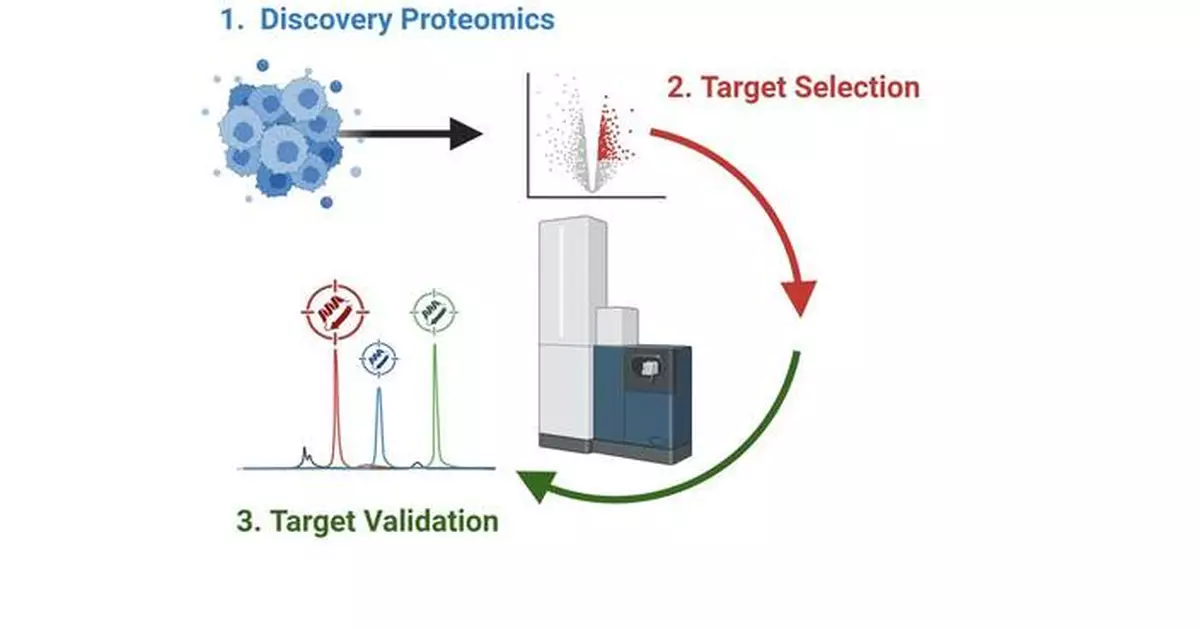
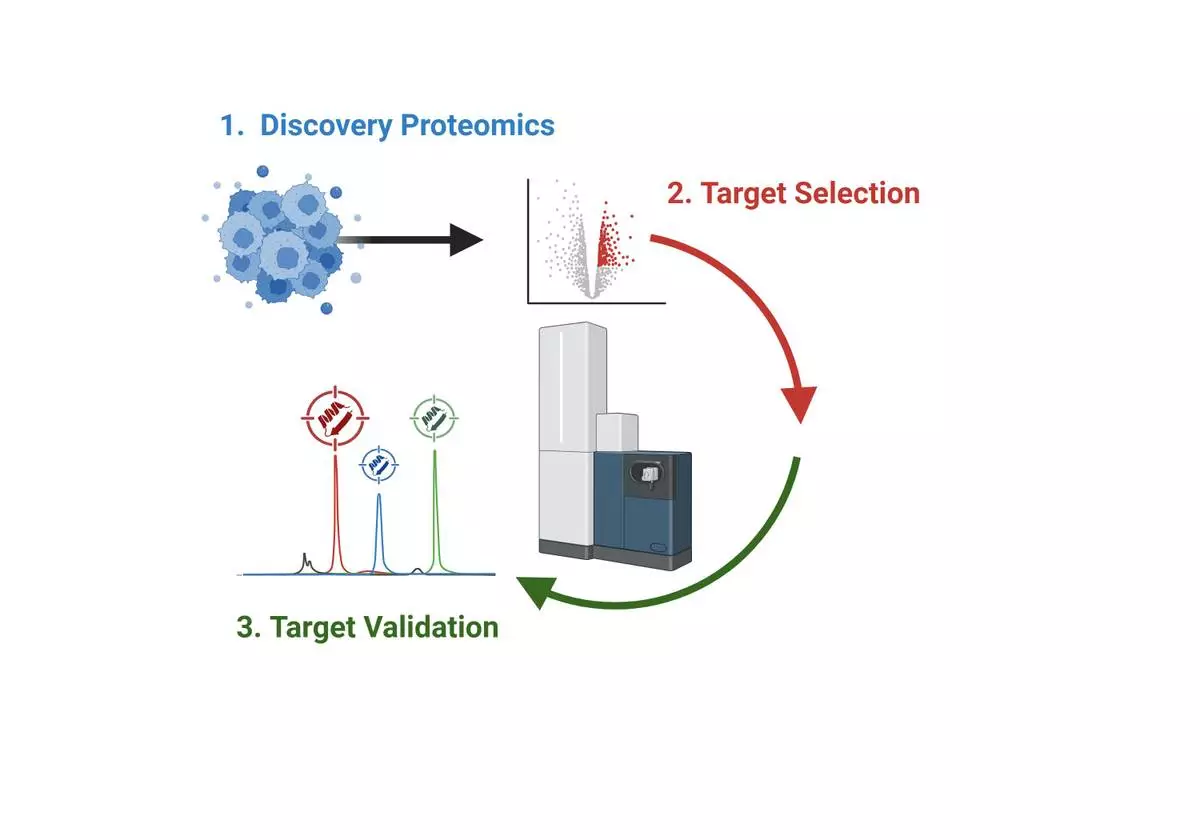
B. Discovery-to-Validation connects dia-PASEF discovery with prm-PASEF validation
A direct path from dda-PASEF, diagonal-PASEF, and dia-PASEF discovery to prm-PASEF target validation is now available within Bruker ProteoScape. Researchers can convert discovery into prm-PASEF target lists and move from discovery studies to targeted analysis of proteins, pathways, and biomarkers.
Prof. Stanley Stevens Jr. at the University of South Florida explained: “ Together with Bruker, we have developed automated workflows that bridge discovery proteomics and targeted assays. By simplifying and accelerating method development, this enables more precise quantitation, helping translate complex proteomics data into actionable biological insights. ”
C. AI transfer learning accelerates Spectronaut® adaptation to MS capabilities
Spectronaut v21 provides an AI analysis environment that can dynamically adapt to new mass spectrometry capabilities and acquisition methods. Modern 4D proteomics is represented by multi-dimensional feature maps, including precursor, fragment, retention time and ion-mobility. Through advanced transfer learning, Spectronaut dynamically tailors its AI models to new acquisition modes and instrument capabilities without requiring model redevelopment.
“ New acquisition modes and instrument configurations now become available before large training datasets can be generated, ” said Dr. Tejas Gandhi of Biognosys. “ Spectronaut’s transfer-learning accelerates AI model adaptation quickly as new MS technologies and methods become available.”
D. Guided PASEF EXciD for high-speed, mobility-resolved glycopeptide characterization
Bruker is advancing glycoproteomics with Guided PASEF EXciD, a timsOmni workflow for fast, selective electron-based fragmentation. Operating at more than 30 Hz, the method recognizes diagnostic glycan oxonium ions during acquisition and directs EXD or EXciD fragmentation to selected glycopeptide precursors. The workflow retains TIMS separation for ion mobility-resolved glycopeptide characterization.
Daniel Polasky, Assistant Professor in Pathology at the University of Michigan stated: “ A major challenge in glycoproteomics is translating complementary peptide and glycan fragment information into confident, biologically meaningful insights. By combining intelligent trapped eXd with automated analysis in FragPipe, researchers can readily characterize site-specific glycosylation and glycan structural diversity in complex biological samples. ”
E. Bruker and Affipro Analytics integrate HDX-MS workflows for structural proteomics
Bruker and Affipro Analytics announce a co-marketing and development agreement for integrated hydrogen-deuterium exchange MS workflows. The solution combines Affipro HDX-MS automation, Bruker HyStar control, and Affipro DeutEx analysis software to connect experimental setup, LC-MS control to molecular interactions, conformation dynamics and protein structure insights.
Dr. Petr Novak, co-founder of Affipro Analytics and Group Leader Structural Biology and Cell Signaling at the Institute of Microbiology of the Czech Academy of Sciences, commented: “By combining Affipro’s workflow expertise with TIMS separation, we provide more structural information at higher throughput to accelerate AI-assisted drug discovery and structural biology.”
F. EDD-MS³ on timsOmni for complete oligonucleotide coverage and native RNA analysis
Valérie Gabelica at the University of Geneva achieved breakthrough nucleic acid analysis on the timsOmni™ with complete sequence coverage of RNA and DNA oligonucleotides through electron detachment dissociation (EDD) and Omnitrap MS³ workflows unique capabilities. Combining EDD with vibrational activation resonance CID, can achieve complete sequence coverage for RNA and DNA oligonucleotides, e.g., on the antisense drug Fomivirsen.
Native top-down analysis of folded RNA structures enabled localization of protected domains and of accessible regions in a single experiment. The Omnitrap can provide softer activation and retention of structurally informative radical fragments. Together, these capabilities extend timsOmni workflows to oligonucleotide characterization and native RNA structural biology.
About Bruker Corporation – Leader of the Post-Genomic Era (Nasdaq: BRKR)
Bruker is enabling scientists and engineers to make breakthrough post-genomic discoveries and develop new applications that improve the quality of human life. Bruker’s high-performance scientific instruments and high value analytical and diagnostic solutions enable scientists to explore life and materials at molecular, cellular, and microscopic levels. In close cooperation with our customers, Bruker is enabling innovation, improved productivity, and customer success in post-genomic life science molecular and cell biology research, in applied and biopharma applications, in microscopy and nanoanalysis, as well as in industrial and cleantech research, and next-gen semiconductor metrology in support of AI. Bruker offers differentiated, high-value life science and diagnostics systems and solutions in preclinical imaging, clinical phenomics research, proteomics and multiomics, spatial and single-cell biology, functional structural and condensate biology, as well as in clinical microbiology and molecular diagnostics. For more information, please visit www.bruker.com.
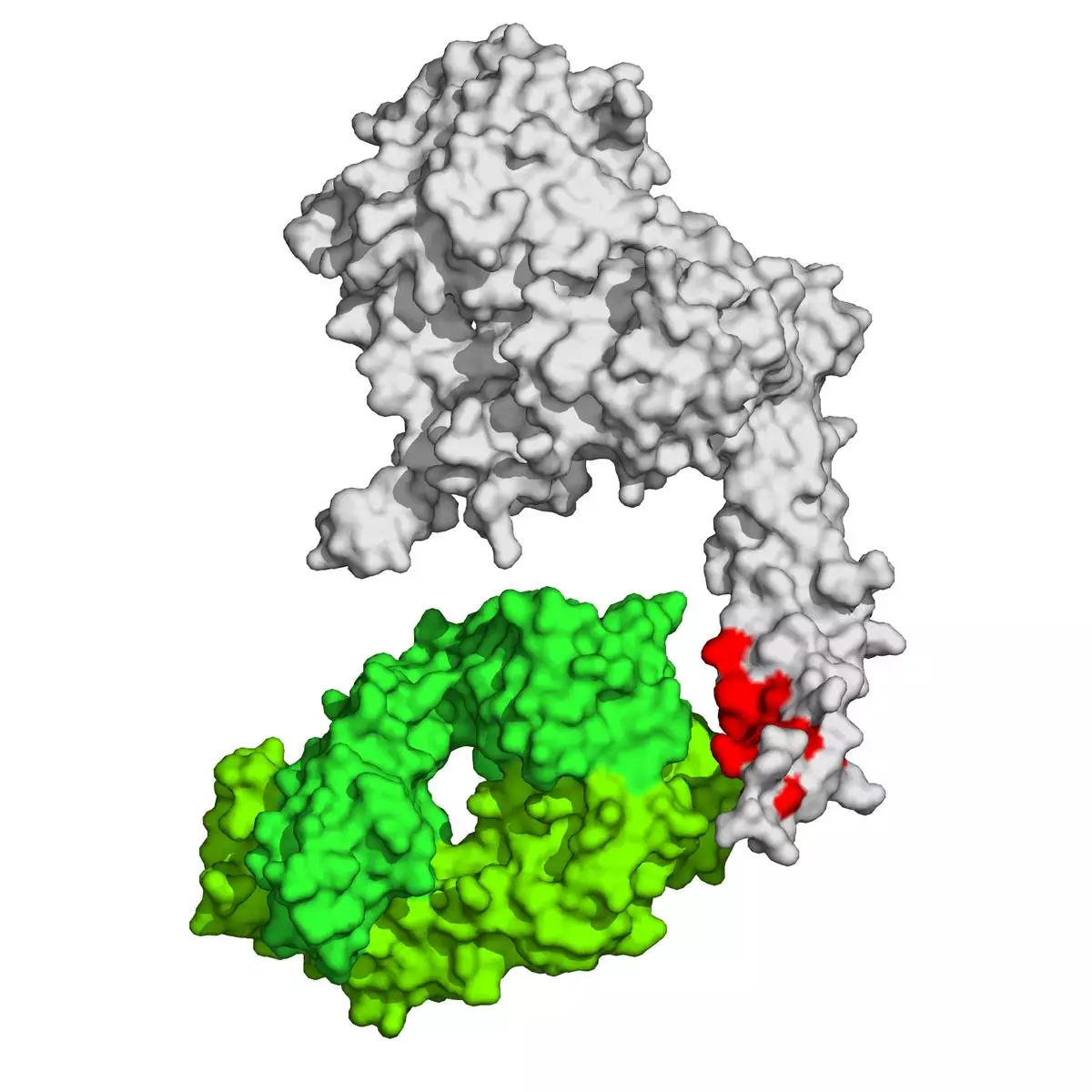
Bruker and Affipro Analytics integrate HDX-MS workflows for structural proteomics
Discovery-to-Validation target workflow