Metal mixtures found in the leftover smoke, ash and debris from the deadly 2023 Maui wildfires were harmful to the lung health of people living nearby long after the burning ended, a new study says.
The work shows that major wildfires, which are worsening with the planet’s warming, could have lasting effects beyond immediate exposure.
Click to Gallery
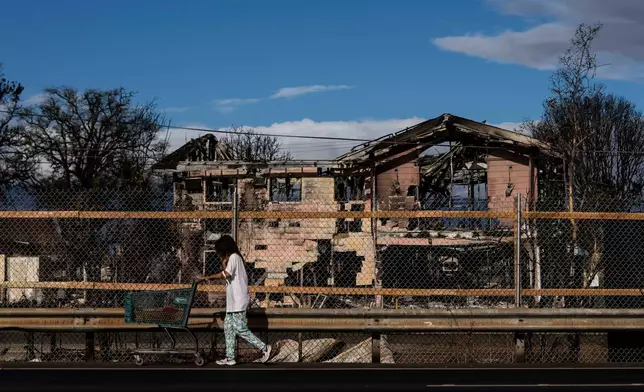
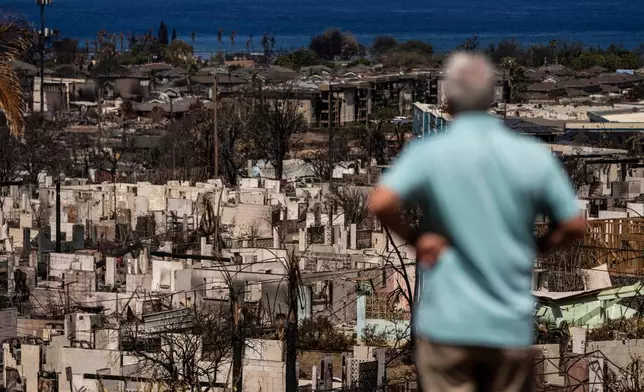
FILE - A person pushes a cart along the Honoapi'ilani Highway past homes destroyed by a recent wildfire in Lahaina, Hawaii, Aug. 21, 2023. (AP Photo/Jae C. Hong, File)
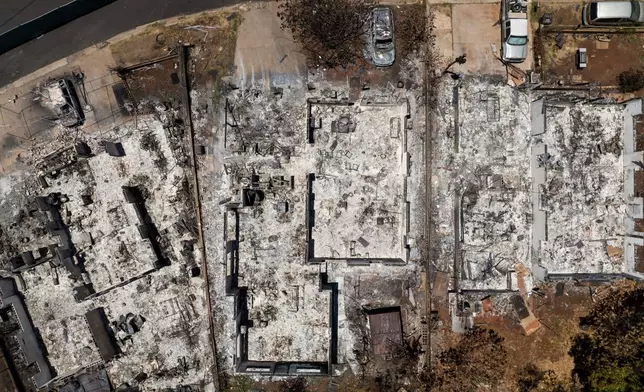
FILE - The remains of homes are visible in the aftermath of a wildfire in Lahaina, Hawaii, Aug. 22, 2023. (AP Photo/Jae C. Hong, file)
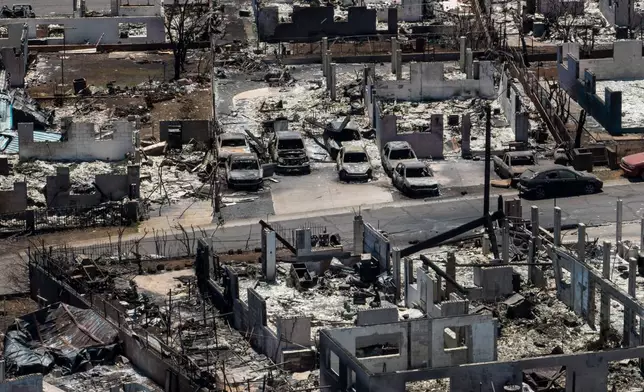
FILE - Charred vehicles remain near burned homes in the aftermath of a wildfire in Lahaina, Hawaii, Aug. 22, 2023. (AP Photo/Jae C. Hong, File)
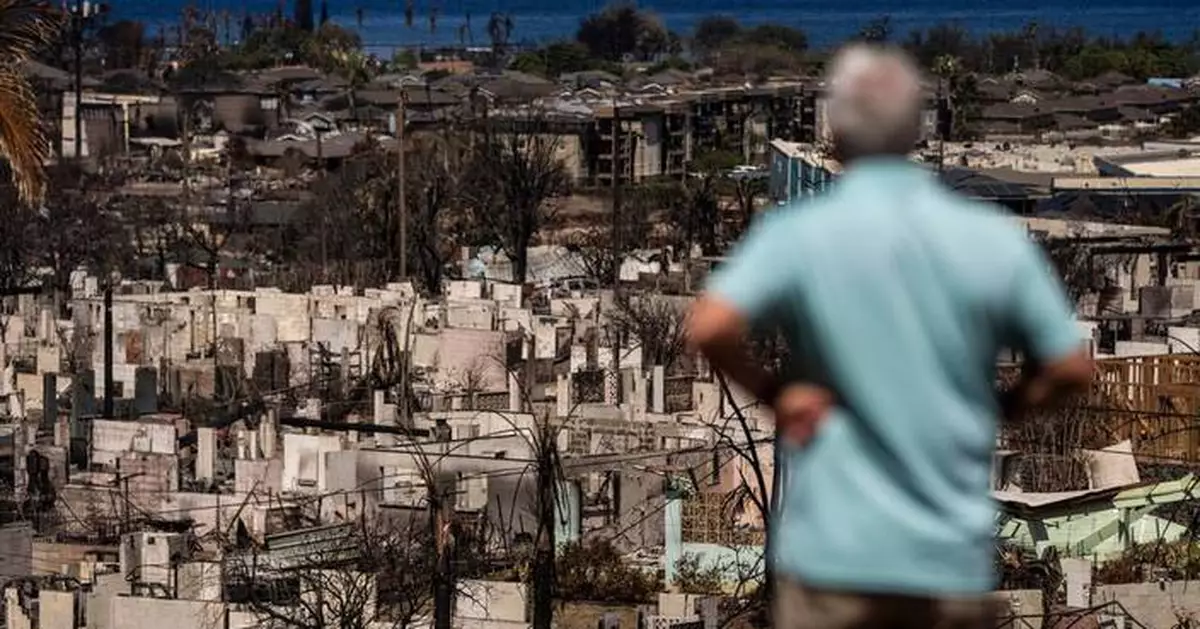
FILE - A man views the aftermath of a wildfire in Lahaina, Hawaii, Aug. 19, 2023. (AP Photo/Jae C. Hong, File)
Post-wildfire air quality needs to be monitored longer term, the research suggests, and recovery efforts need to consider what might remain in contaminated soot, residue and dirt well after burning stops.
The wildfires, caused by wind spreading a brushfire spurred by downed power lines, burned on the Hawaiian island of Maui in August 2023, destroyed the town of Lahaina and killed more than 100 people. They were among the deadliest in U.S. history.
New research published in the journal Proceedings of the National Academy of Sciences on Monday found higher metal levels, associated with respiratory harm, in nearby residents up to a year and a half after the fires.
University of Hawaii researchers studied the urine of 1,400 adults and found substantially elevated concentrations of metals such as arsenic, cadmium, copper and antimony.
These metals could be the result of burned buildings, vehicles, electronics and other materials lost in the wildfires, the researchers say. They can cause a different human impact than simply the burned vegetation that is typically studied after fires of this magnitude.
“What we’re dealing with, especially in the aftermath of what we experienced in Lahaina, is a much more complicated mixture of these chemical exposures,” said Alika Maunakea, the study’s co-author and an anatomy, biochemistry, and physiology professor at the University of Hawaii, Manoa.
The researchers found antimony nearly 40 times higher in the Maui participants than U.S. biomonitoring data. They found manganese 3.8 times higher, barium 2.3 times and arsenic 2.2 times.
Having more metals in the body was more likely to result in abnormal lung function, such as having less breathing capacity and difficulty moving air in and out of one’s lungs, during standard breathing tests, the study found.
Those lung effects aligned with the geographic distribution of smoke and ash; those nearest to Lahaina, and Wailuku and Kahului, experienced a different impact than in those near Kula.
“It’s really important to identify potential sources of these exposures and to mitigate and reduce potential risks for re-exposures that might be contributing to these effects,” Maunakea said. “What happens to the land and environment can shape what people breathe, take into their bodies, and develop over time. The consequences of that can unfold over many years.”
Wildfires are getting larger, more intense, faster-moving and more frequent in certain parts of the globe, experts say, in part due to the warming and drier weather associated with climate change. Human-caused climate change has upped the likelihood of many major fires around the world in recent years and led to fires in regions that typically do not see them as often.
The researchers did note a limitation of the study in that it cannot assess exactly how much of the impact came directly from the wildfires versus chronic or other exposures — such as Hawaii’s geology, diet, historic agricultural and industrial activity and environmental sources — given there is no comparable data from before August 2023.
However, previous studies have also found significant long-term human impacts from wildfires and other environmental crises. The impacts have included lung issues and mental health issues such as depression.
“This is bigger than wildfires. These climate-related disasters can change the environment in ways that continue after the immediate emergency is over,” said Ruben Juarez, study co-author and professor of health economics at the university. “Floods, hurricanes, fires, and other disasters definitely can disturb soil, debris, buildings, and legacy contaminants that we have in Hawaii, creating these pathways for exposure. … Disaster response should not stop when visible danger is gone.”
Dr. Kekoa Taparra, a physician and assistant professor who studies chronic diseases at the University of California, Los Angeles, said the research expands our understanding of the health burden of the fires, particularly over an extended period.
“This type of work echoes that climate-related disasters affect human health well beyond the immediate injuries and deaths we see during the event itself,” said Taparra, who was not involved in the study released Monday but has studied the health impacts of disasters. “Historic wildfires in Lahaina and even Los Angeles have highlighted how these disasters can produce longer-lasting consequences through displacement, disruption of healthcare and social networks, environmental exposures, and potentially increased mortality.
“As these events become more frequent and severe, understanding and measuring their full health impact will be essential to building more resilient communities and health systems.”
Alexa St. John is an Associated Press climate reporter. Follow her on X: @alexa_stjohn. Reach her at ast.john@ap.org.
Read more of AP’s climate coverage.
The Associated Press’ climate and environmental coverage receives financial support from multiple private foundations. AP is solely responsible for all content. Find AP’s standards for working with philanthropies, a list of supporters and funded coverage areas at AP.org.
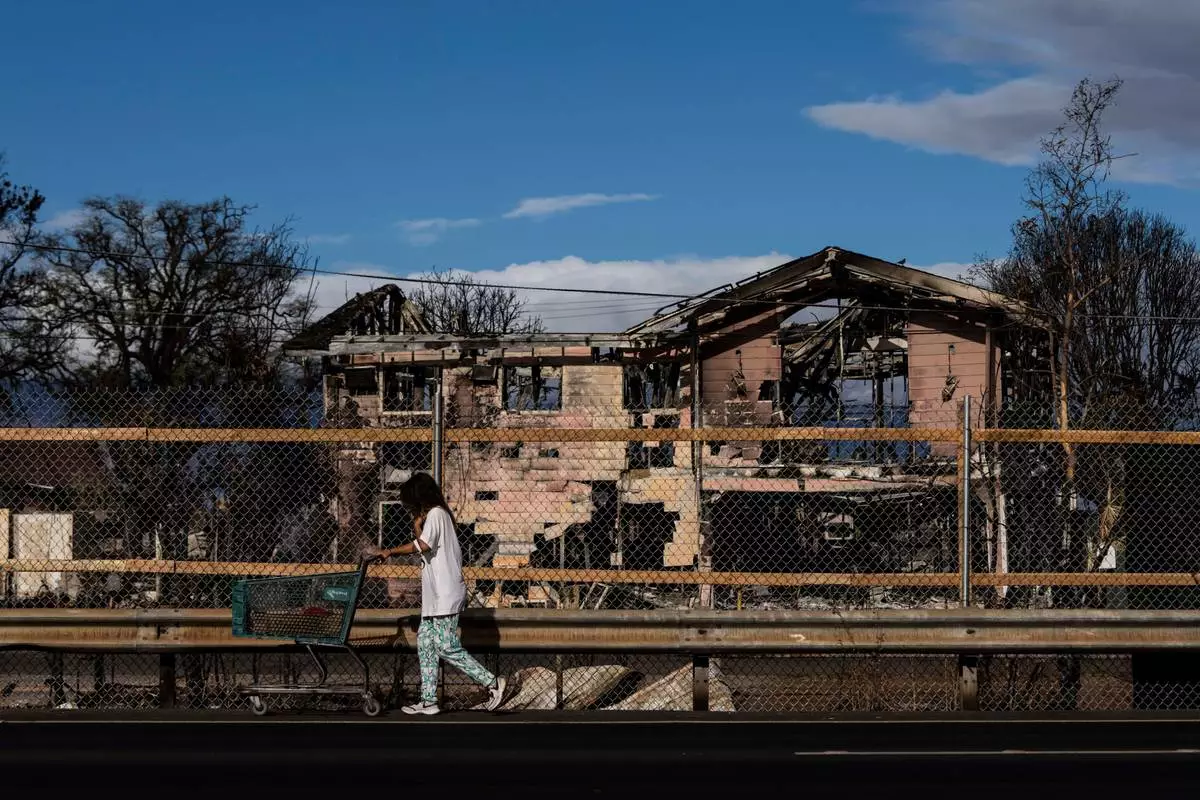
FILE - A person pushes a cart along the Honoapi'ilani Highway past homes destroyed by a recent wildfire in Lahaina, Hawaii, Aug. 21, 2023. (AP Photo/Jae C. Hong, File)
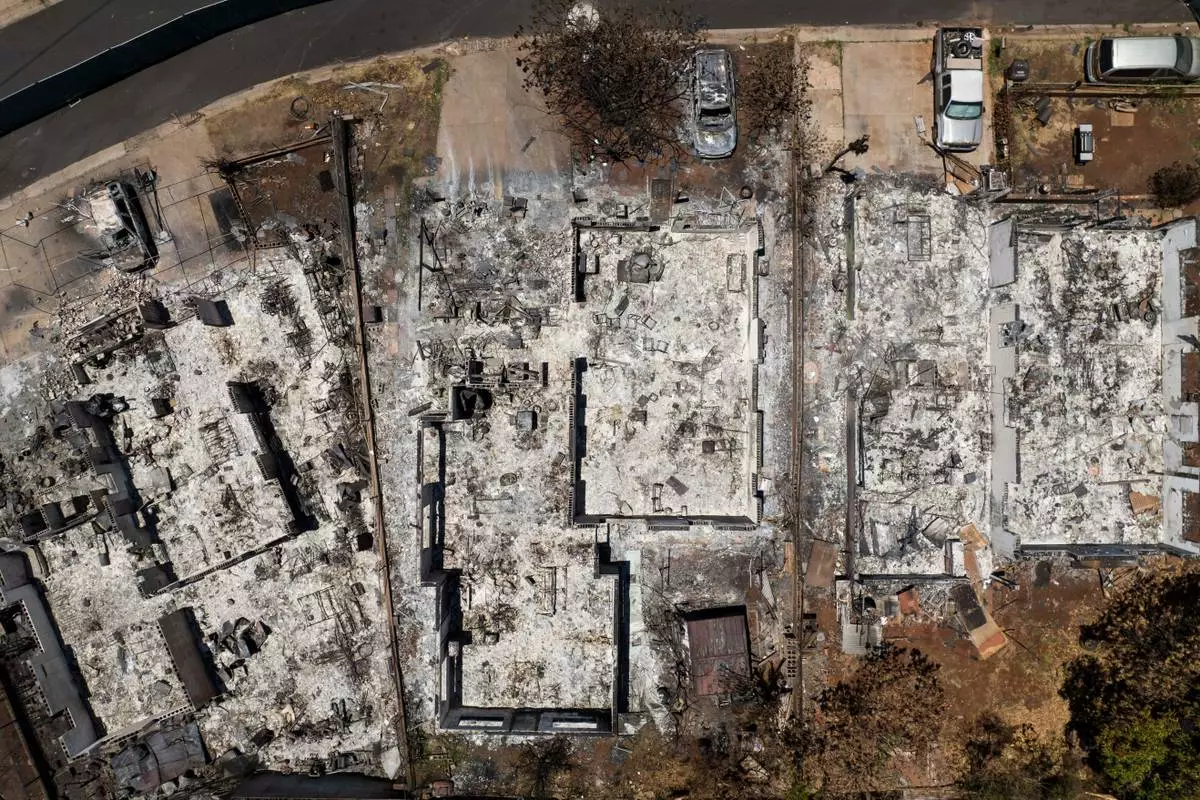
FILE - The remains of homes are visible in the aftermath of a wildfire in Lahaina, Hawaii, Aug. 22, 2023. (AP Photo/Jae C. Hong, file)
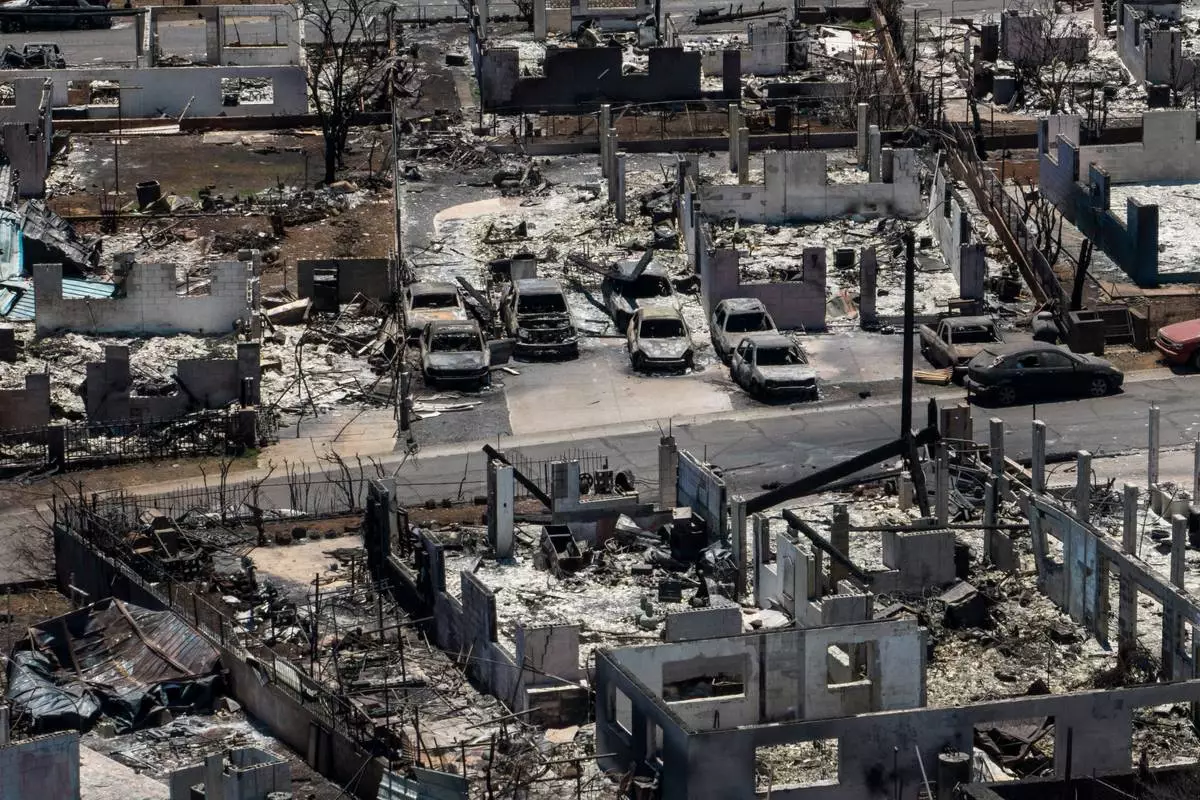
FILE - Charred vehicles remain near burned homes in the aftermath of a wildfire in Lahaina, Hawaii, Aug. 22, 2023. (AP Photo/Jae C. Hong, File)
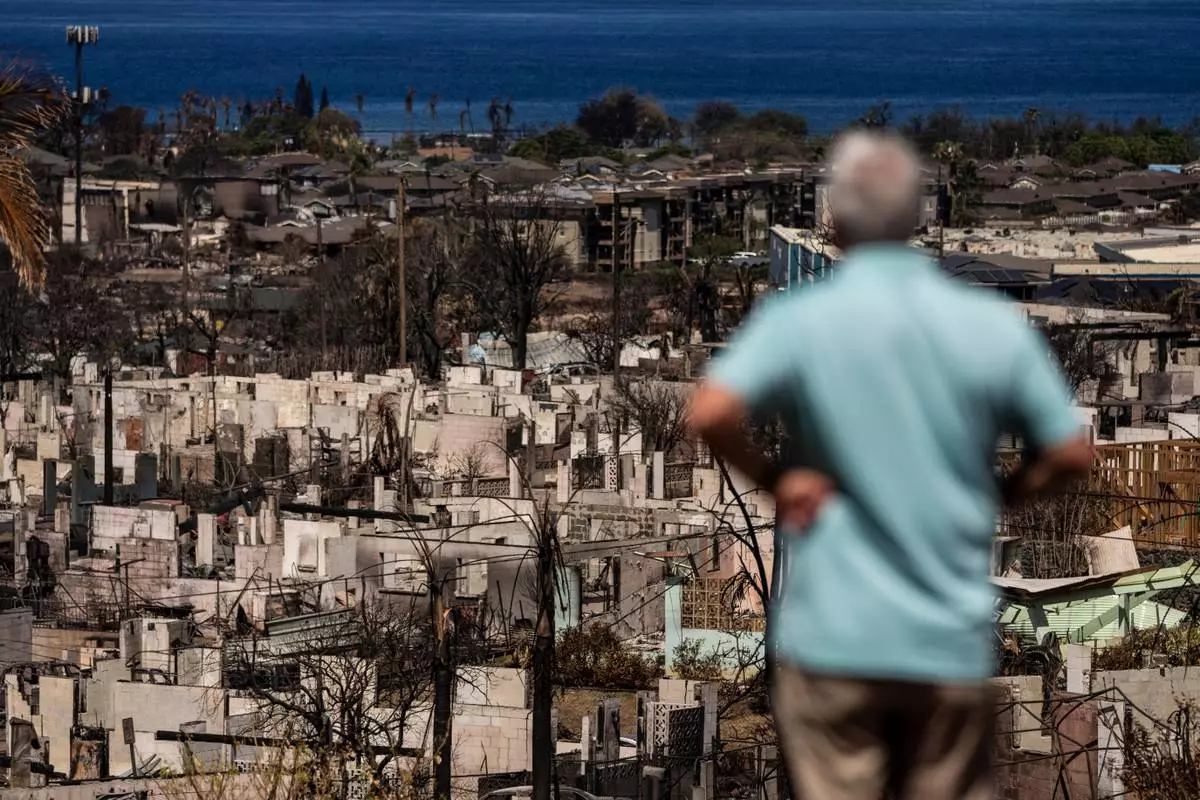
FILE - A man views the aftermath of a wildfire in Lahaina, Hawaii, Aug. 19, 2023. (AP Photo/Jae C. Hong, File)
NEW YORK (AP) — Days before the start of what could be Major League Baseball's last postseason for a while, Carlos Rodón was prepared for a long lockout if owners keep their salary cap proposal on the bargaining table.
“We won't play. I'm going to be frank with you,” the New York Yankees pitcher said. “I'm not worried about it. They should be worried about it. There’s a lot of money on us playing baseball. That’s why they pay us a lot.”
Baseball's five-year labor contract expires Dec. 1 and management is expected to impose a lockout that would stop trades and free-agent signings, then potentially threaten the start of spring training workouts on Feb. 9 and opening day on March 24.
When management last proposed a cap, it sparked a 7 1/2-month strike in 1994 and '95 that led to the first cancellation of the World Series in 90 years. MLB says a cap is needed to alleviate economic disparity, highlighting that no low-revenue team has won the title since the 2015 Kansas City Royals.
“The salary cap and floor proposal levels the playing field, allowing us greater flexibility to address longstanding player priorities while sharing baseball revenue with the players 50/50,” MLB spokesman Glen Caplin said.
Owners would also gain more financial certainty with a cap, which likely would spark an increase in franchise values.
Players point out teams with low payrolls, Milwaukee and Tampa Bay, had the best regular-season records in their leagues this season.
“Despite MLB claiming they need a salary cap because small-market teams supposedly have no hope, we see Milwaukee with the best record in baseball for the second straight year and Tampa with the best record in the AL," union head Bruce Meyer said. “Milwaukee, of course, is 30th out of 30 in our market-size rankings.”
While this would be MLB's 10th work stoppage, the sport hasn't lost any regular-season games since the 1994-95 strike. Baseball players say they will never accept a cap similar to those that have been in the NFL since 1994, the NBA since 1984-85 and the NHL since 2005-06. Nine of the 10 biggest sports contracts by total value in North America belong to MLB players.
“For me the biggest thing is doing right for the generations forward because the generations before me, for the decades before, they’ve fought for our rights today,” Baltimore first baseman Pete Alonso said. “That’s a sacrifice that not just myself but other men around the league are willing to fight for and put up with.”
MLB's proposal would cap team spending next year at $245.3 million, using figures for luxury tax payrolls that include an estimated $23 million for benefits and the pre-arbitration bonus pool. It also would establish a payroll floor of $171.2 million for 2027 but teams could drop as low as $154.1 million and make up the difference over the following two years. The New York Mets' opening day payroll in 2026 was over $352 million.
Contracts would be limited by service time: $500 million and 12 years for those yet to make major league debuts down to $265 million and six years for free-agent-eligible players. It would outlaw megadeals like outfielder Juan Soto's record $765 million, 15-year contract with the Mets.
While MLB proposed to split revenues 50-50, the union says that would lead to a massive decrease in money to players because of the way revenues and expenses are defined and the player portion is calculated. In addition, an escrow provision to set salaries aside in case the players' defined revenue share is above 50% means money in guaranteed contracts could be forfeited.
MLB as part of a cap system would agree to drop service time for free agent eligibility for some players from six years of service to five and to eliminate qualifying offers, but the union maintains that would shift money among players under a cap rather than increase spending.
Alonso would lose $165,775 next year for each regular-season day missed and Rodón would forfeit $144,385.
Los Angeles Dodgers star Shohei Ohtani would give up $374,331 daily and Soto $227,273.
At the other end of the salary scale, players making MLB's proposed $900,000 minimum would lose $4,813 daily. Among the 1,366 players on rosters as of Monday, 549 (40%) started 2026 with less than one year of service time and 893 (65%) had less than three years. Players aren't eligible for salary arbitration until they've completed three seasons, with some exceptions.
Some players are protected financially because of signing bonuses that will continue to be paid during a work stoppage: Toronto first baseman Vladimir Guerrero Jr. is due $14 million on June 30 as part of his $325 million contract, though he would give up $74,866 daily in salary.
Tony Clark, the former All-Star first baseman who headed the union since 2013, was forced out in February and replaced by Meyer, his deputy and chief negotiator in 2021-22.
Baltimore pitcher Chris Bassitt, a member of the union's eight-man executive subcommittee, said there had been a transformation this year in communications within the players' association. The subcommittee and the 30 team player representatives form the executive council that makes union decisions.
“Our last CBA from a player’s side was not internally handled great. I think the structure was very archaic, so to speak, like an old-school approach,” he said. “We have made it our mission to kind of get all 30 clubs — 30 reps that genuinely care. And then not just 30 reps that genuinely care, but 30 reps that are making sure all their players are very informed."
When players and MLB agreed to a deal on March 10, 2022, that ended the lockout, the executive subcommittee voted 8-0 against accepting it, but the team player representatives favored the agreement by 26-4.
The vast majority of the 1,200 players on 40-man rosters when the lockout starts will not have salary arbitration or free agency rights and will have 2027 salaries under $1 million.
“Their voices matter, what they’re feeling, what they're thinking,” Bassitt said. “When I came in the league it was — I’m going to say it plainly — but it was like: `Rookie shut up and sit in the corner and the veterans are going to take care of this.' I don’t think that's a possible avenue to go down anymore. I think the league’s too young, first and foremost. Second, I think the only way to have veteran guys that are informed and understand the process is to start the education process from day one.”
See AP’s full MLB coverage here
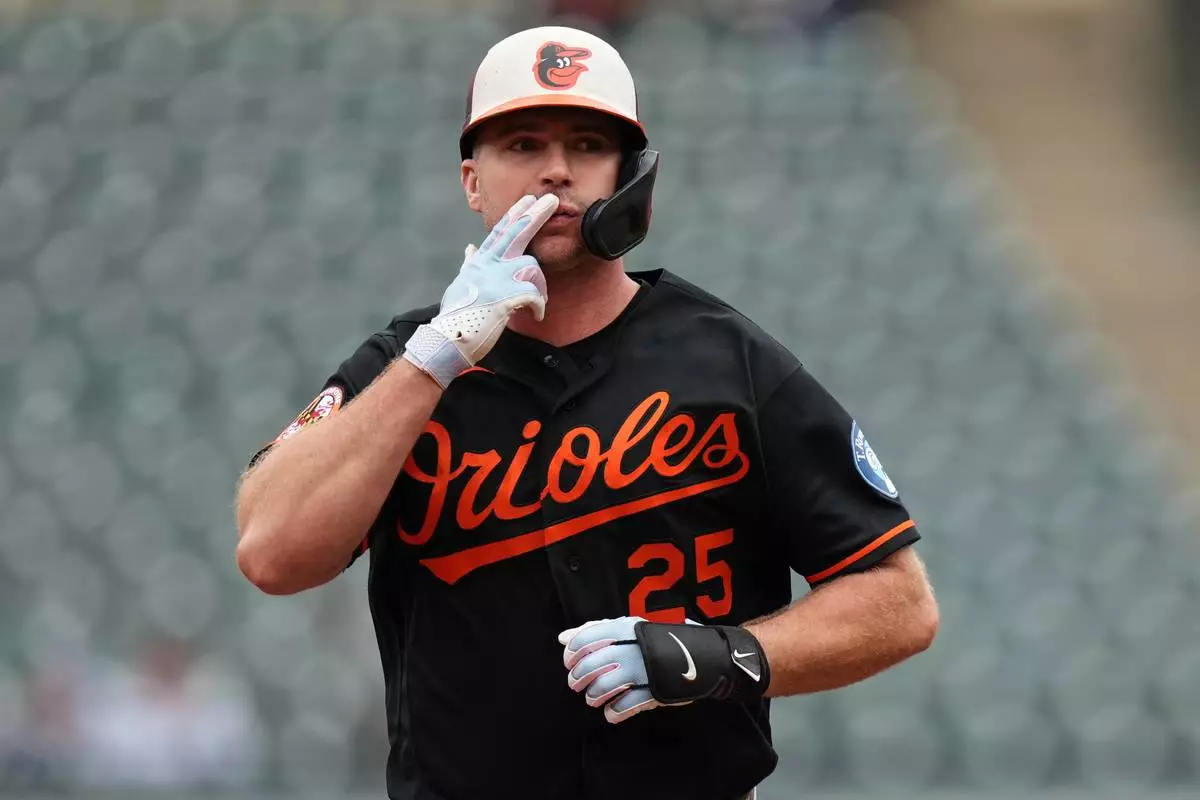
Baltimore Orioles' Pete Alonso rounds the bases after hitting a two-run home run during the fifth inning in the first baseball game of a doubleheader against the Toronto Blue Jays, Wednesday, Sept. 23, 2026, in Baltimore. (AP Photo/Stephanie Scarbrough)
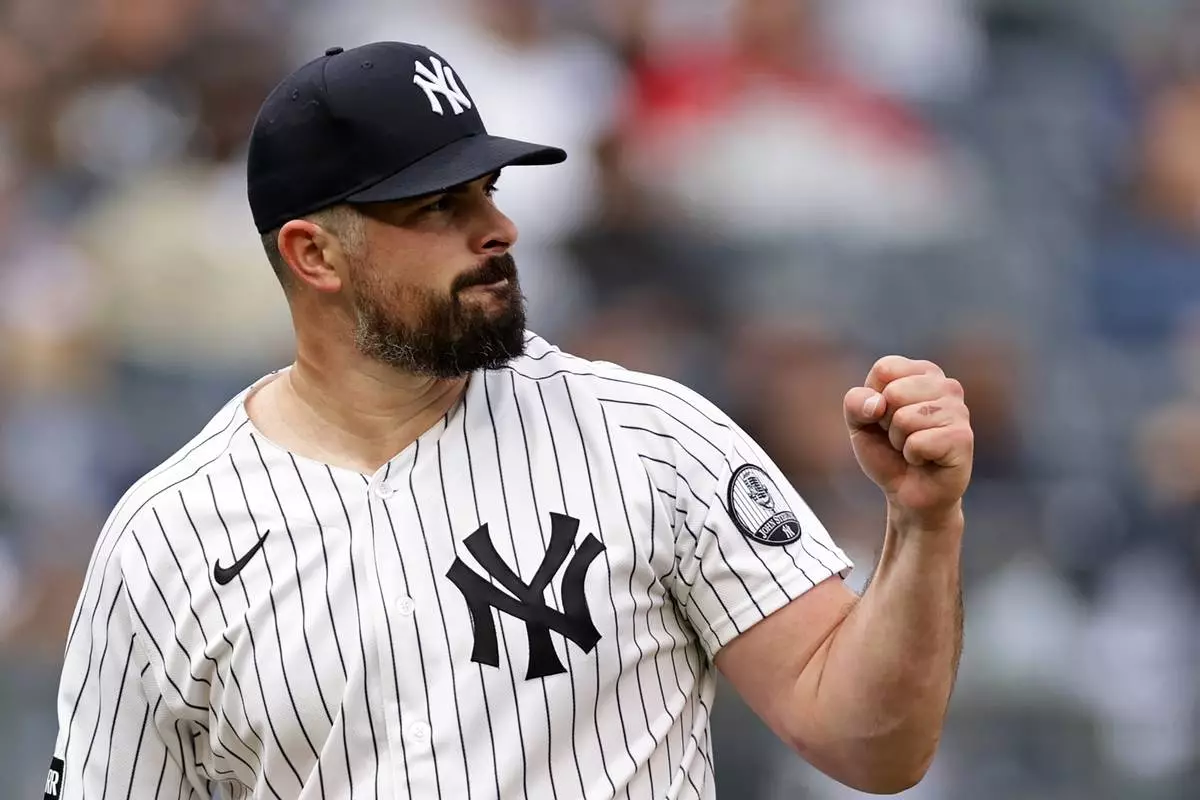
New York Yankees pitcher Carlos Rodon reacts after the final out in the top half of the seventh inning during the first baseball game of a doubleheader against the Tampa Bay Rays, Tuesday, Sept. 22, 2026, in New York. (AP Photo/Adam Hunger)