China firmly opposes the Japanese push to delete the "enemy state" clauses from the United Nations (UN) Charter, a Chinese envoy said Monday at the 81st session of the UN General Assembly.
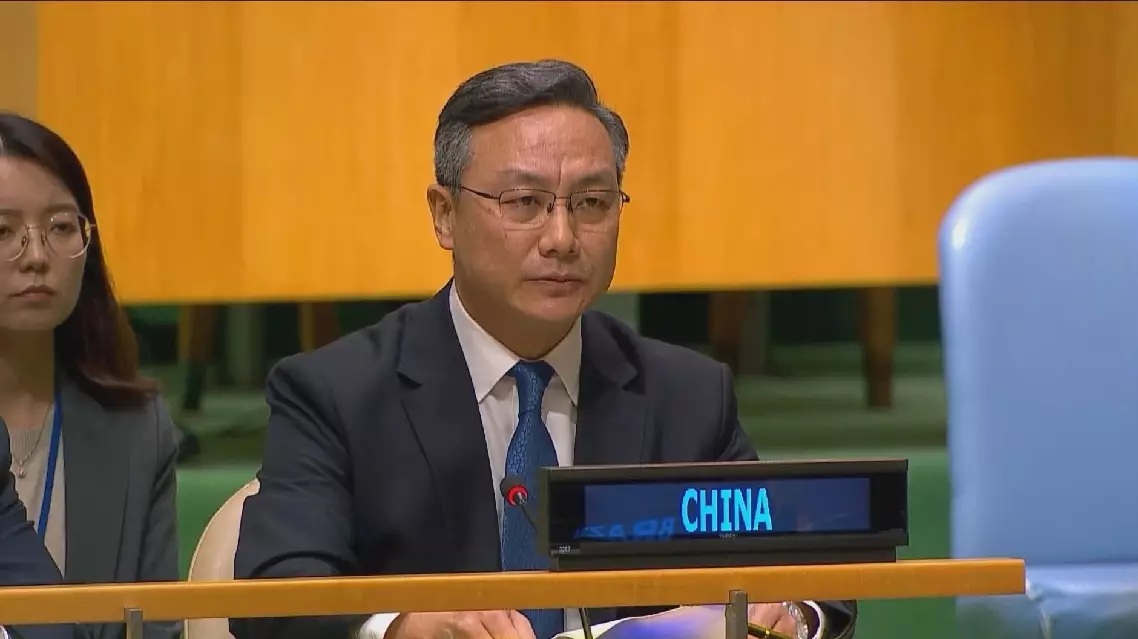
Sun Lei, China's deputy permanent representative to the UN, exercised his right of reply at the General Assembly's general debate on Monday, responding to a speech made last week by Japanese Prime Minister Sanae Takaichi at the UN headquarters, in which she claimed Japan to be a peace-loving country and called for the deletion of references to "enemy state" in the Charter.
The "enemy state" provisions, contained in Articles 53, 77 and 107 of the UN Charter, historically referred to Germany, Italy, Japan and their allied states during WWII. They were established by the Allied powers to prevent the recurrence of wars of aggression.
Addressing the General Assembly, Sun said the international community should focus less on what Japan says and more on what it does. Japan joined the UN on the premise that it acknowledged its militarist crimes and accepted the entire UN Charter, the Chinese side noted.
Yet more than 80 years later, the Takaichi government has avoided any mention of Japan's historical crimes and, rather than reflecting on them, has sought to whitewash and beautify the past, while fabricating false narratives about "threats from neighboring countries" to conceal its continuing military buildup, the envoy said. "In recent years, Japan has drastically increased its military spending, eased the export of lethal weapons, advanced the deployment of intermediate- and long-range missiles, expanded its offensive military capabilities, stockpiled large quantities of sensitive nuclear materials, sought to revise its pacifist Constitution, attempted to break its 'Three Non-Nuclear Principles', and even advocated that Japan become a 'war-capable' nation. Facts have shown that Japan's remilitarization has become a real threat to regional and global peace and stability, " Sun said.
The "enemy state" clauses are an important institutional arrangement, Sun said, noting they were designed to prevent fascism and militarism from once again threatening international peace and security and to safeguard the post-war international order. They remain highly relevant today, he said.
Any attempt to deny or whitewash aggression, revive militarism or challenge the post-war order violates peace and justice and will be firmly opposed by peace-loving people everywhere, he stressed.
"Japanese politicians are urged to face history squarely, reflect on it deeply and take concrete actions to earn trust from Asian neighbors and the international community. China will work with fellow peace-loving countries to resolutely curb the rise of neo-militarism in Japan under the disguise of 'national normalization', preventing it from endangering the region and the world," Sun said.
China warned that Japan has repeatedly broken through post-war constraints and built up its military over the past few years, sending a dangerous signal and exposing its true ambition to abandon peaceful development in favor of military expansion.
"Japan must make a serious choice: whether it will continue to ignore the lessons of history and allow the toxic legacy of militarism to resurface, or face its history of aggression, honor its peace commitments and earn international trust through sincere reflection, and whether it will continue to distort facts and truth and challenge the post-war order, or fulfill its peace commitments through concrete action," Sun said.
China urged Japan to learn from history and immediately halt its dangerous remilitarization. It also called on the international community to stay vigilant and jointly uphold the outcomes of the WWII victory and global peace and stability.
China rejects Japanese call to remove 'enemy state' clauses from UN Charter